





— Blogs —
—Products—
 Consumer hotline +8618073152920
 WhatsApp:+8615367865107
Address:Room 102, District D, Houhu Industrial Park, Yuelu District, Changsha City, Hunan Province, China
Product knowledge
Time:2026-03-04 10:15:43 Popularity:534
An agricultural weather monitoring system is only useful for an operating decision when the observation is recent enough and represents the event of interest. A one-second communication interval does not mean that temperature responds in one second, that a rainfall bucket detects the first raindrop, or that a cloud alarm reaches an operator immediately. Specify those times separately before selecting a NiuBoL station for a farm, orchard or greenhouse project.
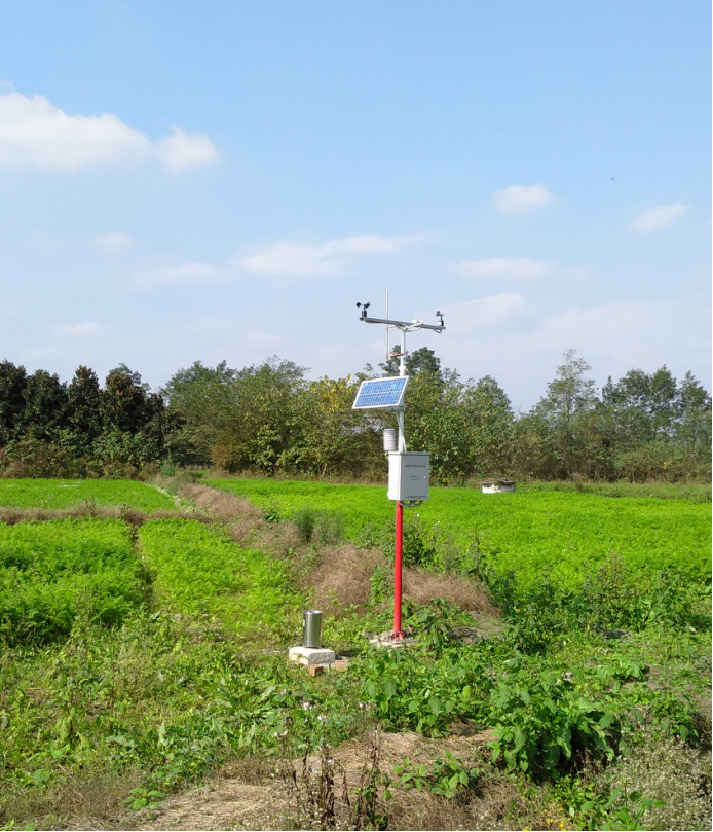
A grower reviewing yesterday's rainfall can accept a different reporting schedule from a contractor monitoring changing wind during spraying. An experimental field may need complete interval records even if staff download them later. A greenhouse operator may need current local readings while an internet connection is unavailable. These are different acquisition requirements, although each installation may display the same weather quantities.
Describe the required output as a quantity, location, time basis and intended decision. For example, request interval rainfall at an open field gauge, rather than simply requesting real-time rain data. For wind, state whether the decision uses an instantaneous sample, an average or a peak over a defined period. The logger must actually acquire the samples needed for that output.
| Timing term | What it describes | What it does not establish |
|---|---|---|
| Sensor response | How quickly the sensing assembly follows a physical change | The interval between Modbus requests |
| Polling interval | How often a logger requests a sensor value | Whether each response contains a newly measured value |
| Averaging or accumulation period | The observations represented by one reported result | The time when that result reaches a server |
| Upload interval | How often records are transmitted | The age of the oldest record in a batch |
| Alarm delivery time | When an operator or controller receives an actionable condition | Detection performance under every field condition |
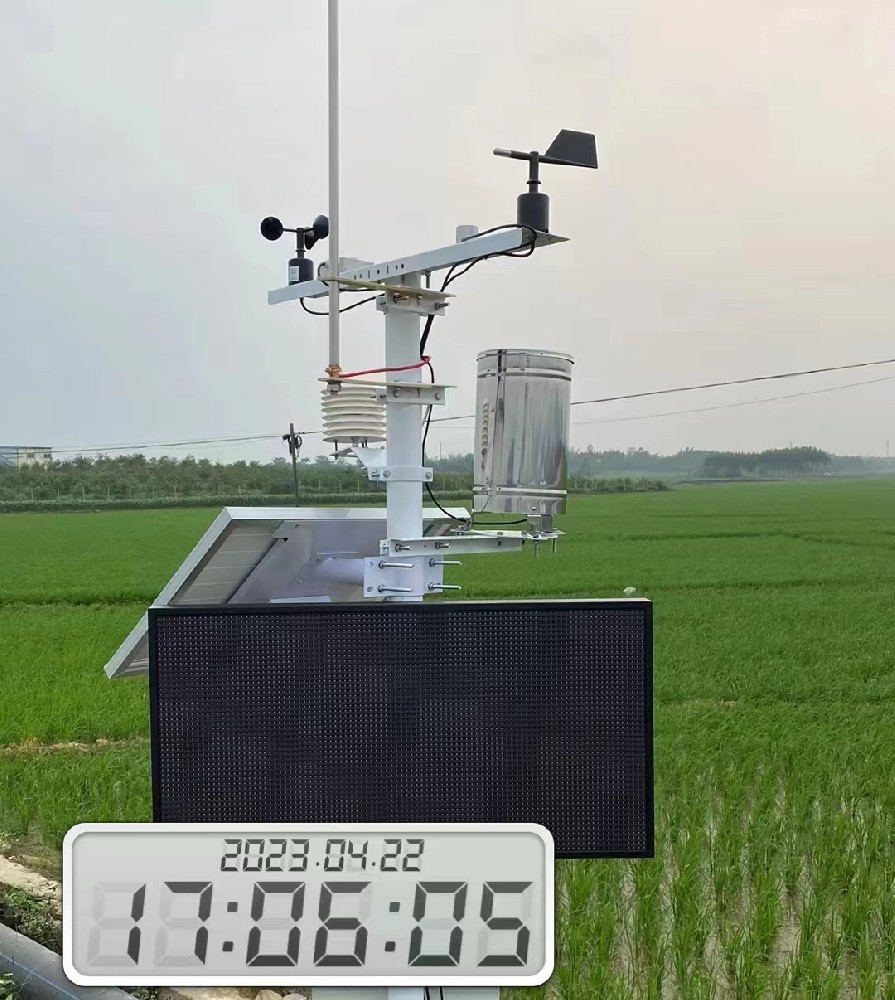
The NBL-W-LBTH combines air temperature, relative humidity and barometric pressure. Its radiation shield allows ambient air to circulate while reducing direct solar heating of the sensing elements. Mounting it beside a sun-heated cabinet or in repeated sprinkler spray changes what it experiences; faster polling cannot correct an unrepresentative location.
The RS485 version uses Modbus RTU and has a minimum polling interval of 1000 ms. That is a communications limit, not a stated thermal response time. If a contract requires a particular response to a temperature step, request the response definition, test conditions and relevant result for the selected assembly. Do not substitute a register refresh specification.
| NBL-W-LBTH item | Specification | Selection consequence |
|---|---|---|
| Air temperature | -40 to 80 C; accuracy +/-0.5 C; resolution 0.1 C | Resolution does not replace the accuracy allowance around a decision threshold |
| Relative humidity | 0-100% RH; accuracy +/-5% RH; resolution 0.1% RH | A narrow humidity switching band needs review against measurement uncertainty |
| Barometric pressure | 10-1200 hPa; accuracy +/-1.5 hPa | Keep station pressure distinct from any software-derived sea-level value |
| Supply and output | 12-24 VDC; RS485 Modbus RTU or a separate 4-20 mA version | Order the output compatible with the actual logger |
| Digital polling | At least 1000 ms between requests | Allow for the rest of the bus and timeout handling |
| Cable and electrical load | Cable configuration and current demand to be established for the ordered version | Obtain these before final cable voltage-drop and power calculations |
Use the NBL-W-LBTH product details when choosing that atmospheric module. A complete agricultural weather monitoring system can add separate wind, rainfall, radiation and soil channels; the atmospheric sensor does not acquire those quantities itself.
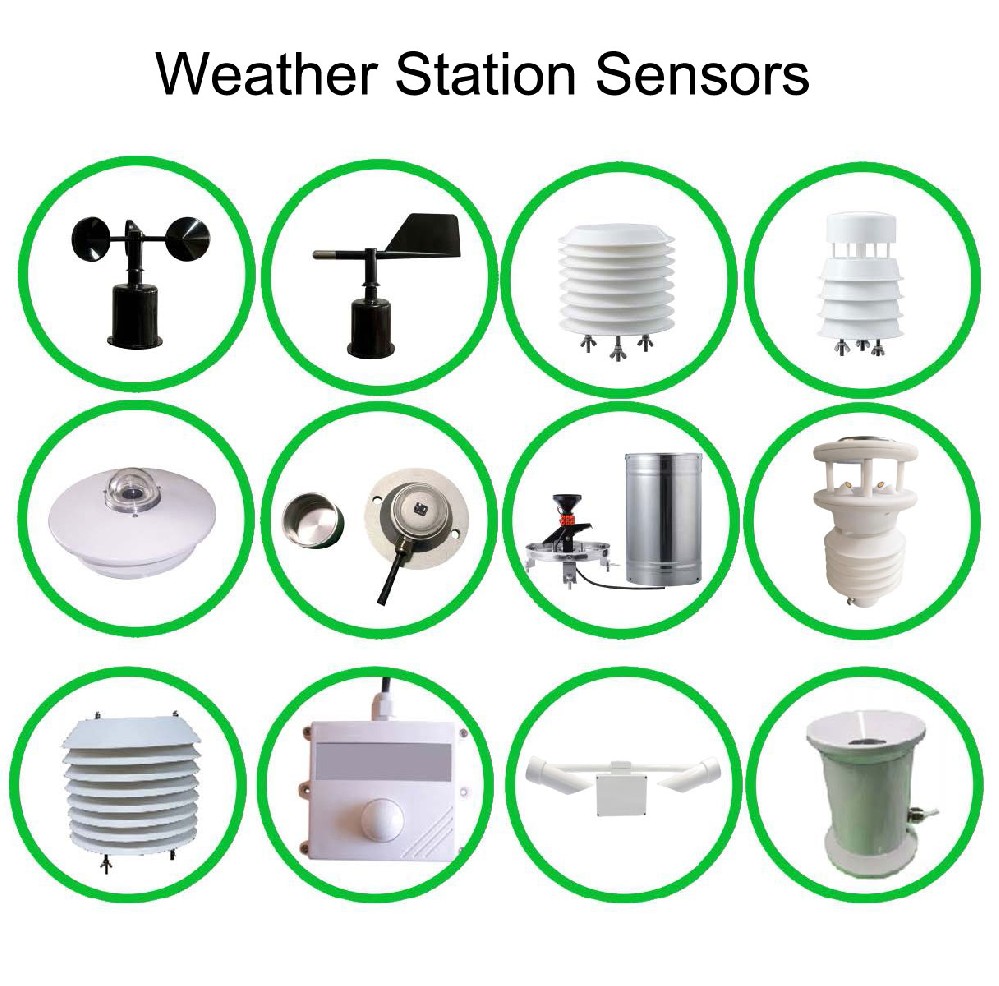
The NBL-W-RS tipping bucket rain gauge has a 0.2 mm resolution. Consider a simplified case with an initially empty bucket, uniform rain at 1 mm/h and no collection losses. Accumulating one tip takes 0.2 hour, or 12 minutes. The logger can count that tip promptly, but it cannot turn the bucket into a first-drop detector.
Actual first-tip timing also depends on residual water, rainfall variability and field collection conditions. Therefore, an application that must stop an operation at the onset of rain may require a separate precipitation-presence channel. A cumulative rainfall channel remains useful for irrigation review and weather records, but those are not the same task.
The NBL-W-RS intensity range is 0-4 mm/min. Its stated +/-4% accuracy applies to the specified indoor static test at 2 mm/min, not to every wind-exposed field event. Its operating temperature is 0-50 C; the lower storage limit is not evidence that an unheated gauge measures frozen precipitation. Select the pulse, voltage or RS485 version deliberately and establish the required electrical interface.
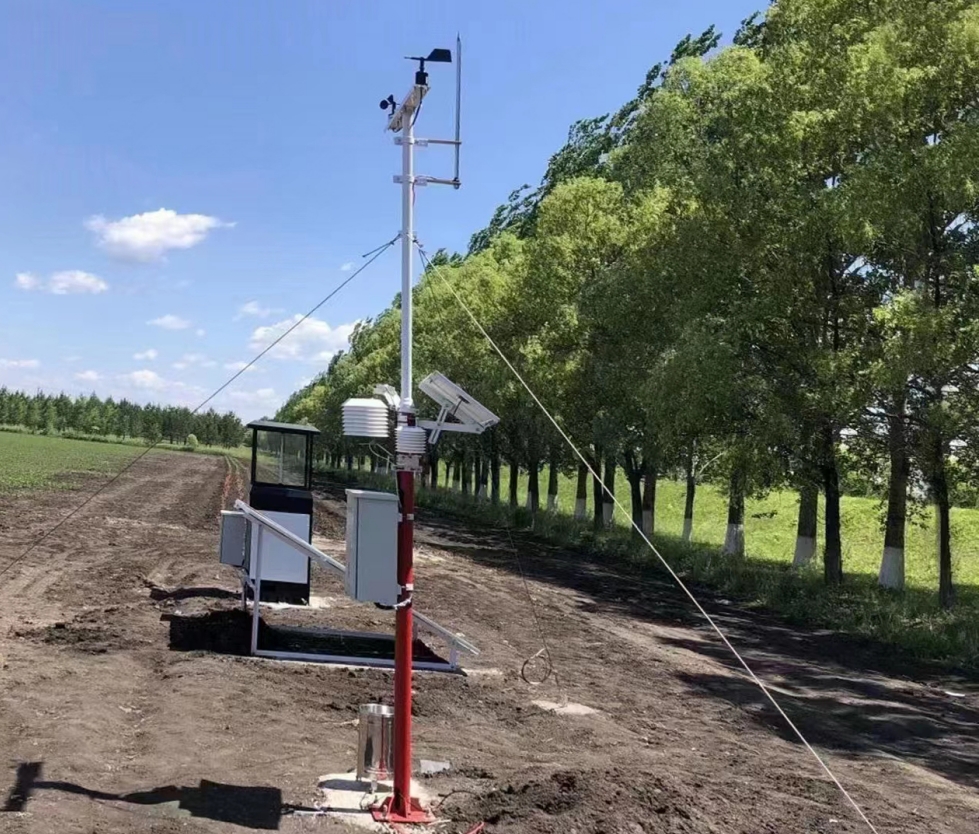
A field station may use separate NBL-W-SS wind speed and NBL-W-DS wind direction sensors with IP65 protection. Select their ordered signal versions and the compatible logger inputs. If an agricultural task depends on short wind events, acquiring one value every several minutes cannot recover the peak that occurred between those acquisitions.
Similarly, a ten-minute mean should not be labelled as the current gust. Ask whether the sensor supplies a calculated result or the logger computes it from acquired samples. Establish the averaging method and period. Direction also requires circular treatment: values on either side of north must not be averaged as ordinary numbers to produce a southerly direction.
For a spray contractor, retain the weather record alongside the operation time and measurement location. A field-edge mast does not prove identical wind inside every sheltered row. For an orchard researcher, record changes in vegetation around the instrument, because seasonal growth can alter exposure even when the hardware and reporting schedule stay unchanged.
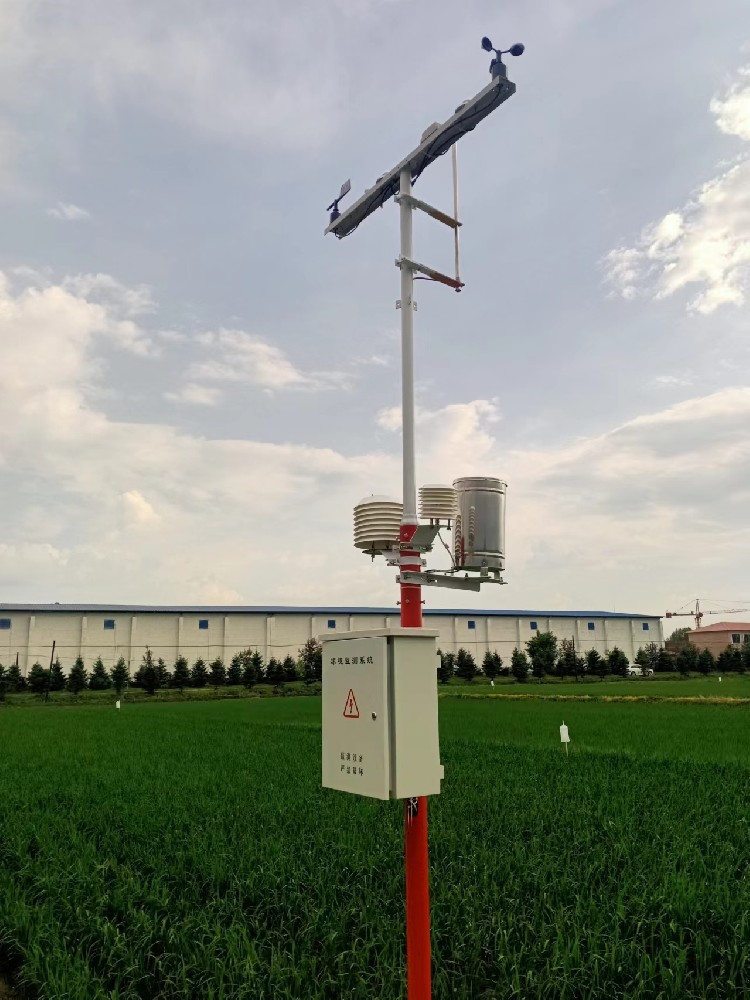
During commissioning, record four times where the equipment supports them: the known input or event, logger acquisition, server receipt and display or notification. If a device has no observation timestamp, document the logger's acquisition timestamp as such. Keep clocks aligned and do not silently replace an older observation time with the latest upload time.
For example, a record acquired at 10:00 but uploaded at 10:05 is five minutes old on arrival. Retrying that upload at 10:08 does not make it a new observation. A platform should show the observation age and distinguish delayed history from current conditions. Test this with the network disconnected, not just with an animated live dashboard.
For local greenhouse control, check whether the controller reads a local input or depends on a remote server. Test the actual architecture before connecting an actuator. Weather acquisition alone does not provide frost prediction or establish a safe control strategy. A crop-canopy temperature requirement may also need measurements beyond a general field air-temperature station.
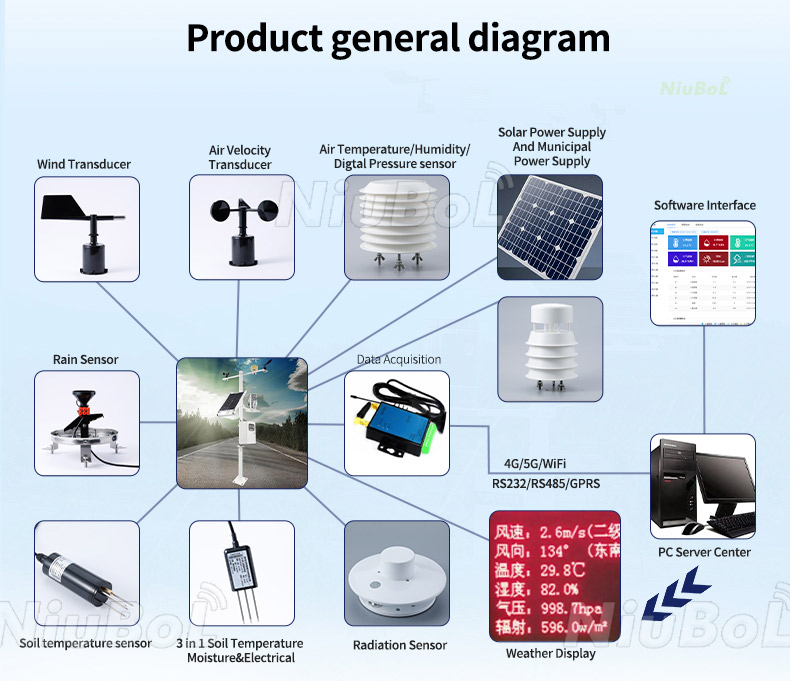
Ask NiuBoL to review the required channels, signal types, acquisition periods and destination format together. Include which outputs must continue locally and which may arrive later as historical records. This makes the quotation comparable: a sensor, a logger with storage and a remotely accessible alarm service have different responsibilities and costs.
A practical acceptance test checks scaled values, interval totals and observation times against a known input sequence. Repeat it after power recovery and a network outage. Check whether missing intervals remain identifiable, whether rain counts survive the relevant interruption, and whether an old value can trigger a notification as though it were current. Retention and recovery behaviour must be demonstrated for the supplied logger rather than assumed from its communication port.
No. Polling describes communication, while physical response depends on the sensor assembly and exposure. Specify the response test separately if rapid temperature changes are central to the project.
Not on the basis of its tip count alone. Water must accumulate before a tip occurs. Evaluate a separate rain-presence sensor when onset detection is the operating requirement.
Only if its serial hardware and Modbus RTU implementation match the selected sensor or logger. Obtain register definitions, scaling, timing and fault behaviour. A station-level RS485 socket does not by itself define the available data.
Base it on the event and required statistic. Daily rainfall review, short wind events and greenhouse control need different acquisition plans. Include averaging and upload periods instead of specifying one interval for every stage.
Provide channel quantities, mounting locations, outputs, power availability, local storage needs and the destination system. Identify alarm delivery and software access as separate requirements; do not assume they are included in the sensor price.
Disconnect the network, continue collecting, reconnect and inspect both historical records and the current display. Verify observation timestamps, age indicators and notification rules using the actual supplied logger and platform.
Specify an agricultural weather monitoring system around the time available to make each decision. Separate sensor response, acquisition, aggregation, upload and notification; then test that chain with realistic interruptions. NiuBoL can review atmospheric, wind and rainfall components against that acquisition plan, so the equipment enquiry describes the observations the project needs rather than a single ambiguous real-time requirement.
Prev:Agricultural Environmental Monitoring Station: Audit Derived Crop Indicators
Next:Ultrasonic Meteorological Station: Integrated Head vs Separate Sensors
Related recommendations
Sensors & Weather Stations Catalog
 Agriculture Sensors and Weather Stations Catalog-NiuBoL.pdf
Weather Stations Catalog-NiuBoL.pdf
Agriculture Sensors Catalog-NiuBoL.pdf
Water Quality Sensor Catalog-NiuBoL.pdf
Related products
 Combined air temperature and relative humidity sensor
 TDR Soil Moisture & Temperature Sensor for irrigation| RS485 |4-20mA| NBL-S-THR
 Soil pH sensor RS485 soil Testing instrument soil ph meter for agriculture |NBL-S-PH
 Wind Speed sensor Output Modbus/RS485/Analog/0-5V/4-20mA
 Tipping bucket rain gauge for weather monitoring auto rainfall sensor RS485/Outdoor/stainless steel
 Pyranometer Solar Radiation Sensor 4-20mA/RS485

Screenshot, WhatsApp to identify the QR code
WhatsApp number:+8615367865107
(Click on WhatsApp to copy and add friends)

