





— Blogs —
—Products—
 Consumer hotline +8618073152920
 WhatsApp:+8615367865107
Address:Room 102, District D, Houhu Industrial Park, Yuelu District, Changsha City, Hunan Province, China
Product knowledge
Time:2026-03-05 22:03:51 Popularity:662
Quick Answer: Negative oxygen ion monitoring in scenic areas should be specified as a defined negative-air-ion measurement with suitable sampling, quality checks and environmental context. The reported count depends on the counter's collection method and mobility response. It is not an oxygen-percentage measurement, a complete air-quality index or proof of health benefits. Design the sensor, logger and public display so valid measurements can be distinguished from outdated or faulted data.

The term negative oxygen ion is widely used in scenic-area projects, but an air-ion counter does not necessarily identify the chemical composition of every detected ion. Atmospheric negative ions include charged molecules and clusters that change through chemical reactions and attachment processes. A concentration channel should be identified by its polarity, method and effective mobility range rather than presented as a direct measurement of pure oxygen molecules.
For a park operator, a useful objective may be to follow changes at a defined observation point or compare locations under comparable conditions. For a research project, mobility response and comparability with another instrument may be central. A visitor display has a different purpose again: it needs clear labels, measurement time and a reliable indication when data are unavailable.
Do not make the ion count stand in for measurements it does not provide. The WHO global air-quality guidelines address PM2.5, PM10, ozone, nitrogen dioxide, sulfur dioxide and carbon monoxide. An ion count is not one of those pollutant concentrations and cannot establish that their guideline levels have been met. Keep any required pollutant monitoring and its averaging rules separate.
For air ion counter selection, compare the conditions under which a number is obtained. A specification of ions/cm3 without a defined collection response leaves uncertainty about whether two instruments count the same ion population. Establish negative-polarity operation, the effective mobility threshold or response range, sampling flow and the method used to evaluate zero and reference response.
Resolution is a display increment, not measurement accuracy. A wide upper limit does not prove reliable performance around a normal background concentration. Ask for the applicable uncertainty expression, noise behavior and environmental limitations. The acceptance procedure should examine the range relevant to the installation, not only an unusually high concentration near a special source.
| Specification field | What to define for the project | Acceptance consequence |
|---|---|---|
| Quantity and unit | Negative-air-ion number concentration, ions/cm3 | Do not confuse count with oxygen percentage or particulate mass |
| Collection response | Polarity and effective electrical-mobility response | Comparisons require compatible instrument responses |
| Range, accuracy and resolution | Selected counter's limits, uncertainty basis and display step | Test the intended background and excursion conditions |
| Sampling | Flow, inlet geometry, permitted weather exposure and flow-status information | Detect a blocked or altered sample path |
| Power and consumption | Counter supply, active fan load and full station load schedule | Size the power system from actual operating loads |
| Environment and construction | Operating temperature, humidity, condensation limits, enclosure rating and cable jacket | A station cabinet rating does not establish the inlet's weather tolerance |
| Output and maintenance | Serial interface, register definitions, cleaning and reference-check procedures | Prove valid readings and fault states through the complete system |
In an aspirating collector, the measured electrical signal depends on the incoming ion population, airflow and collection efficiency. As an illustrative ideal calculation, 1000 singly charged ions/cm3 passing through at 1 L/s produce a collected charge rate of about 0.16 pA at complete collection. Actual instruments have their own flow and response. The small signal explains why leakage, contamination and unstable flow can matter.
Humidity, condensation and deposits need explicit evaluation. A working fan does not prove that the intended flow reaches the collecting region, and a communications reply does not show that the inlet is clear. Screens, filters or improvised inlet tubing can change what reaches the measurement chamber. Use the counter's validated inlet arrangement rather than adding a filter simply because it seems protective.
Arrange access for inspection without moving the inlet to a different environment at every service. Cleaning should follow the collector's material and insulation requirements. A water-resistant external enclosure does not mean the collector can be sprayed or operated with condensation inside. Mark the service and stabilization interval as unavailable for normal interpretation when appropriate.
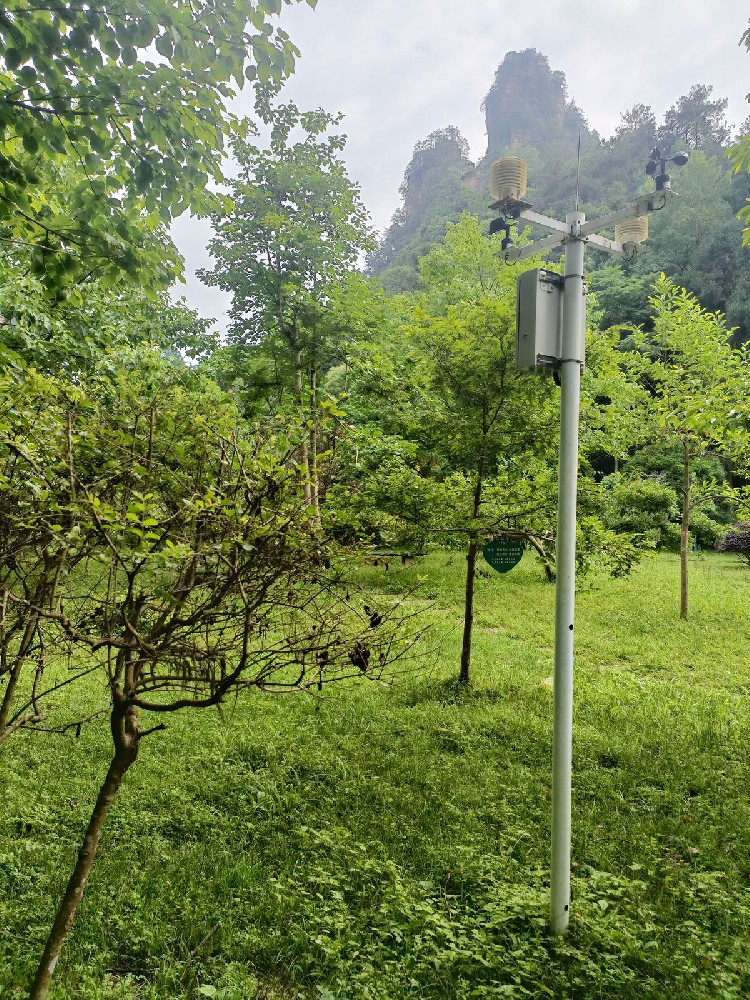
A scenic area monitoring system may compare an entrance, a wooded path and a location near moving water. These are different exposure conditions, not interchangeable samples of one park-wide atmosphere. Choose whether the purpose is representative background observation or characterization of a specific microenvironment. Label the location accordingly on maps, exports and displays.
Review possible influences from splash, mist equipment, ion-generating devices, electrical installations and nearby exhausts. An instrument placed close to a local source may correctly report that point while poorly representing the wider visitor area. Do not use the highest convenient reading as a general park value. For comparisons, preserve inlet height, exposure and measurement method across sites.
Weather context helps distinguish temporal variation from a location difference. Record temperature, humidity, wind and precipitation where relevant. A single afternoon comparison does not establish an annual ranking of locations. Plan a pilot period that includes the weather and operating conditions important to the intended use before fixing the final deployment and range.
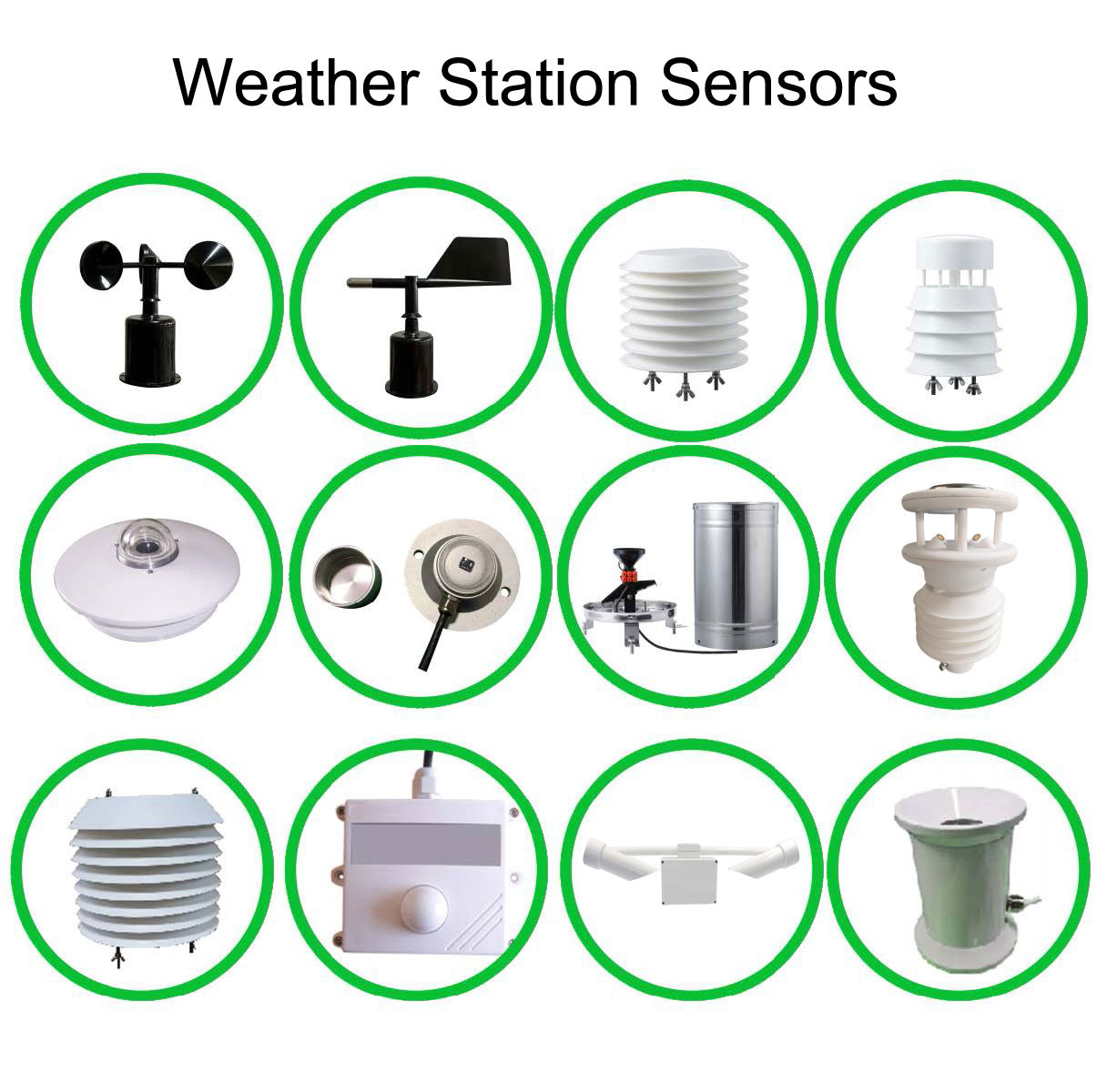
NiuBoL weather and environmental monitoring equipment can provide the station's supporting measurements and data collection. The ion counter remains a separate measurement component whose interface and performance must be specified. Do not transfer an air-temperature sensor's operating limit, protection rating or power consumption to the entire ion monitoring assembly.
The NBL-W-LBTH measures temperature, relative humidity and atmospheric pressure. These channels provide environmental context for the ion measurement; they do not measure ion concentration or identify the ions' chemical composition.
| NBL-W-LBTH parameter | Specification |
|---|---|
| Temperature | -40 to 80 C; accuracy +/-0.5 C; resolution 0.1 C |
| Relative humidity | 0-100% RH; accuracy +/-5% RH; resolution 0.1% RH |
| Pressure | 10-1200 hPa; accuracy +/-1.5 hPa; resolution 0.1 hPa |
| Supply | 12-24 V DC configuration |
| Output | RS485 Modbus RTU configuration; other outputs must be selected separately |
| Serial operation | 9600 baud, 8 data bits, no parity; respect the specified communication timing |
The complete power budget also includes the ion counter's fan, logger, modem, display and any thermal management. A public display can dominate the load. Separate its power and operating schedule from the measurement subsystem where appropriate. Solar and battery sizing needs a site-specific load and resource calculation, not a promise of continuous operation from a list of low-power sensors.
For an RS485 Modbus RTU counter, confirm the address, serial settings, function, register scaling and numeric type with the exact instrument. A common electrical interface does not guarantee a shared register layout. The PLC, RTU or data logger should store the unit, location, instrument identity, measurement time and quality state with each value.
Mobile or other telemetry transfers those records to the platform. MQTT, HTTP and application access depend on the selected gateway and server, not on an RS485 label alone. Verify local recording, reconnection and delayed-record handling. An old record arriving after an outage must keep its original measurement time instead of becoming a new observation.
Choose averaging intervals from the intended question. A short peak, a one-minute mean and an hourly mean are different results. Store enough information to distinguish them. Changing the smoothing or averaging configuration can alter a site's displayed pattern without any physical change outdoors, so record configuration changes with the data history.
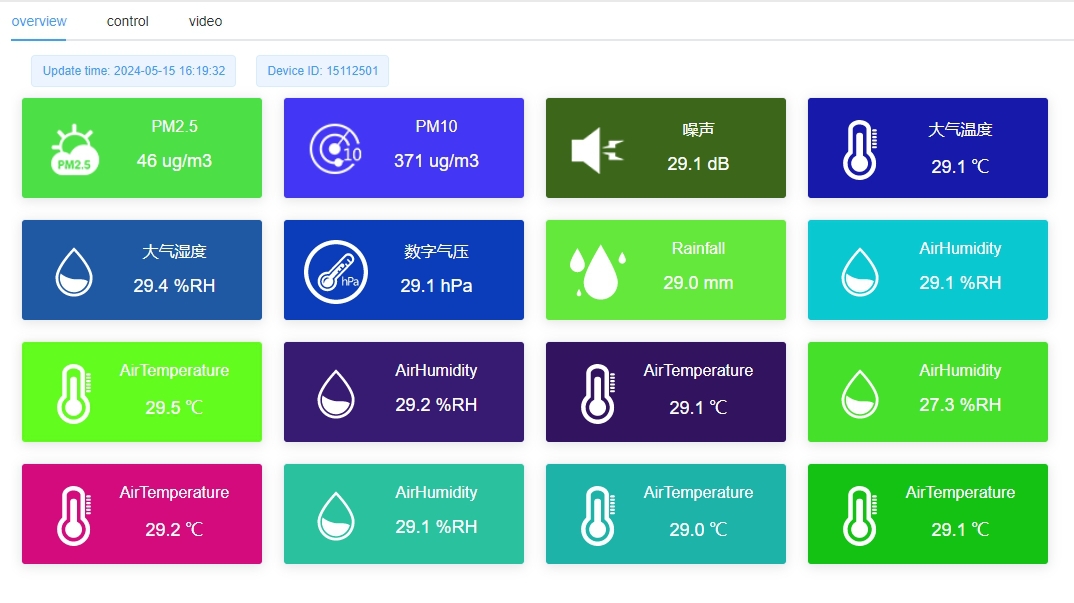
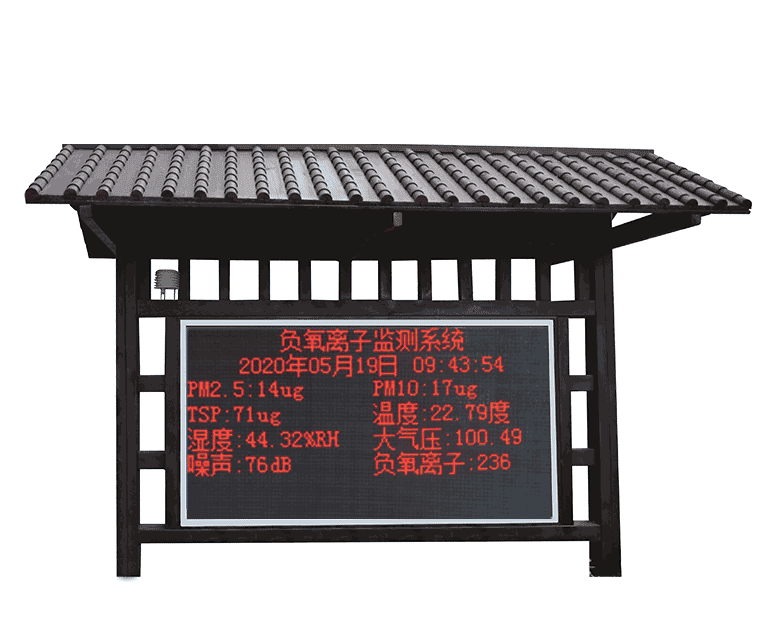
Environmental display data should identify what is being shown, where it was measured and when it was last updated. Keep an out-of-service message available. If the sample flow fails or the sensor is being cleaned, do not preserve the last attractive value as a live reading. Dashboard and outdoor-screen layouts are interfaces; an example image is not a current measurement or an assessment of that location.
Report data coverage when comparing periods. For example, 90 valid observations out of 120 expected observations give 75% coverage. A mean calculated from those 90 points may not represent the missing period, especially if the failures occurred during rain or another relevant condition. Do not fill missing counts with zero or omit the gap without indicating it.
A concentration display should not attach an unsupported health grade or rehabilitation claim. If a project requires a local classification, identify the applicable method and category rules and keep them distinct from raw measurements. A high ion count does not cancel a simultaneous particulate or ozone concern; those channels need their own interpretation.
First verify the counter's configuration, inlet operation and supported zero or reference procedure. Where comparing instruments, match their response characteristics and place them under comparable conditions without one instrument's exhaust affecting the other inlet. Apparent agreement at one concentration cannot establish performance throughout the intended range.
Then test the complete data path with known values and deliberate faults. Check disconnection, loss of sample flow where detectable, loss of internet access and recovery. Confirm that maintenance and invalid data are shown consistently on the local screen, stored record and public display. Keep the accepted configuration with the station record.
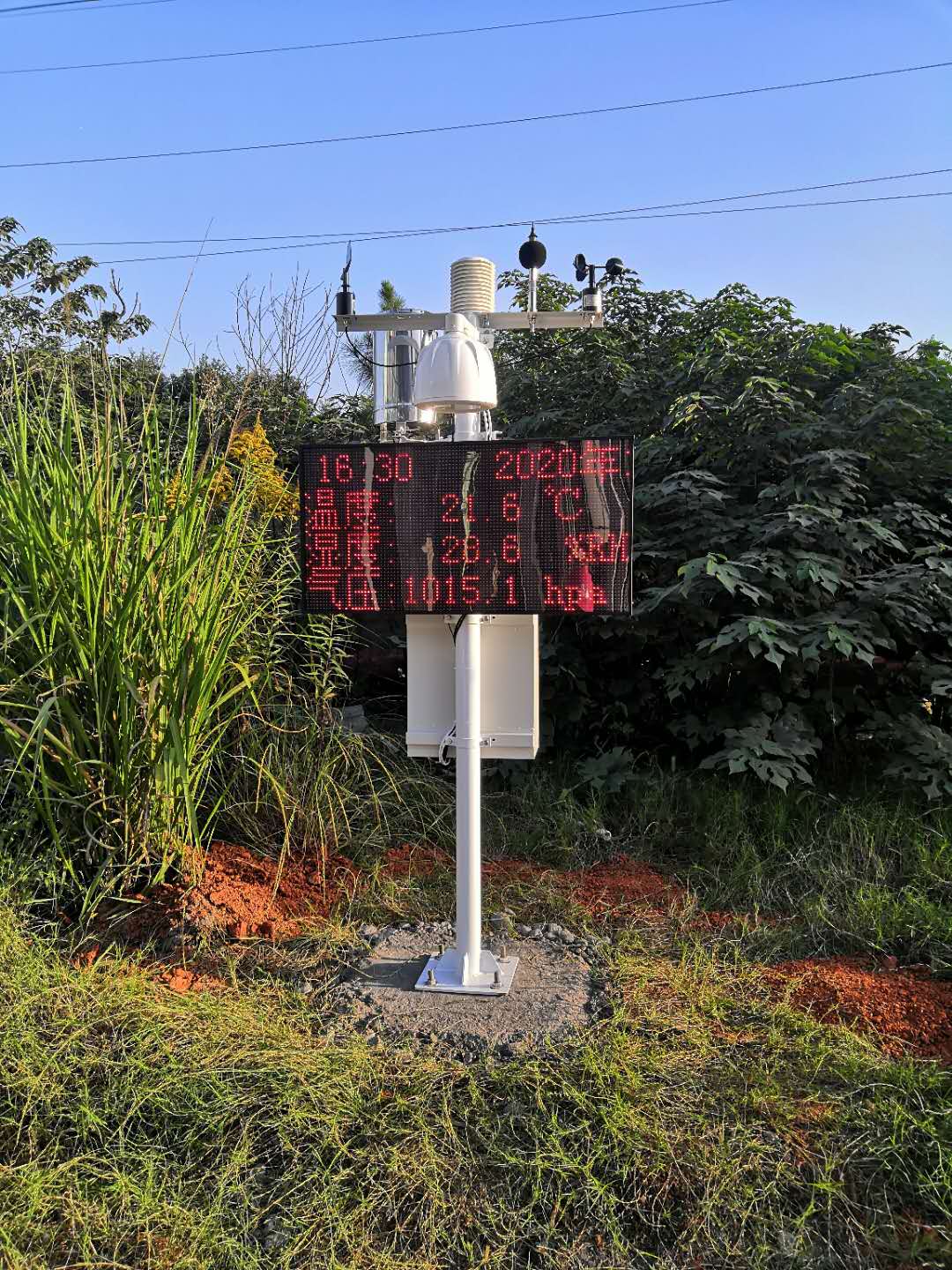
Access near a visitor path, power availability, storm exposure and the ability to inspect an inlet can determine whether a proposed location is workable. Provide safe retrieval and a service route. Set inspection intervals from observed contamination and the counter's maintenance requirements. Any service-life commitment needs defined operating conditions.
Send NiuBoL the monitoring objective, locations, required counter method, anticipated conditions, companion channels and existing platform interface. Separate the counter, weather sensors, logger, communications, enclosure, display and commissioning in the quotation. Confirm which software functions and export interfaces are included instead of assuming a complete cloud service or SDK with every hardware order.
No. It is a defined electrical-ion measurement. Particulate and gas pollutants require their own measurements, methods and averaging rules. Do not convert ion count into an overall safety or health rating.
Their mobility response, flow, inlet geometry or quality condition may differ. Compare those characteristics and sampling exposure before interpreting disagreement as a calibration fault.
Only when that microenvironment is the intended subject and exposure is suitable for the instrument. Such a reading is not automatically representative of the entire scenic area, and splash or condensation can affect operation.
Not without evaluating its effect on the measured population and flow. Use a validated inlet design; a protective addition can also remove or alter what reaches the collector.
No. Register definitions, numeric interpretation and upstream gateway functions must also match. Demonstrate the value, timestamp and fault state through the entire system.
Show the unavailable or stale state and the time of the last valid observation. Do not label a retained historic value as current or replace a missing measurement with zero.
Negative oxygen ion monitoring is useful when the counted population, observation location and data quality are defined. Match the counter to the measurement task, integrate companion weather channels separately and verify public display behavior during faults. NiuBoL can help scope the station architecture around those requirements without treating an ion count as a health certificate.
References: WHO global air-quality guideline scope; research on atmospheric negative cluster ions; ion counter measurement and response characterization.
Prev:Ultrasonic Meteorological Station: Integrated Head vs Separate Sensors
Next:Highway Meteorological Monitoring Station: RWIS Data Integration Before V2X
Related recommendations
Sensors & Weather Stations Catalog
 Agriculture Sensors and Weather Stations Catalog-NiuBoL.pdf
Weather Stations Catalog-NiuBoL.pdf
Agriculture Sensors Catalog-NiuBoL.pdf
Water Quality Sensor Catalog-NiuBoL.pdf
Related products
 Combined air temperature and relative humidity sensor
 TDR Soil Moisture & Temperature Sensor for irrigation| RS485 |4-20mA| NBL-S-THR
 Soil pH sensor RS485 soil Testing instrument soil ph meter for agriculture |NBL-S-PH
 Wind Speed sensor Output Modbus/RS485/Analog/0-5V/4-20mA
 Tipping bucket rain gauge for weather monitoring auto rainfall sensor RS485/Outdoor/stainless steel
 Pyranometer Solar Radiation Sensor 4-20mA/RS485

Screenshot, WhatsApp to identify the QR code
WhatsApp number:+8615367865107
(Click on WhatsApp to copy and add friends)

