





— Blogs —
—Products—
 Consumer hotline +8618073152920
WhatsApp:+8615367865107
Address:Room 102, District D, Houhu Industrial Park, Yuelu District, Changsha City, Hunan Province, China
Product knowledge
Time:2025-01-14 10:43:56 Popularity:1660
Insect trap louvers and impact screens influence which material reaches the collection path, but they are not a species-identification system. A physical opening may restrict some objects while also changing insect entry. For a monitoring project, evaluate the actual captured sample and identification process instead of accepting a claim that the housing admits pests and excludes all non-target insects.
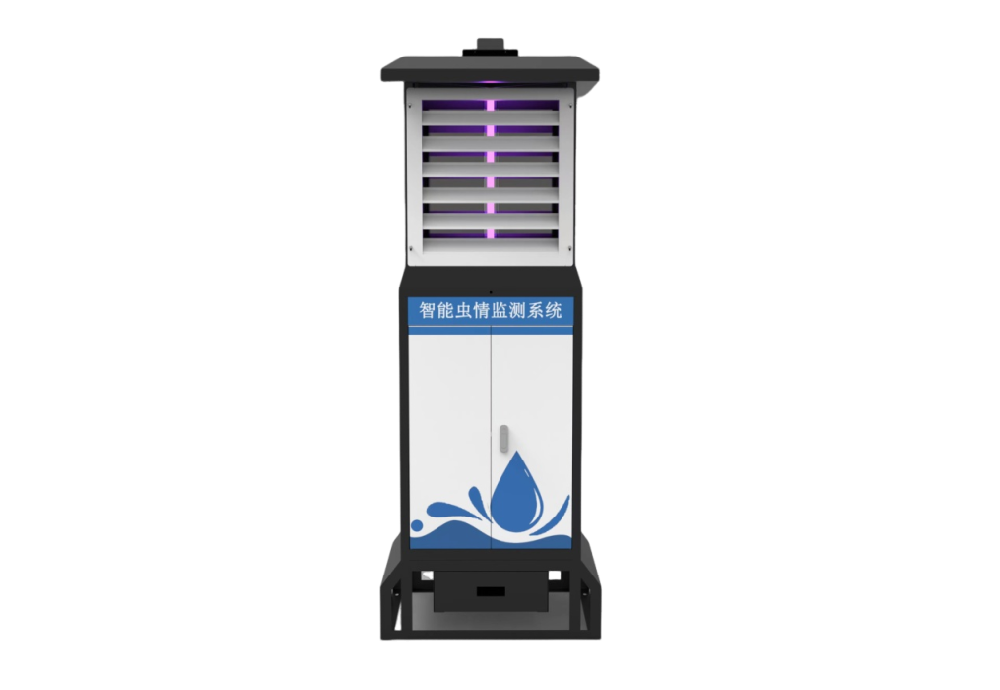
A light trap has an attraction stage, a physical entry path and a later interpretation stage. An insect must respond to the attraction source, reach and enter the apparatus, and remain suitable for observation. A software label concerns interpretation of the collected sample. It does not prove that the entry structure selected only the intended pest.
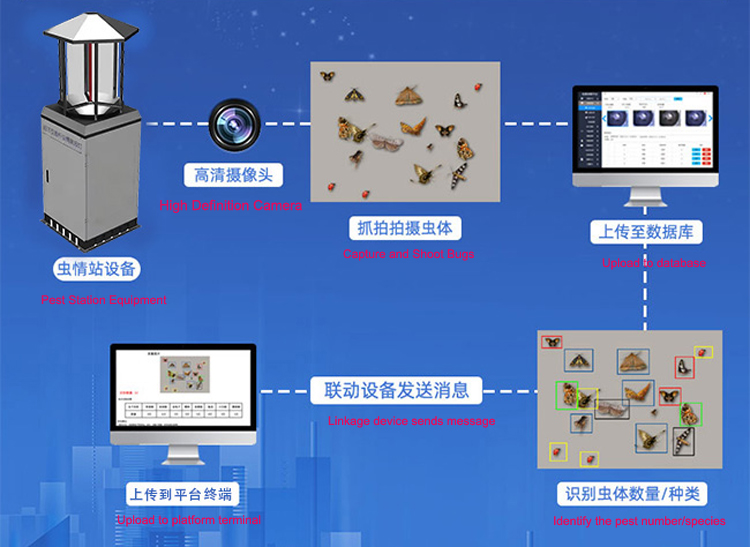
The NiuBoL NBL-IoT-SRPMS remote insect monitoring terminal combines attraction, specimen processing and imaging. Its camera allows a reviewer to inspect what reached the sample. The housing and sample-handling components should support that observation task; they cannot establish species identity from an object's ability to pass through an opening.
Leaves and other debris are not attracted to light in the biological sense. They can enter an exposed apparatus through wind, handling or surrounding vegetation. Non-target insects may respond to light and enter with target insects. These are different contamination routes and need different checks.
| Component or stage | Useful function to examine | Limit of the conclusion |
|---|---|---|
| Louvers or an entry guard | Actual openings, obstruction, water and debris routing | Opening size alone does not certify taxonomic selectivity |
| Impact surface | Whether insects contacting it reach the intended collection path | Contact is not proof of capture, specimen retention or identification |
| Funnel and collection route | Clear passage and delivery to the processing stage | A partially blocked path can change the sample while the lamp remains lit |
| Sample presentation | Readable specimens without excessive overlap or carryover | A photograph represents presented material, not the whole field population |
| Classification | Target-specific labels checked against inspectable images | Image recognition cannot identify an insect that never entered the sample |
Inspect the delivered assembly rather than inferring dimensions or performance from a product photograph. A buyer who needs a specific size-exclusion function should request the opening geometry, target life stage and a relevant test. A general description of protective louvers is not sufficient evidence for that requirement.
Adding mesh, narrowing an opening or covering an impact surface may appear to reduce unwanted material. It may also obstruct light, alter approach and entry, retain insects elsewhere or interfere with drainage. A cleaner collection plate after a modification is not automatically a more representative sample.
Use only the approved arrangement for the purchased version unless an alternative is specifically assessed. If a modification is necessary, record its effective date and compare usable samples before and after it. Keep target catches, non-target catches and unreadable material separate during that evaluation.
A change can matter even when the camera and software are unchanged. A monitoring network that combines guarded and unguarded entry designs may be comparing different sampling conditions. For a repeat order, confirm the physical configuration as well as the electronics and software version.
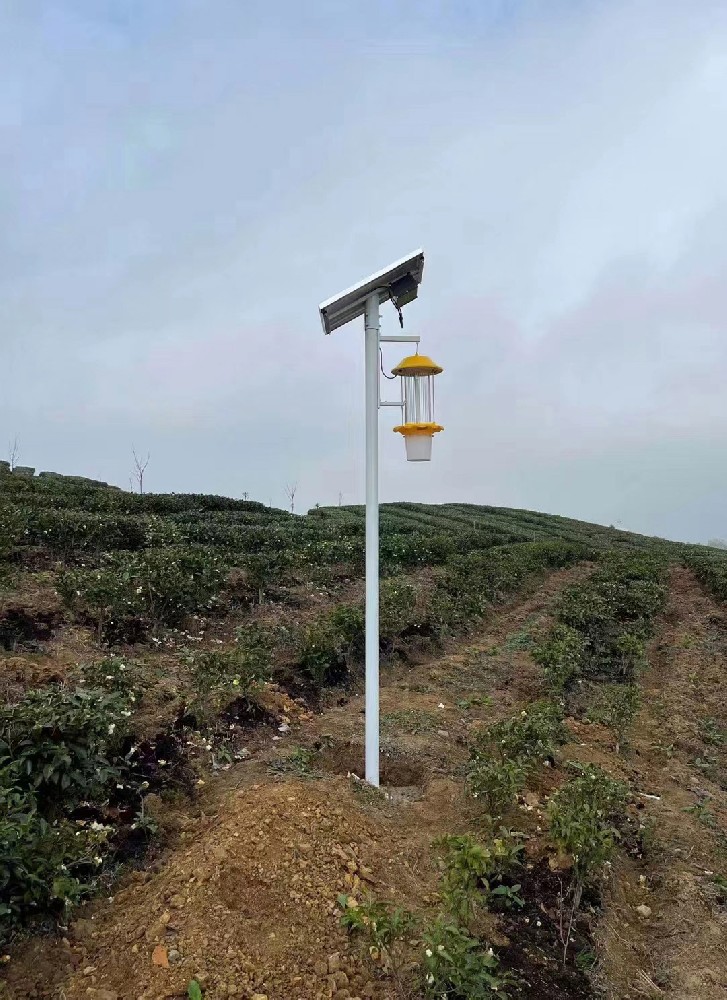
A solar electric-grid insect trap attracts insects for physical capture and control. A remote monitoring cabinet processes samples for imaging and reporting. Their appearance, solar supply or shared use of a lamp does not make their collection mechanisms equivalent.
For projects using both, identify each asset separately. Do not treat the contents of a control lamp's collection container as if they were images produced by the monitoring terminal. Likewise, a large catch in a control lamp does not validate the recognition rate or sampling coverage of the nearby camera system.
For the NBL-IoT-SRPMS configuration, the attraction source is 18 W at 365-395 nm and the camera is specified at 12 megapixels. Those values describe two components; neither establishes the proportion of target insects in a field sample. Verify that the ordered configuration matches the intended capture and imaging task.
A practical review distinguishes target specimens, non-target specimens, debris and material that cannot be classified. Keep the original images and the review decision. If the denominator changes between reports, a percentage may improve even though the number of usable target observations has not.
For example, excluding all unreadable specimens from a recognition calculation answers a different question from reporting how much of the entire collected sample was usable. Ask for both the review scope and the count behind a claimed result. No fixed recognition or exclusion percentage should be inferred from the presence of a shutter.
Ask NiuBoL to confirm the entry assembly, processing arrangement and cleaning access for the ordered terminal. Provide photographs of nearby vegetation and the proposed installation position, plus the target pest and life stage. Where non-target capture is a concern, include specimen review in the field evaluation.
For integration, distinguish numeric status or counts from image access. A PLC or RTU connection through a supported RS485 Modbus RTU implementation does not by itself deliver photographs. Confirm the configured 4G/Ethernet or platform image route and demonstrate that the receiving application can retrieve the corresponding sample.
No such conclusion follows from a louvered structure alone. Physical entry and species identity are different properties. Review actual target and non-target catches under the intended field conditions.
Not without checking the equipment arrangement and effect on sampling, light exposure and drainage. First identify the entry route and follow the model's service procedure.
It establishes that some presented material was photographed. Capture performance also depends on attraction, entry and retention, which must be evaluated separately.
Not where the project requires dated images and reviewed identifications. The capture method and delivered observation record need to match the monitoring specification.
Record the entry configuration, target pest, operating period, sample images and separate counts of target, non-target and unreadable material. Note cleaning and configuration changes that affect comparability.
Insect trap louvers and impact screens are parts of a capture path, not proof of selective pest identification. Assess their physical function, retain inspectable samples and keep entry performance separate from classification results. This gives the buyer a testable monitoring requirement rather than an unsupported filtering claim.
Prev:Rainfall Monitoring Station Functions and Application Scenarios
Next:Ultrasonic wind speed and direction sensors and their applications
Related recommendations
Sensors & Weather Stations Catalog
 Agriculture Sensors and Weather Stations Catalog-NiuBoL.pdf
Weather Stations Catalog-NiuBoL.pdf
Agriculture Sensors Catalog-NiuBoL.pdf
Water Quality Sensor Catalog-NiuBoL.pdf
Related products
 Combined air temperature and relative humidity sensor
 TDR Soil Moisture & Temperature Sensor for irrigation| RS485 |4-20mA| NBL-S-THR
 Soil pH sensor RS485 soil Testing instrument soil ph meter for agriculture |NBL-S-PH
 Wind Speed sensor Output Modbus/RS485/Analog/0-5V/4-20mA
 Tipping bucket rain gauge for weather monitoring auto rainfall sensor RS485/Outdoor/stainless steel
 Pyranometer Solar Radiation Sensor 4-20mA/RS485


Screenshot, WhatsApp to identify the QR code
WhatsApp number:+8615367865107
(Click on WhatsApp to copy and add friends)

