





— Blogs —
—Products—
 Consumer hotline +8618073152920
WhatsApp:+8615367865107
Address:Room 102, District D, Houhu Industrial Park, Yuelu District, Changsha City, Hunan Province, China
Product knowledge
Time:2026-01-17 11:04:27 Popularity:713
A wireless level monitoring system for multiple sites is useful when each reading reaches the person who can act on it. A common dashboard does not create a common level datum, a shared alarm threshold or a maintenance response. For a NiuBoL tank, well or drainage network, define point identity, alarm ownership and service procedures before treating many connected instruments as one operational system.

Give each point a stable identity linked to the physical asset, sensor, observation reference and responsible team. A tank name alone may be ambiguous when an instrument is moved or replaced. Record the units, span, probe elevation, relevant operating limits and whether a displayed number means water depth, remaining storage or elevation above a reference.
Keep location and measurement meaning separate. Two tanks can both display 3 m while having different maximum levels, volumes and overflow risks. A well may report depth below ground, where a larger number means a lower water surface; a tank depth channel normally increases as water rises. The platform must preserve that convention before applying a common high/low alarm rule.
Start with one pilot group representing the difficult sites, not only the most accessible tank. Include a point with poor access or a different receiving interface where relevant. Set the operating procedure on those real differences, then expand only after the responsible staff can identify a measurement, a fault and the required response without relying on the installer.

| System state | Operational meaning | Required handling |
|---|---|---|
| Valid high or low level | A current accepted observation crossed the site's limit. | Notify the assigned team and follow the agreed response. |
| Stale measurement | The latest accepted value is older than the permitted age. | Expose the last-good time and investigate acquisition or delivery. |
| Sensor or acquisition fault | The input is missing, invalid or rejected. | Do not convert the failure to a physical zero or normal level. |
| Planned maintenance | Readings may be disturbed or unavailable during an authorized task. | Mark the interval, limit suppression and verify restoration. |
| Communication recovery | Current and historical records may arrive together. | Preserve measurement time and do not present delayed events as new observations. |
Acknowledgement means someone has received an alarm, not that the tank level is safe. Define when an alarm clears, when it escalates and who handles an unacknowledged event. Keep a continuing process problem visible after a notification is acknowledged. Avoid repeated messages that provide no new information, but do not suppress a continuing condition indefinitely to reduce message volume.
Choose thresholds from each asset's usable operating range and response time. Include any persistence or hysteresis required to prevent nuisance cycling, then demonstrate that it does not hide a rapid event. The same percentage-of-span threshold can correspond to different physical consequences at different tanks. Make the physical limit and the intended response explicit.

A multi-site network can combine suitable wired sensors with selected RTUs or wireless terminals. A hydrostatic probe, an analog split transmitter and a radio head are different order lines. The NiuBoL level monitoring range can support different measurement arrangements; each site still needs a defined interface and receiving-system configuration.
| Site specification | What must be recorded | Why the fleet needs it |
|---|---|---|
| Range and uncertainty | Selected span, required absolute allowance and level reference. | Distinguishes an out-of-range input from a changed process condition. |
| Acquisition interface | Analog-loop mapping or exact digital register and scale. | Allows a replacement to retain the correct engineering value. |
| Supply and protection | Actual terminal/probe limits, battery or power arrangement, component ratings. | Prevents one model's voltage or ingress grade being applied to every point. |
| Communications service | Modem/operator, endpoint, credentials and responsibility. | Separates site failures from expired or incorrect provisioning. |
| Data timing | Sampling, storage, upload and maximum acceptable measurement age. | Makes stale-data detection reflect the actual observation service. |
Do not assume that wireless transmission removes every cable or makes a hazardous installation safe. Wetted materials, field wiring, area approvals and service procedures remain model- and site-specific. Confirm these requirements before procurement rather than accepting a general industrial enclosure description as evidence.
Assign an operational owner and a maintenance owner for each point. The first decides what to do about the water condition; the second investigates sensor, power or communications faults. These roles can be the same person at a small site, but should not disappear into an unowned group inbox as the network expands.
Make response coverage practical. A daytime-only team cannot provide an overnight reaction merely because the platform can send messages at any time. Agree duty periods, escalation and the supported communication channels. SMS, email, applications and other notifications depend on the actual service; verify the selected route rather than promising every channel as standard.
Separate observation from automatic control. If pumps or valves are included, define the local controller, interlocks, manual operation and behaviour during stale data or backhaul loss. A cloud dashboard should not silently replace an existing local protective function. Test the control arrangement with its responsible contractor, not only with the software account administrator.

Link each service event to the point identity, time and action: cleaning, probe movement, replacement, span change, battery service or communications work. Moving a submerged probe can change its level reference; replacing a terminal can change timestamps or upload intervals. A maintenance note should distinguish those changes from the water's behaviour.
Use a bounded maintenance state when measurements are disturbed. Record who enabled it, why and when normal evaluation should resume. After the task, compare the physical reference and local value, then confirm that the platform receives current records. Closing a work order without testing the resumed measurement leaves a gap between administrative completion and operating readiness.
Define role permissions for viewing, acknowledging and changing configuration. A user responsible for alarm response need not have access to alter span or delete history. Confirm the actual platform's supported roles and audit record. Do not infer account isolation or encryption from a general IoT description; include the required access and credential procedures in acceptance.
Review measurement availability, unresolved stale points, unacknowledged alarms, repeated false alarms and service restoration time. Keep planned outages separate from unexpected failures. A high percentage of online gateways can coexist with stale sensor channels, so assess accepted observations rather than connection status alone.
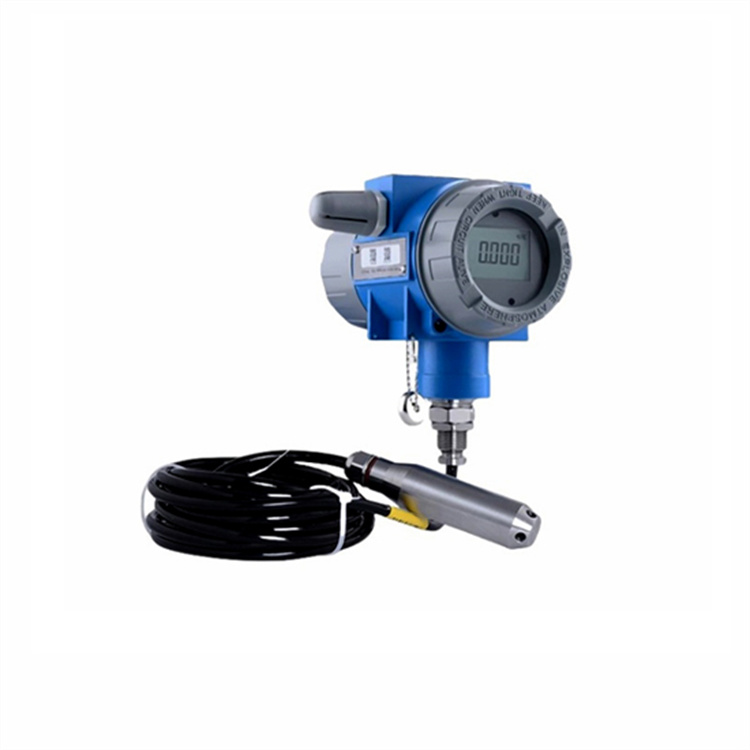
For a wired option within the network, the NiuBoL SMP4601 split-type transmitter provides 4-20 mA and local indication. Treat it as that sensor/input arrangement, not proof of built-in 4G, storage or cloud functions. Keep its point meaning consistent with the rest of the fleet even if the telemetry hardware differs.
For an NiuBoL system proposal, provide the asset list, site interfaces, operational limits, required availability, response coverage and existing platform. Request a pilot, a point-by-point acceptance schedule and a handover record for staff. Compare installed equipment, subscriptions, service access and configuration work on the same scope; removing long signal cables does not establish a universal project saving.
Only where the units, datum, operating limits and consequences justify it. A common number or percentage can mean different physical conditions at different assets. Define thresholds and responses per site.
No. Check the age and validity of the latest measurement. The gateway can remain online while a sensor, input loop or sample acquisition has failed.
Acknowledgement and return to normal are different states. Keep the continuing condition visible and use the agreed clearing and escalation rules.
Standardize where the liquid, range, interface and environment allow it. Do not force one sensor into incompatible media or pressure conditions merely to reduce stock variety.
Point identity, span, units, datum, acquisition conversion, clock, current server records and alarms. A replacement that uploads successfully can still produce the wrong operational meaning.
Credible measurements, responsible alarm response, visible fault states, controlled configuration and repeatable maintenance recovery at representative sites. A map full of connected points is not a substitute for those tests.
A wireless level monitoring system should turn distinct site observations into clear operational responsibilities. Use NiuBoL sensing arrangements appropriate to each asset, preserve measurement identity and timing, and test alarm and maintenance workflows with the people who will use them. A manageable network is one where staff can distinguish a water problem from a monitoring failure and restore service without losing that distinction.
Prev:Wireless Level Transmitter Commissioning: Probe to Server Checks
Next:Submersible Level Meter Troubleshooting: Drift and Missing Data
Related recommendations
Sensors & Weather Stations Catalog
 Agriculture Sensors and Weather Stations Catalog-NiuBoL.pdf
Weather Stations Catalog-NiuBoL.pdf
Agriculture Sensors Catalog-NiuBoL.pdf
Water Quality Sensor Catalog-NiuBoL.pdf
Related products
 Combined air temperature and relative humidity sensor
 TDR Soil Moisture & Temperature Sensor for irrigation| RS485 |4-20mA| NBL-S-THR
 Soil pH sensor RS485 soil Testing instrument soil ph meter for agriculture |NBL-S-PH
 Wind Speed sensor Output Modbus/RS485/Analog/0-5V/4-20mA
 Tipping bucket rain gauge for weather monitoring auto rainfall sensor RS485/Outdoor/stainless steel
 Pyranometer Solar Radiation Sensor 4-20mA/RS485


Screenshot, WhatsApp to identify the QR code
WhatsApp number:+8615367865107
(Click on WhatsApp to copy and add friends)

