





— Blogs —
—Products—
 Consumer hotline +8618073152920
WhatsApp:+8615367865107
Address:Room 102, District D, Houhu Industrial Park, Yuelu District, Changsha City, Hunan Province, China
Product knowledge
Time:2024-05-03 10:35:54 Popularity:3341
Weather station construction requires meteorological sensors, data acquisition equipment, a suitable power supply, mounting structures and protective accessories. For remote monitoring applications, communication equipment and a compatible data monitoring platform may also be required.
Building a reliable weather station involves more than purchasing instruments. Sensor selection, site conditions, installation layout, power availability and maintenance requirements all influence the quality and continuity of meteorological observations.
This guide explains the equipment required for constructing an automatic weather station, how to select an appropriate installation site, and what should be checked before commissioning the system.
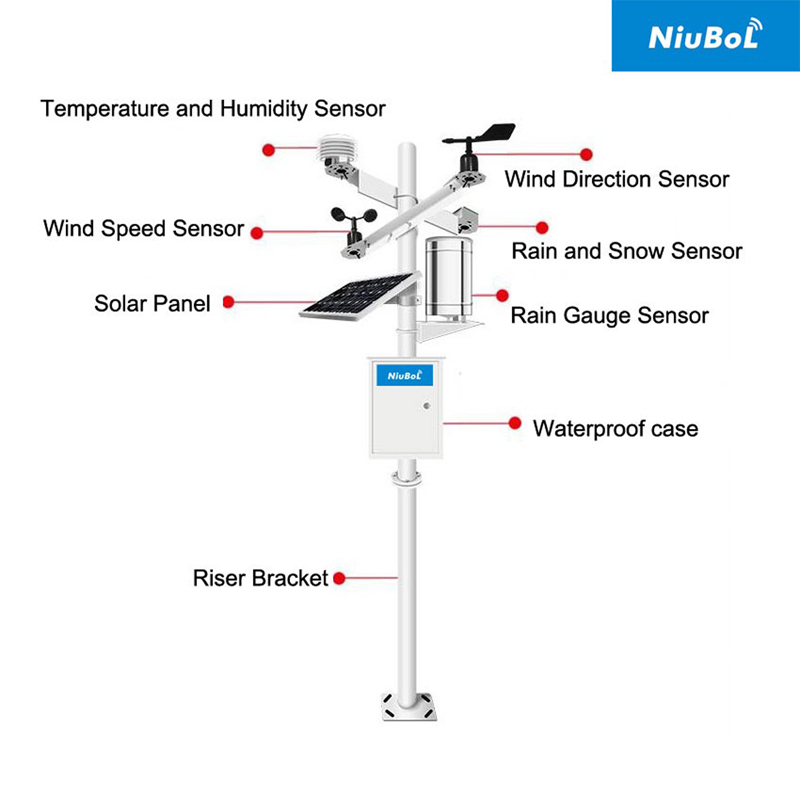
A typical automatic weather station (AWS) consists of several interconnected equipment groups. The final configuration depends on the required meteorological measurements and project objectives.
| Equipment | Main Function | Requirement |
|---|---|---|
| Meteorological Sensors | Measure selected weather parameters. | Required |
| Data Logger or RTU | Collect, process and record sensor measurements. | Required for Automatic Recording |
| Power Supply | Supply electrical power to sensors and electronic equipment. | Required |
| Mounting Pole and Brackets | Support instruments at appropriate positions and heights. | Required for Fixed Installation |
| Protective Enclosure | Protect external electronic equipment and electrical connections. | According to Installation |
| Communication Gateway | Transmit measurements to a remote platform or server. | Required for Remote Access |
| Solar Panel and Battery | Provide independent power for remote installations. | Optional |
| Grounding and Surge Protection | Reduce electrical risks associated with outdoor installations. | According to Site Requirements |
| Monitoring Software | Receive and display collected meteorological measurements. | According to Project |
Meteorological sensors are the core measurement instruments of a weather station. The selected parameters should match the intended agricultural, environmental, industrial or scientific application.
Air temperature and relative humidity sensors provide basic atmospheric observations. Outdoor installations generally require a suitable radiation shield to reduce the influence of direct sunlight while maintaining adequate airflow.
Wind speed sensors and wind direction sensors measure local wind conditions.
Mechanical and ultrasonic instruments are available for different measurement requirements, installation environments and maintenance preferences.
Rain gauges measure precipitation for agricultural irrigation, hydrological monitoring and meteorological observation.
Select the rainfall measurement technology according to the required resolution, rainfall intensity range, environmental conditions and maintenance requirements.
Barometric pressure sensors measure atmospheric pressure, commonly expressed in hectopascals (hPa).
Station pressure and pressure adjusted to sea level are different quantities and should be identified correctly in the monitoring system.
Pyranometers and solar radiation sensors provide irradiance measurements for agricultural meteorology, climate research and photovoltaic performance monitoring.
For solar energy projects, the instrument classification, measurement plane and calibration requirements should be confirmed before purchasing.
Depending on the application, a weather station may also include soil moisture, soil temperature, leaf wetness, CO₂, visibility, snow depth and water level sensors.
These additional measurements are not required for every weather station. They should be selected according to the actual monitoring objectives.
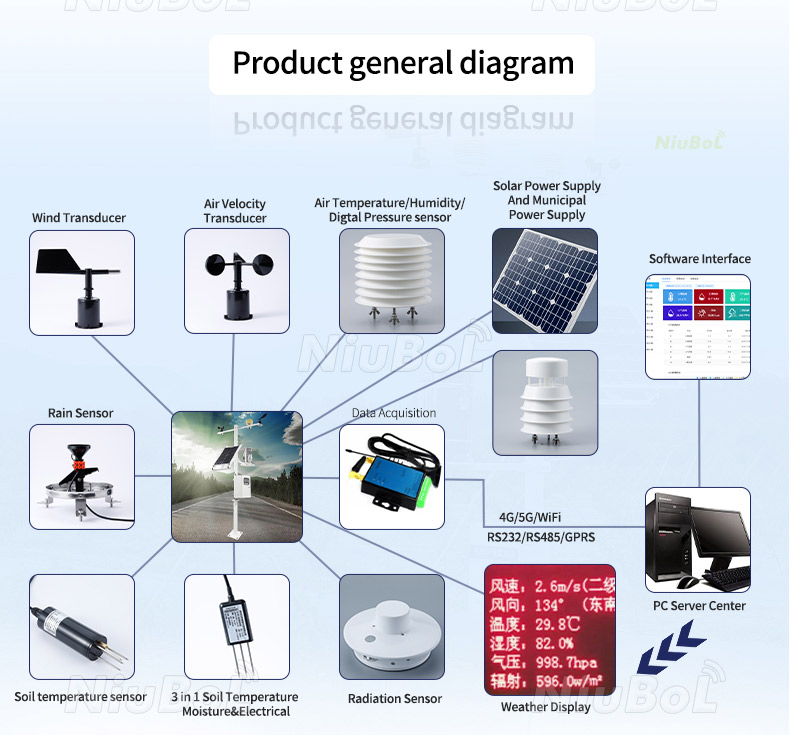
A data logger or RTU collects measurements from connected meteorological sensors and provides data for local recording or remote transmission.
Industrial meteorological sensors commonly use RS485 Modbus RTU, pulse signals or selected analog output interfaces such as 4–20 mA and 0–5 V.
The acquisition equipment must support the actual output interfaces, measurement data formats and number of connected instruments.
For remote monitoring, suitable communication options may include:
4G cellular communication for remote locations with mobile network coverage.
Ethernet communication for sites with wired network infrastructure.
Wi-Fi communication for installations within suitable wireless network coverage.
MQTT or HTTP data transmission to compatible remote servers, depending on the selected gateway.
Data storage, recovery after network interruptions and automatic data quality control depend on the specific data logger or software configuration.
The standard NiuBoL cloud platform supports remote monitoring data visualization. SMS or email alarms and automatic equipment control require separately configured external systems.
Explore NiuBoL IoT communication devices and data acquisition equipment for compatible system configurations.
A stable power supply is necessary for reliable operation of electronic sensors, data acquisition equipment and communication devices.
Weather stations installed near buildings or industrial facilities may use a suitable mains-powered DC supply. Remote agricultural and environmental monitoring stations often use solar power.
A typical solar-powered configuration includes a solar panel, rechargeable battery, solar charge controller and suitable protective enclosure.
Solar panel capacity and battery size should be determined according to total equipment power consumption, local sunlight conditions and the required operating autonomy.
Other weather station installation accessories may include:
Mounting poles, crossarms and sensor brackets.
Radiation shields for temperature and humidity sensors.
Outdoor electrical enclosures and cable glands.
Mounting foundations and structural fasteners.
Grounding equipment and appropriate surge protection devices.
A weatherproof enclosure provides environmental protection within its specified rating. It does not independently provide complete protection against lightning strikes or electrical surges.
Weather station siting should be determined by the intended observation objectives. A location suitable for general meteorological observations may differ from a location intended to monitor crop microclimates, roadside weather or photovoltaic equipment.
For conventional outdoor meteorological observations, select a location that represents the surrounding environment as closely as possible.
Avoid unusual local conditions that could distort measurements unless those conditions are specifically part of the monitoring objective.
Buildings, trees, fences and other obstacles can influence wind measurements, rainfall collection and solar irradiance observations.
Required separation distances depend on the sensor type, obstacle characteristics and applicable installation standards.
Wind sensors generally require adequate exposure to airflow, while rain gauges require suitable precipitation exposure without excessive obstruction.
For representative ambient temperature measurements, avoid unnecessary exposure to exhaust vents, heated surfaces and artificial heat sources.
For environmental pollution monitoring projects, installation near industrial or traffic emission sources may be intentional. Site selection should therefore reflect the specific measurement objective.
Elevation, slopes, valleys and surrounding terrain can influence meteorological observations.
A higher elevation does not automatically provide more accurate measurements. Select a site that is representative of the intended monitoring area and record relevant installation information.
Before constructing a remote weather station, confirm the available solar exposure, cellular network coverage, equipment security and maintenance accessibility.
Remote locations should be evaluated for seasonal access restrictions and environmental conditions that may affect long-term operation.
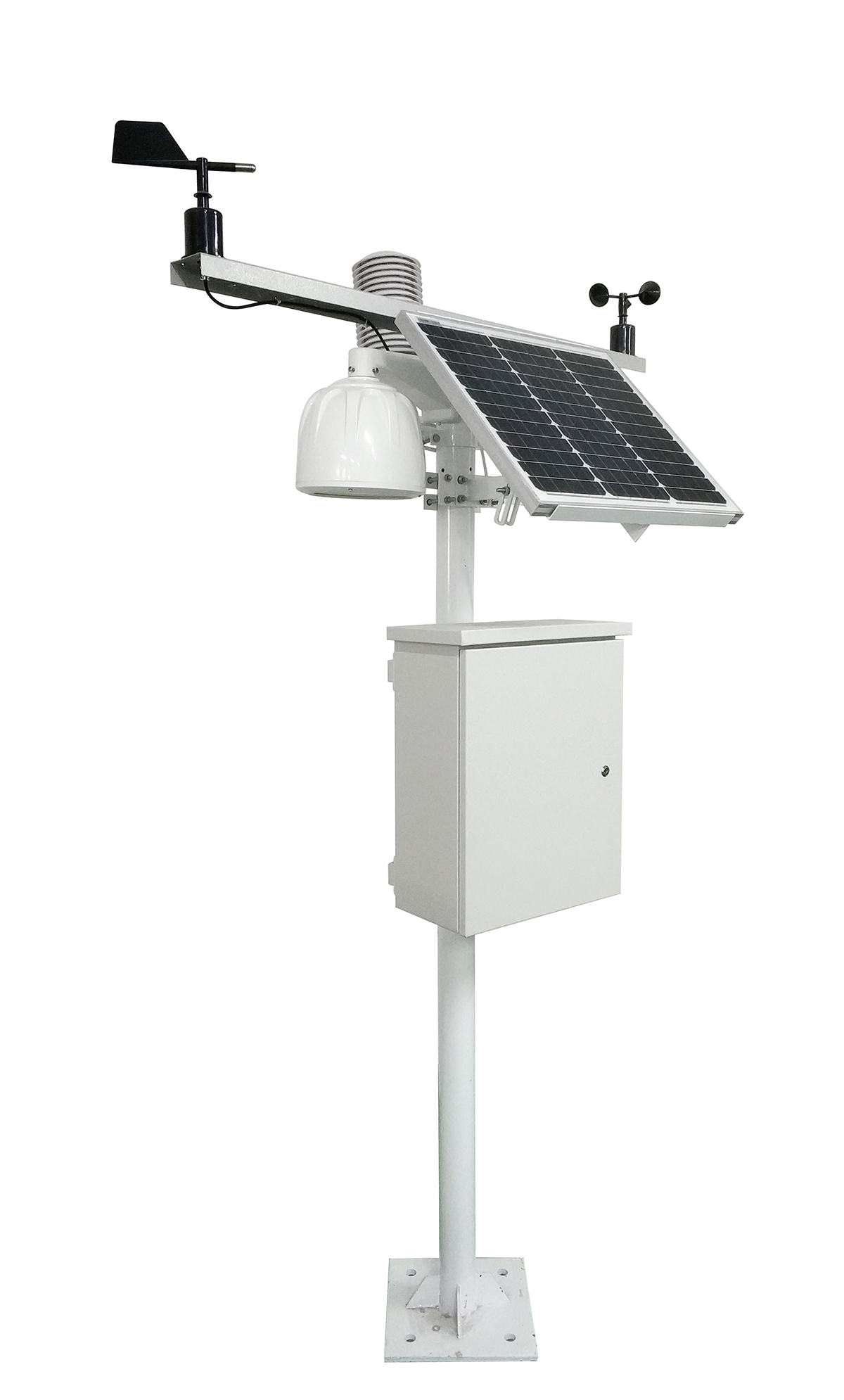
Different meteorological instruments require different installation positions and exposure conditions.
| Instrument | Installation Consideration |
|---|---|
| Temperature and Humidity Sensor | Install with suitable radiation protection and airflow at a height appropriate to the monitoring objective. |
| Wind Sensor | Provide unobstructed airflow and correctly align the direction reference. |
| Tipping Bucket Rain Gauge | Install on a stable, level mounting surface with suitable precipitation exposure. |
| Solar Radiation Sensor | Avoid unwanted shading and align the instrument with the required measurement plane. |
| Atmospheric Pressure Sensor | Protect the instrument while maintaining appropriate atmospheric pressure communication. |
| Soil Moisture Sensor | Install at representative root-zone depths with adequate soil contact. |
Installation heights and obstacle clearance requirements should follow the applicable meteorological observation standards, instrument specifications and project requirements.
For example, conventional meteorological wind observations commonly use a 10 m reference height, while agricultural crop-level monitoring may require different measurement heights.
A general-purpose agricultural weather station should not automatically be considered compliant with every national or international meteorological installation standard.
| Application | Typical Measurement Configuration |
|---|---|
| Agricultural Weather Station | Air temperature, humidity, wind, rainfall, solar radiation and optional soil moisture. |
| Hydrological Station | Rainfall, water level and optional water flow monitoring. |
| Solar PV Weather Station | GHI or POA irradiance, ambient temperature, module temperature and wind. |
| Industrial Weather Station | Wind, temperature, humidity, rainfall and other site-specific environmental measurements. |
| Meteorological Research Station | Instruments selected according to research objectives, measurement uncertainty and calibration requirements. |
These configurations are general selection references rather than fixed equipment packages. Additional accessories, communication devices and power systems should be selected according to the actual installation.
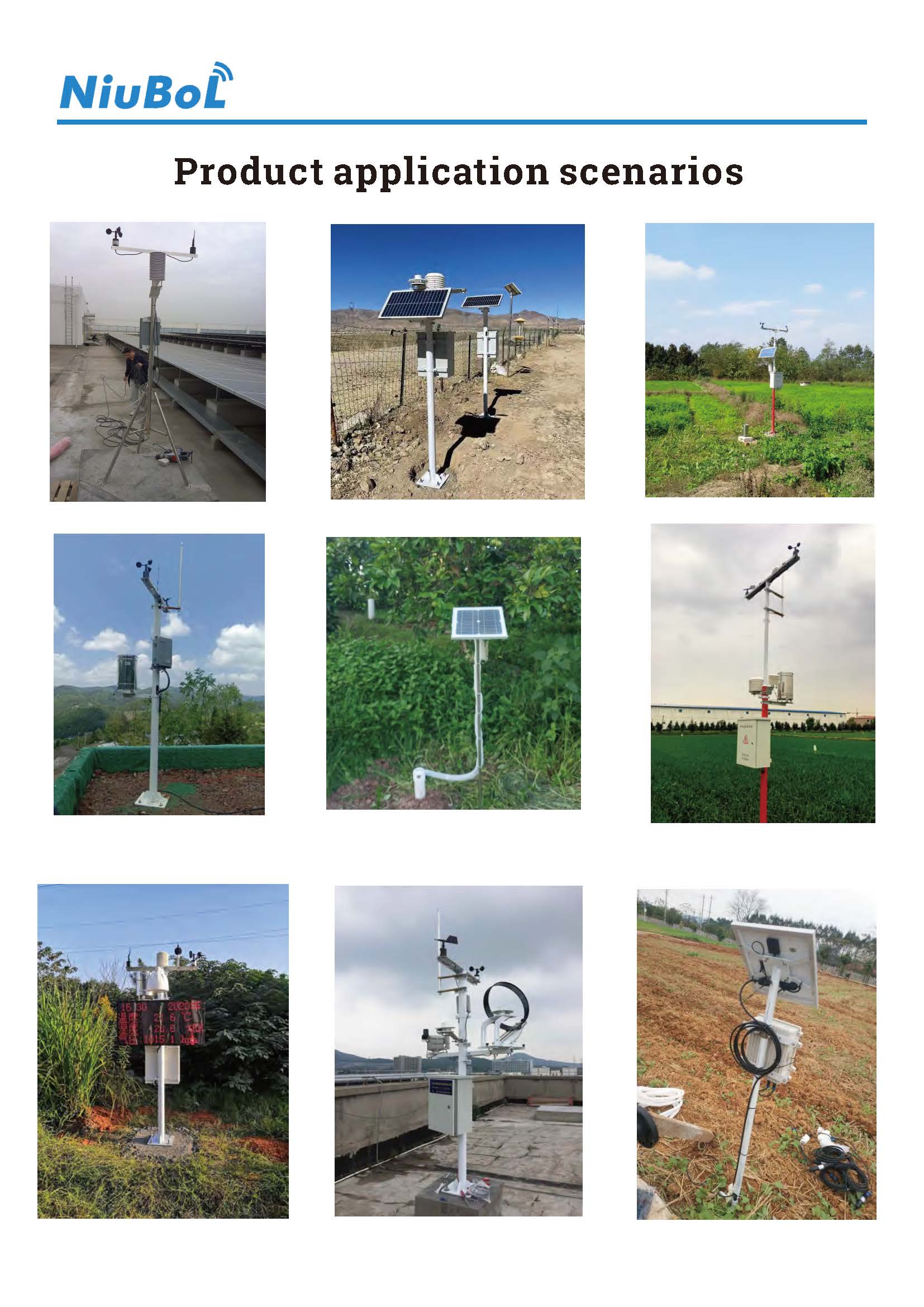
After equipment selection and site preparation, the station should be installed and checked before routine monitoring begins.
Confirm the equipment list and supplied sensor models.
Prepare the mounting foundation and structural supports.
Install the sensors at their specified positions and orientations.
Connect the power supply, signal cables and appropriate grounding equipment.
Configure sensor addresses, communication settings and acquisition intervals.
Verify individual sensor readings and measurement units.
Test local data recording and remote transmission, where applicable.
Inspect enclosure sealing, cable protection and mounting stability.
Record the installation conditions and establish a maintenance schedule.
Commissioning should include checks for missing measurements, incorrect data scaling and communication interruptions.
For larger projects, a representative pilot installation can help evaluate system performance before deploying additional monitoring stations.
A basic automatic weather station requires selected meteorological sensors, data acquisition equipment, electrical power and suitable installation accessories. Remote monitoring also requires compatible communication equipment.
Yes. A suitably configured solar panel, rechargeable battery and charge controller can supply compatible weather monitoring equipment.
There is no single installation height suitable for every sensor and application. Wind, temperature, rainfall and radiation instruments have different installation requirements that should follow the relevant observation objectives and standards.
Yes, provided the data logger supports the sensor interfaces, communication protocols, available input capacity and power requirements.
The required space depends on the number of instruments, mounting structures, surrounding obstacles and applicable observation requirements. A compact weather station may require less installation space than a station with separately positioned instruments.
NiuBoL supplies meteorological sensors, data acquisition equipment, communication devices, solar power accessories and mounting equipment. The final supply scope can be configured according to project requirements.
NiuBoL provides automatic weather stations and meteorological monitoring equipment for agricultural, hydrological, environmental, industrial and renewable energy projects.
For equipment selection and project budgeting, please provide the installation location, required measurement parameters, number of stations, available power supply, communication requirements and any applicable technical standards.
Planning to construct a weather station or expand an existing monitoring network? Contact NiuBoL for equipment recommendations, system configuration, technical documentation and a project-specific quotation.
Related recommendations
Sensors & Weather Stations Catalog
 Agriculture Sensors and Weather Stations Catalog-NiuBoL.pdf
Weather Stations Catalog-NiuBoL.pdf
Agriculture Sensors Catalog-NiuBoL.pdf
Water Quality Sensor Catalog-NiuBoL.pdf
Related products
 Combined air temperature and relative humidity sensor
 TDR Soil Moisture & Temperature Sensor for irrigation| RS485 |4-20mA| NBL-S-THR
 Soil pH sensor RS485 soil Testing instrument soil ph meter for agriculture |NBL-S-PH
 Wind Speed sensor Output Modbus/RS485/Analog/0-5V/4-20mA
 0.2mm Tipping Bucket Rain Gauge for Weather & Hydrology | NiuBoL
 Pyranometer Solar Radiation Sensor 4-20mA/RS485


Screenshot, WhatsApp to identify the QR code
WhatsApp number:+8615367865107
(Click on WhatsApp to copy and add friends)

