







A data logger's outage capacity is its usable storage divided by the rate at which it writes records. Count the bytes actually stored, not sensor ports, Modbus response bytes or the size of an upload packet. Include record metadata, indexes, file allocation and event logs. Then establish whether a full store overwrites old data or stops recording.
Under the explicit packing assumptions below, 40 channels logged every five minutes produce 1,209,600 bytes in seven days: 1.2096 MB, or about 1.154 MiB. That is a calculated data volume, not a NiuBoL logger's guaranteed retention.
Measure the stored record before sizing the buffer
Configure a representative logger and collect a known number of records. Record both the file's logical size and the space it occupies on the storage device. Account for fixed file headers separately from per-record growth. If storage is a database or raw flash area, obtain its allocation and indexing rules rather than relying on a CSV export.
A communications packet and a stored record may contain different fields. A stored value may be a 32-bit number or a text string even when a sensor transmits a 16-bit register. Timestamps, device identifiers, units and quality flags may be repeated per channel or shared by a group. Failed readings may still occupy complete records.
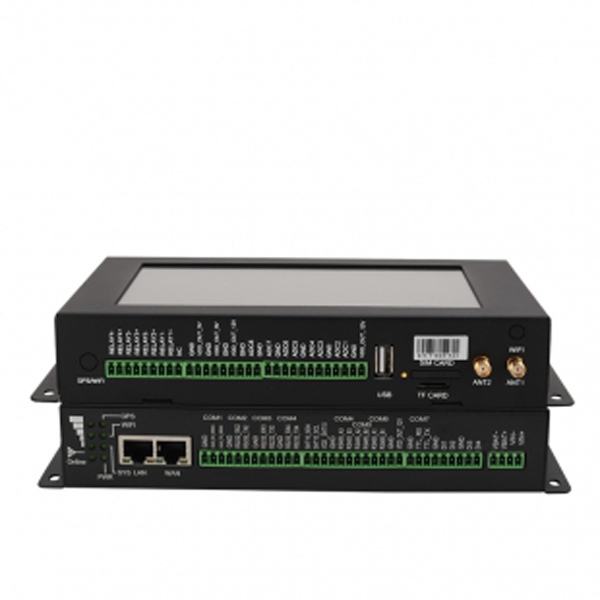
Figure 1. NiuBoL weather station data logger; external connections do not establish the stored record format.
Check at least normal logging, alarms and failed sensor polls. Text and event-driven formats have variable record sizes. A mean or high-percentile size is not a hard upper bound; reserve capacity for the credible worst-case event rate when retention must be guaranteed.
A reproducible seven-day capacity calculation
Assume, for this calculation only:
- 40 measurement channels, all logged every five minutes;
- Eight values packed into each fixed 120-byte stored frame, including its per-frame metadata;
- Seven days of uninterrupted logging without offloading;
- 2,016 scheduled logging instants in that period, excluding a separate duplicate endpoint record.
Frames per instant = ceiling(40 / 8) = 5.
Frames per day = (24 × 60 / 5) × 5 = 1,440.
Bytes per day = 1,440 × 120 = 172,800 bytes.
Seven-day data volume = 7 × 172,800 = 1,209,600 bytes.
Use the ceiling function because partially filled frames still occupy space in this fixed-frame example. With 41 channels, six frames are needed at every instant. If the actual format stores each channel separately or varies the final frame's length, replace this packing model with the measured format.
| Assumed channels | Logging interval | Frames per day | Bytes per day | Seven-day data volume |
|---|---|---|---|---|
| 8 | 5 min | 288 | 34,560 | 241,920 B |
| 40 | 5 min | 1,440 | 172,800 | 1,209,600 B |
| 41 | 5 min | 1,728 | 207,360 | 1,451,520 B |
| 40 | 1 min | 7,200 | 864,000 | 6,048,000 B |
| 40 | 15 min | 480 | 57,600 | 403,200 B |
All rows use the same assumed eight-value, 120-byte packing. They are not published storage formats for any illustrated product.
For units, 1 MB = 1,000,000 bytes, whereas 1 MiB = 1,048,576 bytes. Divide 1,209,600 by the appropriate factor before comparing a procurement specification with a software display. Neither nominal card capacity nor a storage marketing label tells you the usable history allocation.
Size retention, not just free space at installation
Calculate usable capacity after system reservations, indexes, file-system allocation and other logging tasks. Do not deduct the same overhead twice: if measured per-record space already includes it, use that measured rate consistently. File rotation can discard a whole file at once, making the retained window shorter than an ideal frame-by-frame calculation.
With an assumed 2,000,000-byte usable frame allocation, simple division gives a nominal window of 2,000,000 / 172,800 = 11.57 days. At 120 bytes per frame, only 16,666 complete frames fit, so the actual whole-frame window is slightly shorter. This is before any additional whole-file or sector effects not already included in that usable allocation.
A seven-day outage plus a two-day local baseline requires nine days of history: 9 × 172,800 = 1,555,200 bytes under the same assumptions. Additional operational headroom must reflect the actual format, event load and retention requirement, not an arbitrary extra day said to cover flash wear.
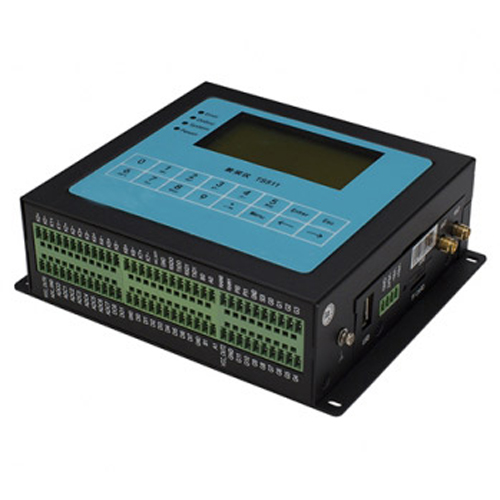
Figure 2. NiuBoL RTU data collector; capacity and retention policy must be assessed for its supplied firmware.
The NBL-1 product information lists 16 MB of local storage and describes TF-card storage. It does not establish the 120-byte format used here, a fixed number of storage years, or a particular automatic backlog-transfer implementation. Treat the worked example as a way to evaluate a configuration, not as a specification for that RTU.
A ring buffer can already be full when the link fails
A ring buffer overwrites the oldest data; fill-and-stop storage stops accepting new data. Both policies exist. Campbell Scientific's TableFile documentation explicitly describes both modes, illustrating why the selected logger's policy must be checked rather than assumed.
If a continuously running ring is already full, its first new write after link loss overwrites an old record immediately. It does not wait another 11.57 days to start overwriting. The nominal window describes the age span retained at a steady write rate, not the time until any overwrite begins. Eventually the earliest uncollected outage records are lost too.
A dedicated unacknowledged-data queue is different from a continuously retained history ring. Establish whether transmitted records are deleted, whether old baseline data shares the same allocation, and whether the platform acknowledges durable receipt. Closely spaced outages can build a backlog if it is not cleared between them; sizing each outage in isolation may then be insufficient.
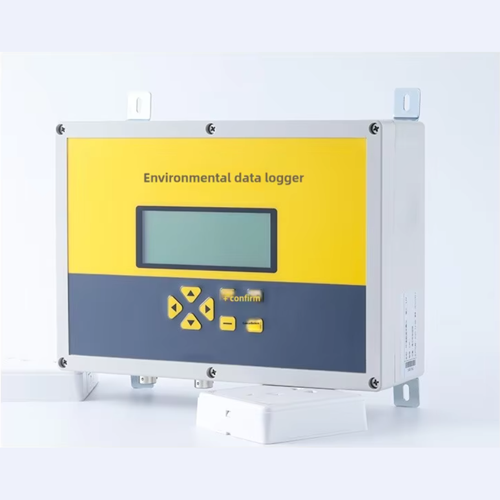
Figure 3. NBL-PH-1 data logger; verify its own usable allocation and full-buffer behavior rather than borrowing another model's values.
Verify the capacity estimate on the bench
Run the intended channel set and logging program for a defined period. For the 40-channel example, a complete 24-hour period contains 288 logging instants and 1,440 frames, or 172,800 bytes of frame data. The 34,560-byte figure applies only to the eight-channel row.
Compare measured growth with the calculation, then exercise file rotation or the full-buffer condition on a test unit. Record the oldest and newest retained records, indexing space, alarm load and behavior after a controlled restart. A file's continued existence does not prove that its oldest records remain readable. A successful restart does not prove every buffered write was committed before power loss.
Use the telemetry gaps and recovery guide for recovery troubleshooting and the general data logger selection guide for interfaces. The capacity decision here depends on actual storage growth and retained history.
Capacity questions
Q1. Can I size storage from the number of RS485 ports?
No. Count stored measurements and their encoding. One bus can supply many values, and each may be recorded at a different interval.
Q2. Is a larger card enough to prevent data loss?
Only if the logger uses the space for the required history and its file limits and overwrite policy permit it. Power loss, uncommitted writes and a growing transfer backlog are separate constraints.
Q3. Must every installation use a 120-byte frame?
No. It is a transparent assumption in this example. Replace it with the selected firmware's documented format or measured storage growth.
Specify a verifiable retention requirement
Define the history that must remain recoverable, then calculate its byte demand and test the full-buffer behavior. Raw capacity alone does not prove outage coverage.
For a capacity review, prepare:
- Measurement counts and logging intervals, including alarms;
- An actual stored file or documented binary record format;
- Available allocation, index/file-system overhead and rotation policy;
- Required outage duration, baseline history and backlog-clearing assumptions;
- Logger model, firmware and storage medium.
Contact NiuBoL with those details to review a suitable logging configuration and a testable retention target.









