





— Blogs —
—Products—
 Consumer hotline +8618073152920
 WhatsApp:+8615367865107
Address:Room 102, District D, Houhu Industrial Park, Yuelu District, Changsha City, Hunan Province, China
Product knowledge
Time:2026-09-07 16:27:33 Popularity:302
The data logger is one of the easiest components to underspecify. Selection should not look only at the number of RS485 ports, but also consider the number of sensors, analog and digital I/O, storage, communication network and future expansion.
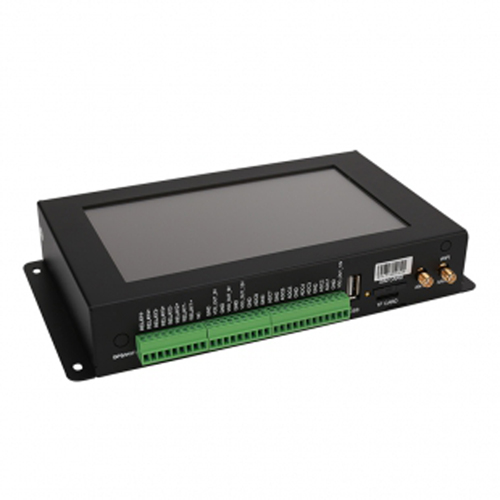
For What Is a Data Logger Interfaces, the Data Logger/Data Acquisition Unit is responsible for reading data from field devices such as RS485, RS232, 4-20mA, 0-5V, pulses or digital inputs, and adding timestamps, storage, protocol conversion and upload functions. Located between sensors and servers, it is a central device in unattended weather, agriculture, water quality and industrial IoT systems.
For environmental monitoring system - What is a data collector, the sampling period determines the amount of data and the power consumption. Minute-level meteorological data and second-level scientific research data have completely different storage requirements. The network loss scenario also confirms the local cache capacity, whether the data is cycled over, and whether the network can be retransmitted after recovery.
For environmental monitoring system - What is a data collector, on-site Ethernet cable is preferred; no fixed network is available 4G; local area wireless can be combined with Wi-Fi or LoRaWAN. When going up to the self-built server, the MQTT, HTTP/ HTTPS, TCP and other protocols and data formats should be determined in advance.
For environmental monitoring system - What is a data collector, fixed weather station coordinates are usually unchanged after installation and can be entered on the platform; continuous GPS is required for mobile devices. Whether remote parameter configuration, OTA and remote diagnostics are required should also be specified during the project design phase.
For environmental monitoring system - What is a data collector, the NiuBoL data collector product covers multiple serial ports, analog volume, switching volume, local storage and other configurations. Some RTU models offer RS485/RS232, 4-20mA/ 0-5V analog inputs, 16MB local storage and TF card expansion for meteorological, agricultural, water quality and industrial IoT systems. Product reference: NiuBoL Data Collector; Data Collector RTU.
For environmental monitoring system - What is a data collector, temperature, humidity, wind speed, water level, pH and other sensors output RS485, 4-20mA or voltage signals. Most individual sensors do not provide cellular communication, a cloud platform account, GPS positioning or long-term historical storage by themselves.
For environmental monitoring system - What is a data collector, the collector reads multiple sensors according to the set period, converts the original registers into engineering values, and can save historical data. Complex collectors are also available with DI/ DO, relay, analog input, SD card or local Flash.
For environmental monitoring system - What is a data collector, the gateway can integrate 4G, Ethernet, Wi-Fi or LoRaWAN functions to convert Modbus data into MQTT, HTTP, TCP and other network protocols. Many modern devices have collectors and gateways in the same hardware.
For environmental monitoring system - What is a data collector, the platform completes database storage, trend curves, maps, alarms, reports, user permissions, and API. When the user already has a self-built platform, the sensor and collector can be retained, and only the appropriate data uplink mode can be replaced or configured.
For environmental monitoring system - What is a data collector, data acquisition and edge networking can refer to the Smart Data Collector, NiuBoL data collector series; the complete automatic weather station combines sensors, acquisition, communication, power supply and structure into a field system.
A1: Multiple serial ports can isolate different groups of devices, reduce the pressure of single bus polling, and also facilitate the handling of devices with different baud rates or protocols.
A2: Depends on the number of bytes per record and the sampling period. Calculations should be based on fields such as actual data frames, timestamps, device IDs, etc., not just estimates based on the number of sensors.
A3: Very important for unattended stations. When there is no local cache, a cellular network outage directly creates a data gap.
A4: Equipment with relay/ DO output and logic functions can participate in the control, but high-power pumps usually still require a contactor, inverter cabinet, or dedicated control cabinet.
For environmental monitoring system - What is a data collector, a5: Because RS485 only provides field serial data, there is no cellular network, IP protocol stack, and server connectivity.
For environmental monitoring system - What is a data collector, a6: Fixed sites are usually recorded by collectors, gateways, or platforms; mobile platforms need real-time GPS/heading.
For environmental monitoring system - What is a data collector, a7: Depending on the system design, it may be stored locally in the collector, on an SD card, in a cloud database, or both.
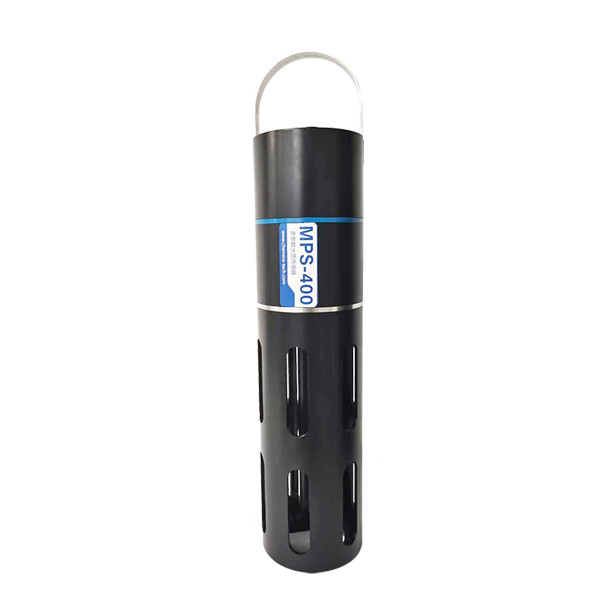
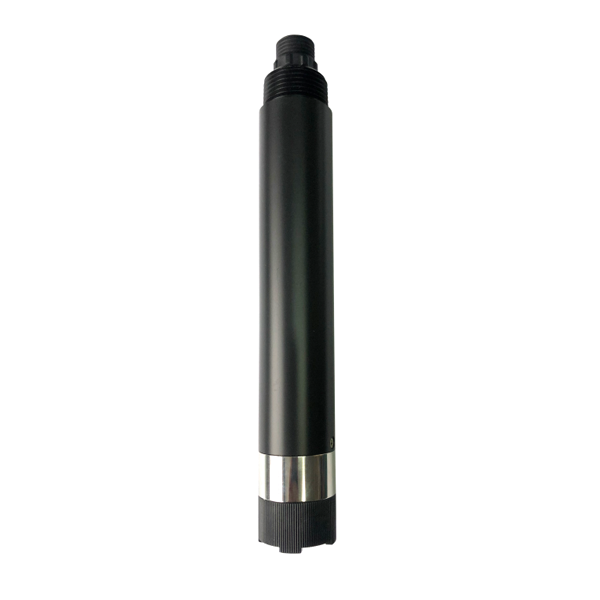
For environmental monitoring system - What is a data collector, a8: For how to build a water quality monitoring system with data logger, RTU and cloud upload, it is a station order when the scope includes several parameters, enclosure, power, logger, gateway, platform, mounting, and field service. A single probe quote will not cover that work.
Data logger selection should start with the complete field I/O list and end with a verified path to the server, including timestamps, storage behavior and recovery after a network interruption. Freeze interface counts, polling load, local retention, protocol, power budget and remote-management needs before panel design so the selected logger can be commissioned without adapters or undocumented conversions.
Prev:IoT Monitoring System Architecture: Sensors, Loggers and Gateways
Next:Online Water Quality Monitoring: pH, EC, ORP, DO and Turbidity
Related recommendations
Sensors & Weather Stations Catalog
 Agriculture Sensors and Weather Stations Catalog-NiuBoL.pdf
Weather Stations Catalog-NiuBoL.pdf
Agriculture Sensors Catalog-NiuBoL.pdf
Water Quality Sensor Catalog-NiuBoL.pdf
Related products
 Combined air temperature and relative humidity sensor
 TDR Soil Moisture & Temperature Sensor for irrigation| RS485 |4-20mA| NBL-S-THR
 Soil pH sensor RS485 soil Testing instrument soil ph meter for agriculture |NBL-S-PH
 Wind Speed sensor Output Modbus/RS485/Analog/0-5V/4-20mA
 Tipping bucket rain gauge for weather monitoring auto rainfall sensor RS485/Outdoor/stainless steel
 Pyranometer Solar Radiation Sensor 4-20mA/RS485

Screenshot, WhatsApp to identify the QR code
WhatsApp number:+8615367865107
(Click on WhatsApp to copy and add friends)

