





— Blogs —
—Products—
 Consumer hotline +8618073152920
WhatsApp:+8615367865107
Address:Room 102, District D, Houhu Industrial Park, Yuelu District, Changsha City, Hunan Province, China
Product knowledge
Time:2026-09-07 16:27:33 Popularity:308
Quick Answer: An online water quality monitoring system combines selected probes, a data logger or PLC, and a communication link to record changes in water conditions. pH, electrical conductivity (EC), oxidation-reduction potential (ORP), dissolved oxygen (DO) and turbidity answer different questions. Choose the combination around the operating decision, then match each probe to the water, measurement location and maintenance access. Five channels do not, by themselves, establish that water is safe or compliant.
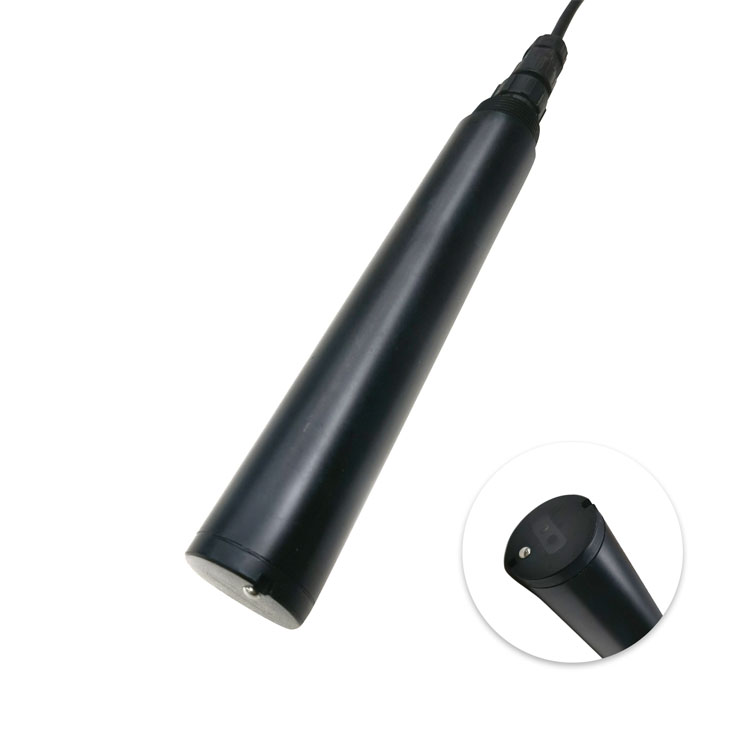
An online water quality monitoring system is more than several probes connected to one logger. Each parameter has its own measurement principle, installation method, maintenance cycle and compensation requirements. System design must account for the water body, flow rate, pollution level and available cleaning method.
Start with the action that follows an abnormal result. An aquaculture operator may need an oxygen warning before the next inspection. A treatment plant may need to distinguish changing influent from an aeration problem. A river-monitoring project may need a time-stamped record for investigating a short pollution event. These jobs require different sensor combinations, alarm settings and verification procedures, even when the equipment uses the same RS485 interface.
Continuous measurement captures fluctuations that occasional sampling may miss. It does not identify every contaminant. Laboratory or dedicated analyzers remain necessary for parameters outside the installed measurement channels and for verification required by the project.
| Parameter | Operating question | Interpretation limit |
|---|---|---|
| pH | Has acidity or alkalinity changed enough to affect treatment or aquatic conditions? | pH is not alkalinity, buffering capacity or a direct chemical-dose measurement. |
| EC | Has the overall ionic conductivity changed during mixing, discharge or water replacement? | EC does not identify individual ions. TDS and salinity conversions depend on the conversion method and water composition. |
| ORP, mV | Is the process becoming more oxidizing or reducing? | ORP depends on the chemical system, pH and electrode condition; it is not a universal chlorine-concentration measurement. |
| DO, mg/L | Is oxygen availability changing in the monitored water? | A measurement near an aerator can differ from the water that needs monitoring. Temperature and salinity affect interpretation. |
| Turbidity, NTU | Has optical scattering changed after a storm, filtration step or process disturbance? | Turbidity is not a universal conversion to suspended-solids mass or microbiological safety. |
A single parameter often fails to explain a change. Falling DO alongside rising temperature deserves a different investigation from falling DO during an incoming wastewater load. Rising EC may suggest altered salt content, but identifying the source requires knowledge of the site and, sometimes, additional sampling. Use synchronized trends to narrow the investigation rather than treating a combination of readings as a chemical diagnosis.
DO and temperature usually address the immediate oxygen question. pH helps track changes associated with biological activity and treatment. EC or salinity is relevant when salt concentration matters to the stock or water-exchange regime. Turbidity can indicate changing particulate conditions, but it cannot replace an ammonia measurement. Locate probes where the readings represent the managed water volume, not only the oxygen-rich discharge from an aerator.
Place DO at the biological stage where aeration performance is being assessed. ORP can help follow reducing or oxidizing conditions at an appropriate process point. pH and EC at the inlet can reveal disturbances that deserve investigation upstream. One rack in a convenient corner cannot represent every treatment stage. A distributed arrangement may be more useful than putting all five parameters into one chamber.
Temperature, DO, pH, EC and turbidity provide complementary time series. However, a near-surface probe does not describe an entire stratified reservoir. Define whether the station follows a fixed depth below the surface or a fixed elevation. Record water-level changes and maintenance periods so a change in measurement position is not mistaken for a water-quality event.
Low-range turbidity can help assess filtration changes, while EC and pH address different treatment requirements. Match the sensor's uncertainty to the actual decision threshold. A broad-range instrument with many displayed decimal places may still be unsuitable for resolving a small change in treated water. Dedicated residual-chlorine or other measurements are separate choices when the process requires them.
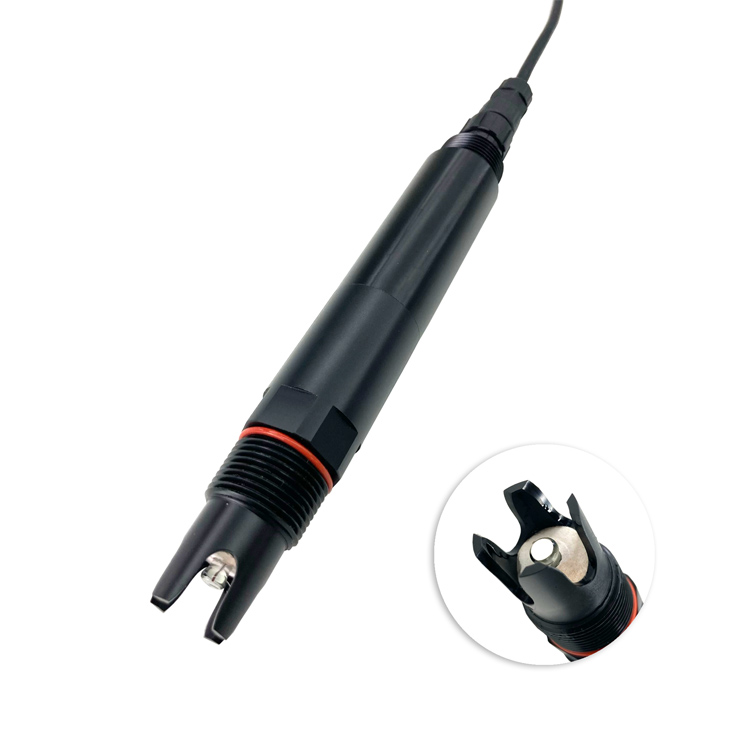
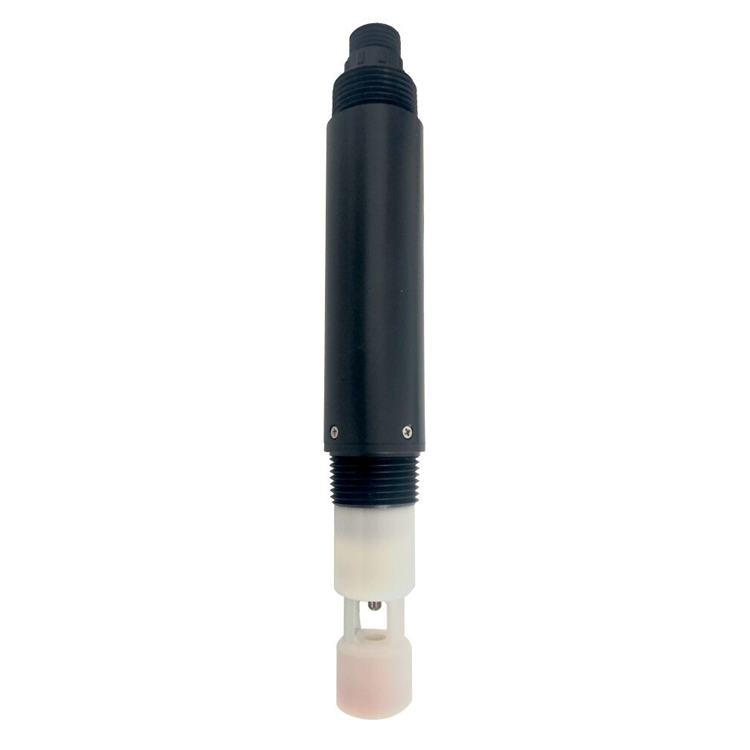
The following examples illustrate individual NiuBoL instruments, not one fixed five-parameter package. Range variants and mounting arrangements must be selected separately. The flow-through turbidity instrument, for example, needs a sample-water circuit rather than the same immersed holder as the other probes.
| Instrument | Measurement range and accuracy | Constraint that affects system design |
|---|---|---|
| NBL-WQ-PH | 0-14 pH; accuracy +/-0.1 pH; resolution 0.01 pH | 0-65 C; operating pressure below 0.2 MPa; POM wetted material; two-point calibration |
| NBL-WQ-EC | Range options: 0-20.00 uS/cm, 0-200.0 uS/cm, 0-5000 uS/cm or 0-200.0 mS/cm; accuracy +/-1% FS | 0-50 C; pressure below 0.6 MPa; select the conductivity range and wetted-material version for the water |
| NBL-WQ-ORP | -1500 to +1500 mV; accuracy +/-6 mV; resolution 1 mV | 0-65 C; pressure below 0.1 MPa; POM wetted material; one-point calibration |
| NBL-WQ-DO | 0-20 mg/L; accuracy +/-2% FS; resolution 0.01 mg/L | Fluorescence measurement; 0-45 C; pressure below 0.2 MPa; salinity compensation setting requires attention |
| NBL-WQ-TSA-4 | 0-10.000 NTU; accuracy +/-5% or +/-0.02 NTU, whichever is greater; resolution 0.001 NTU | Wall-mounted flow cell; 0-60 C; pressure no higher than 0.2 MPa; IP65, not an immersion housing |
These examples use 12-24 VDC and RS485 Modbus RTU. The pH, EC and ORP examples each specify 0.2 W at 12 V and a standard 5 m cable; their probes have IP68 protection. That does not make the logger, cable joint or complete assembly submersible. Cable jacket chemistry, extension length and connector arrangement need to match the installation. Do not infer cable material from the probe's housing material.
Full-scale accuracy matters when selecting EC range. For a 0-5000 uS/cm version, 1% FS is 50 uS/cm. For a 0-200 uS/cm version, it is 2 uS/cm. These are calculations from the stated range and accuracy, not field-test results. Select enough range for expected excursions without sacrificing the discrimination needed near the normal operating point.
Independent probes let a project choose different ranges, replace one measurement channel and install sensors at different process locations. They also require more holders, cable entries and address management. An integrated assembly reduces the number of mounting points and can simplify coordinated cleaning, but retrieval may interrupt several channels together.
Check which parts are individually replaceable, which surfaces a cleaning mechanism actually reaches, and whether a failed channel affects the remaining outputs. Self-cleaning can reduce deposits; it does not eliminate calibration, consumable replacement or site visits. Compare the maintenance operation itself: can a technician reach the equipment, remove a probe without disturbing neighboring sensors, and return it to the same measurement position?
Connect each probe to a compatible PLC, RTU or data logger using its own Modbus register definition. RS485 identifies the electrical interface; it does not guarantee identical register addresses, scaling or data types. Assign unique device addresses before combining probes on a bus. Verify one channel at a time against a direct reading, then test the complete acquisition cycle.
For every recorded value, retain the parameter name, unit, measurement time and validity status. Keep temperature with the water-quality readings. Distinguish raw conductivity from conductivity referenced to a specified temperature. DO salinity compensation may require a configured value; installing an EC probe on the same logger does not automatically update another probe's compensation setting.
The logger can pass data to a remote platform through the selected gateway and network. Polling every second does not necessarily create a new independent measurement every second: probe response, internal filtering and any sample-line transit time still apply. Select the recording interval around the event duration, and test an alarm with a controlled input or simulation before allowing it to influence a process.
Check each probe with suitable standards or a comparison method before installation. After mounting, investigate discrepancies with a reference measurement at the same location and time. A delayed laboratory sample, a different depth or an aerated sample bottle can explain disagreement without indicating an electronic fault.
During early operation, inspect for deposits and compare readings before and after cleaning. Use the observed change to set a service interval. Mark cleaning and calibration periods in the record; do not replace missing or invalid measurements with zeros. The useful maintenance interval is the one that keeps measurement drift acceptable in that water, not a fixed interval borrowed from a cleaner site.
No. Include a parameter when its result changes an operating decision or meets a monitoring requirement. Buying all five at one point may be less useful than installing DO at two critical depths or EC before and after a treatment stage.
Yes, when the logger supports their power requirements, electrical interfaces and protocol details. Test register parsing, units, timeouts and error responses for each device. A common Modbus RTU label alone is insufficient for acceptance.
Only when the required salinity calculation is supported and suitable for the water. The pictured NiuBoL salinity probe represents a distinct output requirement. Do not relabel uS/cm as PSU or apply an unspecified fixed conversion to every industrial solution.
It provides continuous information for the installed parameters. It does not replace analyses for unmeasured substances or the verification method required by a regulator, contract or process specification. Set online alarms and sampling procedures to complement each other.
The selected ranges, independent or integrated probes, cleaning hardware, sample conditioning, logger, communications and installation accessories all affect the quotation. Compare those items individually. A probe-only price is not a complete installed monitoring-system price.
Send the water type, normal and abnormal parameter ranges, monitoring locations, pressure and temperature, existing controller model, and preferred maintenance access. Identify which readings will trigger operator action. These details allow a proposal to distinguish necessary measurement channels from optional additions.
Useful online water quality monitoring starts with a defined decision at a defined point. Combine pH, EC, ORP, DO and turbidity where their information is complementary, choose ranges that resolve the expected changes, and verify the complete measurement path. NiuBoL probe selection should follow those requirements, with mounting, compensation and maintenance included in the configuration.
Prev:Data Logger Selection: Interfaces, Storage, GPS, 4G and Protocols
Next:Agricultural Weather Stations: Parameters, Configuration and Data Use
Related recommendations
Sensors & Weather Stations Catalog
 Agriculture Sensors and Weather Stations Catalog-NiuBoL.pdf
Weather Stations Catalog-NiuBoL.pdf
Agriculture Sensors Catalog-NiuBoL.pdf
Water Quality Sensor Catalog-NiuBoL.pdf
Related products
 Combined air temperature and relative humidity sensor
 TDR Soil Moisture & Temperature Sensor for irrigation| RS485 |4-20mA| NBL-S-THR
 Soil pH sensor RS485 soil Testing instrument soil ph meter for agriculture |NBL-S-PH
 Wind Speed sensor Output Modbus/RS485/Analog/0-5V/4-20mA
 Tipping bucket rain gauge for weather monitoring auto rainfall sensor RS485/Outdoor/stainless steel
 Pyranometer Solar Radiation Sensor 4-20mA/RS485


Screenshot, WhatsApp to identify the QR code
WhatsApp number:+8615367865107
(Click on WhatsApp to copy and add friends)

