





— Blogs —
—Products—
 Consumer hotline +8618073152920
 WhatsApp:+8615367865107
Address:Room 102, District D, Houhu Industrial Park, Yuelu District, Changsha City, Hunan Province, China
Product knowledge
Time:2026-09-07 16:27:35 Popularity:318
Quick Answer: Agricultural weather stations record the local weather needed for irrigation planning, crop-risk assessment and field operations. Select temperature, humidity, wind, rain and radiation channels according to the decision being made, then add soil measurements at representative root-zone locations. A weather station has no fixed acreage coverage, and a weather-based irrigation estimate is not a direct measurement of water remaining in the soil.
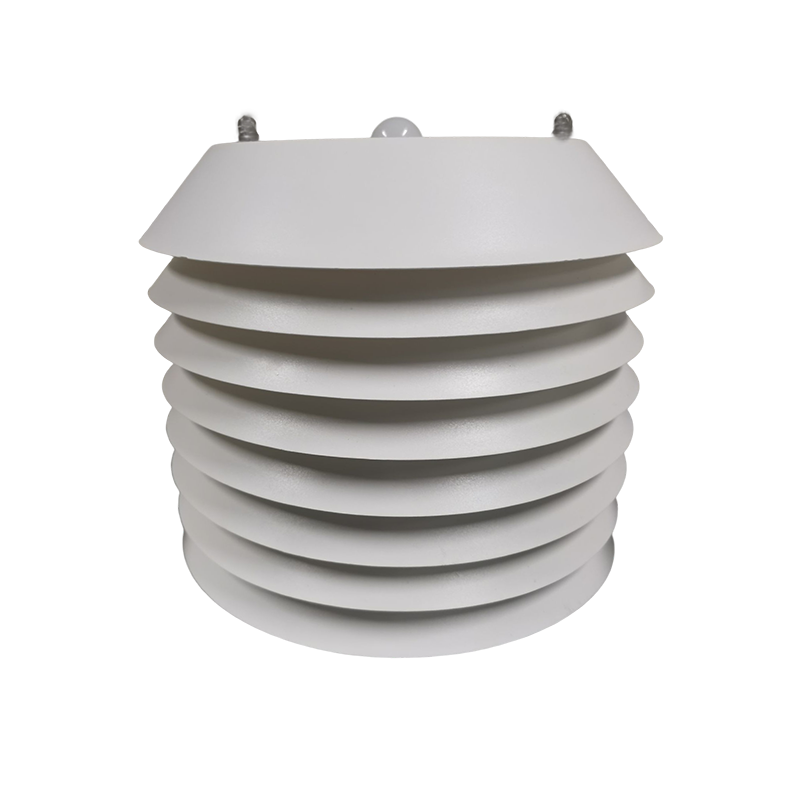
Agrometeorological stations are not fixed seven-parameter packages. Temperature, humidity, wind, rain, radiation and soil moisture each serve different management decisions, and the configuration should be determined by the crops, plots and application goals.
An agricultural weather station typically combines meteorological sensors, a data collector, communication equipment, power and mounting hardware. Soil moisture, soil temperature, EC, leaf wetness or photosynthetically active radiation can be added when the project requires them. Their usefulness depends on position and interpretation, not simply on the number of channels available.
| Farm decision | Useful measurements | Information needed beyond the station |
|---|---|---|
| Review irrigation demand | Air temperature, humidity, wind, solar radiation and rainfall; root-zone moisture | Crop stage, rooting depth, soil water storage, irrigation volume and application efficiency |
| Watch for frost or heat stress | Temperature at relevant locations; humidity and wind for context | Crop sensitivity, local cold pockets and the operating limits of the response system |
| Assess a spraying window | Wind speed and direction, temperature and humidity | Product-use requirements, local restrictions and conditions at the actual application site |
| Run a disease-risk model | Temperature, humidity and leaf-wetness duration where required | A crop-specific model, its input definitions and local validation |
| Monitor greenhouse climate | Inside temperature and humidity, crop-relevant light; outside weather as context | Ventilation, shading and irrigation operation inside the structure |
Keep optional channels tied to a use. Barometric pressure can support a complete weather record, but adding it will not correct a poorly placed soil probe. A light sensor in lux is not a substitute for a solar-radiation input in an energy-based evapotranspiration calculation. A crop-light project may instead need PPFD; specify the measured quantity and unit rather than ordering a generic light channel.
Weather measurements describe the atmospheric demand for water. Soil moisture describes conditions around the installed probe. Using both helps distinguish a hot, dry day from a root zone that actually needs irrigation. A deep soil layer may still contain water after the surface dries; a shallow sensor beside a dripper may remain wet while much of the root zone is drier.
The FAO Penman-Monteith method uses radiation, air temperature, humidity and wind information to calculate reference evapotranspiration, ETo. Crop evapotranspiration requires additional crop information; the station does not measure a crop coefficient. For this method, wind is referenced to 2 m above the surface. Do not feed a different-height reading into the calculation without the appropriate adjustment and exposure assessment.
As a simplified planning example, suppose daily ETo is 5 mm and the selected crop coefficient is 0.8. Estimated crop evapotranspiration is 4 mm. If effective rainfall is assessed as 1 mm and no other water-balance terms change, the day's estimated deficit increases by 3 mm. Across one hectare, 3 mm is 30 m3 of net water. At an assumed 80% application efficiency, the equivalent gross amount is 37.5 m3.
Those numbers illustrate the calculation, not an irrigation prescription. Effective rainfall is not always equal to rain-gauge total, and the decision to irrigate also depends on allowable depletion, existing storage and the irrigation schedule. Compare the estimate with root-zone trends before using it to change a field operation.
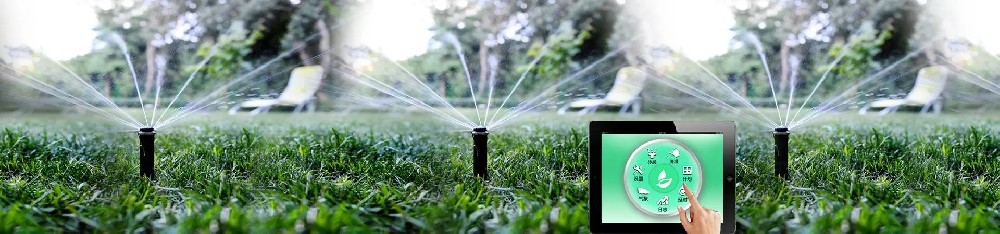
The weather station should represent the intended exposure, avoiding interference from buildings, exhaust vents, nearby obstructions and irrigation sprinklers. Decide whether the purpose is a reference weather record or the conditions inside a particular crop canopy. One location rarely satisfies both. An orchard cold pocket can deserve a separate temperature point even when the main station has an unobstructed weather exposure.
Keep a rain gauge clear of sprinkler spray and splashing surfaces, level its collector and retain access to the inlet. Wind sensors need exposure appropriate to the intended wind measurement, not merely the highest convenient bracket. Temperature and humidity need suitable radiation shielding and airflow. A sensor heated by a metal wall can report a local mounting effect rather than the air temperature required by the model.
Divide soil monitoring by irrigation zone, soil type, slope and rooting pattern. Install at depths that answer a crop question: water availability in the active root zone, movement after irrigation, or drainage beneath it. Record distance from the emitter. A probe immediately below a dripper and another between emitters should not be expected to produce identical trends.
For multi-depth measurement, NiuBoL NBL-S-TMSMS has a standard arrangement at 10, 20, 30 and 40 cm, with other configurations available. Those standard depths are a hardware arrangement, not a universal agronomic recommendation. Choose the depth configuration for the crop and installation, and maintain good contact between the sensing assembly and surrounding soil. Installation gaps can invalidate a trend even when every channel communicates.
A modular station lets an installer place wind, rain, radiation and soil instruments separately and replace one channel without replacing the complete weather sensor. This is useful when measurement heights or maintenance requirements differ. It also creates more cable entries, brackets and individual interfaces to manage.
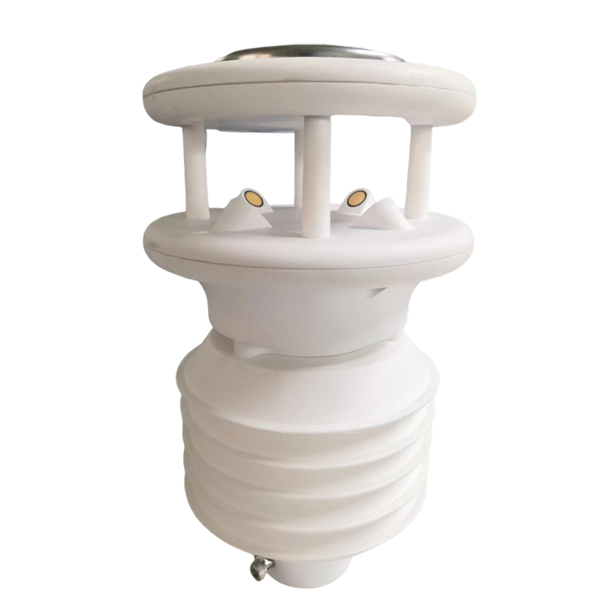
An all-in-one ultrasonic sensor reduces weather-sensor wiring and mounting work. The tradeoff is that its channels share a location, and optional measurements must be identified precisely. The NiuBoL all-in-one range combines wind, temperature, humidity and pressure, with additional channels depending on configuration. Solar radiation and illuminance are different options; a parameter count alone does not tell an integrator which quantity is supplied.
Choose rainfall technology around the intended water record. A tipping-bucket gauge measures collected water through bucket events and needs inlet and mechanism maintenance. An integrated impact-based rainfall channel uses a different measurement principle. Evaluate its stated range, accuracy and site performance against the rainfall use rather than treating all rain outputs as interchangeable.
The NiuBoL NBL-W-LBTH atmospheric sensor is one option for the air-measurement portion of an agricultural weather station. It does not measure rainfall, wind or soil water. The following figures apply to this instrument, not to every complete station configuration.
| Item | NBL-W-LBTH specification | Use in the project |
|---|---|---|
| Air temperature | -40 to 80 C; accuracy +/-0.5 C; resolution 0.1 C | Check uncertainty against the crop alarm threshold and shielding conditions |
| Relative humidity | 0-100% RH; accuracy +/-5% RH; resolution 0.1% RH | A small display step is not the same as small measurement uncertainty |
| Barometric pressure | 10-1200 hPa; accuracy +/-1.5 hPa; resolution 0.1 hPa | Keep measured station pressure distinct from any sea-level correction |
| Supply | 12-24 VDC | Check voltage at the installed sensor during logger and radio operation |
| Output options | RS485 or 4-20 mA | Specify the version and the corresponding logger inputs |
| Digital acquisition | Modbus RTU; 9600 bps; at least 1000 ms between communications | Schedule polling around the instrument's communication interval |
For NiuBoL wind-speed and wind-direction sensors, specify IP65 protection and suitable outdoor connections. The station's overall environmental capability also depends on its logger cabinet, power system and cable joints. Do not assign a common power consumption, cable material or protection rating to a configurable station without identifying its components.
RS485 Modbus RTU connects compatible sensors to the data logger or RTU. A gateway provides the selected remote link; RS485 itself is not a cellular or cloud connection. Check the register map, rainfall accumulation period and soil-depth labels locally before configuring dashboards.
Store acquisition time and missing-data status. Daily rainfall must use a consistent day boundary, and irrigation logs should use the same time reference. Preserve short temperature minima for frost review instead of retaining only a daily average. A disease model needs the time resolution and wetness definition it was designed to use; an occasional humidity value may not provide that input.
During commissioning, compare readings under representative conditions and demonstrate recovery after a network interruption. Verify whether local storage and later upload are actually configured. If irrigation control is included, test its behavior when a probe fails, a value becomes stale or communications stop. Monitoring equipment should not be assumed to provide the control logic or electrical protection for a pump.
There is no fixed acreage rating. Assess terrain, elevation, exposure and crop-management differences. A station may provide a shared weather reference while several soil-monitoring points are needed across irrigation zones. Add weather points where local conditions would change a decision.
No, when the decision concerns conditions around the crop inside. Outside weather helps explain ventilation and incoming conditions, but it cannot replace internal measurements affected by heating, shading and transpiration. Locate internal sensors for the crop and control arrangement.
EC indicates electrical conductivity, not the concentration of every nutrient. Water content, temperature, soil contact and the measurement method affect interpretation. Use it with the relevant soil or nutrient-solution procedure rather than converting every EC change into a fertilizer dose.
Not for every project. A compatible local logger or PLC can collect measurements without a cloud platform. Remote viewing, alarms and multi-site access require the appropriate communications and software. Confirm export, storage and ongoing service costs before ordering.
Send a farm map, crop and growth stage, irrigation zones, proposed soil depths and the decisions the data will support. Include power and network availability, existing software and preferred rainfall measurement. NiuBoL can then separate essential weather channels from crop-specific additions.
Agricultural weather stations are useful when the measurements lead to a defensible field decision. Match weather exposure to the intended calculation, distribute soil sensors by root zone and irrigation management, and check the data before connecting control equipment. More parameters cannot compensate for an unrepresentative installation.
Prev:Online Water Quality Monitoring: pH, EC, ORP, DO and Turbidity
Next:PV Weather Stations: Irradiance, Module Temperature and Wind
Related recommendations
Sensors & Weather Stations Catalog
 Agriculture Sensors and Weather Stations Catalog-NiuBoL.pdf
Weather Stations Catalog-NiuBoL.pdf
Agriculture Sensors Catalog-NiuBoL.pdf
Water Quality Sensor Catalog-NiuBoL.pdf
Related products
 Combined air temperature and relative humidity sensor
 TDR Soil Moisture & Temperature Sensor for irrigation| RS485 |4-20mA| NBL-S-THR
 Soil pH sensor RS485 soil Testing instrument soil ph meter for agriculture |NBL-S-PH
 Wind Speed sensor Output Modbus/RS485/Analog/0-5V/4-20mA
 Tipping bucket rain gauge for weather monitoring auto rainfall sensor RS485/Outdoor/stainless steel
 Pyranometer Solar Radiation Sensor 4-20mA/RS485

Screenshot, WhatsApp to identify the QR code
WhatsApp number:+8615367865107
(Click on WhatsApp to copy and add friends)

