





— Blogs —
—Products—
 Consumer hotline +8618073152920
 WhatsApp:+8615367865107
Address:Room 102, District D, Houhu Industrial Park, Yuelu District, Changsha City, Hunan Province, China
Product knowledge
Time:2026-09-07 16:27:35 Popularity:329
Quick Answer: PV weather stations provide the environmental reference for interpreting photovoltaic output. Measure irradiance in the relevant plane, module back-surface temperature and ambient conditions, then align those records with plant power or energy data. Wind and rainfall add operating context. A lux sensor, an air-temperature reading and an unsynchronized weather feed cannot replace these measurements in a performance assessment.
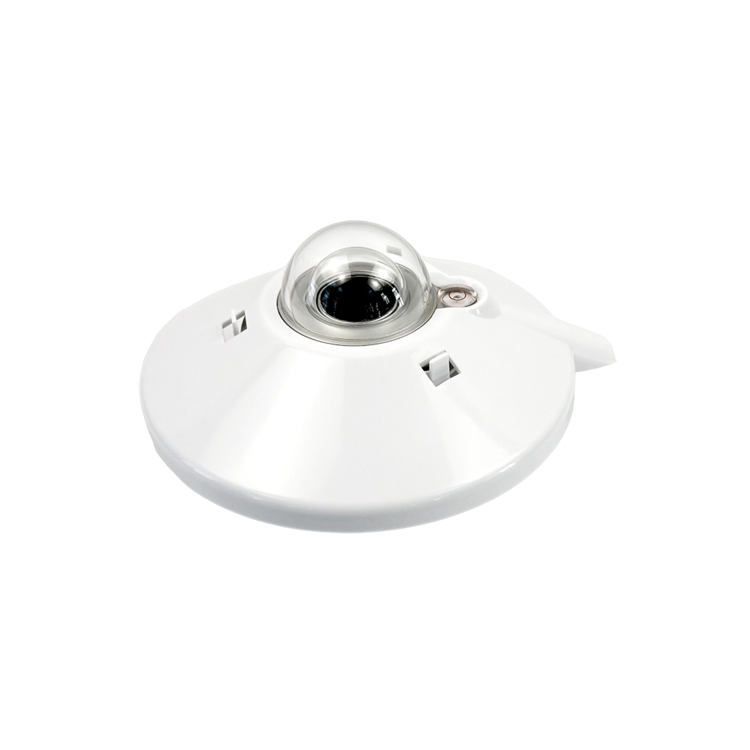
On-site environmental data helps operators distinguish normal weather-related power variation from faults or losses associated with modules, inverters and plant operation. The weather station therefore provides a measurement reference for performance evaluation, not a guarantee of increased generation.
If power falls as a cloud crosses the array, a comparable irradiance record helps explain the change. If output remains low under similar irradiance, examine module temperature, inverter status, curtailment, clipping, availability and other operating conditions. No single weather channel identifies all of these causes. The practical purpose is to make the comparison fair enough to decide what to investigate next.
Global horizontal irradiance, GHI, measures incoming solar irradiance on a horizontal plane. Plane-of-array irradiance, POA, measures the irradiance incident on the plane relevant to the modules. For a fixed-tilt array, this normally requires a sensor with matching tilt and azimuth. POA is more directly related to the array's incident sunlight than GHI alone.
Use a horizontally leveled irradiance sensor for GHI and an appropriately aligned sensor for POA; do not label both channels simply solar radiation. On a tracking array, the POA measurement must represent the changing array orientation. A stationary tilted sensor does not automatically represent a moving tracker throughout the day. Record orientation and any changes to the mounting arrangement.
A site with different orientations or materially different weather exposure may require more than one irradiance point. There is no universal sensor count per megawatt. For bifacial performance work, front-side POA alone does not describe rear-side irradiance. The monitoring design must address rear exposure and spatial variation where those enter the analysis.
DNI and DHI have separate meanings: direct normal irradiance and diffuse horizontal irradiance. Specialized measurements may require tracking or shading arrangements. Do not assume an ordinary unshaded pyranometer reports all radiation components independently.
A thermopile pyranometer measures broadband solar irradiance over its spectral response. A calibrated photovoltaic reference device has a spectral response related to its cell technology. Neither choice removes the need to assess calibration, angular response, temperature effects and mounting. Select the instrument according to the monitoring objective and any contractual measurement requirements.
An illuminance sensor reports lux, weighted for human vision. It cannot be converted into reliable PV irradiance using one universal constant. Similarly, a PAR channel intended for crop-light measurement is not a direct substitute for broadband irradiance in a PV performance calculation.
| NiuBoL option | Relevant specification | Selection implication |
|---|---|---|
| NBL-W-HPRS thermopile pyranometer | 0-2000 W/m2; spectral range 0.3-3 um; 99% response within 35 s | Consider response and angular behavior for the averaging interval and mounting plane |
| NBL-W-HPRS-A thermopile pyranometer | 0-4000 W/m2; spectral range 280-3000 nm at 50% transmittance; 95% response below 5 s | Do not compare its 95% response figure directly with a 99% response figure as if the test criterion were identical |
| NBL-W-PPT module temperature sensor | Range options -50 to 100 C or -20 to 50 C; accuracy +/-0.5 C | Select a range covering the expected back-surface temperature, not only ambient temperature |
| NBL-W-LBTH atmospheric sensor | Air temperature -40 to 80 C, +/-0.5 C; relative humidity 0-100% RH, +/-5% RH | Provides ambient context; it does not measure module temperature |
Specify the electrical output with the instrument. HPRS offers conditioned 4-20 mA, 0-5 V or RS485 options; a raw thermopile signal needs an appropriate low-level input and its individual sensitivity coefficient. HPRS-A also has raw and conditioned-output versions. A general analog input is not automatically suitable for a microvolt-level signal.
The NBL-W-PPT configuration options include 5, 12 or 24 VDC supply and RS485, current or voltage output, with a standard 5 m cable and specified consumption of 0.15 W. These are ordering options, not a statement that every unit accepts every supply or provides every output simultaneously. Identify the delivered version when specifying the logger. Do not infer an IEC monitoring class or third-party certification from a product name alone.
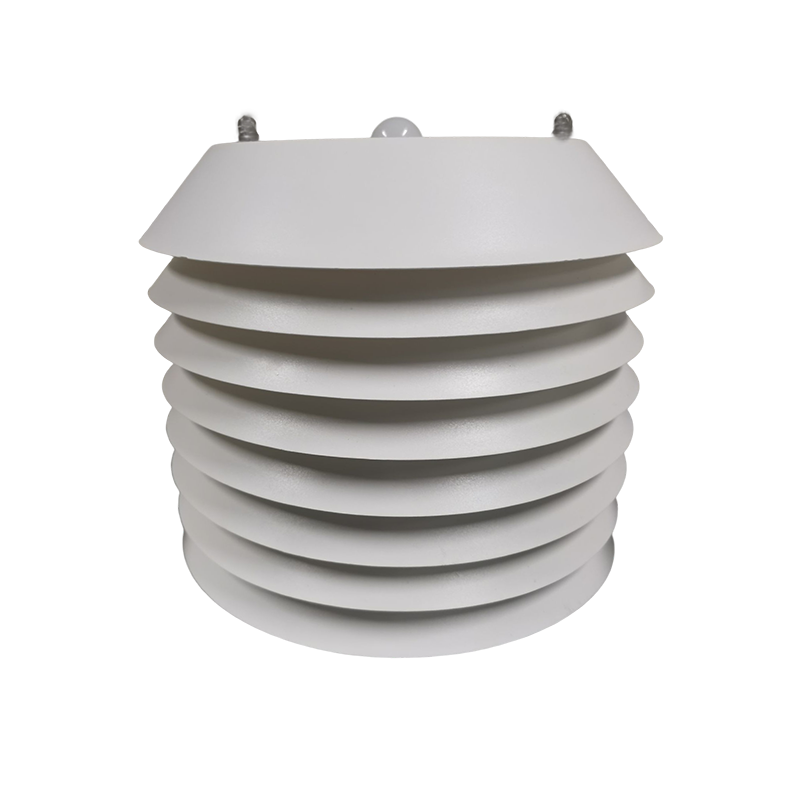
For crystalline-silicon modules, increasing cell temperature generally reduces power at a given irradiance. Use the temperature coefficient for the actual module technology and model; do not apply a generic percentage to every installation. An ambient sensor describes surrounding air, while a contact sensor on the rear surface follows a different thermal condition.
A back-surface measurement can support a thermal model, but it is not a direct measurement of every cell's temperature. Choose representative modules and positions appropriate to the monitoring method. Different mounting arrangements, roof ventilation or row exposure may justify multiple temperature points.
Clean the attachment surface using a method permitted by the module manufacturer. Use a compatible contact and fixing method that maintains thermal contact without damaging the backsheet. Secure the cable so its weight and movement cannot peel the sensor away. Keep the sensing point away from a frame or junction box unless that location is specifically being investigated.
Check attachment after installation and during maintenance. A partly detached probe can drift toward air temperature and make the modules appear cooler than they are. One contact sensor cannot rule out localized hot spots elsewhere; use the appropriate electrical or thermal inspection when a local defect is suspected.
Wind affects convective cooling, but the measured value depends on location. A wind sensor in a sheltered row gap does not necessarily describe the same exposure as one above the array. Match the location to the thermal model or operational question, and record measurement height. Specify IP65 protection for NiuBoL wind-speed and wind-direction sensors, with suitable outdoor cable connections.
Air temperature and humidity help explain thermal conditions and moisture exposure. Rainfall provides context for wetting and possible cleaning events. Rain-gauge totals alone do not quantify soiling loss: light rain can leave deposits, and cleaning effectiveness varies with surface and site conditions. A dedicated soiling measurement or a defined clean-versus-soiled comparison is needed when soiling loss itself is the required result.
A general weather station is not automatically a tracker safety system. Wind stow decisions require the tracker supplier's approved sensing, location, timing and fail-safe arrangements. Do not treat an ordinary logged wind value as a safety-rated control input without that engineering assessment.
Sensor data reaches SCADA through the logger and the selected communication connection. RS485 Modbus RTU describes the field link; the logger or gateway provides the interface expected by the plant system. Map each channel's units, averaging period and acquisition timestamp before comparing it with inverter or meter data.
An instantaneous irradiance value at the end of an interval is not equivalent to average irradiance over that interval. Under moving clouds, even a short clock mismatch can create a false performance change. Use matching intervals and distinguish measurement time from the time a delayed network packet arrives.
A simple energy example shows the importance of comparable periods. Suppose a 100 kWp array delivers 400 kWh during a period with 5 kWh/m2 of measured POA irradiation. Using a reference irradiance of 1 kW/m2, final yield is 4 hours, reference yield is 5 hours and the basic performance ratio is 0.80. These are illustrative numbers, not NiuBoL project results.
If the irradiance sensor under-records that same period by 10%, reference yield becomes 4.5 hours and the apparent ratio rises to about 0.889. The plant has not generated more energy. This illustrates why a dirty, misaligned or incorrectly scaled irradiance channel can conceal a performance problem. Actual reporting must use the project's agreed treatment of availability, temperature, curtailment and data gaps.
Keep the pyranometer optical surface clean using the permitted method, and record cleaning events. A measurement reference often needs a different cleaning plan from the PV modules. When assessing soiling, changing the reference sensor's cleanliness without recording it can alter the apparent loss. Inspect level or tilt after work on brackets and cables, not just after an obvious impact.
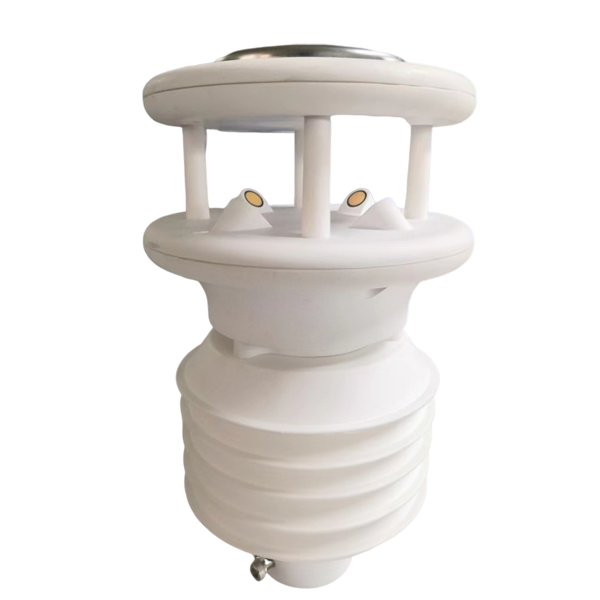
It may provide a useful reference for a small, uniform installation, but adequacy depends on orientation, terrain, plant extent and the required analysis. Multiple array planes or materially different conditions can require additional measurements. Choose the count from the monitoring design, not a fixed plant-capacity rule.
No. Check which channels it actually contains and their measurement performance. The pictured integrated weather sensor can provide selected ambient channels, but module temperature needs a contact measurement and POA irradiance needs the correct plane. An illuminance option is not a pyranometer.
No. Range only defines the measurement span. Calibration uncertainty, directional response, temperature response, stability, alignment and cleanliness all affect the result. Assess the full measurement requirements rather than choosing the largest range or most display digits.
Provide array layout, fixed or tracking orientation, module type, monitoring objective, required irradiance planes and SCADA interface. Include available power, cable distances, environmental exposure and any required calibration documentation. These details determine sensor placement and acquisition equipment more effectively than requesting a generic parameter count.
No fixed increase follows from installing measurement equipment. The data can support diagnosis and maintenance decisions, but the resulting benefit depends on actual faults, operating constraints and actions taken. Evaluate the station by the reliability and usefulness of its measurements.
PV weather stations support performance analysis when irradiance, module temperature and plant output describe the same conditions and time period. Choose the measurement plane first, then the instrument and installation. Ambient channels provide context, while calibration, alignment and data quality determine whether the comparison can be trusted.
Prev:Agricultural Weather Stations: Parameters, Configuration and Data Use
Next:How to Choose Weather Sensors for Coastal, Marine and High-Humidity Environments
Related recommendations
Sensors & Weather Stations Catalog
 Agriculture Sensors and Weather Stations Catalog-NiuBoL.pdf
Weather Stations Catalog-NiuBoL.pdf
Agriculture Sensors Catalog-NiuBoL.pdf
Water Quality Sensor Catalog-NiuBoL.pdf
Related products
 Combined air temperature and relative humidity sensor
 TDR Soil Moisture & Temperature Sensor for irrigation| RS485 |4-20mA| NBL-S-THR
 Soil pH sensor RS485 soil Testing instrument soil ph meter for agriculture |NBL-S-PH
 Wind Speed sensor Output Modbus/RS485/Analog/0-5V/4-20mA
 Tipping bucket rain gauge for weather monitoring auto rainfall sensor RS485/Outdoor/stainless steel
 Pyranometer Solar Radiation Sensor 4-20mA/RS485

Screenshot, WhatsApp to identify the QR code
WhatsApp number:+8615367865107
(Click on WhatsApp to copy and add friends)

