





— Blogs —
—Products—
 Consumer hotline +8618073152920
 WhatsApp:+8615367865107
Address:Room 102, District D, Houhu Industrial Park, Yuelu District, Changsha City, Hunan Province, China
Product knowledge
Time:2026-04-07 20:32:01 Popularity:421
Automatic weather stations are deployed in outdoor environments for a long time and face multiple challenges such as unstable power supply, sensor aging, communication interference and environmental pollution. The following classifies faults by module and summarizes common problems, manifestations and preliminary troubleshooting directions based on engineering practice.
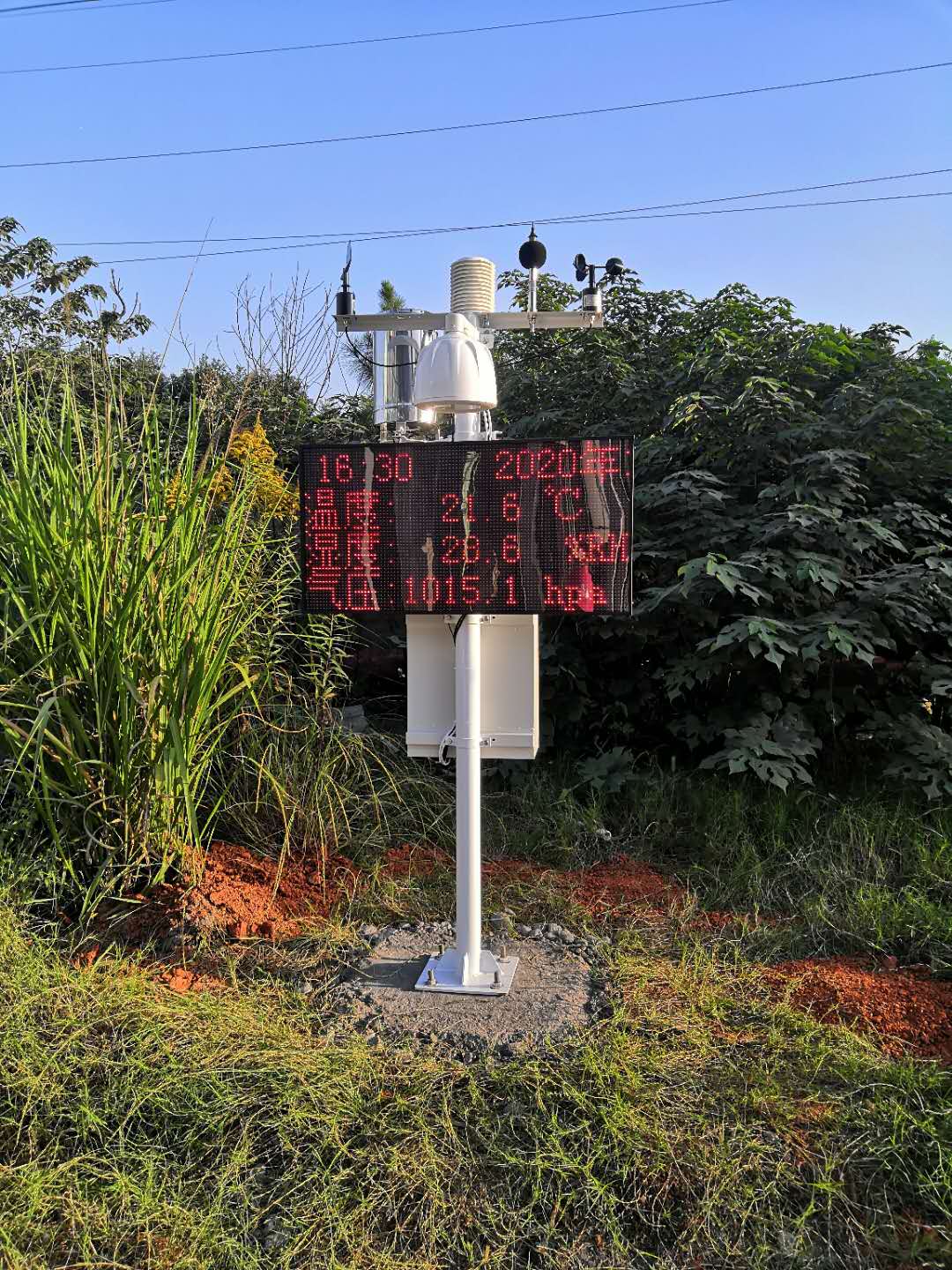
Specific manifestation: the client sub-station indicator light is yellow, and the central station platform cannot receive real-time data or data transmission is interrupted. Such faults are mostly caused by weak network signals, abnormal communication modules, failure of IoT cards or central station platform configuration problems. They are particularly common in rainy weather or base station edge areas. During engineering processing, first verify the communication link through remote parameter testing, or contact the central station to check the platform status; if necessary, check the communication module light flashing on site. Replacing the module or adding a signal amplifier can effectively restore transmission.
Manifestations: temperature reading too high, too low, violent fluctuation or long-term missing measurement. Temperature sensors are usually composed of PT100 platinum resistance and connecting lines. Fault causes include sensor water ingress damage, virtual connection of lines, poor ventilation of the louver box or strong radiation interference. During troubleshooting, power off to check sensor appearance and line connections, use a multimeter to measure resistance value, and replace the sensor or reinforce the wiring after confirmation.
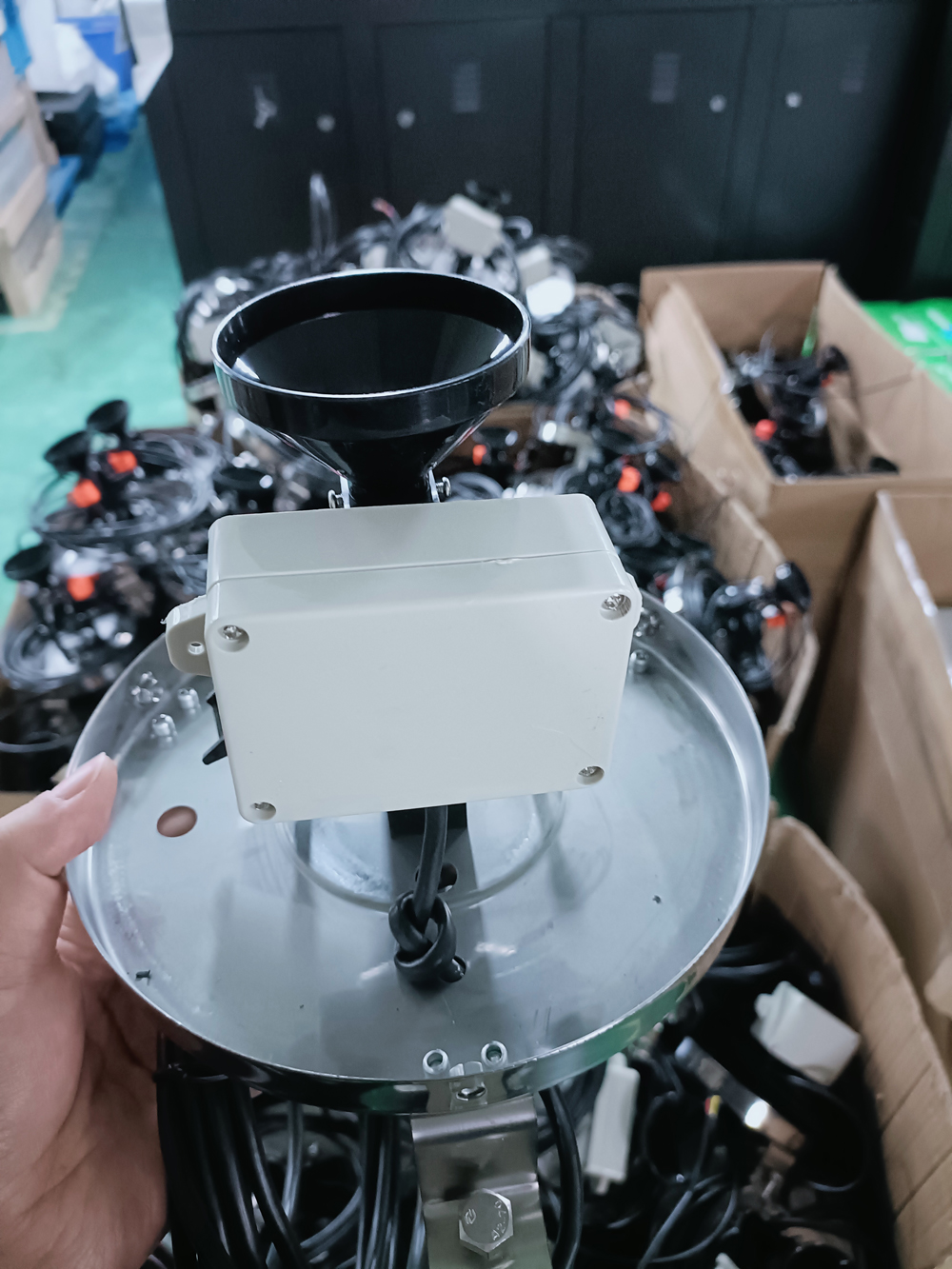
Specific manifestation: rainfall data is zero or significantly lower than actual precipitation. Rain gauges mostly use tipping bucket structure. Common causes include foreign matter blockage in the water receiving cylinder cover net, tipping bucket bearing jamming, reed switch damage or tipping bucket metering error. During on-site inspection, first clean foreign matter inside the cylinder cover and tipping bucket, then use a multimeter to check reed switch continuity; if the bearing is severely worn, the entire rainfall sensor needs to be replaced to restore metering accuracy.
Manifestations are diverse: wind direction fixed in a certain direction when there is wind, no change in wind speed, or wind speed pulse frequency inconsistent with actual. Wind sensors exposed for a long time are prone to bearing wear, dirt accumulation or heating component failure. Troubleshooting steps include measuring voltage between signal line and ground with power on, and verifying the linear relationship between pulse frequency and wind speed. After confirming sensor damage, replace it in time to avoid data deviation affecting wind field analysis.
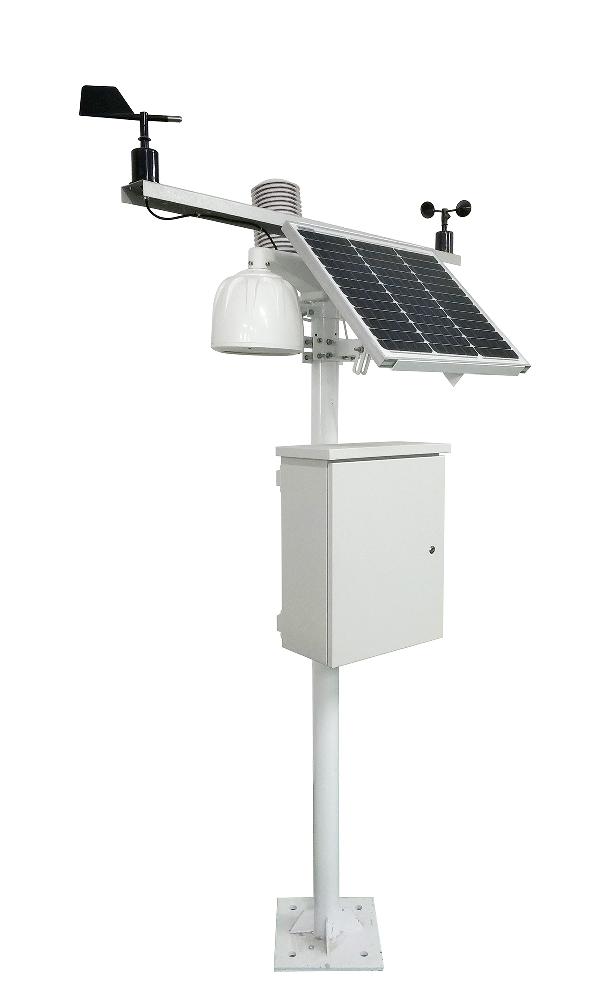
Night data is missing or deviation increases significantly, mainly related to the power supply system. Manifestation: data is normal during the day, but missing measurement or numerical drift occurs at night or during continuous rainy periods. Causes are mostly insufficient battery power, aging of solar panels or charging controller failure. In engineering, regularly check battery voltage (lead-acid batteries below 12V need attention) and solar panel output. If necessary, increase battery capacity in series or replace with lithium iron phosphate batteries to extend endurance.
Sensor appearance is intact but output is abnormal reading, commonly due to collector motherboard, switch damage or strong electromagnetic interference around. Troubleshooting requires checking collector indicator status, using debugging software to send commands to verify channel parameters, and ruling out bus matching resistance problems or external interference sources (such as high-voltage lines, base stations). This fault often requires replacing the collector board or optimizing grounding and lightning protection design.
Overall manifestation: collector does not work, communication module has no light or data has not been stored for a long time. Core causes include battery power shortage, power controller failure, line aging or reduced solar panel efficiency. Particularly prominent in long-term rainy environments. Processing measures: measure battery voltage in sequence, replace power control board, check line contact, and consider upgrading power supply scheme to adapt to complex climate.
Small weather stations are widely used in industrial and agricultural production, tourist scenic spots, scientific research and urban environmental monitoring. However, data deviation will directly affect decision-making accuracy. Influencing factors are mainly concentrated in the following engineering dimensions:
When selection does not match project requirements, sensor range, accuracy or protection level is insufficient, resulting in superposition of system error and random error. All instruments have inherent errors. In application, appropriate models should be selected according to actual environment and corrected through software algorithms to ensure engineering usability of observation data.
Improper installation position is a common cause. Proximity to tall buildings, strong radiation sources, dust pollution areas, smoke emission points or terrain occlusion will lead to high temperature, humidity lag, wind speed distortion or rainfall missing measurement. During site selection, WMO-related specifications should be followed. Priority should be given to open, well-ventilated areas away from pollution sources, and standard louver boxes or radiation shielding devices should be equipped.
Equipment design, manufacturing and inspection links directly determine long-term stability. Low protection level shells are prone to water ingress, and weak circuit anti-interference ability is easily affected by electromagnetic influence. When integrating, engineering companies should give priority to mature products that meet international meteorological observation standards to reduce early failure rates.
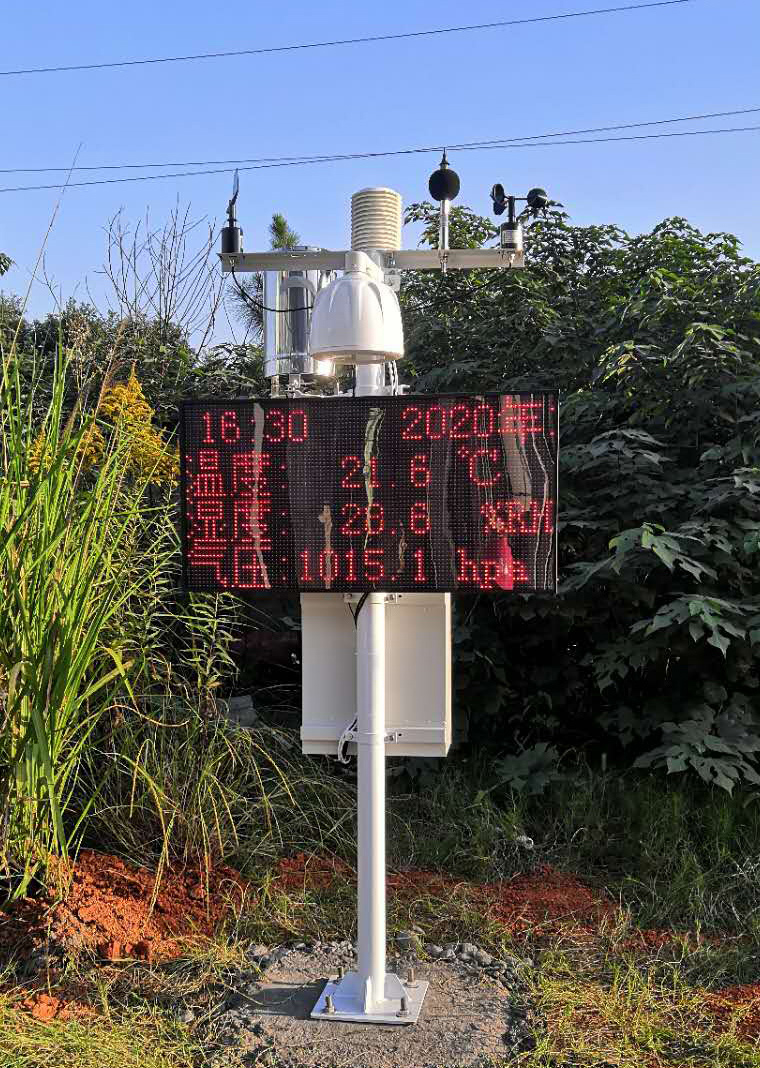
Lack of regular calibration is the main cause of data drift. Hardware aging, filter screen pollution, bearing wear, etc. will accumulate deviation over time. It is recommended to establish a periodic testing mechanism after project delivery, including laboratory comparison, on-site calibration and software parameter verification. Timely replacement of aging parts can maintain high monitoring quality.
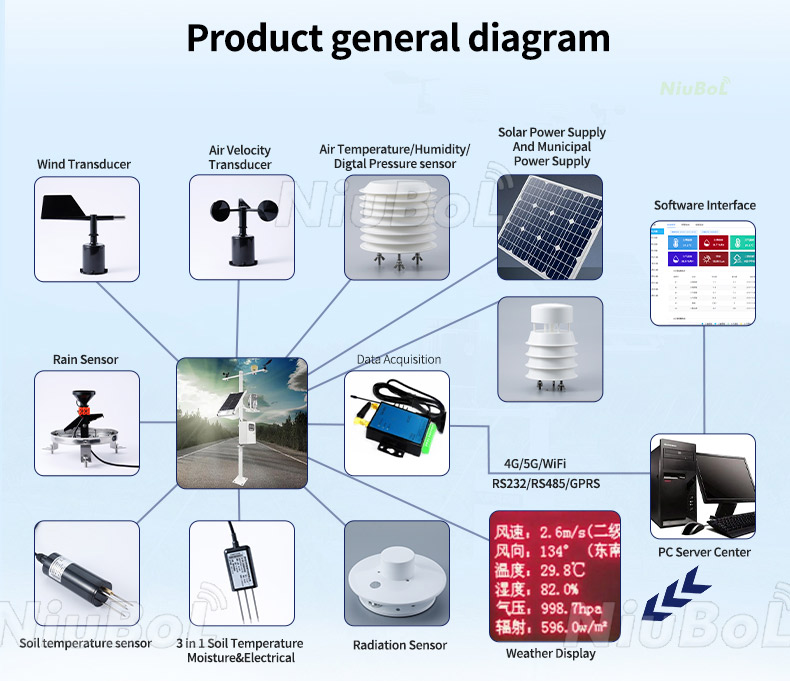
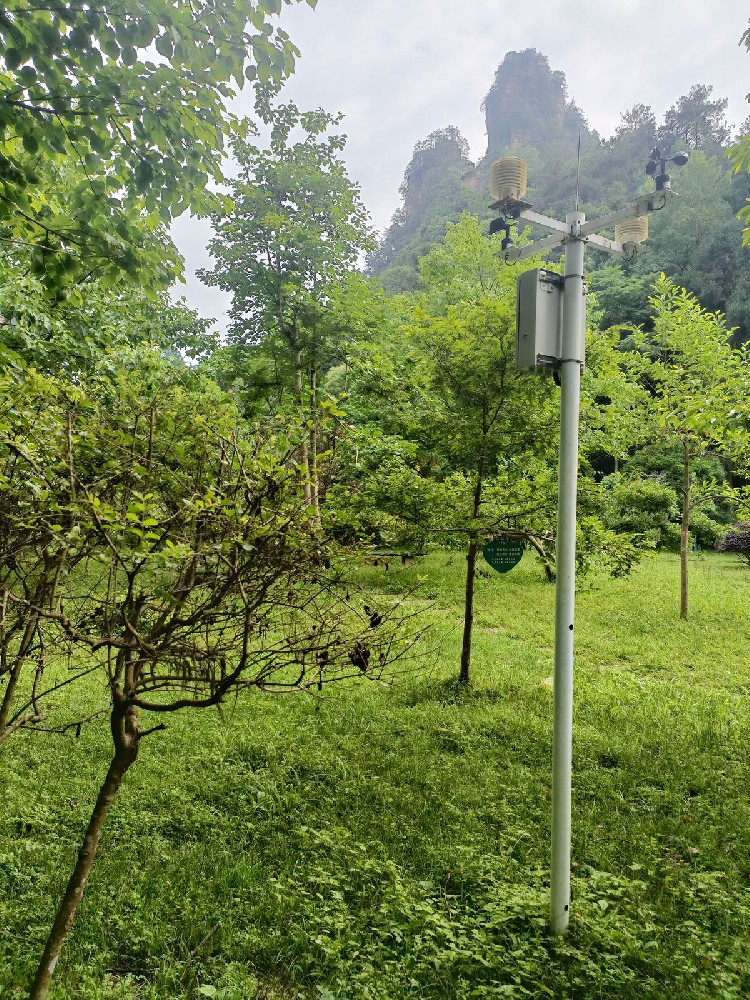
NiuBoL weather station is developed in accordance with the international meteorological WMO organization meteorological observation standards. It is a multi-element automatic observation station that can synchronously monitor conventional meteorological elements such as wind direction, wind speed, temperature, humidity, air pressure, rainfall, soil temperature and humidity. It supports automatic recording, over-limit alarm and data communication functions. The system consists of three parts: meteorological sensor, meteorological data recorder and meteorological environment monitoring software. The modular design facilitates system integration and expansion.
| Element Type | Sensor Type | Typical Range | Common Fault Related Troubleshooting Points |
|---|---|---|---|
| Temperature | PT100 platinum resistance | -50~80℃ | Virtual line connection, water ingress, abnormal resistance |
| Humidity | Capacitive / resistive | 0-100%RH | Filter screen pollution, lag |
| Wind Speed | Three-cup or ultrasonic | 0-70m/s | Bearing wear, abnormal pulse frequency |
| Wind Direction | Wind vane / ultrasonic | 0-360° | Abnormal signal voltage, fixed azimuth |
| Rainfall | Tipping bucket | 0-4mm/min | Tipping bucket jamming, reed switch damage |
| Atmospheric Pressure | Silicon piezoresistive | 500-1100hPa | Acquisition channel fault |
| Soil Temperature and Humidity | Integrated probe | -40~80℃ / 0-100% | Line aging, soil corrosion |
1. What is the most common cause of sub-station offline in weather stations?
A: Mainly communication network problems or module faults, manifested as yellow light always on. First test parameters remotely; if necessary, check the IoT card or add a signal amplifier.
2. How to quickly determine whether the sensor is damaged when temperature data is abnormal?
A: Use a multimeter to measure the PT100 resistance value and substitute it into the formula to compare with the actual temperature, combined with line inspection; if the resistance is abnormal, it is mostly a sensor or wiring problem.
3. What parts should be checked first when the rain gauge has no data?
A: First clean foreign matter in the cylinder cover net and tipping bucket, and check reed switch continuity; tipping bucket jamming is a common mechanical fault point.
4. What is the troubleshooting sequence for abnormal wind direction and wind speed?
A: First measure power supply voltage and signal line voltage, then verify pulse frequency, and finally check bearings and connections.
5. How to solve the problem of large day-night data difference in sub-stations?
A: Focus on checking battery voltage and solar charging efficiency. In areas with frequent rain, it is recommended to increase battery capacity or upgrade to lithium battery solution.
6. What is the relationship between inaccurate data in small weather stations and installation position?
A: Improper position will cause radiation, pollution or wind field interference. Site selection must follow the principles of openness, good ventilation and no occlusion, and be equipped with standard protection devices.
7. What communication methods does NiuBoL weather station support?
A: Supports wired interfaces and GPRS/4G/5G wireless modules, compatible with multiple protocols, convenient for IoT platform integration.
8. How to improve weather station data accuracy through regular maintenance?
A: Establish calibration cycles, clean sensors, check lines, replace aging parts, and use software platforms for trend monitoring and self-diagnosis.
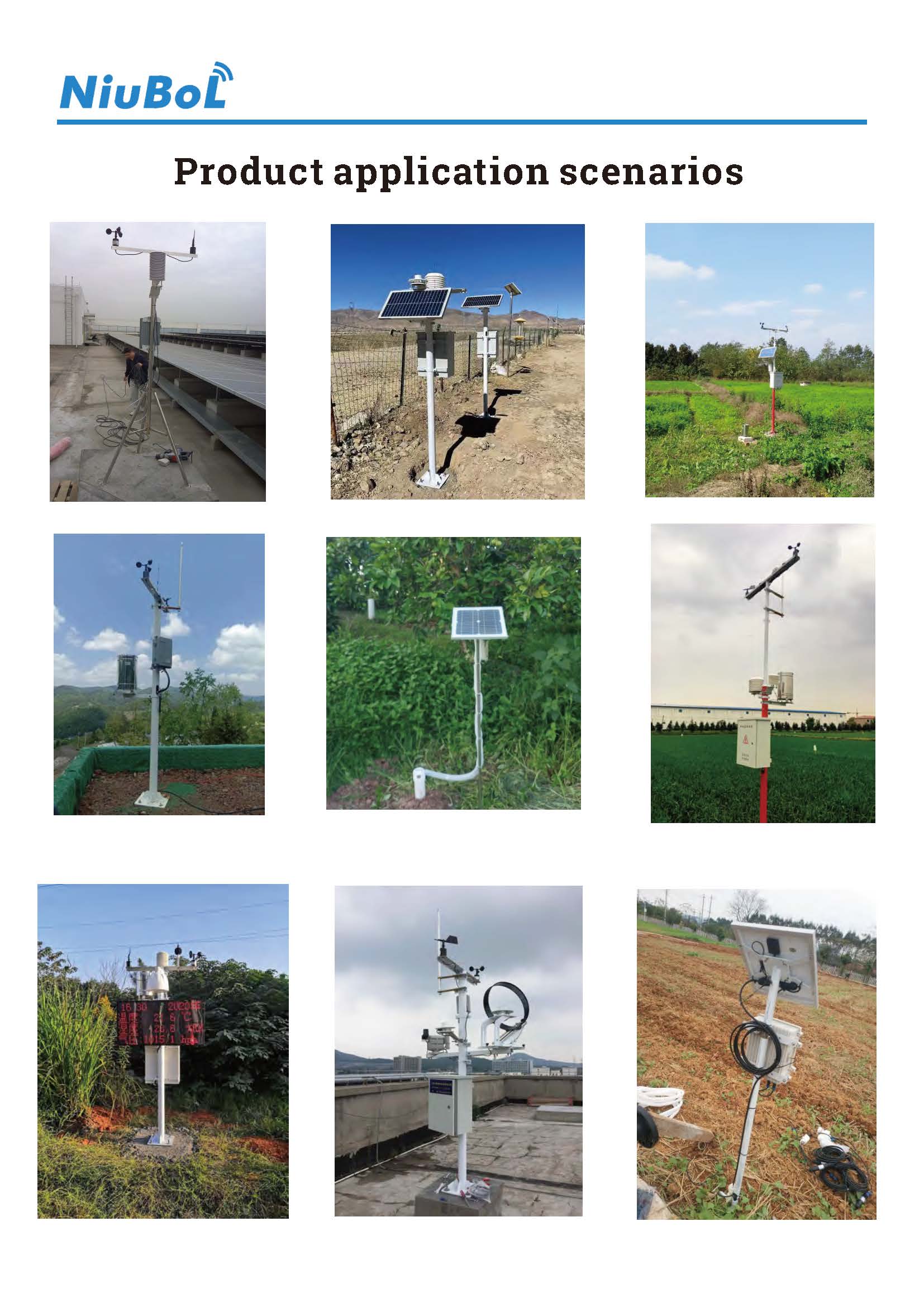
Common faults and inaccurate data problems in weather stations are the main challenges affecting the long-term effectiveness of automatic observation systems. By systematically mastering fault manifestations, causes and troubleshooting methods, combined with scientific selection and standardized operation and maintenance, project reliability can be significantly improved. NiuBoL multi-element automatic observation station takes WMO standards as the benchmark and provides an integrated solution of sensors, recorders and software to help system integrators, IoT suppliers and engineering companies efficiently deliver stable and reliable meteorological monitoring systems.
In actual project planning, it is recommended to comprehensively consider on-site environment, communication conditions and operation and maintenance capabilities, and select appropriate configuration schemes. If you need technical parameters, integration guidance or customized discussions for specific application scenarios, please contact the NiuBoL professional team to jointly promote the high-quality implementation of meteorological observation projects.
Related recommendations
Sensors & Weather Stations Catalog
 Agriculture Sensors and Weather Stations Catalog-NiuBoL.pdf
Weather Stations Catalog-NiuBoL.pdf
Agriculture Sensors Catalog-NiuBoL.pdf
Water Quality Sensor Catalog-NiuBoL.pdf
Related products
 Combined air temperature and relative humidity sensor
 TDR Soil Moisture & Temperature Sensor for irrigation| RS485 |4-20mA| NBL-S-THR
 Soil pH sensor RS485 soil Testing instrument soil ph meter for agriculture |NBL-S-PH
 Wind Speed sensor Output Modbus/RS485/Analog/0-5V/4-20mA
 Tipping bucket rain gauge for weather monitoring auto rainfall sensor RS485/Outdoor/stainless steel
 Pyranometer Solar Radiation Sensor 4-20mA/RS485

Screenshot, WhatsApp to identify the QR code
WhatsApp number:+8615367865107
(Click on WhatsApp to copy and add friends)

