





— Blogs —
—Products—
 Consumer hotline +8618073152920
 WhatsApp:+8615367865107
Address:Room 102, District D, Houhu Industrial Park, Yuelu District, Changsha City, Hunan Province, China
Product knowledge
Time:2026-05-19 15:50:47 Popularity:443
In the actual operation of municipal wastewater treatment plants and industrial wastewater treatment facilities, Biochemical Oxygen Demand (BOD5), Chemical Oxygen Demand (CODCr), Suspended Solids (SS), Ammonia Nitrogen (NH3-N), Total Phosphorus (TP), and pH value constitute the core indicator system for daily monitoring. These parameters not only directly determine whether the effluent meets the "Discharge Standard of Pollutants for Municipal Wastewater Treatment Plant" (GB 18918-2002) and corresponding industry discharge standards, but also serve as the direct basis for process control (such as aeration rate control, carbon source dosing).
Traditional manual sampling and laboratory analysis methods have significant data lag — the processes of sampling, digestion, titration, or incubation usually take several hours (COD) to several days (BOD5). For treatment facilities that require real-time response to influent water quality fluctuations, this lag means that process parameters cannot be adjusted in time, potentially leading to effluent exceeding standards or energy waste (e.g., excessive aeration). Therefore, deploying online monitoring sensors at the inlet, biochemical tanks (anoxic/aerobic sections), and discharge outlet to build a continuous and reliable data acquisition system (SCADA) has become a standard requirement for new construction and upgrading projects.
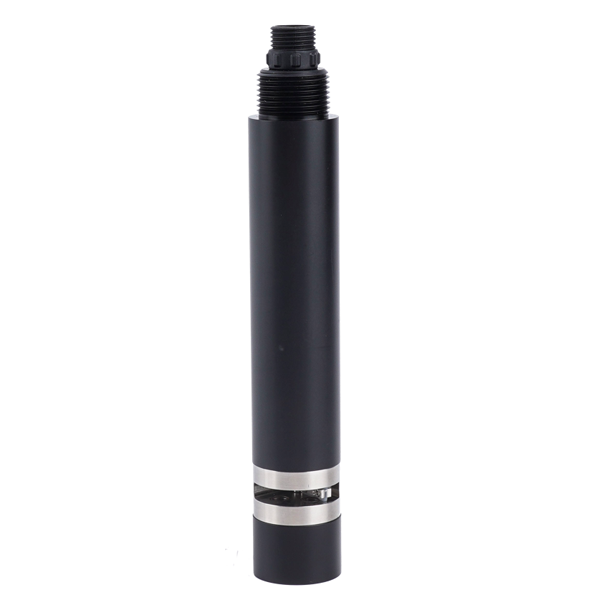
In a typical wastewater treatment IoT monitoring architecture, sensors serve as the bottom perception layer, directly contacting the measured water body. The data flow is as follows:
Sensor Layer: Various parameter sensors (e.g., pH electrode, COD spectral sensor, ammonia nitrogen ion selective electrode) convert physical/chemical signals into digital signals.
Acquisition & Transmission Layer: Sensors transmit data via RS485 bus (the most commonly used physical layer interface in industrial fields) using the Modbus RTU protocol to PLCs (Programmable Logic Controllers), DTUs (Data Transfer Units), or industrial gateways.
Platform Layer: The gateway pushes data via 4G/Ethernet to the central control room SCADA system or the cloud-based environmental big data platform.
For system integrators, adopting sensors with a standard Modbus RTU protocol means no complex hardware protocol parsing or dedicated transmitter instruments are needed; they can be directly connected to existing control systems, significantly reducing integration difficulty and wiring costs.
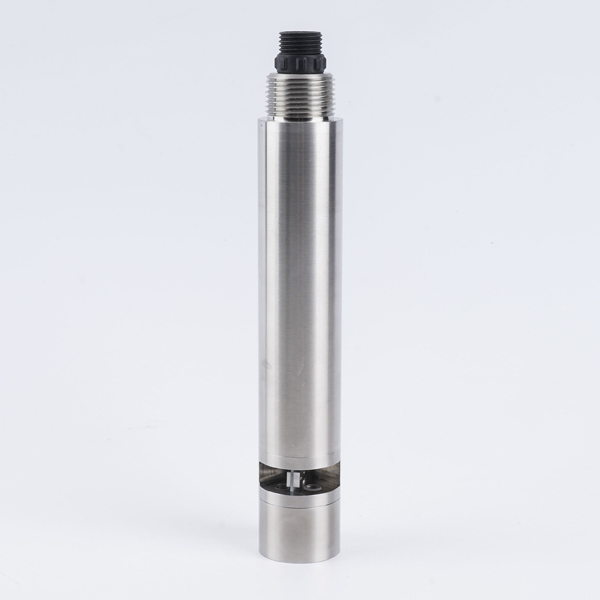
Industrial wastewater sites have complex electromagnetic environments (severe interference from frequency converters and high-power motors), and the distance from sensors to the PLC cabinet often exceeds 100 meters. Due to its differential signal transmission characteristics, the RS485 bus has strong common-mode interference rejection capability and supports a maximum communication distance of 1200 meters, making it the industrial standard for water quality monitoring data transmission.
At the communication protocol level, Modbus RTU has become the de facto industry standard. The following compatibility factors require attention during selection:
Data Frame Format: Confirm the baud rate (commonly 9600 or 4800 bps), data bits (8 bits), stop bits (1 or 2 bits), and parity (none/odd/even) supported by the sensor. The default configuration is mostly 9600 bps, 8 data bits, 1 stop bit, no parity.
Register Address Mapping: Confirm whether the sensor manual provides a clear register address table, specifying the holding register address and data type (e.g., 32-bit float or 16-bit integer, whether coefficient conversion is needed) corresponding to each parameter.
Bus Load Capacity: A single RS485 bus can theoretically host 32 nodes (sensors). In practice, it is recommended not to exceed 20, and install 120Ω terminating resistors at both ends to eliminate signal reflection.
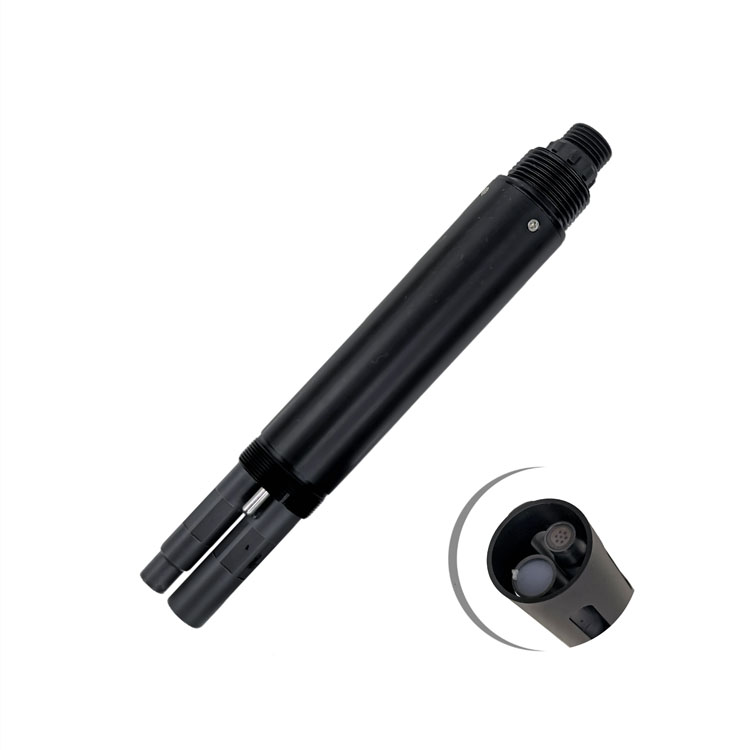
| Parameter | Measurement Principle (Mainstream) | Typical Range | Application & Engineering Notes |
|---|---|---|---|
| pH | Glass electrode method | 0-14 pH | Core indicator for biological treatment; requires regular cleaning of glass bulb to prevent oil fouling. |
| COD | UV absorption (reagent-free) / Potassium dichromate (online analyzer) | 0-500 mg/L (UV) / 0-1000 mg/L (chemical) | UV method suitable for cleaner or stable wastewater, fast response, reagent-free; chemical method has higher accuracy but more maintenance, suitable for discharge compliance monitoring. |
| Ammonia Nitrogen | Ion Selective Electrode (ISE) | 0-100 mg/L | Direct immersion, fast response; high salinity or high pH water requires attention to electrode interference and lifespan. |
| BOD / Turbidity | Microbial membrane/Optical (BOD) / Nephelometric (Turbidity) | BOD: 0-500 mg/L / Turbidity: 0-1000 NTU | BOD sensors typically output estimated values based on correlation algorithms (with TOC/UV254), suitable for trend monitoring rather than precise enforcement. |
| Temperature | Thermistor / PT1000 | 0-50 °C | Used for automatic temperature compensation of pH and dissolved oxygen. |
| Communication Interface | - | - | Standard RS485 (Modbus RTU), power supply mostly DC 12-24V. |
| Protection Class | - | - | Submersible installation requires IP68 rating, capable of long-term underwater operation. |
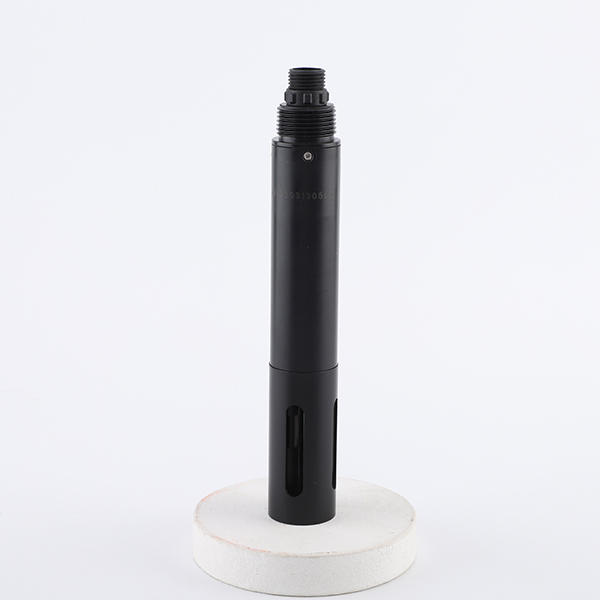
1. Municipal Wastewater Treatment Plant (A²O Process) Process Monitoring
Monitoring Points: Inlet (early warning of shock load), anaerobic/anoxic tanks (monitoring ORP/nitrate), end of aerobic tank (monitoring COD, ammonia nitrogen for aeration and internal回流 control), secondary sedimentation tank, and discharge outlet.
Selection Focus: Aerobic tanks require high-precision dissolved oxygen and suspended solids sensors; anoxic tanks require nitrate nitrogen sensors to optimize carbon source dosing.
2. Industrial Wastewater Discharge Outlet (Chemical/Pharmaceutical/Printing & Dyeing) Compliance Monitoring
Pain Points: Complex water quality (high salinity, toxicity, high temperature), requiring high chemical tolerance of sensors.
Selection Focus: Mandatory use of CODCr online analyzers with environmental certification; pH sensors need self-cleaning types resistant to fouling (with pressure jet or ultrasonic cleaning).
3. Rural Integrated Wastewater Treatment Equipment
Characteristics: Scattered sites, no professional on-duty personnel, limited power supply.
Selection Focus: Prioritize reagent-free, low-power RS485 digital sensors (e.g., UV COD, electrode ammonia nitrogen), combined with 4G RTU for remote operation and maintenance, reducing manual inspection frequency.
Accuracy Selection
- Process Control: For dissolved oxygen control in biochemical tanks, accuracy requirement is ±0.2 mg/L; pH requires ±0.1.
- Discharge Compliance: COD at the discharge outlet must be compared with laboratory standard methods, with deviation controlled within ±10%. If used for environmental platform upload, an online monitor with CCEP certification is required.
Communication Method Selection
- New Projects: With PLC system, prioritize RS485 + Modbus RTU sensors, directly connecting to DI/DO modules or serial servers.
- Old Station Retrofits: If the existing PLC only supports 4-20mA analog input, select sensors with analog output (4-20mA) capability or use external modules for signal conversion.
Installation Environment Selection
- Submersible: Directly inserted into tanks or open channels. Need to consider mounting bracket fixation to avoid flow impact. Self-cleaning functions (e.g., wipers, compressed air purge) are crucial for preventing biofouling.
- Bypass Flow: Water is drawn by a sampling pump to an analysis shelter. Suitable for high-precision chemical analyzers (e.g., CODCr), where environmental conditions are controllable and maintenance is more convenient.
Power Supply Selection
- Mains Power Scenarios: Centralized power supply with DC 24V or AC 220V.
- No Mains / Remote Sites: Choose sensors with low power consumption (typically<1W) supporting solar panel + battery power, paired with low-power RTU.
Q1: Can UV absorption COD sensors completely replace the laboratory potassium dichromate method?
A1: No. The UV method is an estimation method based on the correlation between absorbance at 254nm wavelength and COD. For wastewater with consistent composition (e.g., single-source industrial wastewater), the correlation is good and can be used for process trend control. However, for discharge compliance determination and environmental protection bureau comparison monitoring, the laboratory potassium dichromate method or online analyzers based on chemical principles are still required.
Q2: What are the main failure modes of Ion Selective Electrode (ISE) ammonia nitrogen sensors in wastewater treatment?
A2: There are three main types: First, high pH (>9) causing some ammonium ions to convert to free ammonia, affecting electrode response; Second, potassium ion interference (K+ has similar ionic radius to NH4+); Third, contamination by electroactive substances causing aging of the sensitive membrane. Regular calibration and replacement of the electrode tip are required (typical lifespan 6-12 months).
Q3: How do online BOD sensors achieve fast measurement in 5 minutes?
A3: Online BOD sensors do not directly culture for 5 days. They typically use a microbial membrane electrode method or establish a mathematical model based on historical correlation between TOC/UV254 and BOD for calculation. They are mainly used to reflect relative trends in organic pollution, and their absolute value cannot be used as the sole basis for final discharge determination.
Q4: Which type of sensor should be avoided when monitoring restaurant wastewater containing high amounts of grease?
A4: UV absorption COD sensors should be avoided. Grease adhesion on the optical window severely attenuates ultraviolet light, leading to significantly low readings and difficult cleaning. It is recommended to use a chromium method COD online analyzer, whose sampling lines have high-temperature digestion capabilities to effectively handle grease.
Q5: For SS (Suspended Solids) monitoring, should an optical turbidity sensor or a direct SS sensor be chosen?
A5: They are essentially the same optical principle (90° scattered light). For high activated sludge concentration scenarios (MLSS > 3000 mg/L), an infrared scattered light sensor with a larger range is required; standard turbidimeters (range 0-400 NTU) will fail at high concentrations.
Q6: What special considerations are needed for selecting sensors for intermittently discharged industrial wastewater?
A6: The sensor's response time (T90) and waterproof rating (must be IP68) must be confirmed. Intermittent discharge pipelines may have "empty pipe" conditions; sensors without dry-run resistance or insufficient mechanical sealing are easily damaged.
Q7: When purchasing UV absorption COD sensors, how can the risk of supplier 'overfitting' be avoided?
A7: Request the supplier to provide a third-party comparison report (using actual on-site water samples rather than standard solutions prepared with pure water). Require the supplier to contractually commit to a correlation coefficient R² > 0.9 for the project's specific water quality, and cooperate with on-site sampling calibration services.
Summary
The reliability of wastewater treatment monitoring systems largely depends on the adaptability of front-end sensors to complex water environments. For conventional municipal wastewater projects, reagent-free sensors (UV COD, ISE ammonia nitrogen, optical DO) with the RS485 Modbus protocol offer significant advantages in reducing maintenance burdens and achieving process automation control. For discharge outlet monitoring requiring precise enforcement, traditional chemical online analyzers remain the compliance choice.
In integration work, engineering contractors should focus their core efforts on the mechanical design of the installation environment (anti-scour, easy maintenance) and underlying data calibration and comparison. Choosing brands like NiuBoL with industrial-grade anti-interference design, complete register address tables, and after-sales calibration services can effectively reduce risks during on-site commissioning and project acceptance.
 NBL-WQ-CL Water Quality Sensor Online Residual Chlorine Sensor.pdf
NBL-WQ-DO Online Fluorescence Dissolved Oxygen Sensor.pdf
NBL-WQ-NHN Ammonia Nitrogen Water Quality Sensor.pdf
NBL-WQ-COD Online Water Quality COD Sensor.pdf
NBL-WQ-PH Online pH Water Quality Sensor.pdf
NBL-WQ-EC water quality conductivity sensor.pdf
Prev:NBL-WQ-PH-4 Industrial Online pH Sensor: Technical Principle, Selection & System Integration Guide
Related recommendations
Sensors & Weather Stations Catalog
Agriculture Sensors and Weather Stations Catalog-NiuBoL.pdf
Weather Stations Catalog-NiuBoL.pdf
Agriculture Sensors Catalog-NiuBoL.pdf
Water Quality Sensor Catalog-NiuBoL.pdf
Related products
 Combined air temperature and relative humidity sensor
 TDR Soil Moisture & Temperature Sensor for irrigation| RS485 |4-20mA| NBL-S-THR
 Soil pH sensor RS485 soil Testing instrument soil ph meter for agriculture |NBL-S-PH
 Wind Speed sensor Output Modbus/RS485/Analog/0-5V/4-20mA
 Tipping bucket rain gauge for weather monitoring auto rainfall sensor RS485/Outdoor/stainless steel
 Pyranometer Solar Radiation Sensor 4-20mA/RS485

Screenshot, WhatsApp to identify the QR code
WhatsApp number:+8615367865107
(Click on WhatsApp to copy and add friends)

