





— Blogs —
—Products—
 Consumer hotline +8618073152920
 WhatsApp:+8615367865107
Address:Room 102, District D, Houhu Industrial Park, Yuelu District, Changsha City, Hunan Province, China
Product knowledge
Time:2026-05-19 15:42:30 Popularity:377
In aquaculture, wastewater treatment, and industrial wastewater treatment projects, ammonia nitrogen (NH3-N) is one of the core control indicators. In aquaculture ponds, inorganic nitrogen mainly exists in the forms of ammonia nitrogen, nitrite nitrogen, and nitrate nitrogen, among which ammonia nitrogen is the most toxic. Molecular ammonia is lipophilic, can penetrate cell membranes, cause damage to the gill tissue of aquatic organisms, reduce oxygen transport capacity, and in severe cases, lead to septicemia. Ammonia nitrogen toxicity increases significantly with rising pH and decreasing dissolved oxygen.
When building water quality monitoring and automatic control systems, system integrators need stable, easy-to-integrate online ammonia nitrogen sensors to achieve continuous real-time data acquisition, support PLC/DCS linked control of dosing or aeration strategies, and meet environmental discharge standards and aquaculture production safety requirements. The NiuBoL NBL-WQ-NHN integrated online ammonium nitrogen sensor adopts a PVC membrane ammonium ion selective electrode method with a patented reference system, suitable for long-term stable operation under complex working conditions.
Main sources of ammonia nitrogen include: microbial decomposition of residual feed, animal and plant residues, and excreta in the pond; transformation through nitrification-denitrification processes; and protein metabolism of aquatic animals excreted via gills and urine. Effective monitoring and control of ammonia nitrogen are key to ensuring stable system operation.
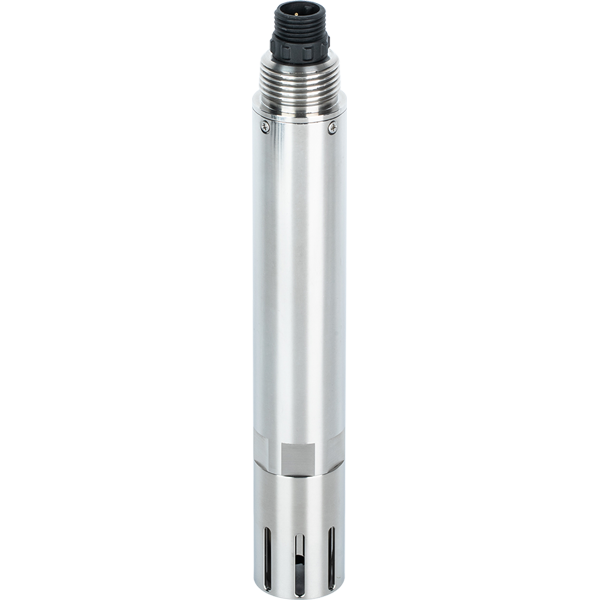
As a front-end water quality acquisition unit, the NBL-WQ-NHN online ammonia nitrogen sensor can be submersibly installed in aquaculture ponds, conditioning tanks, aeration tanks, or discharge pipelines. It connects via RS-485 or 4-20mA signal to PLCs, DCS, edge gateways, or IoT collectors, enabling data uploading, alarm on exceeding limits, and linked control (e.g., aerator start/stop, carbon source dosing). Its IP68 protection design and standard industrial protocols support multi-sensor networking, forming a complete multi-parameter water quality monitoring node.
| Parameter | Specification |
|---|---|
| Model | NBL-WQ-NHN |
| Housing Material | ABS, PVC, POM |
| Measuring Principle | Ion selective electrode method (PVC membrane ammonium ion selective electrode) |
| Range | 0 – 10.00 mg/L; 0 – 100.00 mg/L; 0 – 1000.0 mg/L |
| Resolution | 0.01 mg/L (low range); 0.1 mg/L (high range) |
| Accuracy | ±10% of reading or ±1 mg/L (whichever is greater), ±0.5°C |
| Response Time (T90) | < 60 s |
| Detection Limit | 0.09 mg/L (0-10/100 range); 0.9 mg/L (1000 range) |
| Temperature Compensation | Automatic (Pt1000) |
| Output Modes | RS-485 (Modbus/RTU), 4-20mA (optional) |
| Operating Conditions | 0 – 40°C, < 0.1 MPa, pH 4 – 10 |
| Installation Method | Submersible, 3/4 NPT thread |
| Protection Class | IP68 |
| Power Supply | 12 – 24 V DC |
| Cable Length | 5 meters (customizable) |
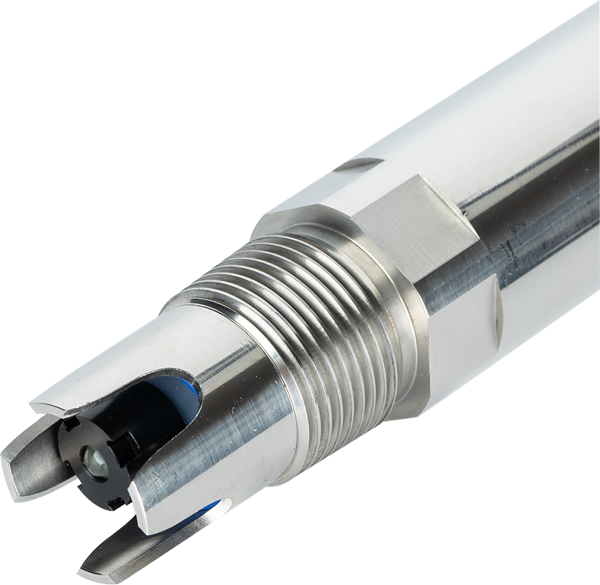
Aquaculture water monitoring: Deployed in key areas of aquaculture ponds to monitor ammonia nitrogen concentration in real time, combined with pH and dissolved oxygen data to trigger aeration and water conditioning, reducing molecular ammonia toxicity and minimizing fish and shrimp stress and mortality.
Municipal wastewater treatment plants: Installed in biochemical tanks and discharge outlets to monitor the ammonia nitrogen nitrification process, support precise aeration control, and ensure effluent ammonia nitrogen meets discharge standards.
Industrial wastewater treatment systems: In projects with high ammonia nitrogen wastewater such as chemical, pharmaceutical, and food processing, used for monitoring in conditioning tanks and post-treatment stages, optimizing denitrification processes.
River and lake environmental monitoring: As fixed or mobile monitoring station nodes, assess eutrophication risks and provide data support for ecological management.
Recirculating aquaculture and hatcheries: Continuous monitoring in high-density culture systems maintains a low ammonia nitrogen environment, improving survival rates and growth speed.
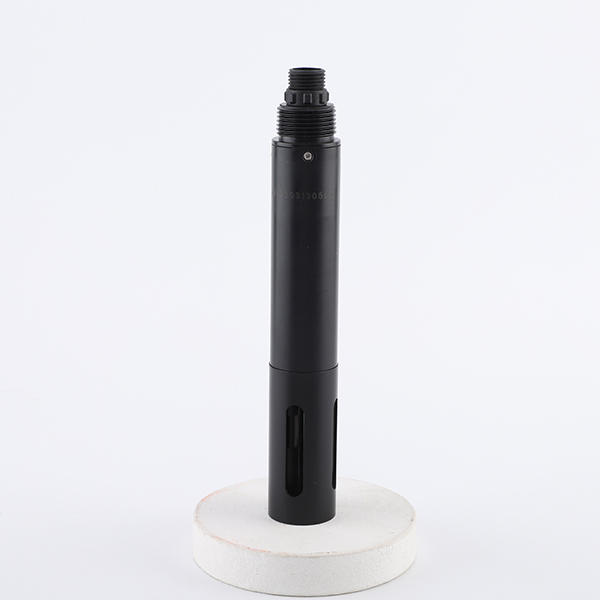
Accuracy selection: For conventional aquaculture and secondary treatment scenarios, the 0-10 mg/L or 0-100 mg/L range is recommended; for high-concentration industrial wastewater, the 0-1000 mg/L range is recommended. Match according to actual working conditions to avoid over-ranging.
Communication method selection: For projects requiring bus networking and remote transmission, prioritize RS-485 Modbus/RTU protocol to support multiple device connections; for legacy analog systems, choose 4-20mA output for direct connection to PLC analog modules.
Installation environment selection: Standard submersible 3/4 NPT interface is suitable for tank and pipeline installation. Operating pressure < 0.1 MPa, pH 4-10 range. Ensure on-site temperature is within 0-40°C. For out-of-range conditions, add protective measures or select supporting pretreatment units.
Power supply selection: 12-24 V DC wide voltage input adapts to different on-site power environments. Low power consumption (0.2W @12V) is suitable for solar-powered or battery-powered remote monitoring points.
Remove the protective cap before use, soak the electrode in clean water for 2 hours to activate, then rinse with deionized water before testing. For long-term non-use (more than two weeks), store dry and put on the protective cap. Keep terminals dry; if contaminated, wipe with absolute alcohol and blow dry. Avoid prolonged immersion in distilled water or protein solutions, and prevent contact with organic silicone grease. If deposits appear after long use, rinse with distilled water; perform two-point calibration when measurement error increases; if calibration fails after maintenance, replace the electrode.
Q1: What is the principle of the ion selective electrode method for measuring ammonia nitrogen?
A1: It is based on the potential response of the PVC membrane ammonium ion selective electrode to ammonium ions, combined with temperature compensation for concentration conversion.
Q2: Which water quality parameters most affect ammonia nitrogen toxicity?
A2: It is mainly affected by pH value; as pH increases, the proportion of molecular ammonia increases, enhancing toxicity. Simultaneously, low dissolved oxygen exacerbates the toxic effect.
Q3: What design features does the sensor's reference system have?
A3: It adopts a patented microporous salt bridge. The internal reference solution slowly exudes forward under pressure ≥100 kPa, significantly extending electrode life and improving stability.
Q4: How to select the different ranges of the NBL-WQ-NHN?
A4: For low-concentration aquaculture water, choose 0-10 mg/L; for medium-high concentration wastewater treatment, choose 0-100 or 0-1000 mg/L, leaving margin according to the maximum possible on-site concentration.
Q5: Is it compatible with existing SCADA systems?
A5: Yes, it supports Modbus/RTU protocol, and a register address table can be provided for seamless integration with mainstream PLCs, DCS, and configuration software.
Q6: What are the pH and temperature requirements for on-site installation?
A6: Operating conditions are pH 4-10, 0-40°C. If out of range, evaluate whether to add pretreatment or select another model.
Q7: How to determine the sensor maintenance cycle?
A7: Inspect and calibrate every 1-3 months depending on conditions; shorten the cycle in highly polluted environments. Perform maintenance or replace the electrode when obvious drift occurs.
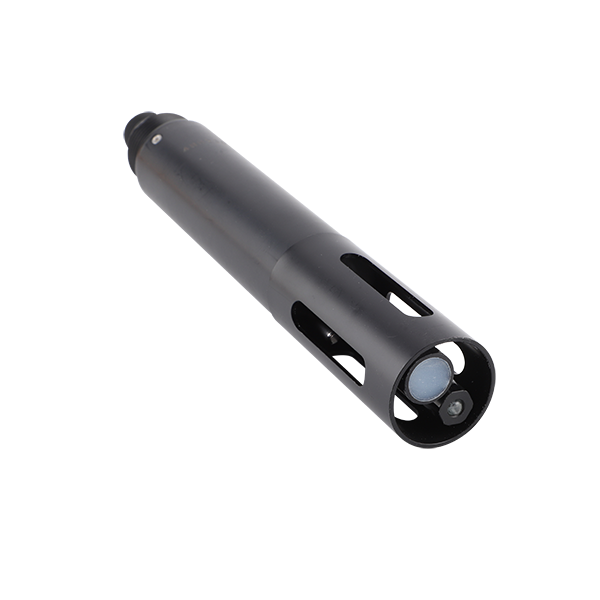
The NiuBoL NBL-WQ-NHN online ammonia nitrogen sensor, utilizing the ion selective electrode method and a stable reference design, provides a reliable online monitoring solution for aquaculture water quality management, wastewater treatment, and industrial wastewater treatment projects. Its standard Modbus RTU and 4-20mA outputs ensure compatibility with various control systems, and the submersible installation method simplifies engineering deployment.
In engineering procurement decisions, it is recommended to conduct selection verification based on specific range requirements, communication protocols, and on-site working condition parameters, and to establish reasonable installation, calibration, and maintenance plans to achieve long-term stable operation and optimal control effects. For technical solution discussions, protocol integration support, or on-site testing, project operating condition details are welcome for targeted collaboration.
 NBL-WQ-NHN-4S Online Ammonia Nitrogen Sensor.pdf
Next:NBL-WQ-PH-4 Industrial Online pH Sensor: Technical Principle, Selection & System Integration Guide
Related recommendations
Sensors & Weather Stations Catalog
Agriculture Sensors and Weather Stations Catalog-NiuBoL.pdf
Weather Stations Catalog-NiuBoL.pdf
Agriculture Sensors Catalog-NiuBoL.pdf
Water Quality Sensor Catalog-NiuBoL.pdf
Related products
 Combined air temperature and relative humidity sensor
 TDR Soil Moisture & Temperature Sensor for irrigation| RS485 |4-20mA| NBL-S-THR
 Soil pH sensor RS485 soil Testing instrument soil ph meter for agriculture |NBL-S-PH
 Wind Speed sensor Output Modbus/RS485/Analog/0-5V/4-20mA
 Tipping bucket rain gauge for weather monitoring auto rainfall sensor RS485/Outdoor/stainless steel
 Pyranometer Solar Radiation Sensor 4-20mA/RS485

Screenshot, WhatsApp to identify the QR code
WhatsApp number:+8615367865107
(Click on WhatsApp to copy and add friends)

