





— Blogs —
—Products—
 Consumer hotline +8618073152920
WhatsApp:+8615367865107
Address:Room 102, District D, Houhu Industrial Park, Yuelu District, Changsha City, Hunan Province, China
Product knowledge
Time:2026-08-17 09:09:00 Popularity:251
Quick Answer: Validate an industrial wastewater COD sensor across production batches and cleaning events, not only on a stable sample. A UV COD-equivalent reading depends on wastewater composition and optical conditions. Pair it with representative reference results, retain process-event records, and distinguish concentration from flow-based pollutant load before setting operating alarms.

Industrial effluent can change when a product batch ends, a vessel is washed, a treatment chemical changes or several streams enter an equalization tank. A sensor that tracks one stable stream may respond differently when that mixture changes. Include those expected states in the trial rather than accepting one clean-water check as the full application test.
| Industrial condition | What the monitoring trial should establish |
|---|---|
| Food or beverage production and washdown | Whether changing residues and cleaning periods preserve the optical-to-reference relationship; retain batch identity and event timing. |
| Textile or other colored process water | How actual color changes and solids affect the estimate. A turbidity reference does not remove every form of optical interference. |
| Batch chemical production | Whether different discharged mixtures need separate relationships or another analytical approach; one valid batch is not proof for all batches. |
| Central equalization and pretreatment | Whether the sample represents the mixed stream and whether concentration changes reflect dilution, changing load or sampling conditions. |

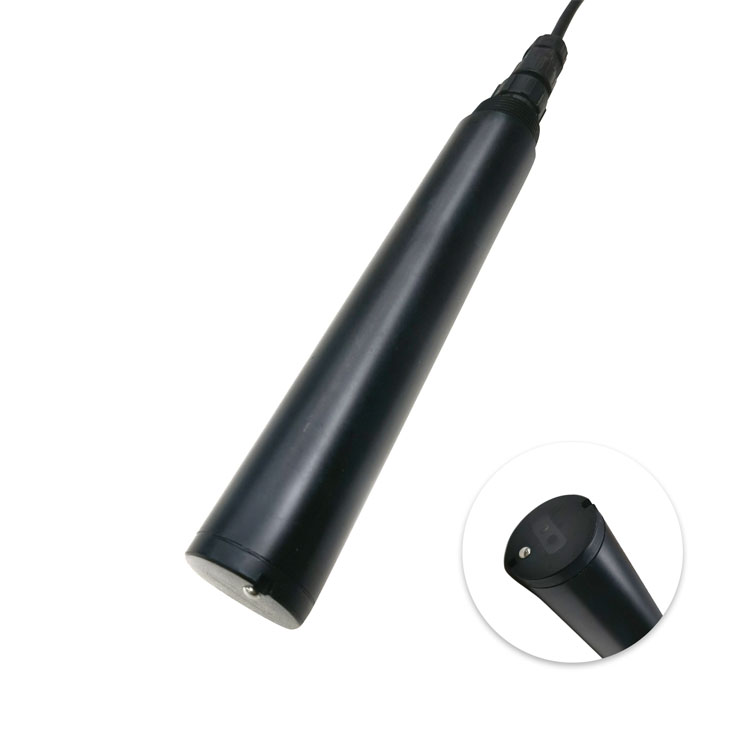
The BOD-related probe shown above uses a different optical response from COD. It can support a separately qualified observation, but agreement between two optical displays is not independent proof of COD accuracy. Establish the appropriate laboratory comparison for the intended wastewater decision.
At each site, identify which observation will cause an operator to investigate, collect a reference sample or review the treatment process. Automatic diversion or other process actions need a separately engineered and approved control arrangement.
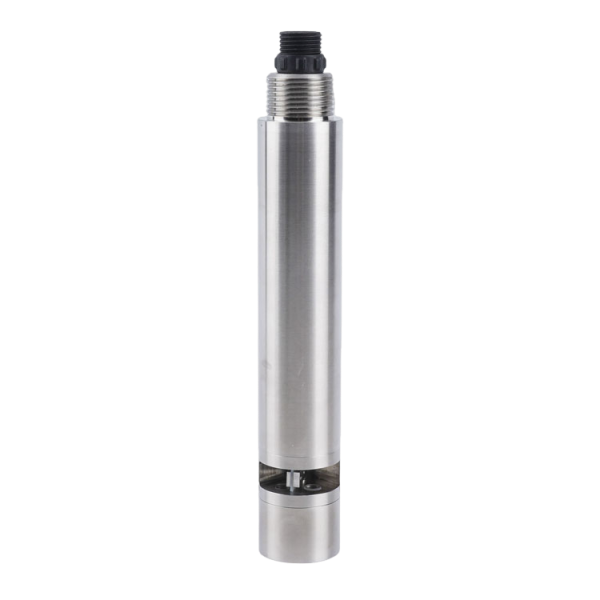
The NiuBoL NBL-WQ-COD uses dual-wavelength ultraviolet absorption with a potassium hydrogen phthalate (KHP) COD-equivalent calibration. Its reference optical channel compensates for some particle-related effects. That does not establish complete removal of interference from bubbles, deposits or changing dissolved composition.
| NBL-WQ-COD item | Digital probe specification |
|---|---|
| COD-equivalent range | 0-200 or 0-500 mg/L on a KHP basis; select the required configuration |
| Resolution / accuracy term | 0.1 mg/L; +/-5% accuracy term, with its applicable basis agreed for the ordered version |
| Supply / consumption | 12-24 V DC; 0.3 W at 12 V for the probe |
| Output | RS485 Modbus RTU; host, power and any network gateway specified separately |
| Working conditions | 0-45 degrees C; pressure below 0.1 MPa |
| Housing / protection | 316L stainless steel; IP68. Confirm compatibility with the actual effluent and cleaning exposure. |
| Installation / cable | Immersion mounting; standard 5 m cable, other lengths configurable; jacket and terminations matched to the route |
If a credible discharge exceeds the selected range, treat that as a selection issue. A repeated maximum value can hide the size of an upset. Assess another configuration or an appropriately validated sampling/analyzer arrangement; do not assume an unplanned dilution produces a valid online result without further engineering.
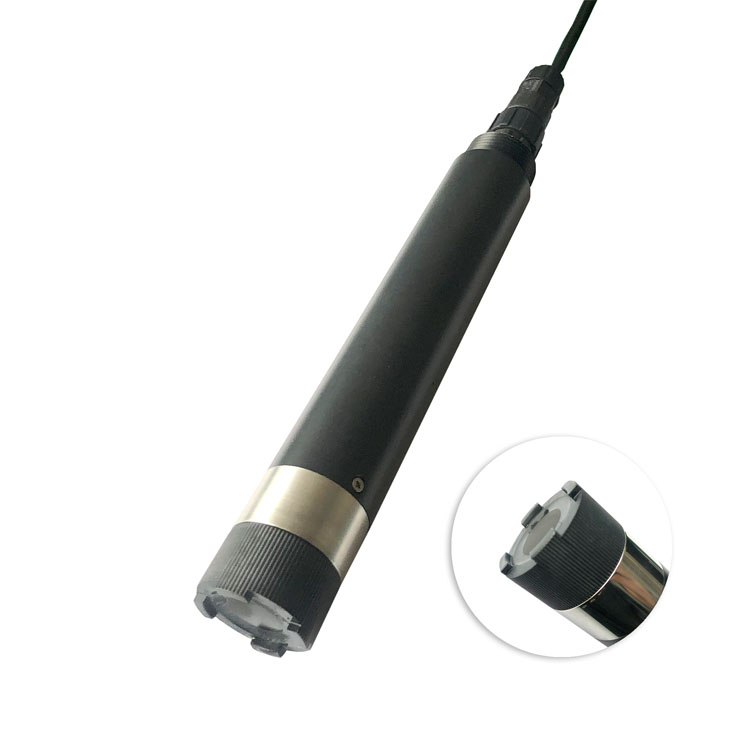
A separate turbidity probe can help document particle changes during a production or cleaning event. Keep the NTU record distinct from the COD estimate and the laboratory result so an optical disturbance is investigated rather than automatically interpreted as increased organic demand.
Concentration in mg/L describes the sampled water. Load also depends on flow. For a constant stream, COD load in kg/day = flow in m3/day × concentration in mg/L ÷ 1000. The flow and concentration must describe the same stream and period.
For illustration, 1000 m3/day at 100 mg/L represents 100 kg/day. A second condition of 2000 m3/day at 60 mg/L represents 120 kg/day. The concentration is lower in the second condition, but the calculated mass load is higher. These are hypothetical operating cases, not sensor test results or treatment limits.
For varying flow and concentration, calculate over aligned time intervals rather than multiplying an unweighted mean concentration by total flow without checking the averaging basis. Preserve invalid measurement periods instead of converting missing concentration data to zero load.
The flow meter and COD probe may also observe different hydraulic positions. Account for mixing and transport time before comparing a production release with the downstream load record. An equalization tank can spread a brief event over time; the downstream peak need not occur at the instant the batch is discharged.
Take reference samples at a location and time representative of the online observation. Record batch identity, cleaning stage, flow condition, appearance and whether the optical window was cleaned. Match grab samples to their observation time and composite samples to their collection period.
Retain the reference method and whether the laboratory measured a filtered or unfiltered sample. A dissolved fraction and a whole-water result do not necessarily answer the same question. Investigate that mismatch before changing the probe's calibration to force agreement.
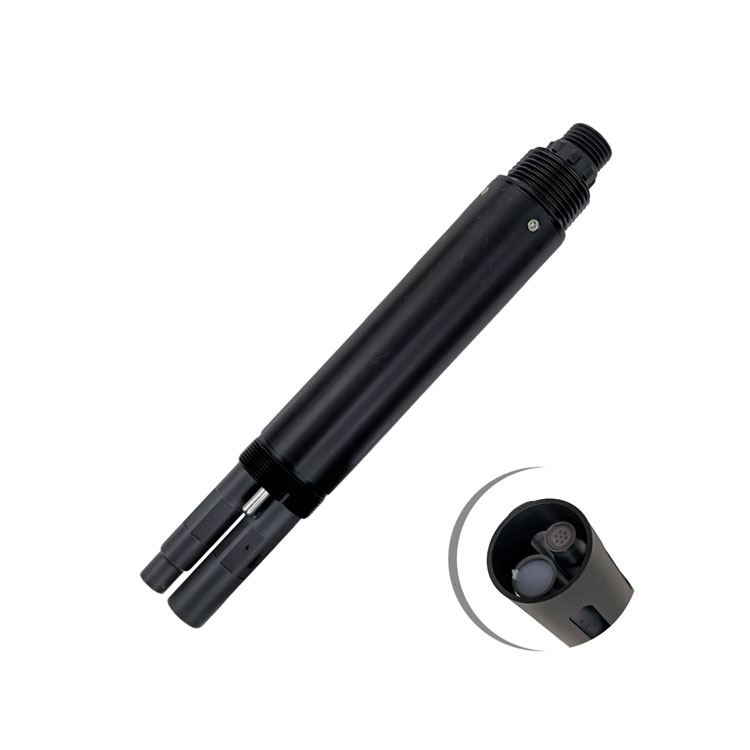
If a plant also measures ammonium, use that independently verified channel as additional process context. It does not identify the cause of a COD change by itself, nor should its concentration be added to COD as if both were the same substance.
When paired results diverge, first distinguish a changed process mixture from window deposits or attached bubbles. Preserve readings before and after an appropriate inspection or cleaning. Recalibration should follow a justified comparison, not be the default response to every new production state.
Direct immersion avoids a transfer line but requires representative water, secure mounting and safe retrieval. A side stream can improve access while adding transit delay, possible settling and flow-conditioning requirements. Confirm how that arrangement changes the sample rather than assuming a cabinet always improves accuracy.
Keep the optics clear of persistent bubbles and avoid a dead pocket selected only because the support is easy to install. Check deposits during the trial, including the conditions after washdown. A brush does not establish that every deposit is removable or that aggressive cleaning chemicals are compatible with every wetted component.
DO at a downstream biological stage can be useful operating information, as illustrated below. Its meaning belongs to that location and operating condition. A stable oxygen reading should not be used to declare an upstream COD disturbance harmless without the appropriate process assessment.
Only if its range, physical limits and validated response cover the relevant mixtures. Include expected batch and cleaning conditions in the assessment. A relationship established for one stream should not be assumed valid after composition changes.
Increasing flow can outweigh the lower concentration. Compare aligned flow and concentration records and calculate mass over the relevant period. Concentration alone cannot establish the total load entering treatment.
No. Particle compensation does not establish correction for every dissolved optical absorber or changing composition. Test the actual wastewater and retain the comparison conditions for the adopted relationship.
Not automatically. Inspect the sensing area and compare matched samples first. A composition change can alter an optical relationship even when the instrument remains electrically sound and correctly calibrated to its standard.
Provide normal and upset concentrations, batch or cleaning variations, temperature, pressure and proposed measurement location. Include reference results, available flow data and the intended operator response. These define whether a probe-only or engineered sampling arrangement is appropriate.
An industrial COD channel is useful when its response is understood across the production states that matter. Qualify the optical relationship, preserve event and service records, and use flow when evaluating mass load. NiuBoL model selection should follow that assessment rather than treating every changing wastewater stream as the same application.
Prev:Pest Control Management System: From Trap Records to Spray Decisions
Next:Buy a Weather Station: Choose Sensor Locations Before Mast Height
Related recommendations
Sensors & Weather Stations Catalog
 Agriculture Sensors and Weather Stations Catalog-NiuBoL.pdf
Weather Stations Catalog-NiuBoL.pdf
Agriculture Sensors Catalog-NiuBoL.pdf
Water Quality Sensor Catalog-NiuBoL.pdf
Related products
 Combined air temperature and relative humidity sensor
 TDR Soil Moisture & Temperature Sensor for irrigation| RS485 |4-20mA| NBL-S-THR
 Soil pH sensor RS485 soil Testing instrument soil ph meter for agriculture |NBL-S-PH
 Wind Speed sensor Output Modbus/RS485/Analog/0-5V/4-20mA
 Tipping bucket rain gauge for weather monitoring auto rainfall sensor RS485/Outdoor/stainless steel
 Pyranometer Solar Radiation Sensor 4-20mA/RS485


Screenshot, WhatsApp to identify the QR code
WhatsApp number:+8615367865107
(Click on WhatsApp to copy and add friends)

