





— Blogs —
—Products—
 Consumer hotline +8618073152920
WhatsApp:+8615367865107
Address:Room 102, District D, Houhu Industrial Park, Yuelu District, Changsha City, Hunan Province, China
Product knowledge
Time:2026-08-17 09:08:00 Popularity:273
A pest control management system should help a farm decide when to inspect, when to seek agronomic advice and when an approved treatment is justified. A trap image or rising insect count is evidence, not an instruction to spray. For a buyer deploying NiuBoL remote insect-monitoring terminals, the important design work is the path from a field observation to a reviewed, documented action for a specific crop block.
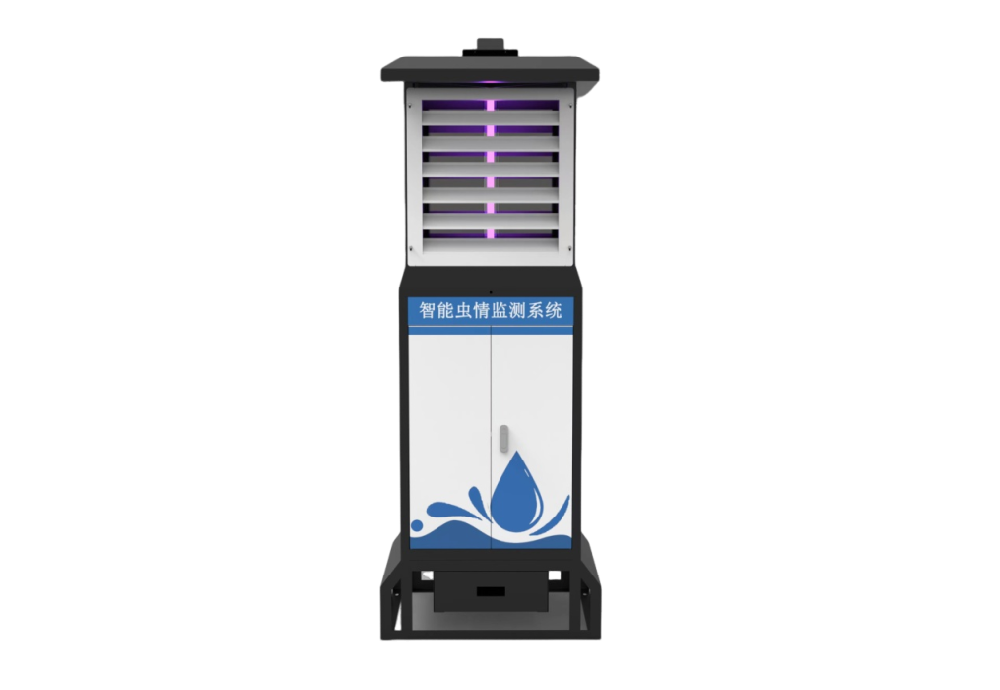
Start with the target pest, crop stage and field management zone. A camera-equipped trap records insects that enter it under its attraction method; it does not measure every insect in the crop. A single count cannot be converted into an infestation rate or a pesticide threshold without a local method. The decision plan should identify which detections prompt closer scouting, who confirms the species, which crop symptoms or life stages matter, and who has authority to approve a treatment.
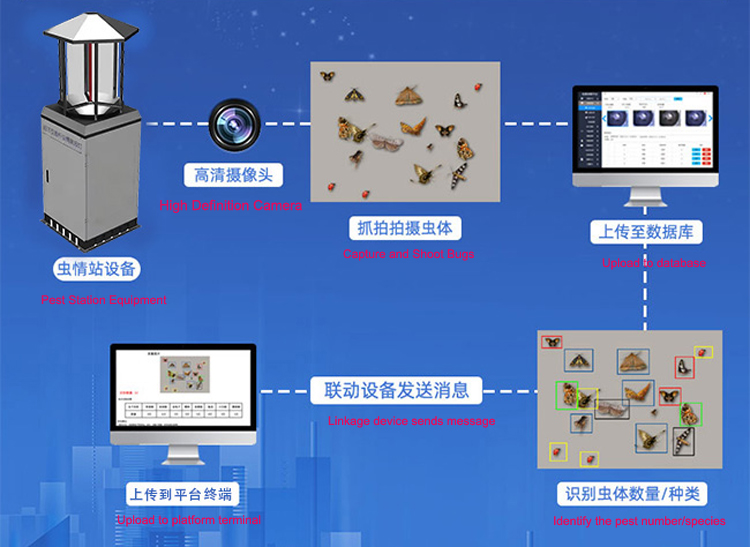
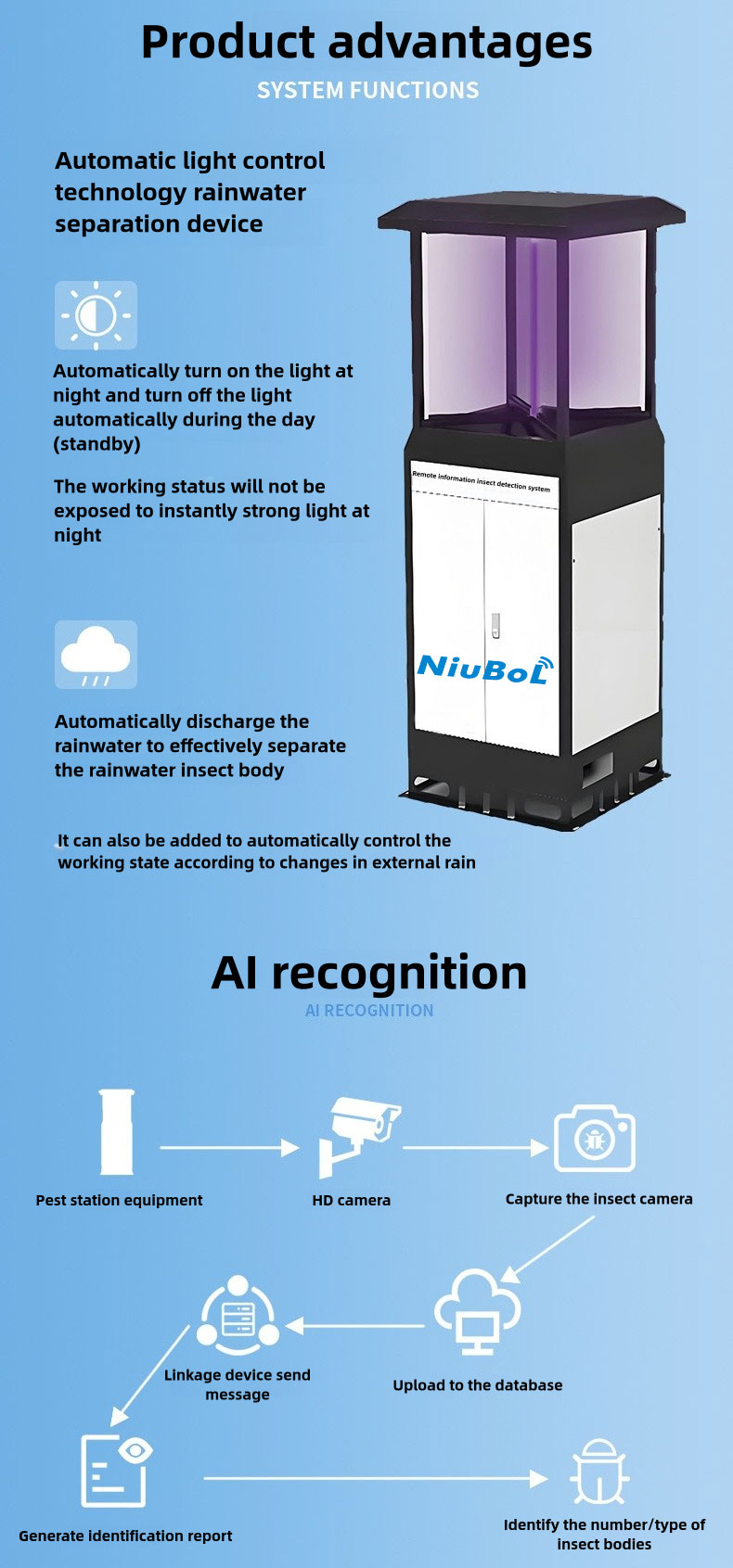
The NiuBoL NBL-IoT-SRPMS system can supply dated trap images and classification records. Keep the raw image available beside the automated label. For a costly or high-risk intervention, a qualified reviewer should be able to challenge an uncertain identification and record why the proposed action was accepted or rejected. This is different from using the device to claim universal identification performance; the field workflow is concerned with whether the evidence is sufficient for the next decision.
A practical alert has a site ID, capture time, target category, image, confidence or review status if available, recent trap service history and a clear requested action. 'High pest count' without the species, crop block or threshold basis creates extra work and can lead to blanket spraying. Set a time limit for reviewing alerts during the relevant season and define what happens when no trained reviewer is available.
| Decision stage | Evidence to check | Possible next action |
|---|---|---|
| Unusual trap record | Image quality, target label, station uptime and recent service | Review or request a new image; do not infer field infestation. |
| Confirmed target detection | Crop block, life stage, repeated records and scouting observations | Inspect the affected area and document crop condition. |
| Management threshold review | Locally approved threshold, crop stage, expected damage and beneficial insects | Ask the responsible agronomy team to select an intervention. |
| Intervention planning | Field access, weather, product label and available non-chemical measures | Approve, defer or reject treatment under the farm's protocol. |
| Follow-up | Scouting result, trap trend and treatment record | Check whether the action addressed the observed problem. |
This ladder prevents two common errors. One is using an automated species label as though it were a treatment threshold. The other is treating a drop in captures after spraying as proof of efficacy without checking trap operation and crop condition. Weather, nearby lights, lure condition and service downtime can change capture counts. The management record should retain those facts next to the chart.
The specific intervention is not a function of the trap controller. Local crop-protection protocols and product-label instructions govern pesticide selection and use. The monitoring system can improve the timeliness and traceability of observations, but it cannot independently approve a chemical application.
Draw field blocks, crop varieties, planting dates and known pest-entry routes. Place initial stations where staff can service them and where a record could change scouting priorities. A single trap near a road edge may be useful as a sentinel but cannot describe every interior block. If two areas differ in crop stage or pest history, keep their records separate rather than averaging them into one farm-wide number.
Record the trap location and attraction configuration. Moving a trap, changing a lure or altering its operating hours changes the basis of the count. The reporting platform should allow annotations and should show outages rather than plotting missing days as zero insects. For a network, use consistent station names linked to crop blocks and assign a field owner who can verify flagged events.
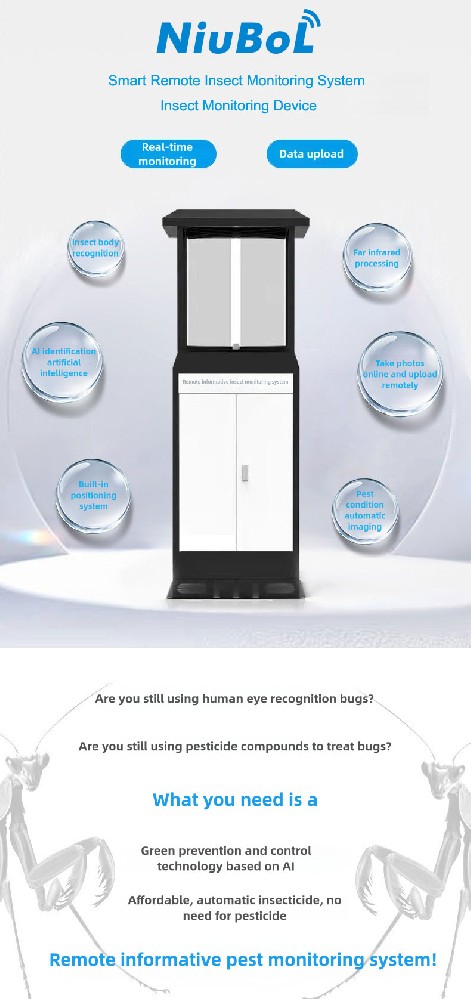
A remote trap, camera, power supply and upload link provide observations. A farm-management platform adds review queues, trends and action records. A PLC or RTU may receive status or numeric signals, but image transfer and species review usually require a separate data path. Confirm the exact ordered interface and sample payload before promising RS485/Modbus RTU integration to an existing controller. The presence of an industrial connector does not prove that every image label is exposed as a register.
For a remote station, test cellular coverage at the planned height and location. Determine whether images are stored locally during an outage, whether they retain original capture timestamps and how the system reports a low battery or full storage device. Size solar and battery capacity for the actual capture, processing and transmission schedule in the relevant season. The monitoring dashboard should make a silent station distinguishable from a genuinely low pest count.
Assign two roles in writing: the technician maintains the device and confirms data continuity; the agronomy reviewer interprets the pest evidence against crop conditions. Those roles can belong to one organization, but the handover must say who is responsible. A contractor who demonstrates a data upload has not thereby accepted responsibility for a spray decision.
Lens fouling, damaged specimens, power interruptions and attraction changes can alter image quality or capture rate. Record inspection and cleaning dates, consumables, software changes and any period when the trap was offline. A rise after cleaning may reflect improved capture or imaging rather than a sudden biological event. Likewise, a species classification model update should be documented if it changes labels assigned to similar images.
At commissioning, capture a representative image, verify its station ID and original timestamp, send it through the intended network, and demonstrate the review and correction workflow. Simulate a communication loss if local buffering is part of the purchase scope. Ask the end user to retrieve the raw image and export the associated decision record; a vendor-only dashboard with no project-access agreement may be insufficient for audit or later handover.
Specify crop and target pests, the number and location of pilot stations, attraction and image workflow, reporting interval, power and coverage conditions, data ownership, software term, spare parts and service visits. State whether the supplier provides only terminals or also installs the network, trains reviewers and configures alert routing. Request a pilot acceptance plan: usable images, timestamp accuracy, outage behavior, access to raw records and a manual-review demonstration. Do not ask for a universal reduction in pesticide use as a sensor acceptance criterion; that outcome depends on agronomy and farm decisions beyond the hardware.
For a distributor or systems integrator, the most useful quotation separates terminal hardware, mounting, solar system, SIM or network service, platform access, commissioning and maintenance. The farm can then compare a single-site pilot with an expanded network on the same scope. A low device-only price says little about the operating cost of a reviewed pest-management process.

It should not be treated as approval by itself. Confirm the image, crop block and field condition, then apply the farm's locally approved pest threshold and treatment protocol. The device can trigger inspection or a review task.
Keep the record as uncertain and request manual identification or fresh scouting. Do not convert an ambiguous label into a confirmed target count merely to fill a dashboard.
Start from management zones and the target pest's behavior. A pilot should test whether each station's observations change scouting coverage. More traps do not fix an attraction method that misses the target pest.
No. Review crop damage, scouting, trap uptime, attraction configuration and weather. A trap can show fewer captures because it was dirty, offline or moved.
Verify the ordered interface, station IDs, data payload, image access, timestamps, outage buffering and alert routing. If a PLC connection is specified, confirm which numeric or status fields are actually available over its protocol.
The farm's qualified crop-management team should define and review it for each crop and target pest. The installer can configure that approved rule but should not invent a universal count-to-spray threshold.
Witness a valid image, correct station location and time, upload to the agreed destination, a manual label review, an alert to the assigned recipient and documented recovery from a controlled outage. Retain the configuration and service instructions.
A pest control management system adds value when it shortens the path from a trustworthy field observation to a responsible decision. NiuBoL remote insect-monitoring terminals can provide images and time-series evidence; scouting, threshold selection and pesticide approval remain managed agronomic tasks. Specify that boundary before buying the network.
Prev:Dissolved Oxygen in Water Meter: Verify Wireless Pond Alert Delivery
Next:Industrial Wastewater COD Sensor: Validate Batch and Cleaning Events
Related recommendations
Sensors & Weather Stations Catalog
 Agriculture Sensors and Weather Stations Catalog-NiuBoL.pdf
Weather Stations Catalog-NiuBoL.pdf
Agriculture Sensors Catalog-NiuBoL.pdf
Water Quality Sensor Catalog-NiuBoL.pdf
Related products
 Combined air temperature and relative humidity sensor
 TDR Soil Moisture & Temperature Sensor for irrigation| RS485 |4-20mA| NBL-S-THR
 Soil pH sensor RS485 soil Testing instrument soil ph meter for agriculture |NBL-S-PH
 Wind Speed sensor Output Modbus/RS485/Analog/0-5V/4-20mA
 Tipping bucket rain gauge for weather monitoring auto rainfall sensor RS485/Outdoor/stainless steel
 Pyranometer Solar Radiation Sensor 4-20mA/RS485


Screenshot, WhatsApp to identify the QR code
WhatsApp number:+8615367865107
(Click on WhatsApp to copy and add friends)

