





— Blogs —
—Products—
 Consumer hotline +8618073152920
WhatsApp:+8615367865107
Address:Room 102, District D, Houhu Industrial Park, Yuelu District, Changsha City, Hunan Province, China
Product knowledge
Time:2026-08-17 09:07:00 Popularity:301
A wireless pond installation needs more than a dissolved oxygen in water meter that sends a plausible number to a screen. The operator must know when that number was measured, whether it is still current, and whether a low-oxygen notification reached someone able to act. Specify the oxygen probe and the alert delivery chain separately: a working probe does not prove that remote notification is working.
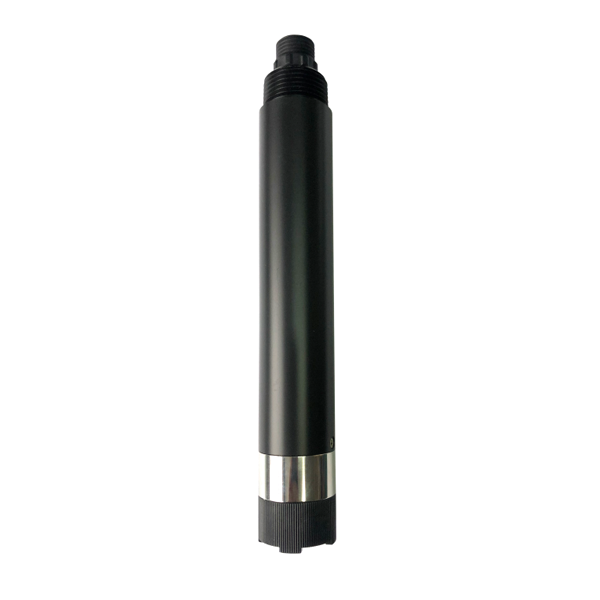
In this arrangement, an immersion probe measures oxygen and temperature. RS485 Modbus RTU carries the readings to a local PLC, RTU or data logger. A compatible gateway provides the wireless uplink. The receiving platform evaluates the agreed alarm conditions and sends notifications through its supported channels. Wireless service, alarm rules and message delivery are not inherent functions of the submerged probe.
Record three separate times where the selected equipment supports them: sample acquisition, platform receipt and notification dispatch. If acquisition timestamps are unavailable, identify exactly what the logger timestamp represents. A message sent promptly can still contain an old measurement after a stalled polling task or delayed upload.
| Oxygen probe | Measurement and electrical limits | Consequence for a pond alarm |
|---|---|---|
| NBL-WQ-DO | 0-20.00 mg/L; accuracy +/-2% FS; resolution 0.01 mg/L; 12-24 V DC; less than 0.3 W at 12 V | Full-scale accuracy corresponds to +/-0.4 mg/L over this span. Display resolution is not an alarm confidence margin. |
| NBL-WQ-DO-4A | 0-20.00 mg/L; accuracy +/-2% of reading; 12-24 V DC; 0.2 W at 12 V | Uses a different accuracy basis. Evaluate performance near the site's decision threshold rather than comparing decimal places. |
| Immersion conditions | Base DO: 0-45 degrees C, pressure below 0.2 MPa; DO-4A: 0-50 degrees C, pressure at or below 0.2 MPa; both IP68 | Check water conditions at the installed depth. Protect connections above the water as well as the probe. |
| Communication | RS485 Modbus RTU; optional 4-20 mA on DO-4A | Order the required interface and obtain the corresponding wiring and register information. Neither output alone supplies a wireless connection. |
Define oxygen thresholds with the farm's responsible aquaculture specialist using species, biomass, temperature and management practice. There is no universal safe alarm setting for all ponds. Account for measurement uncertainty and the time needed to reach the pond; do not merely copy another site's setpoint.
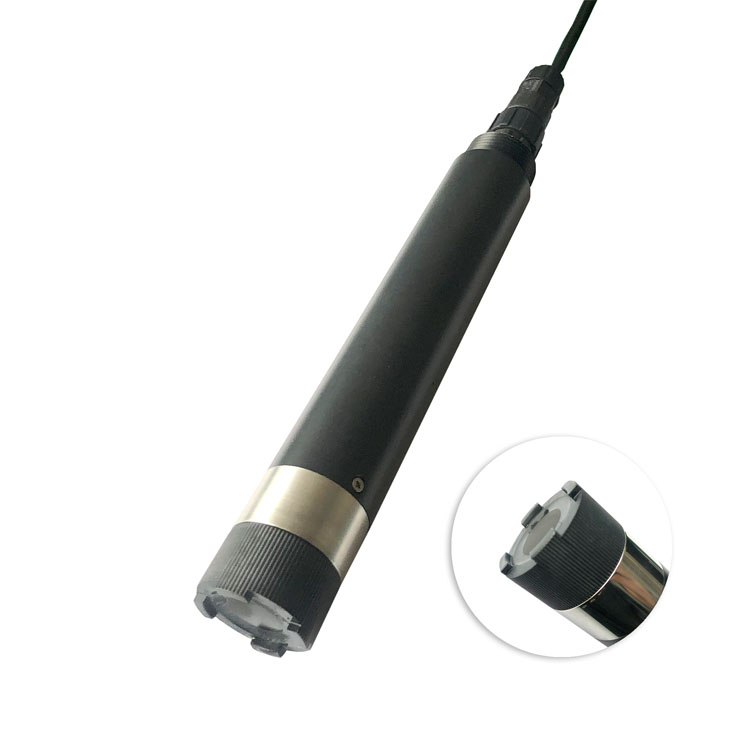
A low-oxygen alarm describes a valid measurement below a threshold. A stale-data alarm describes missing or outdated observations. These require different responses. An empty register or failed poll must not become 0.00 mg/L, and the last good value must not remain green indefinitely.
As an illustrative software test, suppose a logger polls every 30 seconds and uploads every two minutes. A three-minute-old platform reading may reflect the upload schedule; a ten-minute-old reading demands investigation. These are test settings, not recommended pond safety limits. Set the permitted data age from the farm's required response time and verify the chosen logger and platform can enforce it.
Use distinct messages for oxygen low, sensor communication lost and gateway offline. Include pond identity, measured value, unit, acquisition time and alarm state where supported. A dashboard receipt timestamp is insufficient if old data can be retransmitted after reconnection.
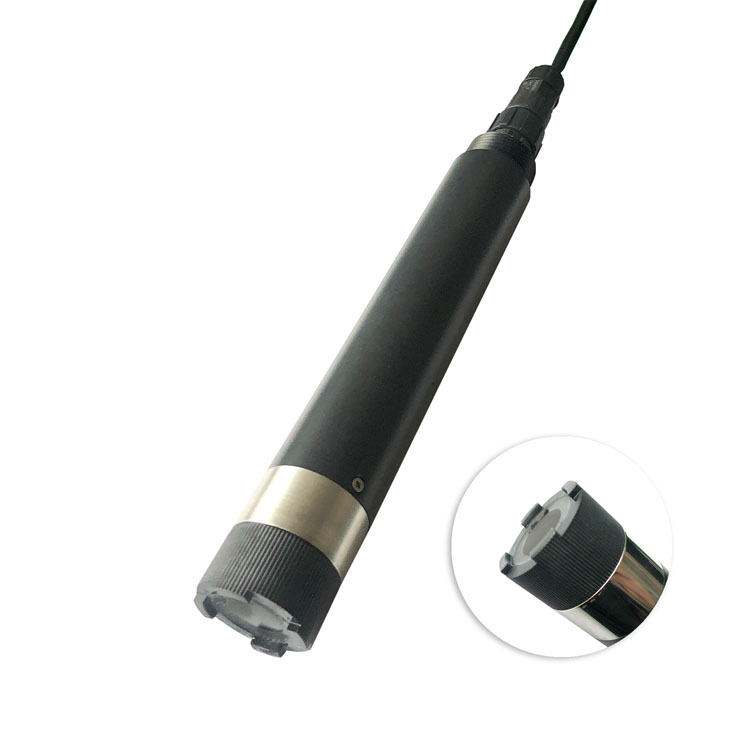
Aerator control should not depend on an internet path unless the control design explicitly accepts that dependency. Where local control is required, the control engineer should define behavior during sensor faults and uplink loss. A remote message cannot substitute for a functioning local control circuit.
Position the cap below the lowest expected water level, clear of sediment and direct bubble impingement. Avoid choosing the aerator's visibly oxygenated discharge solely because its mast offers convenient gateway mounting. Check whether the location represents the water occupied by the stock, including conditions before dawn and after feeding.
Secure the probe for retrieval without pulling its cable. Clean deposits, check the cap and compare an unexpected reading before changing calibration. Temperature compensation is automatic on these optical probes; salinity correction uses a configured value and does not independently measure changing salinity.
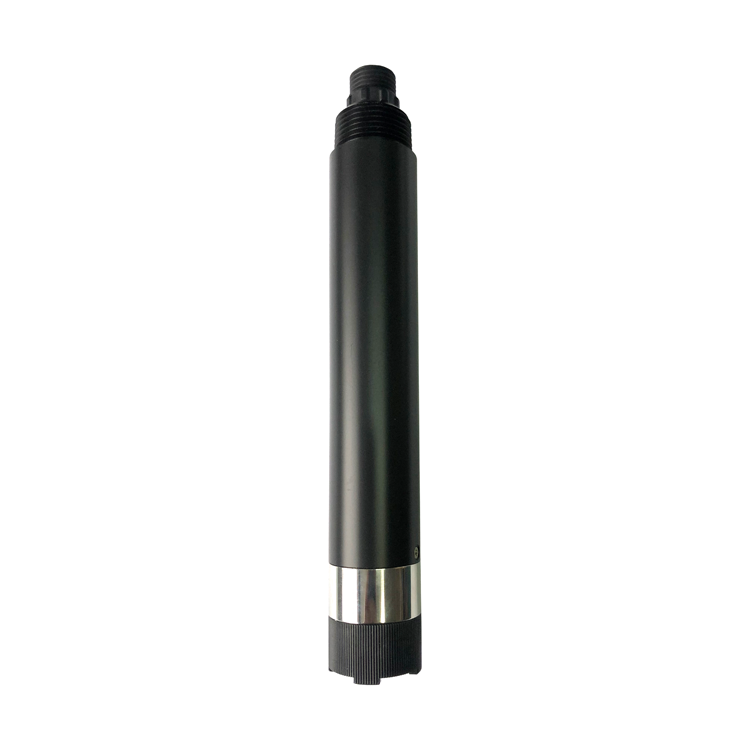
The listed probes provide a measurement interface, not a complete phone service. A compatible logger or controller, wireless gateway, receiving platform and configured notification channel are required. Ask the supplier to demonstrate the complete path with the proposed equipment.
Total delay includes measurement response, polling, alarm persistence, upload scheduling and notification delivery. Measure end-to-end delay during a controlled test. A short probe response time alone does not establish the operator's notification time.
That depends on the selected logger and gateway. Require a demonstration of local acquisition, any available buffering, timestamp retention and recovery behavior. If local aeration must continue without coverage, test the local control path independently.
Identify the probe model, cable, mounting, logger, gateway, antenna, supply and enclosure. State who provides the SIM or network subscription, platform and notification service. Provide pond locations and expected coverage so hardware and recurring services can be priced separately.
No. Also test stale readings, link loss, power recovery and the intended recipient's response. A test message proves only that a delivery path worked at that moment, not that oxygen data remain current during failures.
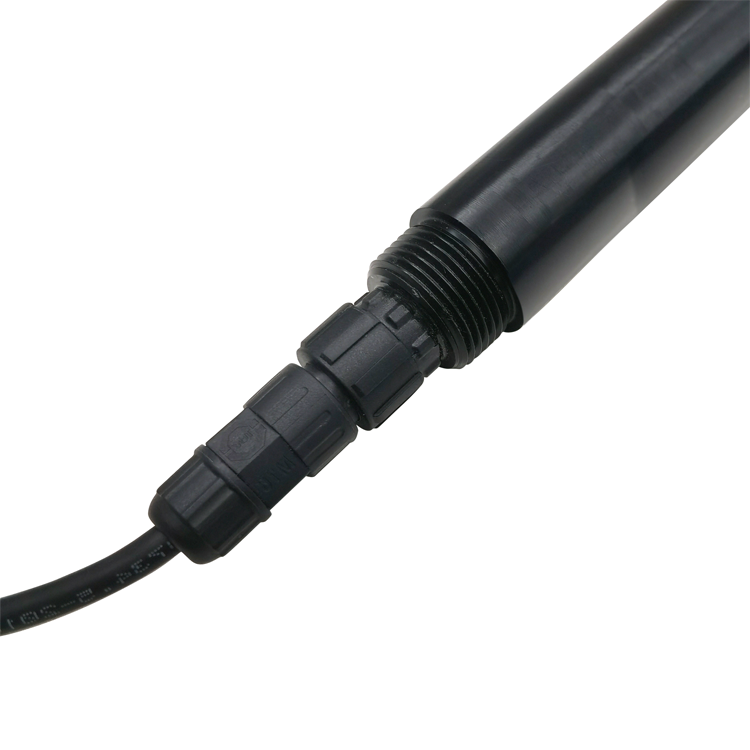
For wireless pond monitoring, select the oxygen probe on its actual accuracy basis and verify the route from a fresh measurement to an actionable notification. Send NiuBoL the pond layout, oxygen range, receiving equipment and required response time to review probe selection and the separate logging and communication components.
Prev:Online COD BOD TSS pH Analyzer: Four Channels, Different Methods
Next:Pest Control Management System: From Trap Records to Spray Decisions
Related recommendations
Sensors & Weather Stations Catalog
 Agriculture Sensors and Weather Stations Catalog-NiuBoL.pdf
Weather Stations Catalog-NiuBoL.pdf
Agriculture Sensors Catalog-NiuBoL.pdf
Water Quality Sensor Catalog-NiuBoL.pdf
Related products
 Combined air temperature and relative humidity sensor
 TDR Soil Moisture & Temperature Sensor for irrigation| RS485 |4-20mA| NBL-S-THR
 Soil pH sensor RS485 soil Testing instrument soil ph meter for agriculture |NBL-S-PH
 Wind Speed sensor Output Modbus/RS485/Analog/0-5V/4-20mA
 Tipping bucket rain gauge for weather monitoring auto rainfall sensor RS485/Outdoor/stainless steel
 Pyranometer Solar Radiation Sensor 4-20mA/RS485


Screenshot, WhatsApp to identify the QR code
WhatsApp number:+8615367865107
(Click on WhatsApp to copy and add friends)

