





— Blogs —
—Products—
 Consumer hotline +8618073152920
WhatsApp:+8615367865107
Address:Room 102, District D, Houhu Industrial Park, Yuelu District, Changsha City, Hunan Province, China
Product knowledge
Time:2026-08-17 09:06:00 Popularity:295
Quick Answer: An online COD BOD TSS pH analyzer package needs four clearly defined channels, not four measures of the same pollutant. COD and BOD optical probes provide water-dependent estimates, TSS optics need a solids correlation, and pH measures a different chemical property. Establish each channel's method and verification before treating the package as one monitoring result.
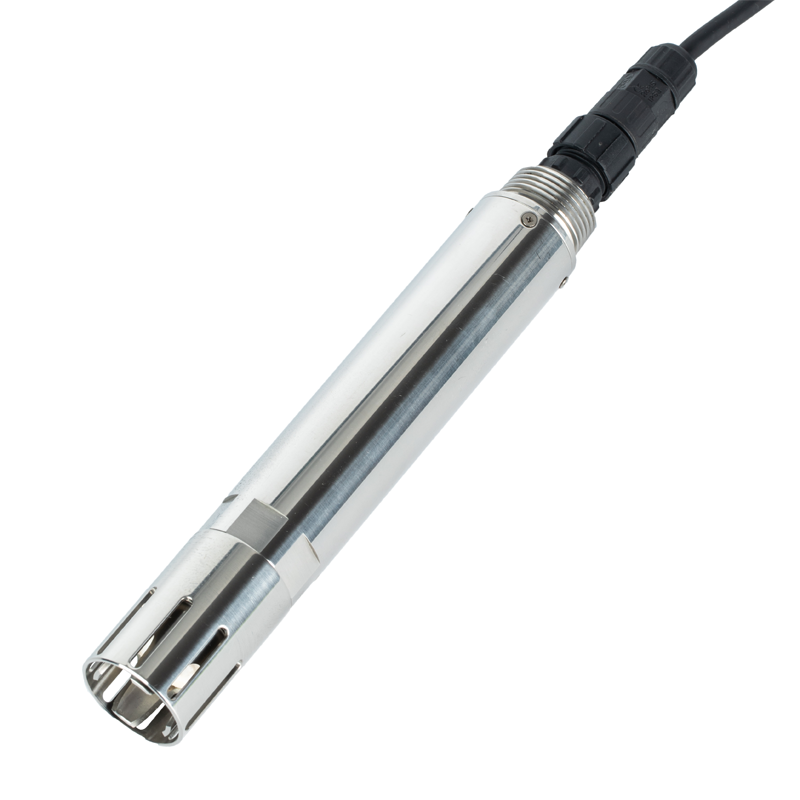
A wastewater contractor may receive a request for a single "four-parameter analyzer" even though the operating requirement involves several probes, different reference methods and separate service procedures. Begin with the process questions: organic-load warning, biological treatment assessment, solids carryover or acid/base control. The hardware list follows those questions.
A pH probe, shown above, supplies acidity/basicity information. It cannot establish oxygen demand or suspended-solids mass. Likewise, a high solids result does not identify the dissolved organic fraction, and an oxygen-demand estimate cannot tell the operator whether a pH electrode is functioning correctly.
| Channel | Measurement distinction |
|---|---|
| COD | Laboratory chemical oxygen demand uses a specified chemical method. A UV probe estimates a COD-related value from an optical response and calibration relationship. |
| BOD | BOD5 represents biological oxygen consumption during a defined five-day test. A fluorescence probe produces a rapid BOD-related estimate, not that incubation test. |
| TSS | A reference mass result depends on a specified filtration and drying procedure. An optical probe estimates concentration from scattering and its calibration. |
| pH | An electrochemical measure associated with hydrogen-ion activity; it is not an oxygen-demand or solids concentration. |
The EPA chemical-methods index lists distinct methods for these parameters, including continuous electrometric pH and gravimetric residue measurements. A matching unit on a probe display does not demonstrate that it performs a specified laboratory method. Agree the actual reporting requirement with the project owner.
The optical DO probe below measures oxygen at its sensing surface. It can be useful for biological-process observations or an appropriately configured laboratory procedure, but a single DO reading is not a BOD5 result. The incubation, sample preparation and quality controls of a BOD test remain separate tasks.
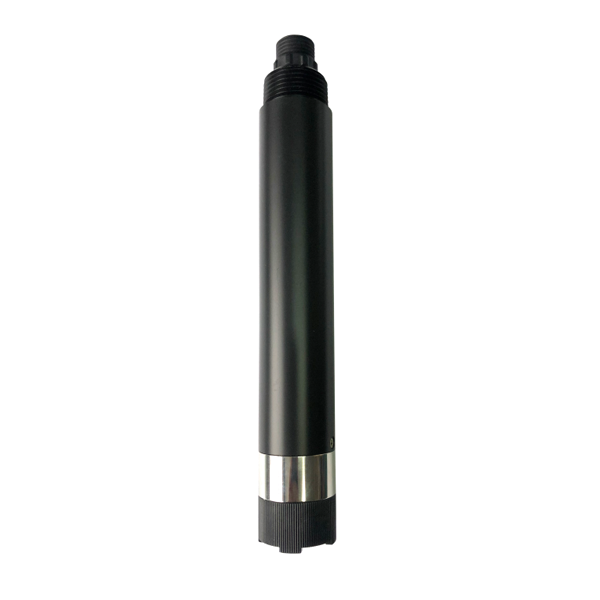
The NiuBoL NBL-WQ-BOD-4S instead uses fluorescence associated with organic substances. Its short optical response permits frequent observations, but that response time is not a shortened BOD5 incubation. A useful field comparison needs representative samples and an agreed relationship to the intended laboratory result.
There is no universal COD-to-BOD conversion that makes one probe a substitute for the other. A relationship established for a stable stream can change after a product switch, a new cleaning chemical or a different influent source. Keep the paired data and its applicable wastewater conditions with any adopted conversion.
Use BOD/COD ratios cautiously when evaluating biodegradability. A ratio calculated from two unqualified optical estimates can look precise while reflecting their calibration assumptions. Establish the relationship with suitable reference measurements before using the ratio in treatment decisions.
An online TSS result depends on the particles' optical properties as well as their mass. A change from one sludge or product residue to another can change the scattering response at the same mass concentration. Verify the relationship against appropriately collected solids samples over the expected range.
Salinity, illustrated below as an additional measurement, addresses dissolved salts. It is not TSS. If salt changes matter to the treatment assessment, record them on a separate channel rather than adding a salinity value to suspended-solids totals or treating it as proof of the cause of a BOD change.
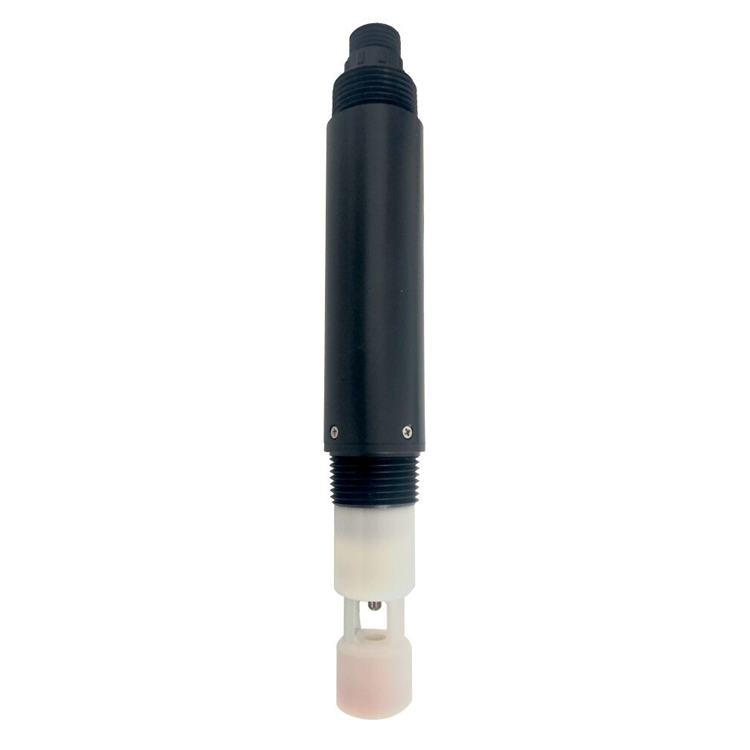
pH also requires its own sampling and calibration treatment. Verify it at a representative location with suitable buffers. Do not average pH values arithmetically and treat the result as equivalent to a flow-weighted mass concentration. Where a combined or composite sample is required, use the specified measurement procedure rather than inventing a four-channel averaging rule.
The following NiuBoL options illustrate a separately identified probe package. They do not establish that every four-parameter request fits one body or that every family accepts these four modules. Select the exact models, ranges and process connections for the installation.
| Probe option | Range and channel requirements |
|---|---|
| NBL-WQ-COD | 0-200 or 0-500 mg/L COD equivalent on a KHP basis; 0.1 mg/L resolution. Agree the selected accuracy basis and matrix comparison. |
| NBL-WQ-BOD-4S | 0-300 mg/L BOD-related optical estimate; 0.1 mg/L resolution. Specify the permissible comparison error at the intended operating concentrations. |
| NBL-WQ-TSS-4A | 0-2000 mg/L; stated accuracy term +/-5%, dependent on sludge homogeneity. Verify sample-specific concentration response. |
| NBL-WQ-PH-4S | 0-14 pH; 0.01 pH resolution; accuracy +/-0.1 pH. Verify the ordered version's temperature and process limits. |
For the COD channel, KHP identifies potassium hydrogen phthalate as the calibration basis; a plant sample still needs its own comparison. The BOD-related probe below should retain its own tag and reference relationship. A similar numerical range does not make the outputs equivalent, and neither instrument should inherit the other's coefficients merely because both report mg/L.

| Installation item | Requirements for the selected digital probes |
|---|---|
| Supply / output | 12-24 V DC; RS485 Modbus RTU. Confirm any optional analog output separately. |
| Stated probe consumption | COD 0.3 W at 12 V; BOD-4S, TSS-4A and PH-4S each 0.2 W at 12 V |
| COD and BOD-4S water limits | 0-45 degrees C; pressure below 0.1 MPa; 316L housing |
| TSS-4A water limits | 0-50 degrees C; pressure below 0.2 MPa; POM/ABS construction |
| Protection / cables | IP68 probes; standard 5 m cables, other lengths configurable. Confirm jacket and connection suitability for the actual exposure. |
| PH-4S construction | POM and 316L; suitable orientation, holder and wet-storage arrangement for the glass electrode |
The listed probe consumptions total 0.9 W at their stated 12 V operating points. That arithmetic is not a power-supply rating for a complete analyzer cabinet. Controllers, sampling equipment, communication and any event loads must be assessed separately.
Mechanical requirements differ as well. Protect optical paths from attached bubbles and deposits without changing which water reaches them. Keep the pH electrode in its permitted orientation. A common rack should accommodate those differences rather than force every probe into the same alignment.
Each device on a shared RS485 segment needs a unique address, compatible serial settings and its correct register decoding. The PLC, RTU or data logger should identify the channel's model, unit, measuring location and quality state. A value that stopped updating must not remain indistinguishable from a current observation.
For comparisons, record whether the reference is a grab sample or a time-composite sample. A momentary online value should not be expected to equal a result representing a different collection period. Where a side stream is used, account for its transit time before aligning samples and trends.
The turbidity probe below provides an NTU measurement. It can add particle-related context, but NTU is not automatically TSS in mg/L. If a turbidity channel is proposed instead of the selected TSS instrument, require a justified site-specific relationship and a suitable acceptance test.
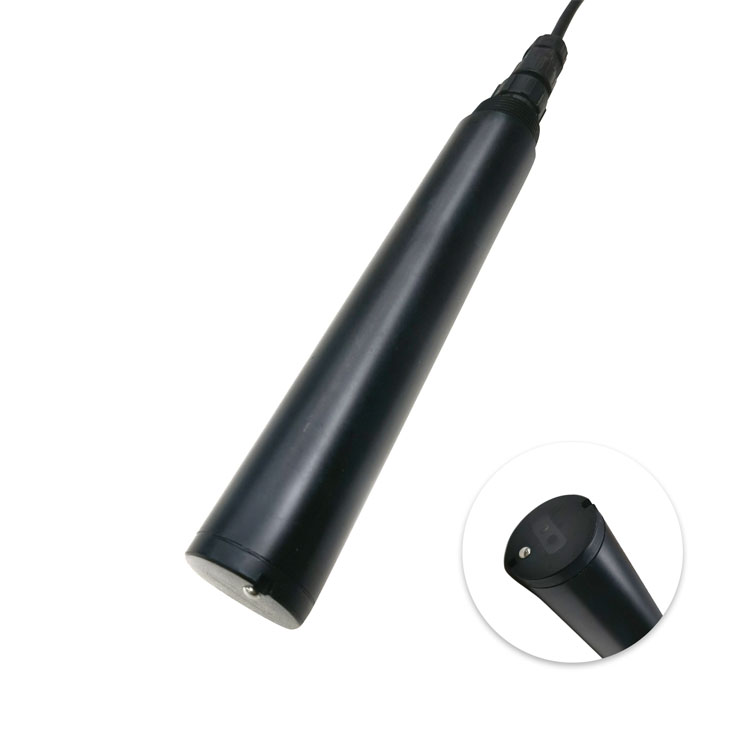
Check pH using appropriate standards and process observations. Check the optical channels with their suitable standards, then collect matched field comparisons covering normal operation and credible variations. For solids, protect sample representativeness; for oxygen-demand estimates, retain the laboratory method and relevant sample handling.
Test each communication loss separately and mark cleaning or calibration periods. Review how the final dashboard handles incomplete groups: a valid pH value does not make a missing COD value valid. If a calculation uses several channels, its result needs an invalid state whenever a required input is unavailable.
For selection, state the required error near the actual decision point rather than only requesting a broad catalog range. If a limit lies close to the method's usable low end, require evidence there. Do not impose the same percentage criterion on pH, TSS mass and two different optical estimates.
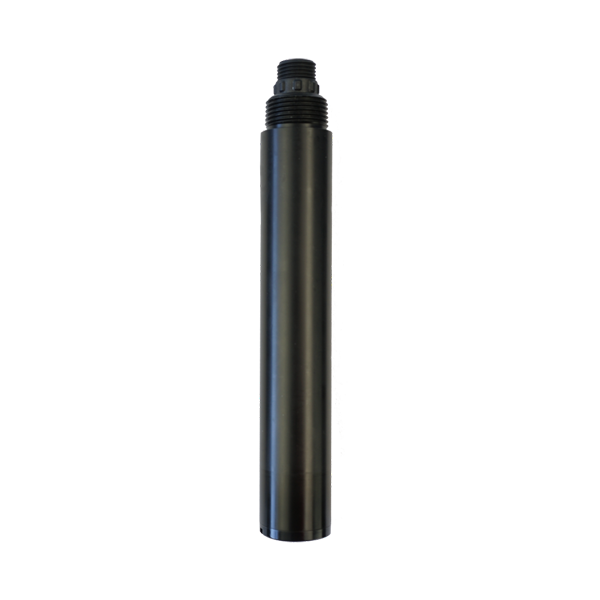
No. Confirm what each supplied channel actually measures and which reference methods the project requires. Optical estimates and a digital display do not establish equivalence to laboratory digestion, incubation or filtration procedures.
Only a suitably validated relationship can support that estimate for its stated wastewater conditions. Reassess it when composition changes; a fixed factor should not be treated as a direct biological oxygen-demand measurement.
Not by changing the unit label. Establish the required mass-concentration relationship, applicable sample types and comparison error. Particle changes can alter the relation even when both readings appear stable.
No. Verify addresses, serial settings, register formats, units and host capacity for each device. Mechanical conditions, power and individual maintenance procedures remain separate compatibility checks.
List the exact four channels, ranges, measurement bases, required reference checks and installation arrangement. Separate probes from the host, sample conditioning and integration work so a sensor set is not compared with a commissioned analyzer station.
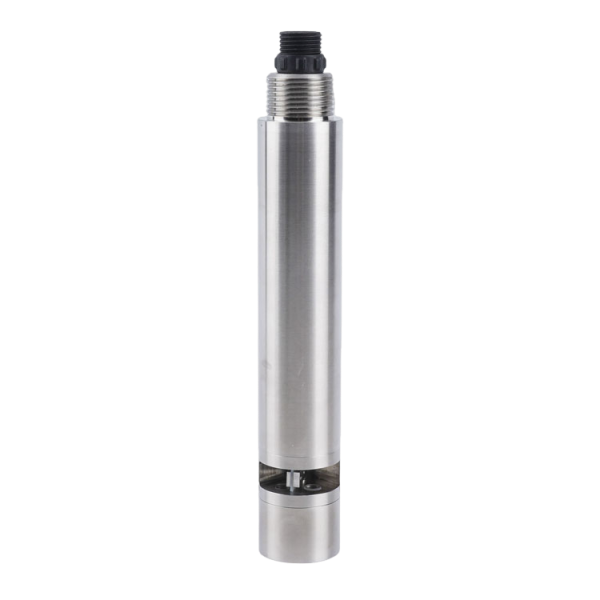
A four-channel package is useful when it retains four understandable measurement paths. Define the purpose and reference basis of each channel, qualify optical relationships for the water, and preserve individual quality states. NiuBoL probes can be configured around those requirements without presenting four different methods as one interchangeable pollution number.
Prev:TDS Water Sensor for Cooling-Tower Blowdown: Verify the EC Control Basis
Next:Dissolved Oxygen in Water Meter: Verify Wireless Pond Alert Delivery
Related recommendations
Sensors & Weather Stations Catalog
 Agriculture Sensors and Weather Stations Catalog-NiuBoL.pdf
Weather Stations Catalog-NiuBoL.pdf
Agriculture Sensors Catalog-NiuBoL.pdf
Water Quality Sensor Catalog-NiuBoL.pdf
Related products
 Combined air temperature and relative humidity sensor
 TDR Soil Moisture & Temperature Sensor for irrigation| RS485 |4-20mA| NBL-S-THR
 Soil pH sensor RS485 soil Testing instrument soil ph meter for agriculture |NBL-S-PH
 Wind Speed sensor Output Modbus/RS485/Analog/0-5V/4-20mA
 Tipping bucket rain gauge for weather monitoring auto rainfall sensor RS485/Outdoor/stainless steel
 Pyranometer Solar Radiation Sensor 4-20mA/RS485


Screenshot, WhatsApp to identify the QR code
WhatsApp number:+8615367865107
(Click on WhatsApp to copy and add friends)

