





— Blogs —
—Products—
 Consumer hotline +8618073152920
 WhatsApp:+8615367865107
Address:Room 102, District D, Houhu Industrial Park, Yuelu District, Changsha City, Hunan Province, China
Product knowledge
Time:2026-05-19 15:46:31 Popularity:339
In industrial automation and environmental protection projects, pH value is a key process control parameter, directly affecting reaction efficiency, equipment corrosion rate, microbial activity, and discharge compliance. When building SCADA, DCS, or IoT water quality monitoring platforms, system integrators require stable and reliable online pH sensors that can withstand complex working conditions, support standard industrial protocols, and facilitate long-term maintenance.
Traditional pH measurement faces problems such as electrode drift, temperature influence on internal resistance, and liquid junction contamination. The NiuBoL NBL-WQ-PH-4 series industrial online pH sensor adopts the glass electrode method combined with a patented reference system design, optimized for industrial field requirements to meet the stability demands of continuous online measurement.
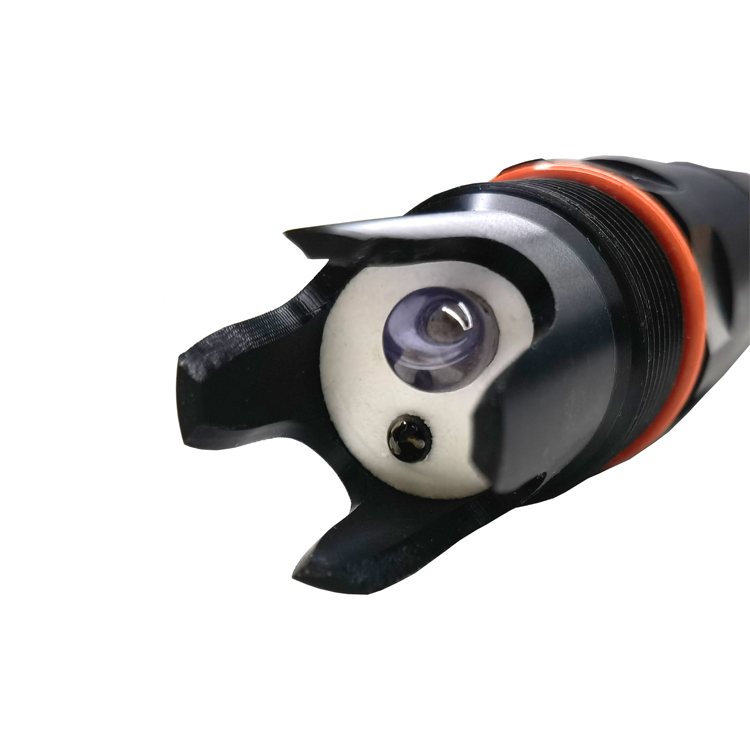
The measurement of pH combination electrodes is based on the hydrogen ion selective glass membrane potential. The following key characteristics exist in practical applications:
Asymmetric potential: Even with identical internal and external reference systems, a potential difference of several millivolts to tens of millivolts exists at the inner and outer interfaces of the glass bulb. This potential is related to the glass blowing process, surface contamination, or erosion and can be compensated by the instrument's zero adjustment.
Zero potential: Refers to the pH value of the solution when the electromotive force of the measuring cell is zero, mainly determined by the pH and chloride ion concentration of the internal reference solution. The polarity is stable near the zero potential point; attention must be paid to polarity changes when deviating.
Internal resistance: Mainly determined by the glass membrane, typically tens of megohms. For every 7°C decrease in temperature, the internal resistance approximately doubles (e.g., 50 MΩ at 28°C, up to 800 MΩ at 0°C). Low internal resistance electrodes have lower requirements for the input impedance of subsequent amplifier circuits.
Acid error and alkali error: Under high alkaline conditions (low hydrogen ion concentration), alkali metal ion interference causes the measured pH value to be lower than actual; under strong acidity (pH < 1~2), an acid error occurs, causing the reading to be higher than actual. In engineering, errors are controlled by combining temperature compensation and regular calibration.
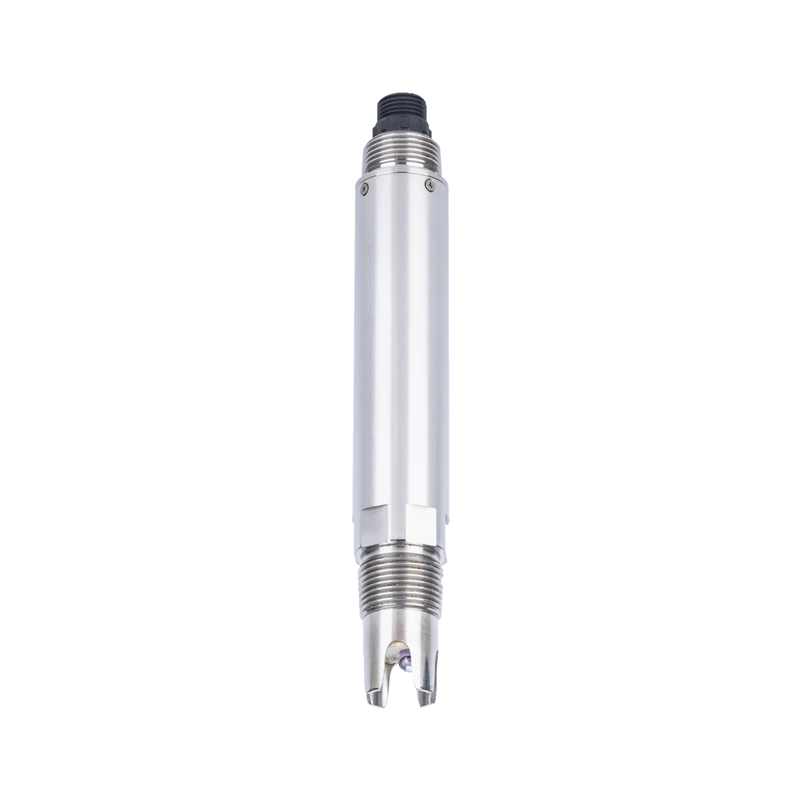
To ensure measurement accuracy and electrode life, the following specifications must be followed during on-site operation:
1. Before installation, check that there is no bubble at the front of the bulb; if bubbles exist, shake them out.
2. After removing from the soaking solution, shake dry in deionized water. Avoid wiping the bulb with paper towels to prevent static electricity effects. It is recommended to rinse with the measured solution.
3. After inserting into the solution, stir and shake several times, then let it stand still. For plastic shell electrodes, fully expel bubbles from the cavity between the bulb and the shell.
4. After testing viscous samples, rinse repeatedly with deionized water. If necessary, first clean with a suitable solvent and then reactivate.
5. Avoid prolonged contact with strong bases, corrosive solutions, or dehydrating media (such as absolute ethanol, concentrated sulfuric acid), as these media can damage the hydrated gel layer.
6. Plastic shell (PC material) electrodes are not suitable for environments containing solvents like carbon tetrachloride or trichloroethylene; use glass shell models instead.
The NiuBoL NBL-WQ-PH-4 industrial online pH sensor serves as a front-end acquisition unit, installed directly in reaction tanks, pipelines, or submersible mounting points. It connects via RS-485 or 4-20mA signal to PLCs, DCS, industrial controllers, or edge gateways, enabling real-time data acquisition, alarm linkage, and automatic dosing control. In IoT solutions, it can be combined with other NiuBoL water quality sensors to form multi-parameter monitoring nodes, supporting remote platform data upload.
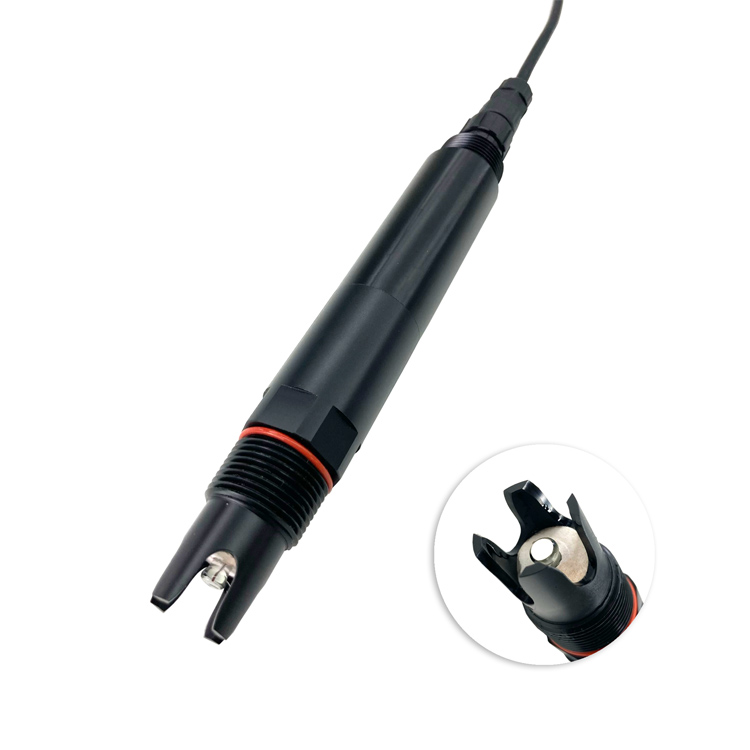
The sensor provides RS-485 (Modbus/RTU protocol) and 4-20mA current output, both directly compatible with mainstream industrial control systems. The Modbus RTU protocol supports multi-device bus networking with configurable addresses and flexible baud rate adjustment, facilitating integration with existing SCADA systems. The 4-20mA output is compatible with traditional analog input modules, enabling seamless replacement of old instruments.
| Parameter | NBL-WQ-PH-4A | NBL-WQ-PH-4S |
|---|---|---|
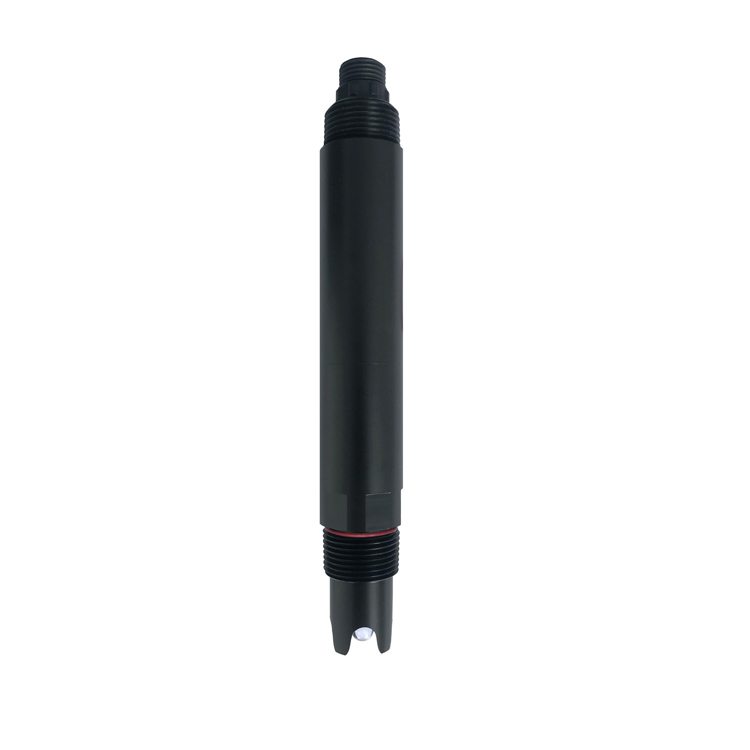
| Housing Material | POM + ABS | POM + 316L |
| Measuring Principle | Glass electrode method | Glass electrode method |
| Range | 0 – 14.00 | 0 – 14.00 |
| Resolution | 0.01 | 0.01 |
| Accuracy | ±0.1 pH, ±0.3°C | ±0.1 pH, ±0.3°C |
| Response Time (T90) | < 30 s | < 30 s |
| Temperature Compensation | Automatic (Pt1000) | Automatic (Pt1000) |
| Output Signal | RS-485 (Modbus/RTU), 4-20mA (optional) | RS-485 (Modbus/RTU), 4-20mA (optional) |
| Operating Temperature | 0 – 50°C | 0 – 50°C |
| Operating Pressure | ≤0.2 MPa | ≤0.2 MPa |
| Protection Class | IP68 | IP68 |
| Installation Method | 3/4 NPT thread, submersible | 3/4 NPT thread, submersible |
| Power Supply | 12 – 24 VDC | 12 – 24 VDC |
| Cable Length | 5 meters (customizable) | 5 meters (customizable) |
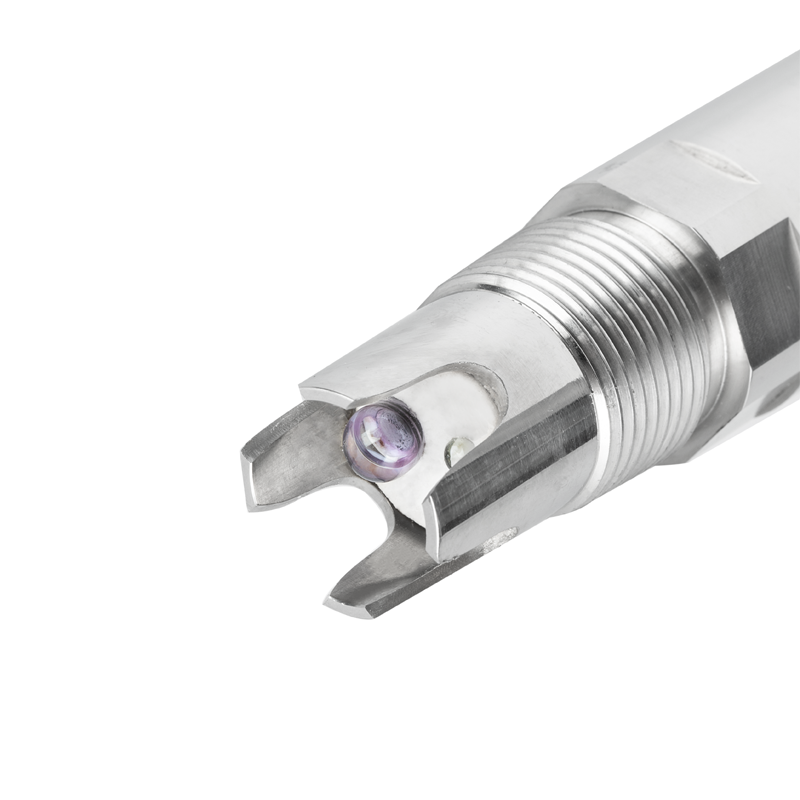
Wastewater treatment plant online monitoring: Installed in aeration tanks, sedimentation tanks, and discharge outlets for continuous pH monitoring and neutralization system linkage, ensuring effluent pH stabilizes within the 6-9 range.
Chemical and pharmaceutical process control: Precise pH control in reaction vessels, combined with automatic acid/alkali dosing devices, reducing batch fluctuations and improving product yield and consistency.
Industrial circulating cooling water systems: Monitor cooling tower water quality to prevent scaling, corrosion, or microbial growth caused by pH deviation, extending equipment service life.
Electroplating and surface treatment production lines: Real-time monitoring of bath pH to maintain process stability and avoid product quality defects.
Food & beverage and paper industries: pH control in raw water treatment and production processes to meet process and hygiene requirements, supporting data traceability.
Select the appropriate model according to working conditions: NBL-WQ-PH-4A is recommended for general water quality; NBL-WQ-PH-4S (316L housing) is suitable for applications with certain corrosiveness or requiring higher structural strength. The range covers 0-14 pH, meeting most industrial needs. Consider installation position pressure (≤0.2 MPa), temperature range, and whether 4-20mA output is required. For long-term operation projects, evaluate reference solution exudation stability and maintenance intervals.
- Thoroughly rinse the electrode with deionized water or the measured solution before installation to remove bubbles.
- Use shielded cables for signal lines; for RS-485 bus, daisy-chain wiring is recommended with terminating resistors at the ends.
- Perform regular two-point calibration (commonly using pH 4.00 and 6.86 or 9.18 buffer solutions). Calibration intervals depend on working conditions.
- Avoid storing the electrode in a dehydrated environment for long periods; regularly check the state of the glass bulb's hydrated layer.
- For plastic shell models, pay attention to medium compatibility and avoid solvent contact.
- Ensure power supply and grounding meet industrial EMC requirements to prevent common-mode interference from affecting high-impedance measurements.
Q1: pH electrode internal resistance is greatly affected by temperature. How to ensure measurement stability in low-temperature environments?
A1: Automatic Pt1000 temperature compensation combined with low internal resistance glass membrane design effectively reduces the impact of temperature on measurement accuracy.
Q2: What is the alkali error of a pH electrode? How to reduce deviation in high pH solutions?
A2: Alkali error causes low readings at high pH. In engineering, select dedicated low-alkali-error electrodes and combine with frequent calibration and temperature compensation for control.
Q3: What are the characteristics of the NBL-WQ-PH-4 reference system?
A3: It adopts a patented microporous salt bridge design. The internal reference solution slowly exudes forward under pressure ≥100 kPa, lasting over 20 months, significantly extending electrode life and stability.
Q4: What is the main difference between NBL-WQ-PH-4A and NBL-WQ-PH-4S?
A4: The main difference is the housing material. The 4S uses 316L stainless steel, making it more suitable for applications with corrosive media.
Q5: Is the sensor compatible with third-party PLC integration?
A5: Yes, it supports Modbus RTU protocol and 4-20mA output, directly connectable to mainstream PLC and DCS systems.
Q6: How to determine if custom cable length is needed?
A6: The standard 5-meter cable is suitable for most submersible installations; deep wells or long-distance pipeline installations may require custom length in advance.
Q7: How to verify sensor performance during project acceptance?
A7: Perform on-site two-point calibration using standard buffer solutions, combined with multi-point comparison testing, to confirm that accuracy and response time meet technical parameter requirements.
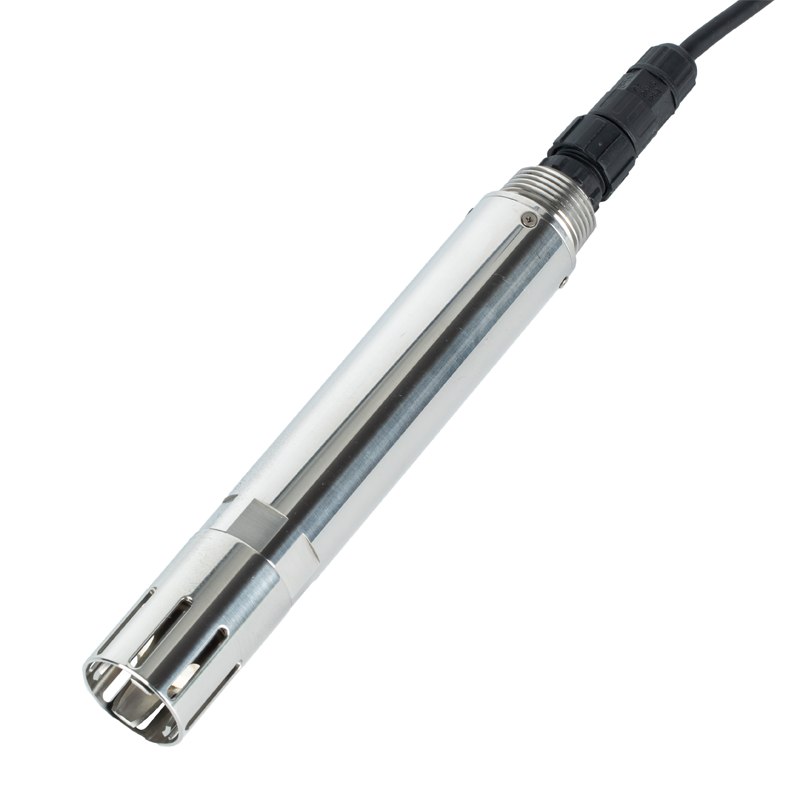
The NiuBoL NBL-WQ-PH-4 industrial online pH sensor, based on the glass electrode method, combined with a stable patented reference system and standard industrial communication interfaces, provides a reliable front-end solution for automation control projects in water treatment, chemical, environmental protection, and other fields. Its clear electrical characteristics, standardized usage requirements, and good protocol compatibility help system integrators reduce integration difficulty and improve long-term system stability.
In engineering procurement decisions, it is recommended to conduct selection verification based on specific medium characteristics, installation environment, and control system architecture, and to establish reasonable calibration and maintenance plans to achieve optimal cost-performance and operational reliability. For further integration solution discussions or prototype testing, welcome to provide operating condition parameters for targeted evaluation.
 NBL-WQ-PH Online Water Quality pH Sensor.pdf
Related recommendations
Sensors & Weather Stations Catalog
Agriculture Sensors and Weather Stations Catalog-NiuBoL.pdf
Weather Stations Catalog-NiuBoL.pdf
Agriculture Sensors Catalog-NiuBoL.pdf
Water Quality Sensor Catalog-NiuBoL.pdf
Related products
 Combined air temperature and relative humidity sensor
 TDR Soil Moisture & Temperature Sensor for irrigation| RS485 |4-20mA| NBL-S-THR
 Soil pH sensor RS485 soil Testing instrument soil ph meter for agriculture |NBL-S-PH
 Wind Speed sensor Output Modbus/RS485/Analog/0-5V/4-20mA
 Tipping bucket rain gauge for weather monitoring auto rainfall sensor RS485/Outdoor/stainless steel
 Pyranometer Solar Radiation Sensor 4-20mA/RS485

Screenshot, WhatsApp to identify the QR code
WhatsApp number:+8615367865107
(Click on WhatsApp to copy and add friends)

