





— Blogs —
—Products—
 Consumer hotline +8618073152920
 WhatsApp:+8615367865107
Address:Room 102, District D, Houhu Industrial Park, Yuelu District, Changsha City, Hunan Province, China
Product knowledge
Time:2026-05-19 15:22:17 Popularity:376
In water treatment and disinfection processes, total chlorine and free chlorine are key control indicators. Free chlorine mainly refers to available chlorine existing in the form of hypochlorous acid, hypochlorite, and dissolved elemental chlorine; total chlorine includes the sum of free chlorine and combined chlorine. The NiuBoL electrode method is based on the constant-voltage electrochemical measurement principle, achieving on-site rapid and reliable detection.
The working electrode assembly consists of two dedicated working electrodes, a reference electrode, and a counter electrode. The free chlorine electrode surface is coated with tetramethylbenzidine. Under a fixed voltage, free chlorine undergoes a reduction reaction on the electrode surface, releasing electrons and generating current. The total chlorine electrode is coated with potassium iodide, prompting combined chlorine to participate in the same reduction process. The current intensity is linearly proportional to the chlorine concentration in the water sample. The concentration is calculated by recording the current-time curve in real time.
This method features fast response speed and is less affected by turbidity and color, making it suitable for online or portable deployment.
Chlorine dioxide generates a similar reduction reaction on the electrode surface, causing interference. It is highly volatile and can be effectively removed by aerating the water sample with air for 5 minutes. The instrument's acceptable pH range is 4–9. Exceeding this range affects the electrode reaction efficiency and current stability, requiring pre-adjustment. The temperature compensation function automatically corrects measurement deviations within 0–50°C.
Sodium hydroxide solution (2.0 mol/L): For fixing water samples. Dissolve 80 g NaOH in pure water and dilute to 1 L.
Laboratory Grade 1 pure water: For blank tests and reagent preparation.
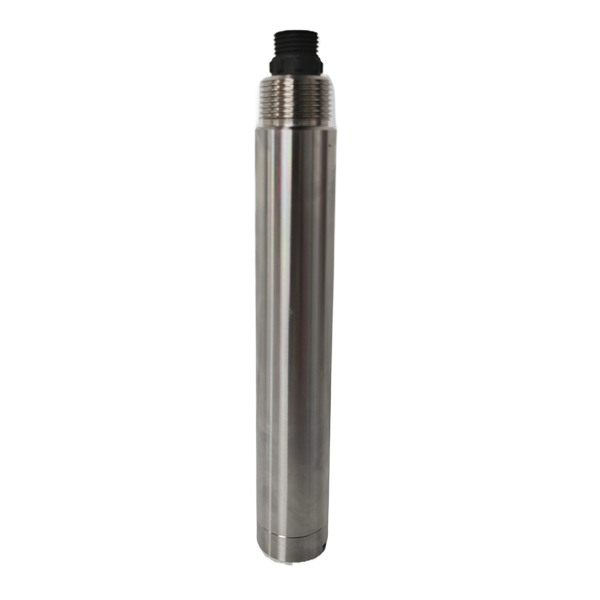
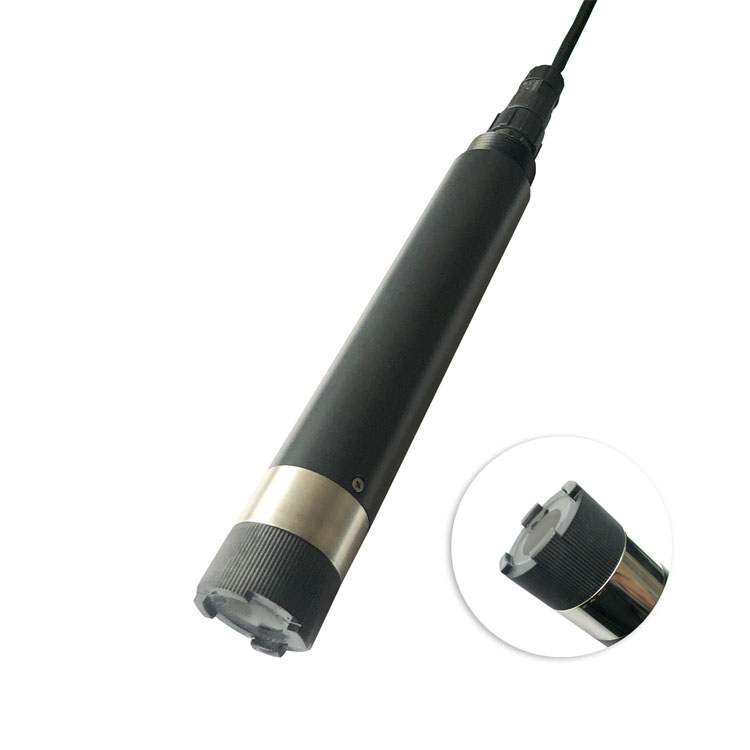
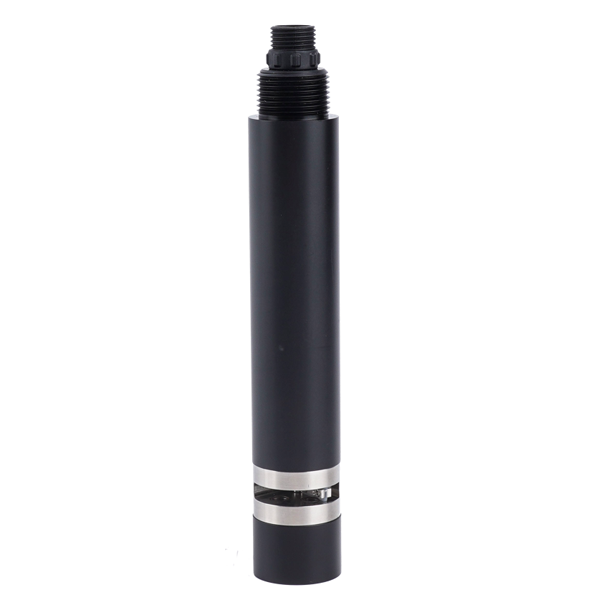
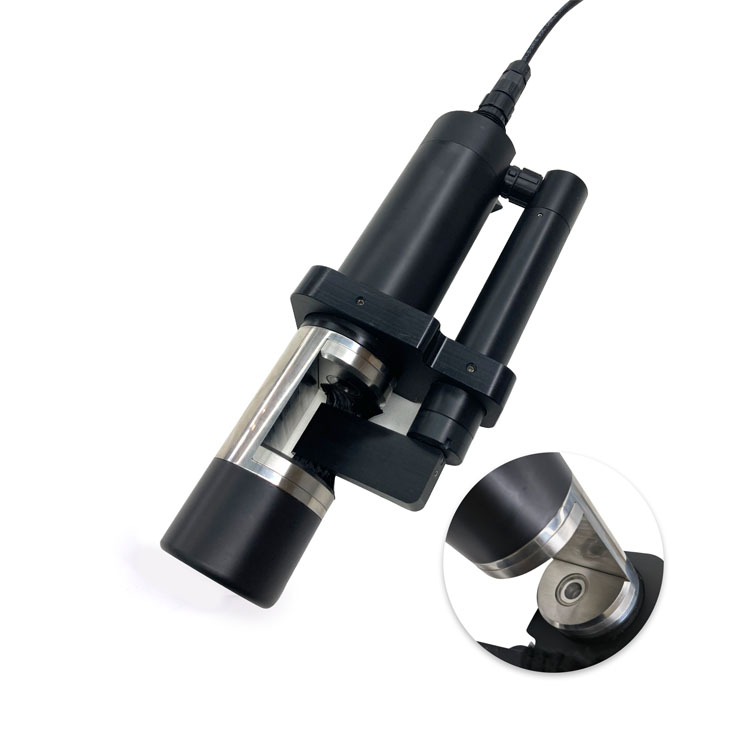
NiuBoL Portable Electrochemical Chlorine Analyzer: Integrates free chlorine electrode, total chlorine electrode, reference electrode, supports temperature compensation and RS-485/4-20mA output.
Instrument operating environment: Temperature 0–50°C, humidity ≤90%.
| Parameter | Specification (Free Chlorine) | Specification (Total Chlorine) | Remarks |
|---|---|---|---|
| Measuring Principle | Constant-voltage electrochemical method | Constant-voltage electrochemical method (potassium iodide activation) | Dual electrode set |
| Range | 0–2.000 mg/L (typical) / 0–20 mg/L (extended) | 0–2.000 mg/L / 0–200 mg/L | As Cl₂ |
| Resolution | 0.001 mg/L | 0.01 mg/L | - |
| Accuracy | ≤±0.05 mg/L (10 mg/L, 20°C); ≤±2 mg/L (20 mg/L, 10°C) | ≤±0.5 mg/L (10 mg/L, 20°C); ≤±10 mg/L (200 mg/L, 10°C) | Meets engineering requirements |
| pH Range | 4–9 | 4–9 | Adjust if out of range |
| Temperature Range | 0–50°C (auto compensation) | 0–50°C (auto compensation) | Pt1000 |
| Response Time (T90) | <90 s | <90 s | - |
| Output Signal | RS-485 (Modbus RTU), 4-20mA | Same as left | Compatible with PLC/SCADA |
| Protection Class | IP68 | IP68 | Long-term immersion |
| Power Supply | 12–24 VDC | 12–24 VDC | Low power consumption |
| Operating Pressure | ≤0.2 MPa | ≤0.2 MPa | Flow cell installation |
Data are based on typical specifications of the NiuBoL series chlorine sensors and industry standards.
Free chlorine and total chlorine are chemically unstable; on-site immediate determination is recommended. For preservation, pre-add 1% of the sampling volume of 2.0 mol/L NaOH solution to an amber glass bottle, fill completely with the water sample, and seal immediately to avoid air contact. For acidic water samples, increase the amount of NaOH to ensure pH >12. Turbidity and color do not significantly affect the electrode method. Control the water sample temperature within 2–35°C. Under dark conditions at 4°C, it can be stored for up to 5 days before determination.
6.1 Connect the working electrode assembly to the analyzer and check instrument performance.
6.2 Test blank pure water; the reading should be below the method detection limit.
6.3 Adjust the water sample pH to the range of 4–9.
6.4 Rinse the measuring cup with the water sample to be tested, then measure to the line.
6.5 Select free chlorine or total chlorine measurement mode, insert the electrode assembly into the water sample, wait for the reading to stabilize, and record.
6.6 After measurement, clean the electrode and cup, and turn off the instrument.
Free chlorine concentration (C1) and total chlorine concentration (C2) are directly displayed by the instrument (mg/L as Cl₂). Combined chlorine concentration C3 = C2 – C1. If the water sample is diluted, multiply by the dilution factor.
Drinking water treatment plants and network monitoring: NiuBoL chlorine electrodes support real-time online deployment at finished water outlets and key network points, enabling closed-loop control with automatic chlorination systems, ensuring residual chlorine remains within the qualified range.
Industrial circulating cooling water disinfection: Monitor total and free chlorine in circulating water to prevent microbial growth while avoiding equipment corrosion and disinfection byproduct formation due to excess chlorine.
Swimming pool and landscape water treatment: Suitable for both portable and online modes, providing rapid response to water quality changes and maintaining safe disinfection levels.
Wastewater treatment plant effluent disinfection: Ensure total chlorine in discharged water meets environmental standards, supporting remote SCADA integration.
Q1: What are the main advantages of the electrode method compared to the DPD spectrophotometric method?
A1: The electrode method requires no colorimetric reagents, responds faster, is less affected by water sample color and turbidity, and is suitable for online continuous monitoring.
Q2: How to effectively remove chlorine dioxide interference?
A2: Aerate with air for 5 minutes; its volatility allows significant reduction of interference.
Q3: Can water samples with pH outside the 4–9 range be measured directly?
A3: No. The pH must be adjusted to the specified range using buffer solutions or NaOH/HCl; otherwise, accuracy decreases.
Q4: How to calibrate the NiuBoL chlorine electrode?
A4: Use two-point calibration: zero point (chlorine-free pure water) and slope (standard solution of known concentration). For new electrodes, it is recommended to activate them in tap water for 24 hours.
Q5: What is the maximum storage period for preserved water samples before determination?
A5: Under dark conditions at 4°C and sealed, determination should be completed within 5 days. Beyond this period, re-sampling is recommended.
The NiuBoL electrode method for total and free chlorine in water provides a practical choice for system integrators, IoT solution providers, and water treatment engineering contractors based on reliable constant-voltage electrochemical principles, clear operational procedures, and engineering-grade technical parameters. In the fields of drinking water safety, industrial process control, and environmental monitoring, this technology can effectively enhance automation levels, reduce labor costs, and ensure water quality compliance. Through proper selection, standardized sampling, and regular maintenance, long-term stable operation can be achieved.
For product selection, technical integration solutions, or on-site application support, it is recommended to further evaluate based on specific operating conditions (such as range, installation method, communication requirements).
Prev:Smart Aquaculture & Water Treatment: Ammonia Nitrogen Control & Online Sensor Integration Guide
Next:NiuBoL Routine Wastewater Treatment Online Monitoring Parameters & Sensor System Integration Guide
Related recommendations
Sensors & Weather Stations Catalog
 Agriculture Sensors and Weather Stations Catalog-NiuBoL.pdf
Weather Stations Catalog-NiuBoL.pdf
Agriculture Sensors Catalog-NiuBoL.pdf
Water Quality Sensor Catalog-NiuBoL.pdf
Related products
 Combined air temperature and relative humidity sensor
 TDR Soil Moisture & Temperature Sensor for irrigation| RS485 |4-20mA| NBL-S-THR
 Soil pH sensor RS485 soil Testing instrument soil ph meter for agriculture |NBL-S-PH
 Wind Speed sensor Output Modbus/RS485/Analog/0-5V/4-20mA
 Tipping bucket rain gauge for weather monitoring auto rainfall sensor RS485/Outdoor/stainless steel
 Pyranometer Solar Radiation Sensor 4-20mA/RS485

Screenshot, WhatsApp to identify the QR code
WhatsApp number:+8615367865107
(Click on WhatsApp to copy and add friends)

