





— Blogs —
—Products—
 Consumer hotline +8618073152920
 WhatsApp:+8615367865107
Address:Room 102, District D, Houhu Industrial Park, Yuelu District, Changsha City, Hunan Province, China
Product knowledge
Time:2026-05-18 09:09:39 Popularity:475
In modern smart aquaculture (especially Recirculating Aquaculture Systems - RAS) and industrial water treatment projects, the control of ammonia nitrogen (NH3-N) directly determines the success or failure of the system. Total ammonia nitrogen (TAN) in aquaculture water consists of unionized ammonia (NH3) and ionized ammonium (NH4+). Among these, unionized ammonia (NH3) is highly lipid-soluble and easily penetrates cell membranes, causing fatal toxicity to aquatic organisms such as fish and shrimp.
According to fishery water quality standards, the molecular ammonia (NH3) content in aquaculture water must be strictly controlled below 0.2 mg/L.
When 0.2 mg/L ≤ NH3 ≤ 0.5 mg/L, fish and shrimp may experience acute or chronic poisoning, leading to reduced feed intake, tissue damage, gill permeability disruption, and severely stunted growth.
When NH3 ≥ 0.5 mg/L, it can cause hyperexcitability, loss of balance, convulsions, and even large-scale acute mortality.
For IoT solution providers and engineering contractors, ammonia nitrogen in water mainly originates from decomposition of residual feed, ammonia excretion by aquatic organisms, and anaerobic biochemical reactions under anoxic conditions. Since ammonia poisoning often occurs suddenly and traditional aerators have no direct effect on eliminating ammonia toxicity, system integrators must build highly real-time, high-frequency, automated monitoring and control systems without manual intervention, achieving continuous data logging and closed-loop actuator coordination (e.g., automatic water exchange, sludge discharge, or biofilter activation).
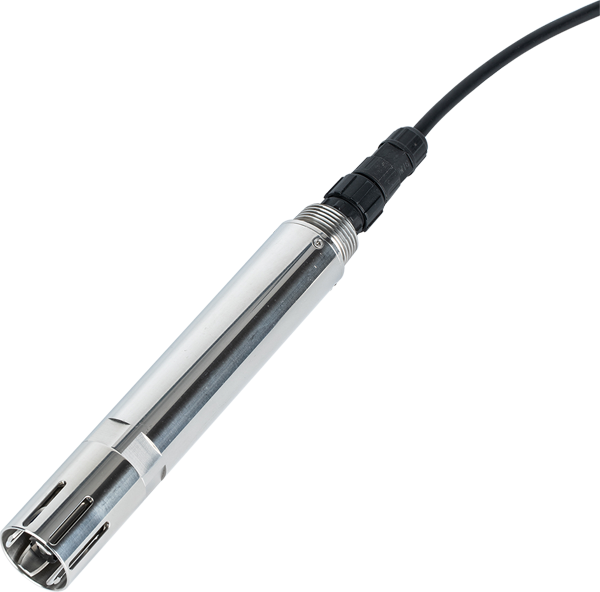
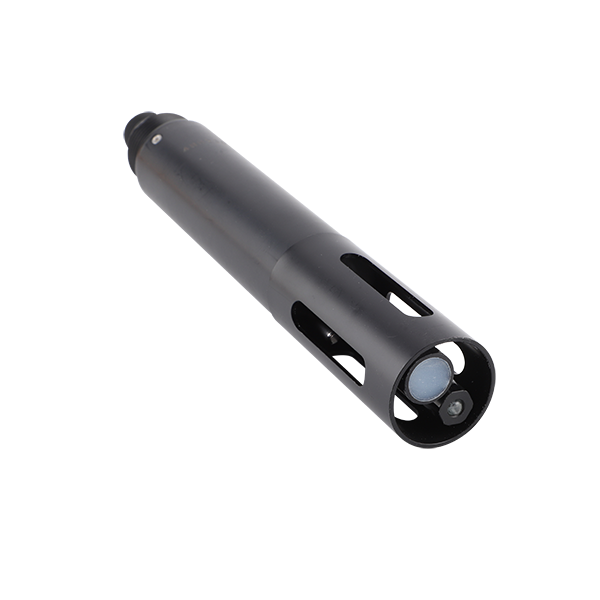
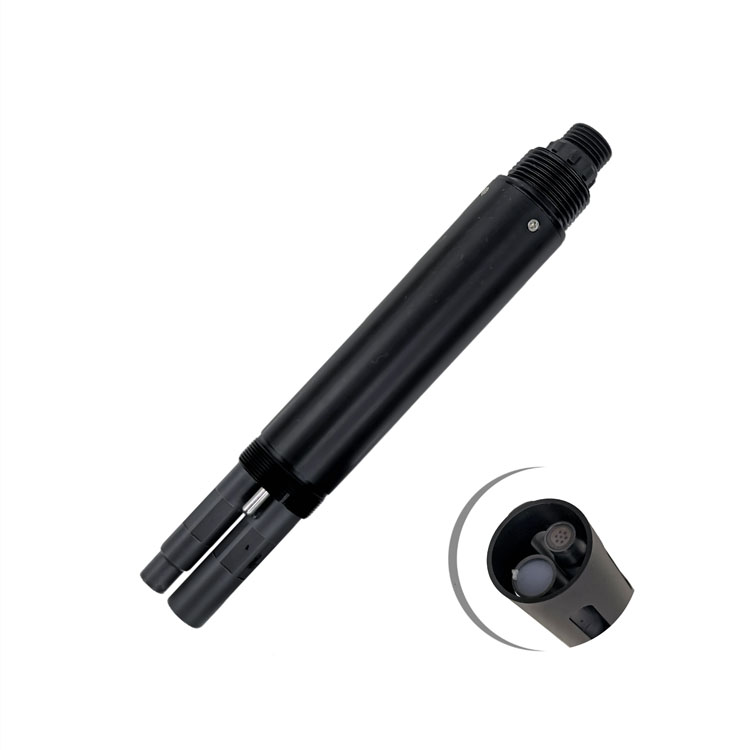
In the overall water quality IoT or industrial control system, the NiuBoL Ammonia Nitrogen Sensor (Model: NBL-WQ-NHN) sits at the core interface between the perception layer and the execution layer:
[Water Environment / Measured Medium]
       │
       ▼
[NiuBoL Online Ammonia Sensor (Perception Layer)]  ───(Built-in Temp/Data Compensation)
       │
       ▼  [RS-485 bus / Modbus RTU protocol]
[PLC / RTU / Industrial IoT Gateway (Control Layer)]
       │
       ├────────────────────────┐
       ▼                        ▼
[Field Actuators (Circulation Pump/Water Exchange Valve/Biofilter)]   [Cloud Platform / HMI Touch Screen (Application Layer)]
The sensor is directly immersed in the aquaculture pond or circulation pipeline, collecting ammonium ion concentration in real time. After automatic temperature compensation via internal digital chip, it converts analog signals into standard digital signals for upload. The control layer (PLC/data collector) drives field actuators based on set thresholds, forming a complete automated closed-loop control circuit.
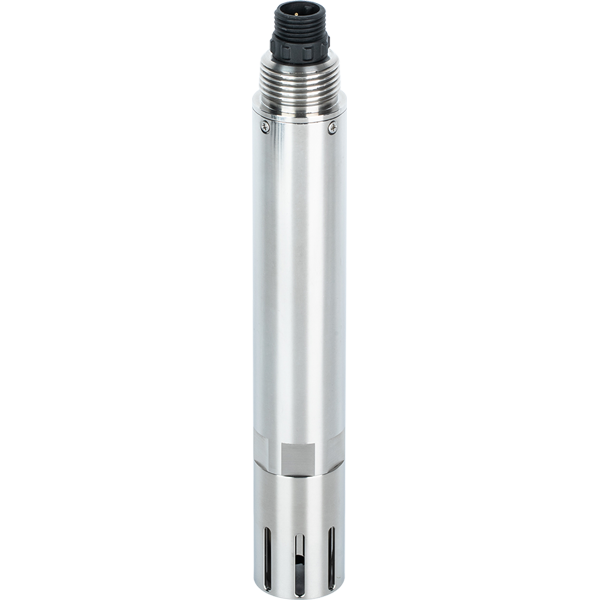
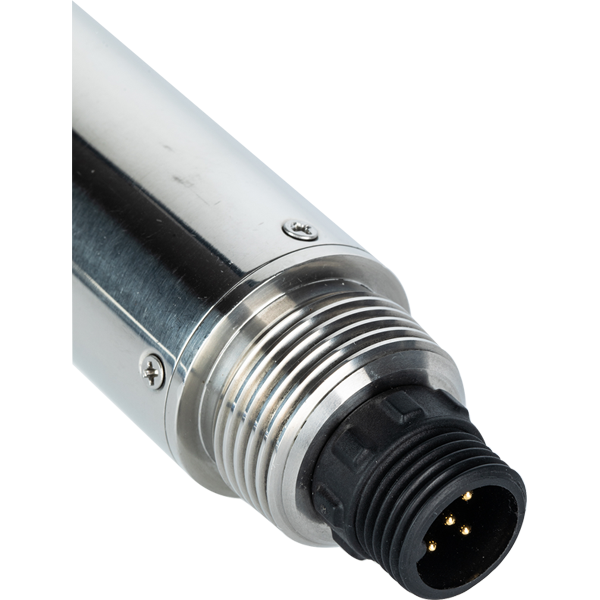
To ensure high anti-interference capability in multi-sensor parallel connection and long-distance transmission, the NiuBoL online ammonia nitrogen sensor strictly follows industrial standards in communication interface and protocol:
Physical Interface: Standard RS-485 bus interface. Supports multi-node parallel topology, with multiple water quality sensors (e.g., pH, dissolved oxygen, ammonia, temperature probes) on a single bus, effectively saving data collector hardware ports and engineering cabling costs.
Communication Protocol: Standard Modbus RTU protocol. Clearly defined data registers, strong compatibility. System integrators can directly access data into third-party PLCs (e.g., Siemens, Mitsubishi), industrial PCs, universal controllers, or wireless cloud platforms without complex private drivers, ensuring high system scalability.
| Parameter | Specification / Description |
|---|---|
| Model / Brand | NBL-WQ-NHN / NiuBoL |
| Measuring Principle | Ion Selective Electrode (ISE) |
| Housing Material | ABS, PVC, POM (excellent corrosion resistance & mechanical strength) |
| Range | 0~10.00 mg/L; 0~100.00 mg/L; 0~1000.0 mg/L (selectable per project) |
| Resolution | 0.01 mg/L (10/100 mg/L range), 0.1 mg/L (1000 mg/L range) |
| Accuracy | 0~10.00 mg/L: ±10% of reading or ±1 mg/L (whichever greater), ±0.5℃; other ranges: ±10% of reading |
| Temperature Compensation | Automatic (ATC) via built-in Pt1000 sensor |
| Response Time (T90) | < 60 seconds (high dynamic response) |
| Minimum Detection Limit | 0.09 mg/L (10/100 mg/L range); 0.9 mg/L (1000 mg/L range) |
| Output Interface | RS-485 (Modbus RTU) / 4-20 mA loop (optional) |
| Operating Conditions | Temp: 0~40℃; Pressure: <0.1 MPa; pH: 4~10 |
| Power Supply & Consumption | 12~24V DC / 0.2W @12V (supports low-power remote deployment) |
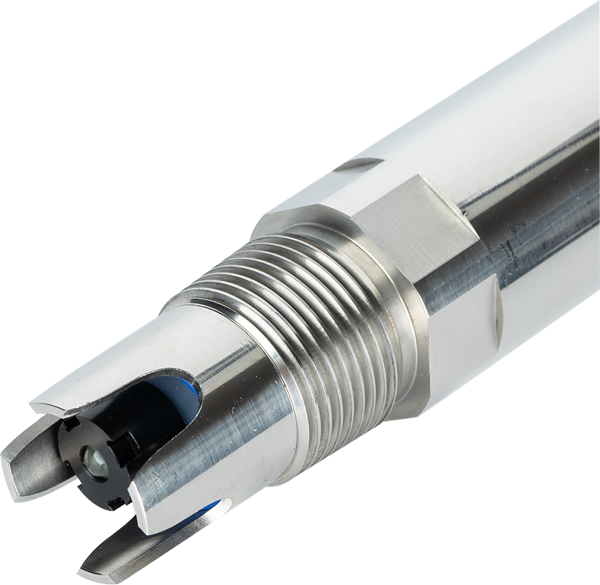
| Protection Rating / Mounting | IP68 / 3/4 NPT thread, submersion or in-line installation |
5.1. Recirculating Aquaculture System (RAS)
In closed RAS systems, biological load is high. By placing NiuBoL online ammonia sensors at both inlet and outlet of the biofilter, integrators can evaluate the nitrification efficiency of the biofilter in real time. If ammonia at the outlet exceeds the setpoint, the system triggers an audible alarm and increases circulation flow.
5.2. Pond Digital Aquaculture Grid Monitoring
In extensive conventional or high-density pond farming, combined with wireless gateways and sensors, a regional water quality monitoring network can be built. Data is aggregated via RS-485 to IoT hubs or collection boxes and wirelessly uploaded to cloud platforms, helping farmers or park managers break space limitations and achieve 24/7 data logging.
5.3. Industrial Wastewater & Municipal Sewage Discharge Monitoring
In industrial wastewater treatment and sewage plant process control, this sensor can serve as input for DO closed-loop control in aeration tanks or for preliminary water quality compliance screening at effluent outlets. Its wide range (up to 1000.0 mg/L) effectively handles sudden high-concentration organic shocks.
Accuracy and Range Selection:
- Aquaculture / surface water projects: Prefer 0~10.00 mg/L or 0~100.00 mg/L range to obtain 0.01 mg/L high resolution.
- High-concentration industrial wastewater / biological influent monitoring: Must select 0~1000.0 mg/L range to avoid sensor overload.
Communication Method: For modern IoT new projects, fully adopt RS-485 (Modbus RTU) for multi-device digital bus integration; if interfacing with traditional DCS analog input cards, opt for 4-20 mA output.
Installation Environment: The sensor has 3/4 NPT threads supporting submersion (using extension rod into pond, aeration tank) or flow-cell mounting. Ensure water pressure < 0.1 MPa.
Power Supply Selection: Supports 12-24V DC wide voltage. For remote unattended monitoring stations, 12V solar battery can be used; central control cabinet projects directly use 24V DC industrial power.
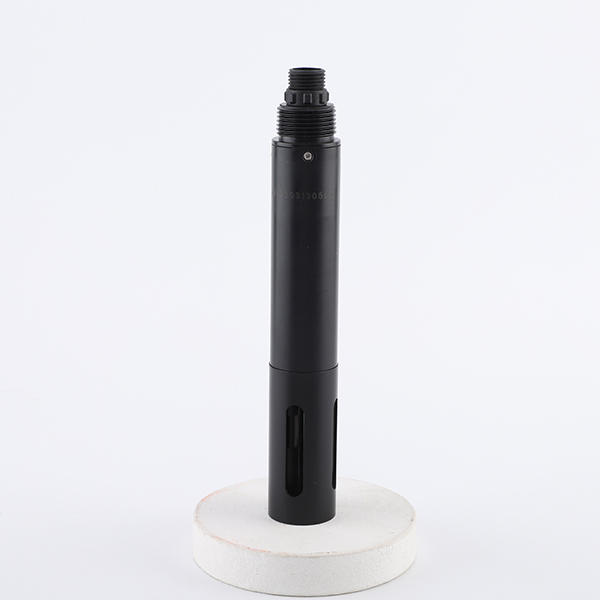
Interfering Ion Protection: ISE operates based on potentiometric principle; potassium ions (K+) in water cause co-interference with ammonium ions. In system software integration, if potassium ion concentration is extremely high, a correction factor must be introduced via software algorithm.
pH and Temperature Coupling: The speciation of ammonia nitrogen in water is greatly affected by pH. This sensor operates stably within pH 4–10. When integrating control logic, it's recommended to analyze ammonia data together with pH and temperature for more accurate assessment of actual non-ionic ammonia (NH3) toxicity.
Very Slow Leakage Reference Maintenance: The sensor uses a unique internal reference liquid design with extremely slow leakage under at least 100 kPa pressure, ensuring high electrode life and stability. However, before first installation or restart after long inactivity, the sensing element must be soaked in clean water for 2 hours to reactivate.
I. Technical Questions
Q1: What are the core advantages of ion selective electrode (ISE) compared to traditional chemical reagent methods?
A1: Core advantages: no reagent consumption, continuous real-time output, no secondary pollution, extremely low maintenance cost. Traditional chemical methods require periodic reagents and produce waste liquid, whereas NiuBoL sensor has response time <60s and directly provides continuous data stream, ideal for automated closed-loop control.
Q2: What role does automatic temperature compensation (ATC) play in measurement?
A2: Electrode response potential changes with temperature. The built-in Pt1000 sensor monitors medium temperature in real time, and the internal chip automatically corrects potential based on the Nernst equation, ensuring accurate ammonia concentration output within 0–40°C.
Q3: Why is "activation" necessary after long-term electrode non-use?
A3: The PVC sensitive membrane at the electrode tip cannot establish stable potential equilibrium in dry condition. Soaking in clean water for 2 hours allows the membrane to re-swell and rehydrate, activating ion exchange channels and restoring normal measurement accuracy.
II. Selection Questions
Q4: What are the differences when selecting sensors for aquaculture projects vs. wastewater treatment projects?
A4: Main differences are range and fouling protection. Aquaculture has better water quality with low ammonia concentration, typically 0~10.00 mg/L. Wastewater plant influent has high concentration and complex composition, choose 0~1000.0 mg/L range, and consider periodic cleaning device based on site conditions.
Q5: Is the sensor material resistant to seawater corrosion?
A5: The housing materials (ABS, PVC, POM) have excellent salt spray and acid/alkali corrosion resistance. Thus, the sensor is fully suitable for harsh environments like marine aquaculture and high-salinity industrial wastewater.
Q6: How to select output signal based on control system interface?
A6: For modern digital bus architecture, choose standard RS-485 interface. For older analog control cabinets, specify 4-20 mA current loop module at time of purchase.
III. Procurement & Project Questions
Q7: What is the standard cable length of the sensor? Will longer distances affect data transmission?
A7: Standard factory cable is 5 meters (customizable). Thanks to RS-485 digital differential signal transmission with strong anti-interference, transmission over hundreds of meters does not affect measurement accuracy or signal integrity.
Q8: How to determine if the sensor electrode has failed and needs replacement?
A8: When performing two-point calibration in standard solution, if the sensor cannot be calibrated, readings drift severely, or there is no response to concentration changes, and after cleaning with deionized water and reactivation no improvement is seen, the PVC membrane or reference system has reached end of life — then a replacement electrode should be ordered from the manufacturer.
In automated water quality monitoring and smart aquaculture project delivery, real-time data acquisition and equipment maintenance-free operation are core indicators of system integration quality. The NiuBoL online ammonia nitrogen sensor, with its standard Modbus RTU protocol compatibility, extremely low operating power consumption (0.2W), and stable very-slow-leakage reference design, provides engineering contractors and system integrators with a cost-effective, easy-to-integrate field solution. Through proper selection and standardized system integration, it significantly reduces project lifecycle operating costs and ensures safe, stable operation of aquaculture and water treatment systems.
 NBL-WQ-NHN-4S Online Ammonia Nitrogen Sensor.pdf
Prev:NBL-WQ-PH Industrial Online pH Sensor | RS485 Modbus RTU Selection & System Integration Guide
Next:NiuBoL Electrode Method for Total & Free Chlorine: Principle, Procedure & Technical Guide
Related recommendations
Sensors & Weather Stations Catalog
Agriculture Sensors and Weather Stations Catalog-NiuBoL.pdf
Weather Stations Catalog-NiuBoL.pdf
Agriculture Sensors Catalog-NiuBoL.pdf
Water Quality Sensor Catalog-NiuBoL.pdf
Related products
 Combined air temperature and relative humidity sensor
 TDR Soil Moisture & Temperature Sensor for irrigation| RS485 |4-20mA| NBL-S-THR
 Soil pH sensor RS485 soil Testing instrument soil ph meter for agriculture |NBL-S-PH
 Wind Speed sensor Output Modbus/RS485/Analog/0-5V/4-20mA
 Tipping bucket rain gauge for weather monitoring auto rainfall sensor RS485/Outdoor/stainless steel
 Pyranometer Solar Radiation Sensor 4-20mA/RS485

Screenshot, WhatsApp to identify the QR code
WhatsApp number:+8615367865107
(Click on WhatsApp to copy and add friends)

