





— Blogs —
—Products—
 Consumer hotline +8618073152920
 WhatsApp:+8615367865107
Address:Room 102, District D, Houhu Industrial Park, Yuelu District, Changsha City, Hunan Province, China
Product knowledge
Time:2026-05-18 08:41:01 Popularity:633
In industrial wastewater treatment, environmental monitoring, and water treatment system integration projects, selecting appropriate water quality organic content indicators is the foundation of process design and equipment selection. TOD, TOC, COD, and BOD are all used to characterize the total amount of organic matter in water, but there are clear differences in their measurement principles, numerical ranges, and engineering orientation.
For system integrators, IoT solution providers, and engineering contractors, understanding the technical boundaries of these four indicators helps make accurate judgments in project commissioning, online monitoring equipment selection, and biochemical process control.
Total Oxygen Demand refers to the amount of oxygen consumed when reducing substances in a water sample (mainly carbon, hydrogen, oxygen, nitrogen, phosphorus, and sulfur in organic matter) are completely oxidized to CO₂, H₂O, NOₓ, and SO₂ under high-temperature catalytic combustion conditions, in mg/L.
Measurement conditions: 900℃ high temperature, platinum catalyst, combustion time about 3 minutes. The TOD value approaches the theoretical oxygen demand and can be used for rapid assessment of the complete oxidation oxygen demand of almost all organic matter in water samples.
Total Organic Carbon is an indicator that directly expresses the total amount of organic matter in water as carbon content, in mg/L (C).
Measurement principle: The water sample is burned at 900℃ with platinum catalysis, and the increment of generated CO₂ is measured and converted to total carbon content. TOC does not involve oxygen consumption conversion, so it is more direct than BOD or COD in characterizing total organic matter. Typical municipal wastewater TOC is about 200 mg/L, and after secondary biochemical treatment it is usually below 50 mg/L.
Chemical Oxygen Demand refers to the oxygen equivalent corresponding to the oxidant consumed when a strong oxidant (usually potassium dichromate) oxidizes organic matter and some reducing inorganic substances in water under specific conditions, in mg/L.
When potassium dichromate is used, it is called CODCr, with an oxidation rate of 90%–95%. When potassium permanganate is used, it is called CODMn (permanganate index), which has weaker oxidation capacity and is mostly used for surface water or drinking water evaluation. CODCr is mostly used as the conventional control indicator for industrial wastewater and wastewater treatment.
Biochemical Oxygen Demand represents the amount of dissolved oxygen consumed by aerobic microorganisms decomposing organic matter in water under 20℃ aerobic conditions, reflecting the concentration of biodegradable organic matter. BOD5 (5-day biochemical oxygen demand) is commonly used as an engineering indicator, in mg/L.
The BOD5 measurement cycle is 5 days and cannot be used for real-time process control, but it remains the core parameter for judging wastewater biodegradability.
For the same water sample, the measured values of the four indicators are usually not equal. The order by numerical value is:
TOD > CODCr > BOD5 > TOC
Main reasons:
TOD includes the complete oxidation oxygen consumption of all reducing substances (including sulfur, phosphorus, nitrogen, etc.), resulting in the highest value.
CODCr can oxidize 90%–95% of organic matter, but some long-chain or aromatic compounds are not completely oxidized.
BOD5 only reflects the portion biodegradable by microorganisms within 5 days, usually accounting for 30%–80% of CODCr.
TOC only represents carbon content and does not include the metering weight of oxygen elements, resulting in the lowest value.
Engineering reference ratios (vary by wastewater characteristics):
BOD5 / TOD: 0.1–0.6
CODCr / TOD: 0.5–0.9
BOD5 / CODCr: >0.3 indicates good biodegradability;<0.2 means biological treatment is not recommended directly.
| Indicator | Principle | Conditions | Oxidation Degree | Measurement Cycle | Main Engineering Uses |
|---|---|---|---|---|---|
| TOD | High-temperature catalytic combustion | 900℃, platinum catalysis | Complete oxidation (including S, P, N) | About 3 minutes | Rapid assessment of total oxygen demand, online monitoring |
| TOC | High-temperature combustion + CO₂ measurement | 900℃, platinum catalysis | All organic carbonization | About 3–5 minutes | Direct characterization of total organic carbon, often used for instrument comparison |
| CODCr | Potassium dichromate oxidation | 165℃ digestion, 2h | 90%–95% organic matter | 3–4 hours | Conventional wastewater control indicator, process regulation basis |
| CODMn | Potassium permanganate oxidation | Boiling water bath or heating | Easily oxidizable organic matter | 1–2 hours | Surface water, drinking water evaluation |
| BOD5 | Microbial oxygen consumption | 20℃, 5 days dark cultivation | Biodegradable organic matter | 5 days | Biodegradability judgment, biological process effect evaluation |
Online Monitoring Scenarios
TOD and TOC have short measurement response times (3–5 minutes) and are suitable for real-time monitoring. TOD is closer to theoretical oxygen demand, while TOC is not affected by oxygen equivalent conversion. When configuring online water quality analyzers, system integrators should prioritize TOD or TOC sensors if the process requires rapid reflection of organic load changes.
Process Control Scenarios
Wastewater treatment plants generally use CODCr as the daily control indicator. The measurement cycle can be controlled within 4 hours, meeting the needs of same-day process adjustments. For stably operating municipal sewage plants, a statistical correlation model between CODCr and BOD5 can be established to estimate effluent BOD5.
Biodegradability Judgment Scenarios
In the preliminary assessment of industrial wastewater projects, BOD5 must be measured and the BOD5/CODCr ratio calculated. When this ratio is below 0.2, advanced oxidation, hydrolysis acidification pretreatment, or physicochemical routes should be considered.
Surface Water and Discharge Supervision Scenarios
Surface water environmental quality standards mostly use CODMn, BOD5, and TOC. Discharge standards (such as GB 8978-1996) use CODCr and BOD5 as mandatory indicators.

Q1. Which is closer to theoretical oxygen demand, TOD or COD?
TOD. Because TOD completely oxidizes reducing substances including sulfur, phosphorus, and nitrogen at 900℃, while CODCr is limited by oxidant capacity, with an oxidation rate of about 90%–95%.
Q2. Why does the same water sample have the lowest TOC value?
TOC only represents the mass concentration of carbon elements, while TOD and COD represent the mass of oxygen required during the oxidation process. Elements such as hydrogen and sulfur in organic matter also consume oxygen but do not contribute to the TOC value.
Q3. BOD5 measurement takes too long — can it be replaced by COD?
In specific wastewater with established stable correlations, COD can be used to estimate BOD5, but it cannot completely replace it. Biodegradability judgment and biological process effect evaluation still require direct BOD5 measurement.
Q4. Why do wastewater treatment plants use COD instead of TOD for daily operations?
COD measurement equipment is widely available, reagent costs are low, and operating procedures are mature. TOD requires dedicated high-temperature combustion analyzers, with higher purchase and maintenance costs, making it more suitable for online rapid monitoring scenarios.
Q5. What is the threshold for judging biodegradability of industrial wastewater?
BOD5/CODCr > 0.3: suitable for biological treatment; 0.2–0.3: requires pretreatment to improve biodegradability; < 0.2: conventional biochemical processes are not recommended.
Q6. What are the main differences between TOD and TOC online analyzers?
TOD measures oxygen consumption, while TOC measures carbon content converted from carbon dioxide. TOD instruments respond more completely to organic matter containing sulfur, phosphorus, and nitrogen, while TOC instruments more directly reflect total organic matter without being affected by oxidant efficiency.
Q7. In what scenarios is the permanganate index CODMn still used?
It is used in drinking water, surface water, and seawater monitoring because these water bodies have low organic concentrations, the potassium dichromate method has insufficient detection limits, and potassium permanganate has good response consistency to humus and other organic matter in natural water bodies.
Q8. When procuring water quality monitoring equipment, which indicator should system integrators prioritize?
It depends on the project stage: for real-time feedback control of biochemical processes, choose TOD or TOC online analyzers; for discharge compliance monitoring, COD and BOD5 detection capabilities must be included; for industrial wastewater biodegradability assessment, the laboratory needs BOD5 measurement conditions.
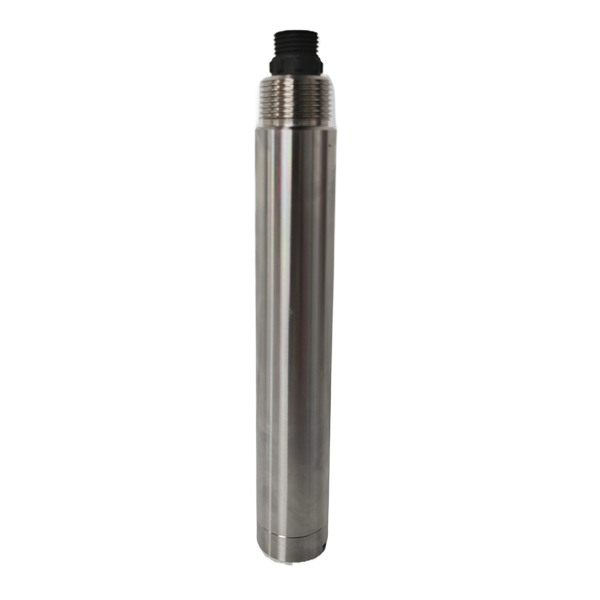
TOD, TOC, COD, and BOD characterize the concentration of organic matter in water from four different dimensions: complete oxidation oxygen demand, total carbon content, chemical oxidation oxygen consumption, and biological oxidation oxygen consumption. TOD and TOC have fast response speeds and are suitable for online monitoring and process control; COD is the core parameter for daily operation of wastewater treatment; BOD5 is an irreplaceable basis for biodegradability judgment.
In engineering practice, a single indicator cannot fully describe the characteristics of water organic pollution. System integrators and engineering contractors should reasonably combine the four indicators according to process stage, regulatory requirements, and equipment costs, and establish ratio relationship models for specific water qualities to improve monitoring efficiency and process control accuracy.
 NBL-WQ-CL Water Quality Sensor Online Residual Chlorine Sensor.pdf
NBL-WQ-DO Online Fluorescence Dissolved Oxygen Sensor.pdf
NBL-WQ-NHN Ammonia Nitrogen Water Quality Sensor.pdf
NBL-WQ-COD Online Water Quality COD Sensor.pdf
NBL-WQ-PH Online pH Water Quality Sensor.pdf
NBL-WQ-EC water quality conductivity sensor.pdf
Related recommendations
Sensors & Weather Stations Catalog
Agriculture Sensors and Weather Stations Catalog-NiuBoL.pdf
Weather Stations Catalog-NiuBoL.pdf
Agriculture Sensors Catalog-NiuBoL.pdf
Water Quality Sensor Catalog-NiuBoL.pdf
Related products
 Combined air temperature and relative humidity sensor
 TDR Soil Moisture & Temperature Sensor for irrigation| RS485 |4-20mA| NBL-S-THR
 Soil pH sensor RS485 soil Testing instrument soil ph meter for agriculture |NBL-S-PH
 Wind Speed sensor Output Modbus/RS485/Analog/0-5V/4-20mA
 Tipping bucket rain gauge for weather monitoring auto rainfall sensor RS485/Outdoor/stainless steel
 Pyranometer Solar Radiation Sensor 4-20mA/RS485

Screenshot, WhatsApp to identify the QR code
WhatsApp number:+8615367865107
(Click on WhatsApp to copy and add friends)

