





— Blogs —
—Products—
 Consumer hotline +8618073152920
 WhatsApp:+8615367865107
Address:Room 102, District D, Houhu Industrial Park, Yuelu District, Changsha City, Hunan Province, China
Product knowledge
Time:2026-05-18 09:01:19 Popularity:373
In automation retrofits and new projects across environmental protection, water utilities, chemical, pharmaceutical, power and other industries, system integrators frequently need to deploy highly reliable online pH measurement points. Traditional 4-20mA analog pH meters suffer signal attenuation and accuracy loss under long-distance transmission and electromagnetic interference environments. In contrast, digital communication solutions significantly reduce wiring complexity, improve data integrity, and facilitate integration with PLC, DCS, SCADA or industrial IoT platforms.
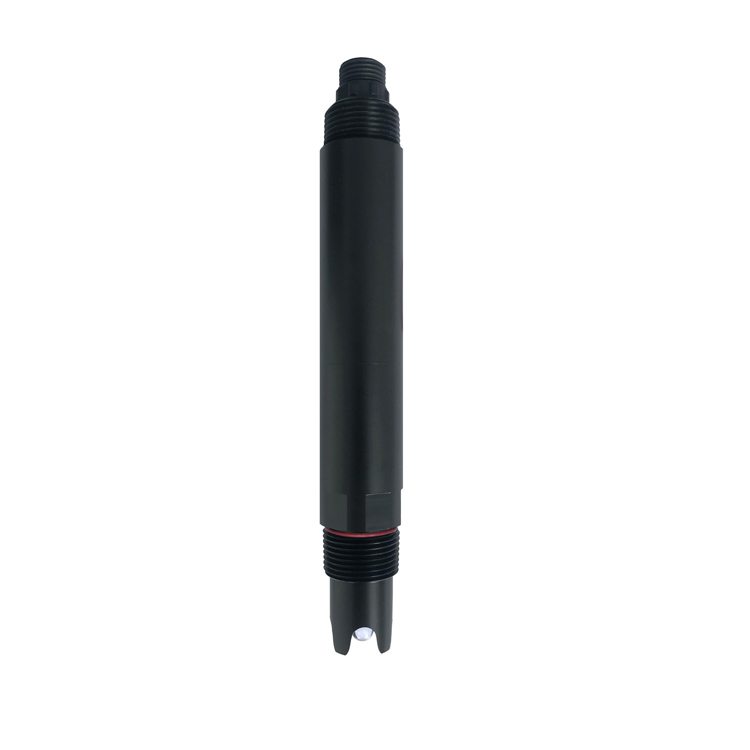
The NBL-WQ-PH industrial online pH sensor is specifically designed for such engineering requirements. Positioned at the field process measurement layer, it provides stable and easily integrable pH and temperature data, supports continuous operation under complex working conditions, and reduces maintenance frequency as well as system failure points.
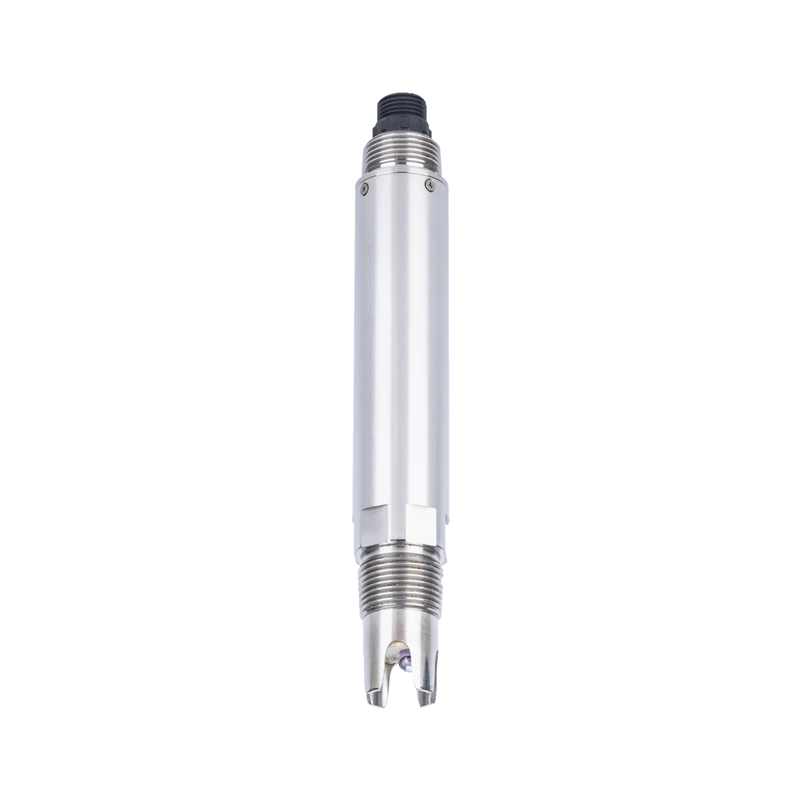
As a front-end sensing unit in industrial control systems, this sensor is installed directly in reaction tanks, process vessels or pipelines. Via the RS485 bus, it transmits compensated pH values, temperature readings, and device status to the host system. It can be seamlessly integrated with various PLCs, RTUs, edge computing gateways or SCADA software to achieve closed-loop control or data acquisition networks. In distributed monitoring architectures, it enables multi-point parallel data collection and centralized management, reducing the impact of single-point failures on overall system reliability.
The NBL-WQ-PH features a standard RS-485 interface and Modbus RTU protocol, one of the most mature and widely adopted communication methods in industrial environments. It is fully compatible with mainstream PLCs such as Siemens S7 series, Schneider Modicon, Rockwell CompactLogix, Inovance, Omron, etc., requiring no additional protocol converters for networking.
The dual high-impedance differential amplifier combined with digital output effectively suppresses electromagnetic interference in the field. Response time T90 < 30s suits fast-response neutralization control or dynamic process monitoring. IP68 overall protection and ABS/PC alloy housing further guarantee long-term reliability in high-humidity and corrosive gas environments.
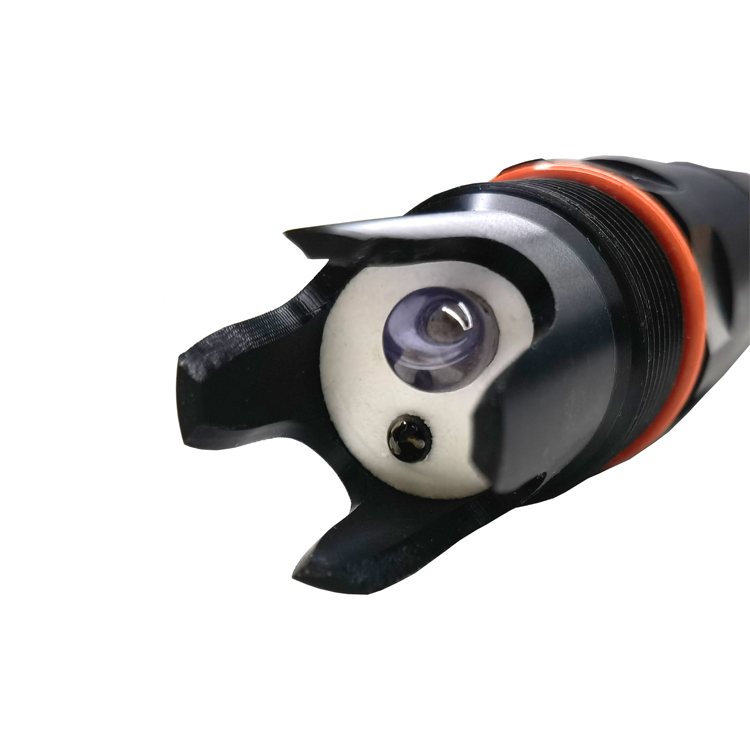
| Parameter | Specification |
|---|---|
| Model | NBL-WQ-PH |
| Measurement Principle | Glass Electrode Method |
| Range | 0~14.00 pH |
| Resolution | 0.01 pH |
| Accuracy | ±0.1 pH, ±0.3℃ |
| Response Time (T90) | <30s |
| Minimum Detection Limit | 0.1 |
| Calibration Mode | Two-point calibration |
| Temperature Compensation | Automatic (Pt1000) |
| Output | RS-485 (Modbus RTU) |
| Power Supply | 12~24V DC |
| Power Consumption | 0.2W @12V |
| Operating Temperature | 0~50℃ |
| Operating Pressure | ≤0.2MPa |
| Protection Rating | IP68 |
| Installation Connection | 3/4 NPT submersion type |
| Housing Material | ABS/PC alloy |
| Cable Length | 5 meters (customizable) |
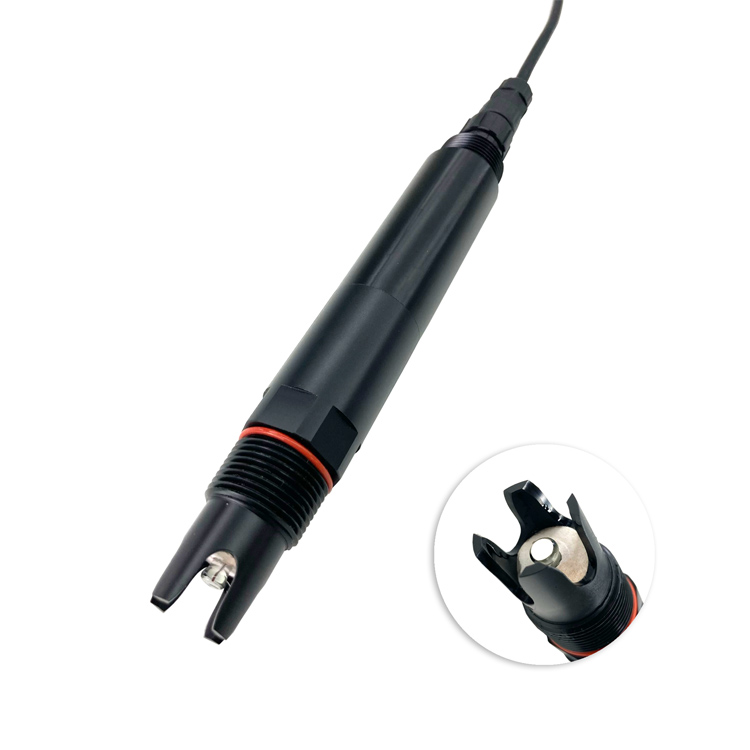
The performance of the pH combination electrode directly affects measurement stability and service life. Before first use or after long-term storage, correct storage procedure is essential.
Proper Storage Method: Immerse the sensor in pH4 buffer solution containing 3mol/L KCl. This activates both the hydrated gel layer of the glass bulb and the liquid junction. Recommended storage time is 8 to 24 hours or longer depending on electrode aging and glass membrane thickness. The reference electrode liquid junction must remain moist to prevent increased junction potential and instability.
Common Mistakes & Consequences: Some users use pure distilled water or KCl-free pH4 buffer for storage, which dilutes the internal KCl concentration at the liquid junction, leading to slow response, increased drift, and degraded accuracy. Long-term storage in neutral or alkaline solutions also dulls the glass membrane response.
Routine Maintenance: After measurement, rinse with distilled water and gently blot dry. When not in use, store in 3mol/L KCl storage solution. If deposits form on the glass membrane, briefly soak in dilute hydrochloric acid (1+9) then rinse thoroughly. Periodically check that the wiring terminals are dry; clean with anhydrous alcohol if necessary.
6.1. Environmental Water Quality Online Monitoring: Continuous pH monitoring in surface water, wastewater plant influent/effluent, river and lake automatic stations. Enables data interfacing with environmental platforms and over-limit alarm triggering.
6.2. Industrial Wastewater Treatment & Neutralization Control: In wastewater treatment lines of chemical, printing & dyeing, electroplating, papermaking industries, used for precise chemical dosing control in acid-base neutralization tanks, optimizing chemical consumption and ensuring stable discharge compliance.
6.3. Chemical & Pharmaceutical Reaction Process Monitoring: Real-time pH tracking in reactors, fermenters and other process vessels, working with PID control systems to maintain optimal reaction conditions, improving product consistency and production efficiency.
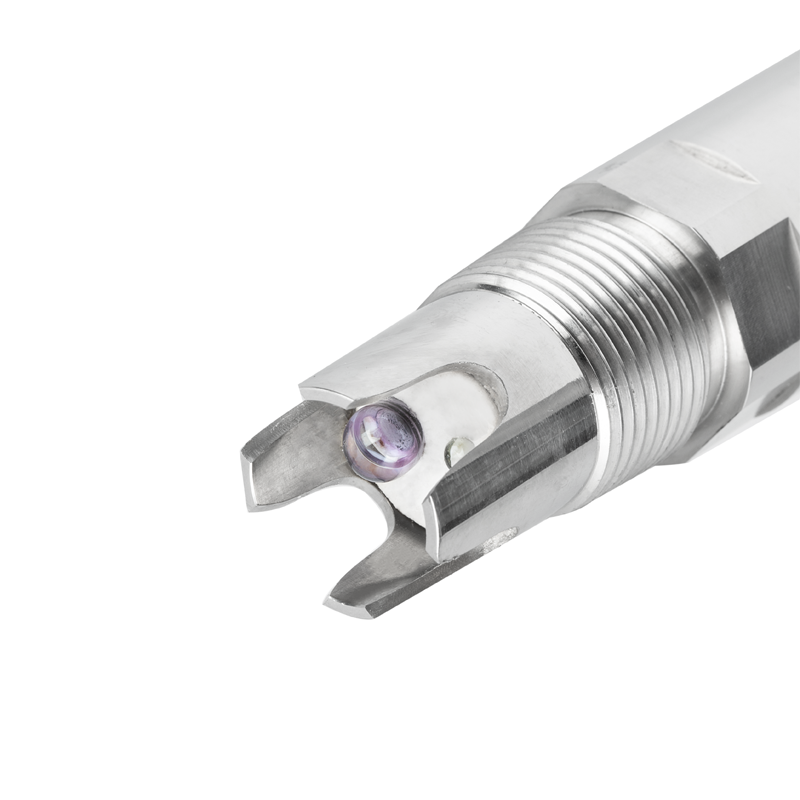
Accuracy vs. Application: ±0.1 pH accuracy suits most industrial process control. For high-precision requirements, maintain long-term performance through rigorous two-point calibration and proper maintenance.
Communication Protocol Selection: RS485 Modbus RTU is the recommended solution, supporting multi-point bus connection, long-distance transmission, and lossless digital transfer, significantly outperforming analog output in terms of anti-interference and integration complexity.
Installation Environment: 3/4 NPT threads facilitate pipe insertion or tank submersion installations. When selecting, ensure medium temperature ≤50℃, pressure ≤0.2MPa, avoiding locations with strong vibration, excessive air bubbles, or crystallization.
Power Supply & Cabling: 12-24V DC wide voltage tolerance adapts to industrial field power environments. Use shielded twisted pair cables for wiring, configure terminating resistors appropriately, and add repeaters if needed to ensure stable communication.
Verify correct wiring before power-up; perform single-unit Modbus communication test first to confirm register addresses and baud rate.
At least 1/3 of the sensor must be immersed in the measured medium; avoid dry exposure or installation in dead zones.
Regular calibration based on actual process media; use buffer solutions close to field conditions when possible.
Avoid contact of the electrode with organosilicone oils, strongly dehydrating solvents, or prolonged immersion in pure water.
During project acceptance, record initial storage status, calibration data, and communication logs as baseline for future maintenance.
Technical Questions
Q1: What should I do if the pH combination electrode responds slowly or drifts significantly?
A1: The most common cause is reduced KCl concentration at the liquid junction. Immediately re-soak the electrode in pH4 buffer containing KCl for several hours, clean the glass membrane, and perform a two-point calibration. This usually restores performance.
Q2: How can I tell if the electrode needs replacement?
A2: If after repeated calibrations you cannot achieve ±0.1 pH accuracy, the response time is significantly prolonged, or the glass membrane shows irreversible cloudiness or cracks, replace the sensor with a new one.
Q3: What should I do if Modbus communication is interrupted or data is abnormal?
A3: Sequentially check supply voltage, A/B line polarity, shield grounding, terminating resistors, and baud rate consistency. Use Modbus testing software to verify a single point first.
Selection Questions
Q4: How to choose between RS485 version and 4-20mA version?
A4: RS485 is better for networking, multi-point acquisition, long-distance transmission, and digital integration projects. 4-20mA suits simple local display or situations where PLC analog input cards are limited.
Q5: Does this sensor support high temperature or high pressure applications?
A5: The standard model operates within 0-50℃ and ≤0.2MPa. For conditions beyond this range, a dedicated high-temperature high-pressure pH sensor must be selected.
Q6: How many sensors can be connected on one RS485 bus?
A6: Theoretically supports up to 247 addresses, but practically recommend no more than 32 devices per segment. For more devices, add repeaters or segment the wiring to ensure communication quality.
Procurement / Project Questions
Q7: Do you support custom cable lengths and other special requirements?
A7: Yes, cable lengths longer than 5 meters can be customized. We also provide Modbus register address mapping tables, installation drawings, and technical support based on project needs.
Q8: How can long-term operating costs be reduced in projects?
A8: Proper storage and maintenance, regular calibration, and avoiding incorrect storage methods significantly extend electrode service life, reducing overall lifecycle costs.
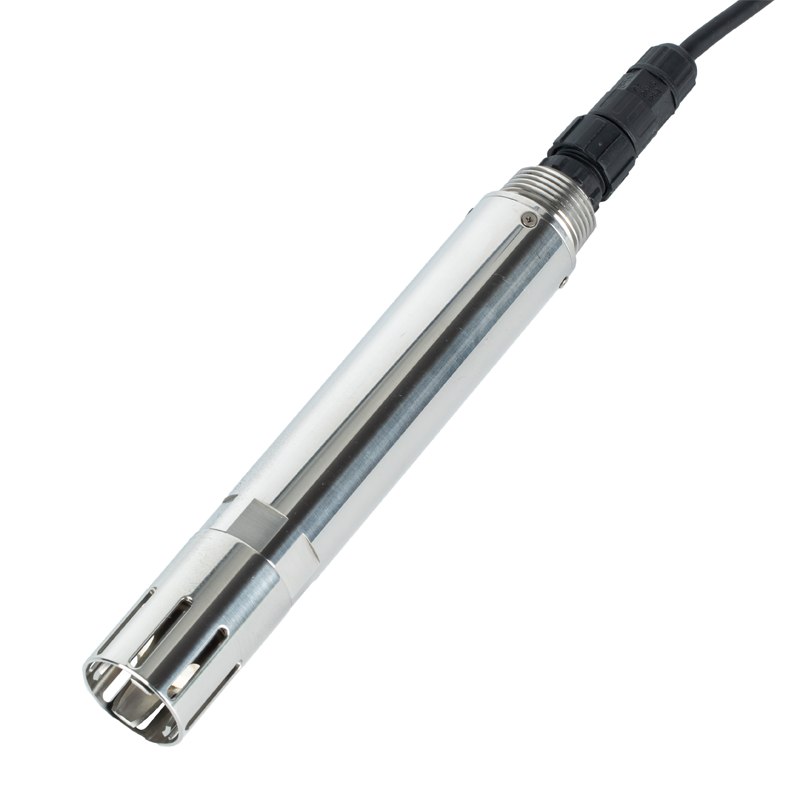
The NBL-WQ-PH industrial online pH sensor, with its mature glass electrode technology, reliable RS485 Modbus RTU communication, and engineering-oriented design details, provides system integrators and engineering contractors with a stable, scalable pH measurement solution. In typical applications such as environmental monitoring, wastewater treatment, and chemical process control, correct selection, proper storage and maintenance, and rational integration effectively ensure continuous measurement data and system reliability.
 NBL-WQ-PH Online Water Quality pH Sensor.pdf
Next:Smart Aquaculture & Water Treatment: Ammonia Nitrogen Control & Online Sensor Integration Guide
Related recommendations
Sensors & Weather Stations Catalog
Agriculture Sensors and Weather Stations Catalog-NiuBoL.pdf
Weather Stations Catalog-NiuBoL.pdf
Agriculture Sensors Catalog-NiuBoL.pdf
Water Quality Sensor Catalog-NiuBoL.pdf
Related products
 Combined air temperature and relative humidity sensor
 TDR Soil Moisture & Temperature Sensor for irrigation| RS485 |4-20mA| NBL-S-THR
 Soil pH sensor RS485 soil Testing instrument soil ph meter for agriculture |NBL-S-PH
 Wind Speed sensor Output Modbus/RS485/Analog/0-5V/4-20mA
 Tipping bucket rain gauge for weather monitoring auto rainfall sensor RS485/Outdoor/stainless steel
 Pyranometer Solar Radiation Sensor 4-20mA/RS485

Screenshot, WhatsApp to identify the QR code
WhatsApp number:+8615367865107
(Click on WhatsApp to copy and add friends)

