





— Blogs —
—Products—
 Consumer hotline +8618073152920
 WhatsApp:+8615367865107
Address:Room 102, District D, Houhu Industrial Park, Yuelu District, Changsha City, Hunan Province, China
Product knowledge
Time:2026-05-18 08:47:17 Popularity:290
In the integrated construction of municipal sewage pipe networks, domestic sewage treatment plants, and surface water monitoring projects, ammonia nitrogen (NH3-N) is always an indispensable core biochemical indicator. Nitrogen sources in domestic sewage mainly come from human excreta, of which about 80% of nitrogen exists in urine, initially in the form of organic nitrogen such as urea, but is easily and rapidly hydrolyzed into ammonia nitrogen by bacteria during pipeline transportation and biochemical degradation.
Traditional chemical analysis methods (such as Nessler reagent spectrophotometry) face extremely harsh reaction condition restrictions during laboratory testing:
Environmental Cross-contamination: Projects using ammonia water such as nitrate nitrogen cannot be carried out simultaneously in the laboratory, and reagents easily absorb volatile ammonia from the air, leading to high results.
Strict Water Quality Control: Time-consuming and labor-intensive secondary distilled ammonia-free water or composite resin exchange column effluent must be used.
Sensitive Reaction Conditions: Reaction temperature must be strictly controlled at 20℃~25℃, color development time must be precisely controlled within 10min~30min, and system pH must be accurately adjusted to 13 to avoid turbidity and incomplete color development.
For system integrators, engineering contractors, and IoT solution providers, this laboratory testing method that relies on manual labor, has strict environmental requirements, and involves complex reaction processes cannot be applied to on-site environments that require dense collection, real-time control, and unattended operation. To achieve process control in domestic sewage plants (such as adjusting aeration tank DO according to ammonia nitrogen concentration) and compliance monitoring at sewage discharge outlets, the engineering community urgently needs a highly stable, reagent-free, digitally output on-site detection terminal.
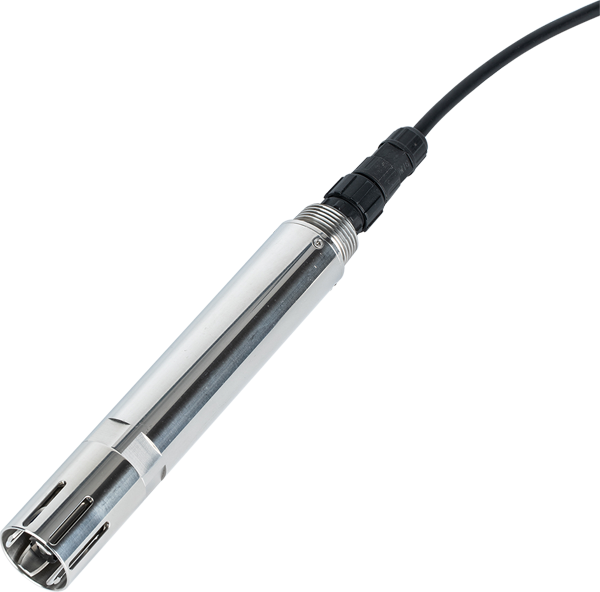
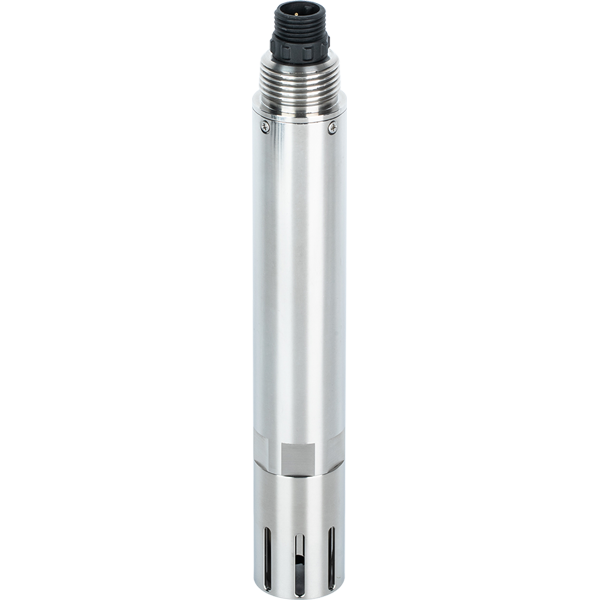
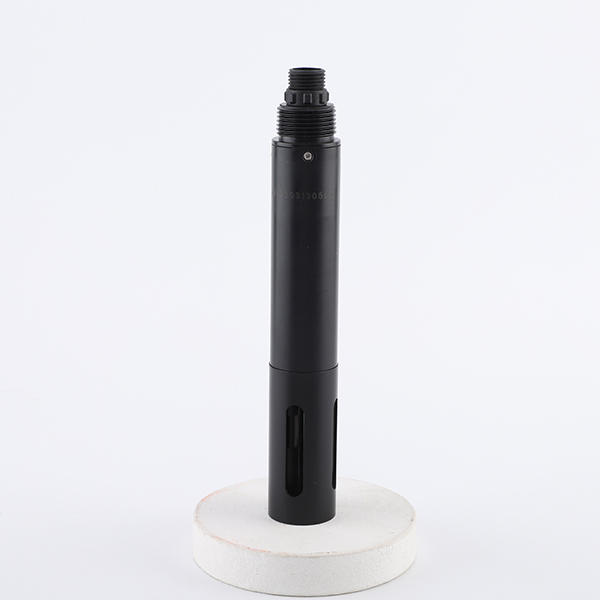
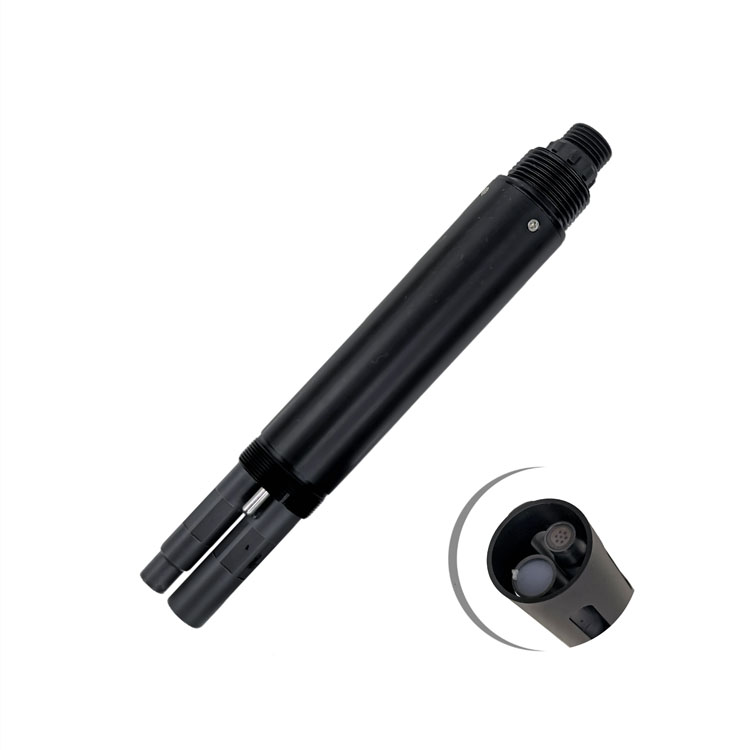
In the topology architecture of automated water quality monitoring and SCADA control systems, the NiuBoL integrated online ammonia nitrogen sensor (Model: NBL-WQ-NHN) is located at the front-end perception layer.
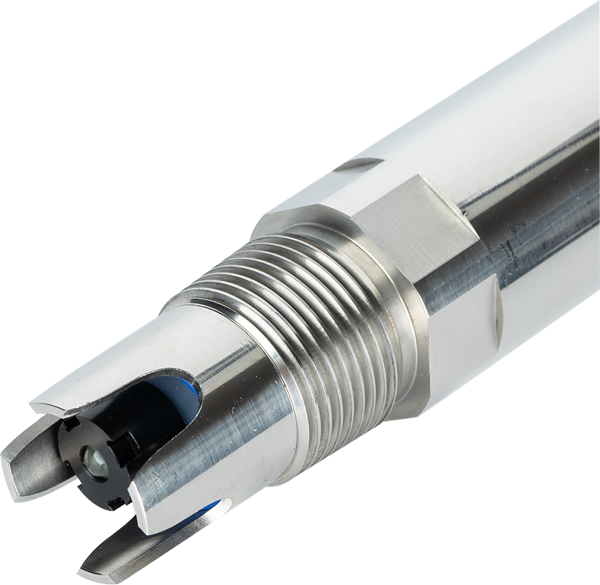
It no longer requires complex water sampling pump sets, electric valves, and constant temperature reaction tanks. Instead, it is directly installed at the sewage plant inlet, aeration tank, outlet, or open channel monitoring station through 3/4 NPT industrial pipe thread. The sensor converts the ammonium ion potential signal captured by the sensitive element into digital output after correction by the internal Pt1000 automatic temperature compensation chip, and connects to the control layer PLC, DCS, or on-site RTU acquisition terminal.
To solve the pain points of severe electromagnetic interference and high wiring costs on industrial sites, the NiuBoL online ammonia nitrogen sensor fully complies with mainstream industrial control standards:
Physical Interface: Based on RS-485 bus architecture, it supports daisy-chain multi-node parallel connection. A single bus can integrate multiple water quality probes without repeaters, greatly saving hardware ports of acquisition modules.
Communication Protocol: Adopts standard Modbus RTU protocol. The data register format is open and transparent, supporting seamless connection with mainstream PLCs such as Siemens, Omron, and Inovance, industrial touch screens (HMI), and third-party IoT gateways, greatly shortening the software development and debugging cycle for solution providers.
Analog Compatibility: For the renovation of traditional old control systems, the device provides optional 4-20 mA current loop output to ensure seamless transition of upgrade projects.
| Parameter Item | Technical Specifications & Engineering Indicators |
|---|---|
| Equipment Model / Brand | NBL-WQ-NHN / NiuBoL |
| Measurement Principle | Ion Selective Electrode Method (ISE) |
| Housing Material | ABS, PVC, POM (industrial-grade anti-corrosion and wear-resistant) |
| Range & Resolution | 0~10.00 mg/L (Resolution: 0.01 mg/L) 0~100.00 mg/L (Resolution: 0.01 mg/L) 0~1000.0 mg/L (Resolution: 0.1 mg/L) |
| Measurement Accuracy | 0~10.00 mg/L range: ±10% of reading or ±1 mg/L (whichever is greater); Other high ranges: ±10% of reading |
| Temperature Compensation | Automatic temperature compensation (built-in Pt1000 sensor, temperature resolution 0.1℃) |
| Response Time (T90) | < 60 seconds (meets dynamic process control requirements) |
| Detection Limit | 0.09 mg/L (10/100 mg/L range); 0.9 mg/L (1000 mg/L range) |
| Calibration & Cleaning | Two-point calibration / On-site mechanical cleaning-free design |
| Output Interface | RS-485 (Modbus RTU) / 4-20 mA (optional) |
| Operating Environment | Temperature: 0~40℃; Pressure: < 0.1 MPa; pH: 4~10 |
| Electrical Characteristics | Power Supply: 12~24V DC; Power Consumption: 0.2W @ 12V (very suitable for solar power) |
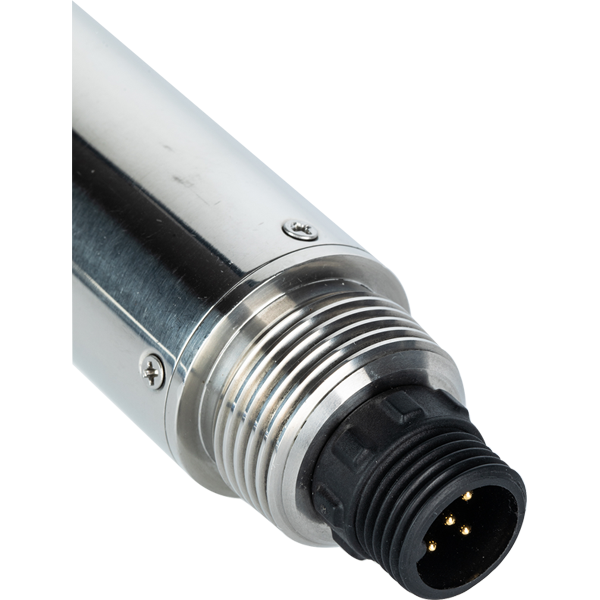
| Protection Rating / Interface | IP68 / 3/4 NPT pipe thread, standard M16-5 core waterproof connector male |
5.1. Municipal Domestic Sewage Plant Inlet and Outlet Monitoring
Domestic sewage inlet ammonia nitrogen fluctuates sharply. Integrating a 0~100.00 mg/L range sensor at the inlet allows real-time understanding of inlet load impact; deploying a 0~10.00 mg/L range sensor at the outlet enables online continuous monitoring of effluent compliance in conjunction with the control system.
5.2. Closed-loop Control of Sewage Biochemical Treatment (Aeration Tank) Process
Installing an online sensor at the end of the aeration tank denitrification section uses ammonia nitrogen concentration data as the key logic variable for the PLC to control the blower frequency converter. When ammonia nitrogen drops to the set threshold, aeration intensity is automatically reduced, significantly lowering plant operating power consumption while ensuring process compliance.
5.3. Smart City Underground Sewage Pipe Network Traceability Monitoring
Utilizing the sensor’s IP68 waterproof capability and ultra-low power consumption of 0.2W, combined with batteries and 4G/5G RTU deployed at key nodes of urban sewers, it can continuously record ammonia nitrogen changes in the pipe network and effectively investigate illegal discharge along the line.
5.4. Rural Domestic Sewage Distributed Treatment IoT System
In remote, unattended rural domestic sewage micro-treatment stations, traditional chemical equipment is difficult to operate due to inability to replenish reagents in time. The NiuBoL digital probe, combined with IoT data transmission, can directly transmit real-time data to the municipal operation and maintenance cloud platform to achieve remote cluster monitoring.
When formulating selection plans, engineering procurement personnel should configure hardware from the following dimensions:
Range Level Matching: Surface water, micro-pollution sources, rural sewage effluent — select 0~10.00 mg/L to leverage the high resolution of 0.01 mg/L. Municipal domestic sewage inlet and general industrial wastewater discharge outlets — select 0~100.00 mg/L. High-concentration fertilizer and landfill leachate raw water — select 0~1000.0 mg/L to prevent overload.
Physical Integration Interface: For new digital pumping stations or multi-parameter buoy projects, uniformly use RS-485 (Modbus RTU) interface. For docking with old central control cabinets, specify the optional 4-20 mA when ordering.
7.1 Water pH Window Period Limitation: The ion selective electrode method (ISE) measures NH4+ ions in water. According to chemical equilibrium, when water pH > 10, ammonium ions largely convert to free NH3 molecules, resulting in low measurement values.
7.2 Co-directional Interfering Ion Avoidance: In specific industrial or high-salt wastewater, high concentrations of potassium ions (K+) may cause positive interference.
7.3 Electrode Activation Mandatory Process: Before on-site power-on debugging, the measuring electrode and reference electrode must be soaked in clean water for 2 hours.
Q1: How does the ion selective electrode method used by the online ammonia nitrogen sensor avoid the complex temperature and time limitations of the laboratory Nessler reagent method?
A: The Nessler reagent method relies on complex chemical color development reaction speed and therefore has extremely strict requirements on temperature, time, and pH. The NiuBoL ion selective electrode method is based on the Nernst potential equilibrium principle and is a physical electrochemical sensor. It performs hardware-level automatic temperature compensation through the built-in Pt1000 sensor, with dynamic response less than 60 seconds, completely freeing itself from the constraints of chemical color development reaction time.
Q2: Why does this device not need to prepare complex “ammonia-free water” like in the laboratory?
A: Laboratory analysis requires preparation of ammonia-free water to reduce “blank absorbance” caused by reagents, utensils, and the environment to improve the accuracy of photometric methods. The NiuBoL online sensor works directly in actual water bodies and establishes electrode slope and zero point through “two-point calibration” with standard buffer solutions. It directly measures the selective potential of ions, so no experimental water is consumed during on-site operation.
Q3: Will the housing materials ABS, PVC, and POM age in domestic sewage with high organic matter content?
A: No. These three materials are recognized in the industrial field as chemically corrosion-resistant and wear-resistant. POM provides extremely high mechanical support strength, while ABS and PVC have strong inertness to common surfactants, weak acids and alkalis, and bacterial biofilms in domestic sewage, ensuring physical stability under long-term immersion at IP68 protection level.
Q4: Power supply is a big issue when integrating in urban sewers or underground pipe networks. Is this device feasible?
A: Very feasible. The sensor adopts a low-power digital circuit design with operating power consumption of only 0.2W @ 12V. System integrators can easily use a small solar battery or industrial lithium battery pack combined with a low-power RTU to build long-running distributed monitoring nodes in the pipe network.
Q5: If the project site pH value often exceeds 10 for short periods, can this sensor be selected?
A: If pH only slightly exceeds the limit for short periods and can automatically recover, the electrode will not be physically damaged. However, during periods when pH exceeds 10, measurement data will be low due to the conversion of ammonium ions to free ammonia. If the process allows, data exclusion logic for that period can be set in the control software.
Q6: Can the sensor’s built-in M16 waterproof connector be cut directly for wiring?
A: It is recommended to use the original matching female cable for physical extension. If cutting is necessary for pipe threading on site, strictly follow the cable colors (power+, power-, 485_A, 485_B) for high-insulation waterproof connection.
Q7: In municipal sewage projects, what is the normal maintenance cycle of the sensor? Do reagents need to be replaced frequently?
A: The sensor is reagent-free with zero reagent procurement cost. In ordinary domestic sewage or river monitoring projects, the maintenance cycle is usually 1-2 months. Maintenance only requires rinsing surface deposits on the PVC membrane with clean water and performing two-point calibration with standard solution regularly.
Q8: How to evaluate the procurement economics of this product for general contracting projects?
A: Traditional online chemical ammonia nitrogen analyzers have high single-unit procurement costs and annual reagent operation and maintenance expenses. In addition to significant cost advantages in initial procurement, the NiuBoL sensor can reduce later operation and maintenance costs by more than 80% for project owners due to zero reagent consumption, 0.2W low power consumption, and long-life reference system, greatly enhancing the competitiveness of integrators’ solutions.
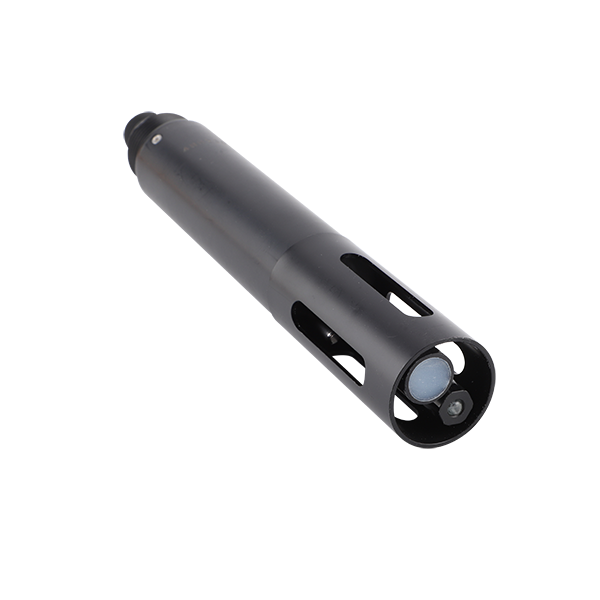
For ammonia nitrogen pollution in domestic sewage caused by rapid hydrolysis of organic nitrogen, the traditional laboratory Nessler reagent method has been unable to meet the requirements of modern industrial and municipal automation control due to heavy environmental cross-contamination and harsh reaction condition control. The NiuBoL integrated online ammonia nitrogen sensor, with its industrial-grade Modbus RTU protocol design, reagent-free consumption characteristics, automatic temperature compensation technology, and robust IP68 structure, successfully solves the problem of continuous on-site collection. For system integrators committed to sewage plant process energy saving and pipe network traceability monitoring, this water quality sensor is a highly reliable perception tool that can significantly reduce system integration complexity and improve project delivery quality.
 NBL-WQ-NHN-4S Online Ammonia Nitrogen Sensor.pdf
Related recommendations
Sensors & Weather Stations Catalog
Agriculture Sensors and Weather Stations Catalog-NiuBoL.pdf
Weather Stations Catalog-NiuBoL.pdf
Agriculture Sensors Catalog-NiuBoL.pdf
Water Quality Sensor Catalog-NiuBoL.pdf
Related products
 Combined air temperature and relative humidity sensor
 TDR Soil Moisture & Temperature Sensor for irrigation| RS485 |4-20mA| NBL-S-THR
 Soil pH sensor RS485 soil Testing instrument soil ph meter for agriculture |NBL-S-PH
 Wind Speed sensor Output Modbus/RS485/Analog/0-5V/4-20mA
 Tipping bucket rain gauge for weather monitoring auto rainfall sensor RS485/Outdoor/stainless steel
 Pyranometer Solar Radiation Sensor 4-20mA/RS485

Screenshot, WhatsApp to identify the QR code
WhatsApp number:+8615367865107
(Click on WhatsApp to copy and add friends)

