





— Blogs —
—Products—
 Consumer hotline +8618073152920
 WhatsApp:+8615367865107
Address:Room 102, District D, Houhu Industrial Park, Yuelu District, Changsha City, Hunan Province, China
Product knowledge
Time:2026-02-02 10:29:00 Popularity:597
In the lifecycle management of photovoltaic power plants, soiling loss is one of the main non-technical factors leading to Performance Ratio (PR) decline. Traditional regular cleaning modes often face the trade-off between “over-cleaning increasing costs” or “delayed cleaning causing power generation loss.”
NiuBoL focuses on the R&D of industrial-grade photovoltaic monitoring hardware. Its NBL-W-PSS photovoltaic dust monitoring station provides system integrators, EPC contractors, and IoT solution providers with a quantifiable data foundation through precise measurement of module surface transmittance loss, enabling the upgrade from “empirical cleaning” to “on-demand cleaning” closed-loop.

Unlike traditional weighing or visual estimation methods, NiuBoL adopts a more engineering-applicable optical measurement technology.
1. Transmittance Loss Conversion Model
The NBL-W-PSS is installed on the photovoltaic array frame to simulate the real soiling environment of photovoltaic module glass. The system uses blue light pollutant closed-loop measurement technology, continuously monitoring the light intensity attenuation coefficient between soiled glass and a clean reference group to directly calculate the effective reduction in sunlight reaching the cells.
2. Real-Time Quantification of Soiling Ratio (SR)
The sensor converts collected physical signals in real time into pollution ratio (SR, 50%~100%). For integrators, this value can be directly converted in the SCADA system into “power generation loss percentage.” This direct logical relationship provides clear trigger thresholds for backend automatic alarms and cleaning robot linkage.
In smart photovoltaic O&M projects, dust monitoring stations are an important part of the digital foundation.
1. Intelligent Cleaning Decision Support
Integrators use NiuBoL-provided data streams, combined with local manual cleaning costs, electricity prices, and expected power generation gains, to build cleaning cost-benefit models (LCOE optimization). When SR falls to a critical threshold, the system automatically generates O&M work orders, greatly reducing the blindness of O&M.
2. PR Value Correction and Performance Benchmarking
During power plant performance evaluation, dust-induced losses are often confused with module degradation or inverter efficiency issues. Introducing dust monitoring station data allows isolation of environmental pollution factors, truly restoring the original efficiency of photovoltaic modules and providing scientific evidence for technical retrofits and warranty claims.
3. Grid-Based Environmental Analysis and Trend Prediction
In large ground-mounted power plants, grid deployment of monitoring points enables analysis of dust accumulation rate differences in different areas (e.g., near roads, factories, or desert zones), optimizing cleaning paths for localized optimal O&M.

To meet the stringent stability requirements of B2B engineering projects, the NBL-W-PSS adopts full industrial-grade standard design:
| Parameter Item | Technical Indicator |
|---|---|
| Power Supply Voltage | DC 12V |
| Signal Output | RS485 |
| Communication Protocol | Standard MODBUS RTU protocol |
| Average Power Consumption | ≤1W (low-power design, suitable for solar-powered systems) |
| Pollution Measurement Accuracy | ±1% (90%~100% range); ±5% (50%~80% range) |
| Optional Configuration | Optional ambient temperature sensor (accuracy ±0.5℃) |
| Protection Level | All-weather industrial-grade design, resistant to UV aging |
As solution providers, during project planning, pay attention to the following dimensions:
Protocol Compatibility: Ensure the monitoring station supports standard Modbus RTU. NiuBoL provides complete register mapping tables for quick docking with various distributed data acquisition terminals (DTU) or PLCs.
Installation Location Representativeness: The monitoring station should be installed in the middle of the photovoltaic array, with tilt angle identical to the photovoltaic modules to simulate real dust gravity and rainwater self-cleaning effects.
Self-Maintenance Logic: The NBL-W-PSS adopts a non-mechanical structure and is almost maintenance-free. However, during routine cleaning of surrounding modules by O&M personnel, ensure the sensor window is cleaned similarly to reset the “zero point” reference.
Low Power Consumption and Anti-Interference: For non-powered areas or strong electromagnetic environments (e.g., near inverters), NiuBoL’s lightning protection and low-power architecture ensure robust data transmission.
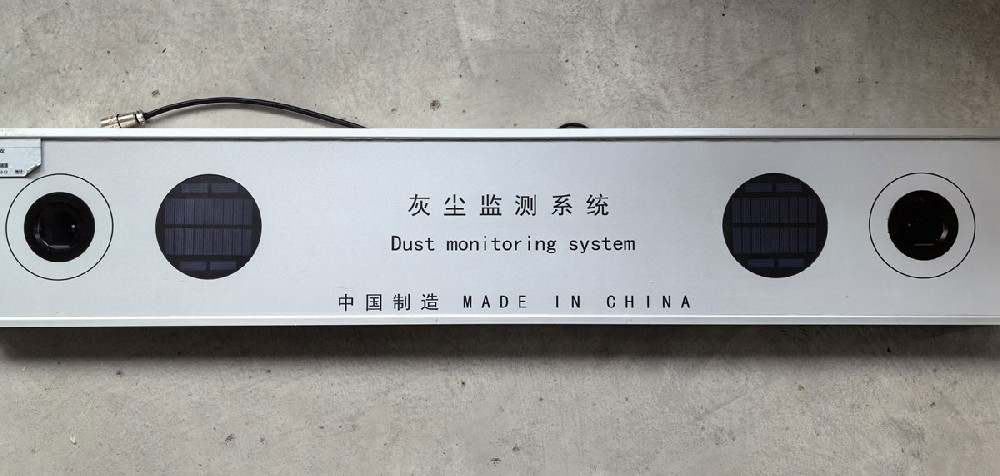
Deployment of NBL-W-PSS in large projects is not isolated; typical topology includes:
Edge-Side Integration: Sensors connect to NiuBoL intelligent data acquisition gateways via RS485 bus. Gateways perform local data preprocessing, filtering instantaneous reading fluctuations caused by heavy rain.
Protocol Stack Support: In addition to standard Modbus RTU, we support integrators converting data via edge gateway protocol to push to MQTT or HTTP/HTTPS interfaces for seamless docking with cloud smart O&M platforms.
Physical Layer Stability: Considering vibration and high temperature of photovoltaic panel frames, sensor brackets adopt stress-relief design to ensure no mechanical displacement of the optical path under strong wind or extreme heat, guaranteeing long-term measurement consistency.
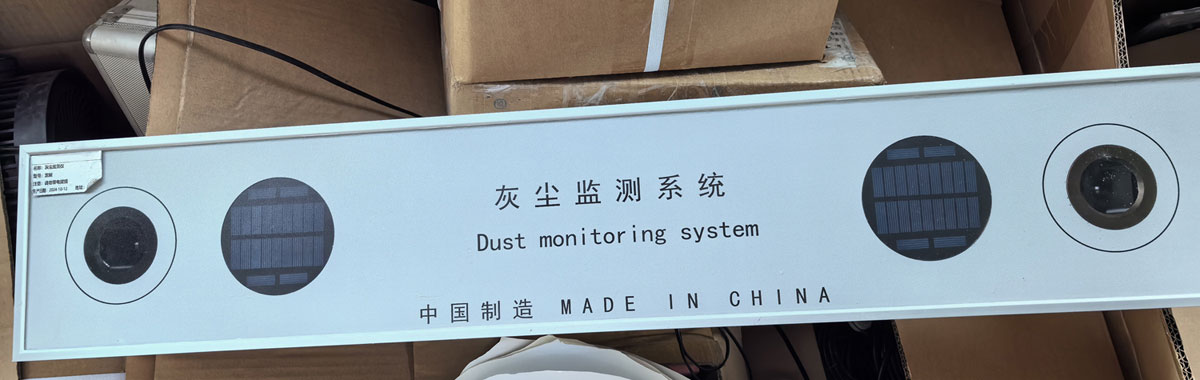
B2B procurement requires hardware configuration based on project ROI (return on investment):
| Project Type | Recommended Configuration Scheme | Core Value Proposition |
|---|---|---|
| Large Ground-Mounted Power Plants (Utility Scale) | Grid deployment of NBL-W-PSS (multi-point averaging) | Precise PR value benchmarking, supporting large-scale cleaning robot cluster scheduling. |
| Commercial & Industrial Rooftop (C&I) | Single NBL-W-PSS + optional ambient temperature | Reduce rooftop inspection frequency by O&M personnel, prevent local dust pollution causing “hot spot” effects. |
| Residential Photovoltaic Monitoring Systems | Integrated low-power OEM module | Provide value-added data services for household APPs, increasing user stickiness. |
| Photovoltaic Research/Demonstration Bases | High-precision dual-sensor version (with high sampling rate data link) | Provide highly reliable scientific research data, meeting requirements for papers or technical evaluations. |
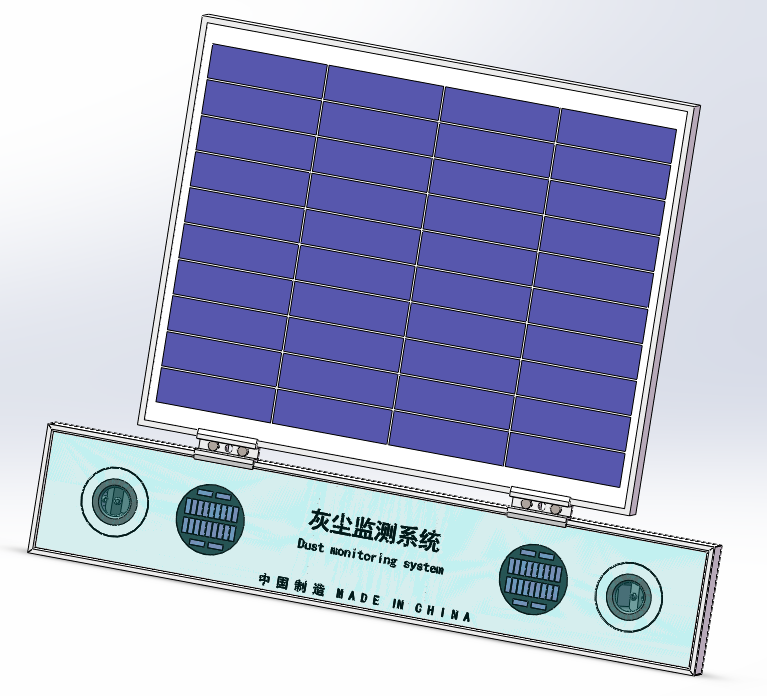
Q1. How does the NiuBoL dust monitoring station distinguish dust from cloud shading?
The equipment uses closed-loop reference measurement technology, monitoring transmittance changes on the glass surface rather than direct light intensity. This differential measurement logic effectively excludes cloud fluctuations and light intensity changes from interfering with pollution ratio calculation.
Q2. Does the equipment require regular manual cleaning?
The sensor simulates dust accumulation on module surfaces. Therefore, only clean the sensor window when the O&M team performs routine cleaning on the array—no additional specialized maintenance needed.
Q3. Can the monitoring station link with automatic cleaning robots?
Yes. Integrators can read Modbus signals via RS485; when SR (pollution ratio) falls below a preset threshold (e.g., 95%), trigger cleaning robot startup commands through PLC.
Q4. How does dust monitoring data specifically help with PR value correction?
In the PR (Performance Ratio) calculation formula, deducting dust losses (Soiling Loss) allows more precise identification of power decline due to module aging or electrical faults, avoiding O&M misjudgments.
Q5. Does the system support long-distance data transmission?
NiuBoL provides standard RS485 interfaces with transmission distances up to 1200 meters. For larger projects, support wireless cloud upload via LoRaWAN or 4G DTU/gateway modules.
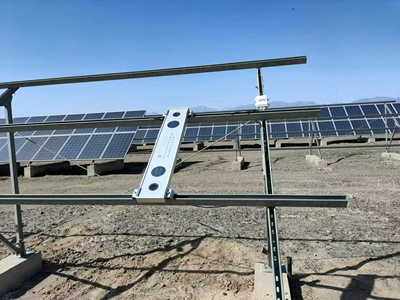
Q6. How is measurement accuracy ensured in sandstorm-prone areas?
The NBL-W-PSS has wide-range monitoring capability and achieves ±1% high accuracy in the 90%~100% interval. It maintains engineering-grade accuracy even under heavy pollution (above 50%).
Q7. Does installing the equipment require damaging existing photovoltaic panel frames?
No. The equipment uses clamp or hoop installation methods, enabling non-destructive installation on new or existing photovoltaic array brackets with extremely high adaptability.
Q8. Can NiuBoL provide OEM customization for specific projects?
As an original manufacturer, we provide brand customization, protocol customization, and multi-sensor integration solutions (e.g., adding backsheet temperature monitoring) for system integrators to build differentiated competitiveness.
Q9. How does the NBL-W-PSS operate at night or in low light?
The sensor uses active light source detection technology with high-sensitivity receivers, enabling 24-hour continuous monitoring. Although power generation occurs during the day, nighttime pollutant monitoring helps O&M teams complete cleaning decisions before sunrise the next day.
Q10. Will large-particle pollutants like bird droppings on the sensor surface cause abnormal readings?
NiuBoL uses dual-optical path calibration algorithms. For localized large-particle shading, the algorithm automatically identifies signal mutations and applies logical correction, or informs the system via status code (Status Code) of possible localized severe soiling rather than uniform overall dust accumulation.
Q11. If the power plant already has a pyranometer installed, is a dust monitoring station still needed?
Yes, very much needed. Pyranometers measure “how much sunlight there is,” while dust monitoring stations measure “how much the glass blocks.” Only combining both accurately distinguishes whether power generation decline is due to “lack of sunlight” or “dirty panels.”
Q12. Does the equipment’s protection level support long-term operation in sandstorm-prone areas?
Yes, the equipment uses sealed optical window design with anti-sand and wear-resistant characteristics, fully capable of handling northwest desert or overseas high-dust environments.
In today’s pursuit of minimizing LCOE (Levelized Cost of Electricity), photovoltaic dust monitoring stations have become a standard component of smart power plant sensing layers. The NiuBoL NBL-W-PSS transforms the invisible “dust shading” into visible “economic loss data” through industrial-grade optical closed-loop technology.
For integrators, introducing NiuBoL’s monitoring solutions means providing clients with more precise O&M recommendations, more efficient cleaning schedules, and more realistic performance evaluation reports.
NiuBoL provides global photovoltaic EPC and IoT partners with full-chain support from single sensors to integrated monitoring systems.
Contact our engineering technical team now to request the detailed NBL-W-PSS register manual and integration quotation!
 NBL-W-PSS Soiling Sensor Photovoltaic Dust Monitoring Instrument Data Sheet.pdf
Related recommendations
Sensors & Weather Stations Catalog
Agriculture Sensors and Weather Stations Catalog-NiuBoL.pdf
Weather Stations Catalog-NiuBoL.pdf
Agriculture Sensors Catalog-NiuBoL.pdf
Water Quality Sensor Catalog-NiuBoL.pdf
Related products
 Combined air temperature and relative humidity sensor
 Soil Moisture Temperature sensor for irrigation|NBL-S-THR
 Soil pH sensor RS485 soil Testing instrument soil ph meter for agriculture |NBL-S-PH
 Wind Speed sensor Output Modbus/RS485/Analog/0-5V/4-20mA
 Tipping bucket rain gauge for weather monitoring auto rainfall sensor RS485/Outdoor/stainless steel
 Pyranometer Solar Radiation Sensor 4-20mA/RS485

Screenshot, WhatsApp to identify the QR code
WhatsApp number:+8615367865107
(Click on WhatsApp to copy and add friends)

