





— Blogs —
—Products—
 Consumer hotline +8618073152920
 WhatsApp:+8615367865107
Address:Room 102, District D, Houhu Industrial Park, Yuelu District, Changsha City, Hunan Province, China
Product knowledge
Time:2025-12-16 21:14:08 Popularity:805
The integrated wind speed and direction sensor, abbreviated as wind speed and direction meter or anemometer-vane, is a device capable of simultaneously measuring wind speed and wind direction in real time.
Its core roles include providing key meteorological parameters:
Meteorological Forecasting and Monitoring: Real-time wind field data is the foundation for weather forecasting and meteorological disaster warnings.
Energy Optimization: In wind farms, used to optimize wind turbine blade angle and rotation speed, improving power generation efficiency.
Safety Assurance: In construction, aviation, bridges, tunnels, and other fields, used to monitor and control airflow states for structural safety and operational comfort.
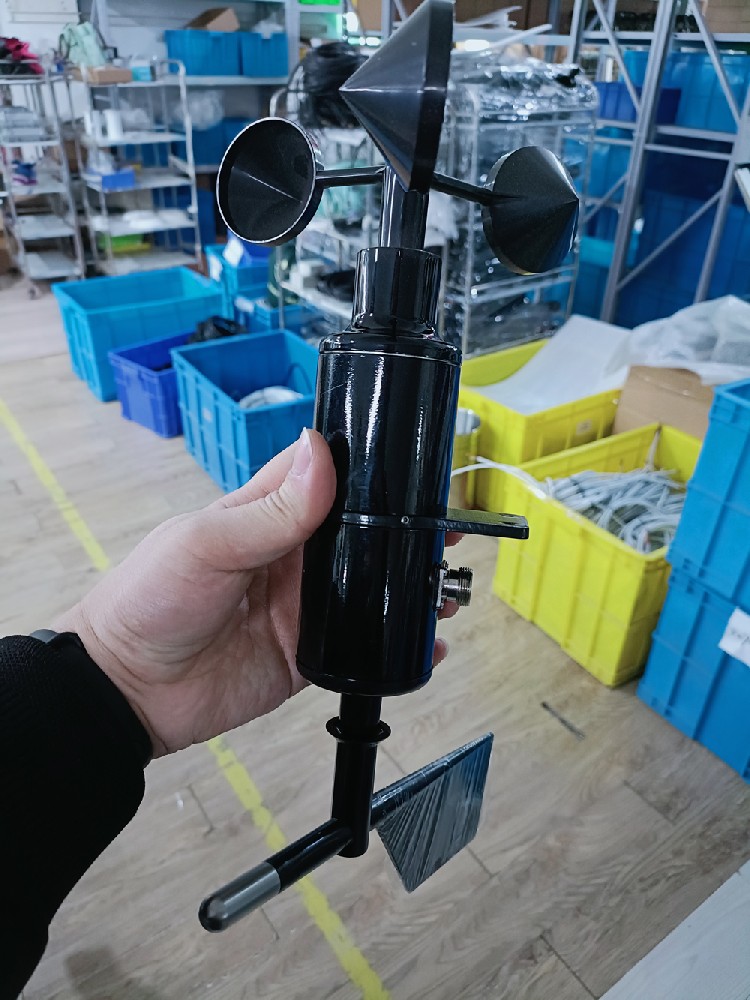
The NiuBoL NBL-W-WSDS adopts the traditional mechanical principle, completing measurements through two independent components integrated into one device.
Wind Speed Measurement (Anemometer Cups):
Component: Typically uses a three-cup structure. Cups are made of lightweight, high-strength carbon fiber material.
Principle: When wind blows the cups, they rotate around a vertical axis. Due to resistance differences between windward and leeward sides, the cups continue rotating. Cup rotation speed is proportional to wind speed. The internal signal processing unit (e.g., photoelectric encoder or Hall element) converts rotation speed into pulse or voltage/current signals.
Wind Direction Measurement (Wind Vane):
Component: Consists of a wind vane with sensitive parts and an internal precision potentiometer.
Principle: The wind vane always points into the wind under wind force. The vane shaft connects to a precision potentiometer. When wind direction changes, potentiometer resistance changes. Measuring resistance or output voltage precisely determines direction angle (0-360 degrees).
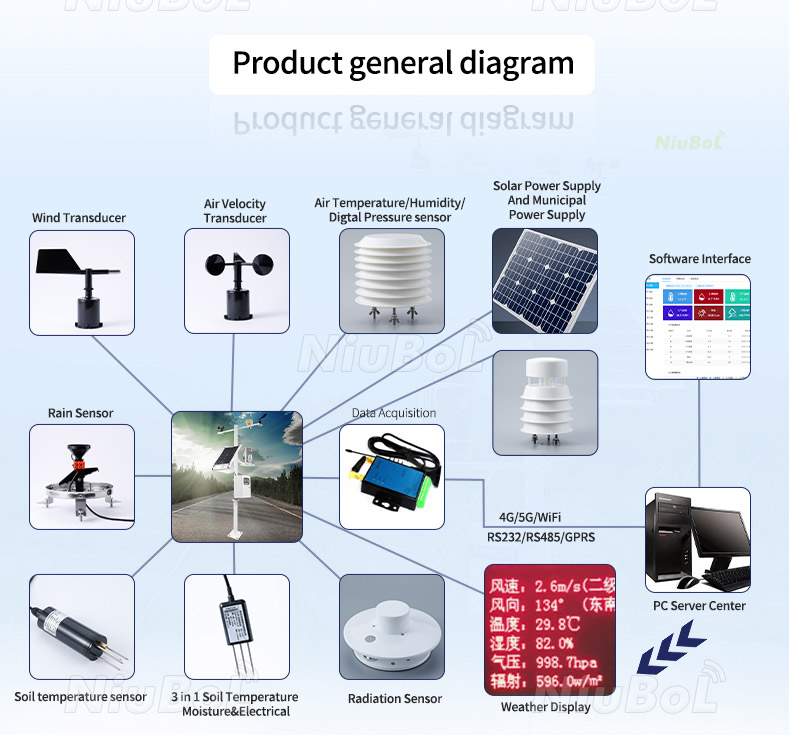
The NiuBoL NBL-W-WSDS integrated wind speed and direction sensor integrates these two core components with optimizations for performance and reliability:
Wind Speed Component: Cups use carbon fiber material with high strength and low inertia, ensuring low starting threshold (≤ 0.8m/s), capturing weak wind changes with good dynamic characteristics.
Wind Direction Component: Uses low-inertia light metal vane and precision potentiometer for rapid and stable response. Wind direction starting speed is even lower (≤0.5m/s).
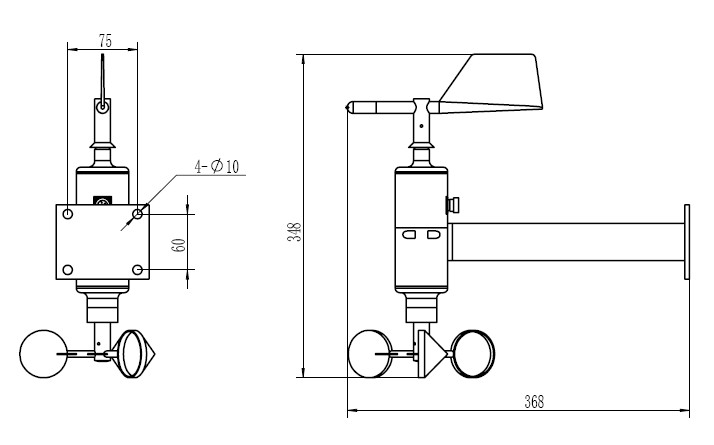
Structural Design: Compact and lightweight integrated design for easy portability, installation, and transport, with corrosion resistance suitable for harsh environments.
The NBL-W-WSDS excels in accuracy, range, and compatibility:
| Parameter | Wind Speed Measurement (V) | Wind Direction Measurement | Advantage Analysis |
|---|---|---|---|
| Measurement Range | 0-45m/s (optional 0-70m/s) | 0-360° | Wide range coverage, suitable for strong wind environments (e.g., typhoon areas). |
| Accuracy | ±(0.3+0.03V)m/s | ±3° | High accuracy, especially maintaining precision at low wind speeds. |
| Resolution | 0.1m/s | 1° | Meets professional meteorology and wind resource assessment requirements for fine data. |
| Starting Wind Speed | ≤0.8m/s | ≤0.5m/s | Low threshold effectively monitors breeze states. |
| Output Forms | 4-20mA, 0-5V, RS485 | 4-20mA, 0-5V, RS485 | Multiple signal outputs; RS485 suitable for long-distance transmission and anti-interference. |
| Operating Temperature | -40℃ -50℃ | -40℃ -50℃ | Wide temperature range adapts to extreme cold or hot climates. |
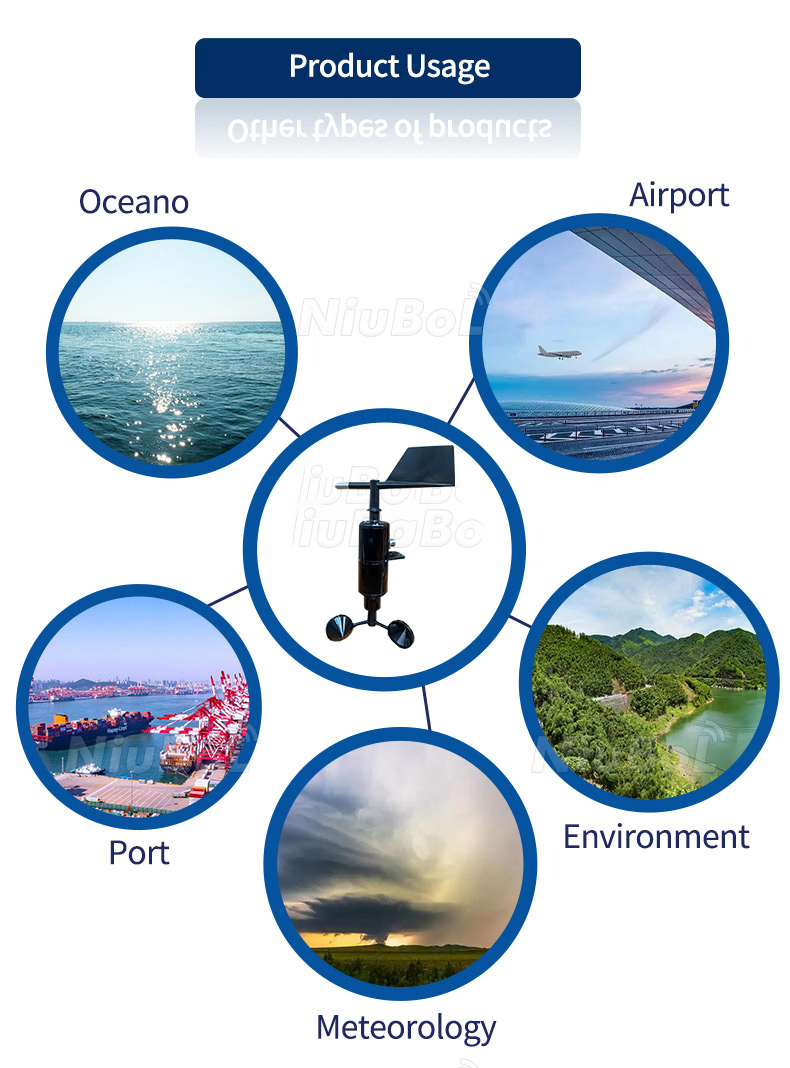
Integrated wind speed and direction sensors are key to automation, safety, and efficiency in many industries:
Wind Resource Assessment: Long-term monitoring in pre-construction phase evaluates wind resource stability and feasibility for site selection and economic assessment.
Turbine Optimization Control: Real-time data controls automatic yaw adjustment for optimal power generation.
Safety Protection: Triggers warnings when wind speed exceeds thresholds, automatically shutting down turbines to prevent damage.
Automatic Weather Stations: Provides real-time data for forecasting and short-term climate trends.
Pollution Diffusion Monitoring: Wind speed and direction determine pollutant spread; data builds air quality models for path and concentration prediction.
Agricultural Meteorology: Monitors field microclimate for wind protection, pest control (affecting spray drift), and greenhouse ventilation.
Bridges and Tunnels: Monitors wind loads and vibrations on large-span bridges for safety and traffic control (e.g., restrictions in high winds).
Aviation and Ports: Airports use precise wind data for safe takeoffs/landings; ports for ship docking and lifting operations.
High-Rise Buildings: Monitors local airflow for design optimization, improving wind resistance and environmental comfort.
| Aspect | Advantages | Considerations (Potential Drawbacks) |
|---|---|---|
| Efficiency and Cost | Integrated design simplifies installation and wiring, reducing overall deployment costs. | Traditional mechanical types may have errors in complex conditions (e.g., icing, strong winds) due to wear and inertia. |
| Accuracy and Reliability | NiuBoL products use premium materials like carbon fiber for improved accuracy and corrosion resistance. | Mechanical structure requires regular maintenance for smooth rotation and long-term stability. |
| Compatibility | Provides RS485, 4-20mA, 0-5V outputs for easy integration into existing systems. | Limited to certain scenarios; high-precision, non-contact needs may require ultrasonic sensors. |
With technological development, ultrasonic wind sensors are trending due to no moving parts, minimal maintenance, and high accuracy. However, NiuBoL's mechanical integrated sensors (e.g., NBL-W-WSDS) remain mainstream in meteorology and industry due to mature technology, high cost-effectiveness, strong lightning resistance, and stable data in strong winds.
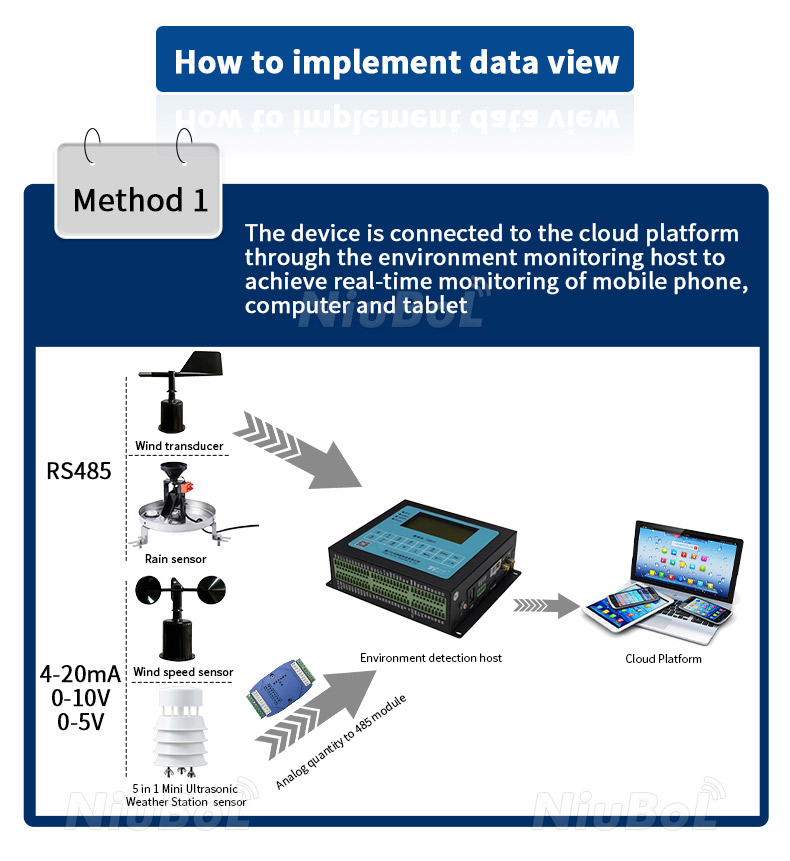
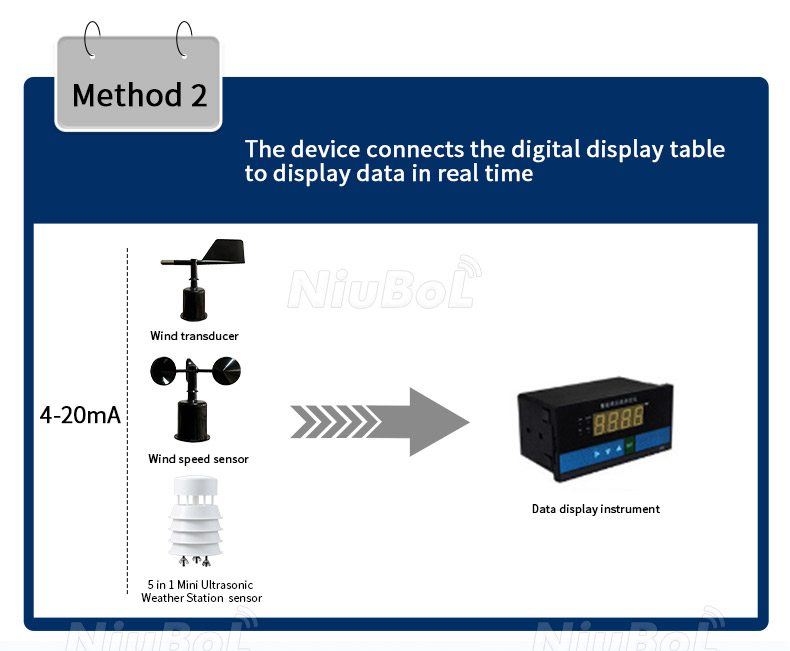
Q1: How to ensure measurement accuracy of the integrated wind speed and direction sensor?
A: Mainly depends on:
Correct Installation: Ensure open, unobstructed location with sturdy pole/platform to avoid vibrations affecting cup rotation.
Regular Maintenance: Clean cups and vane periodically, check shaft smoothness and cable connections.
Compliance with Standards: Ensure product meets national standards like SL61-2003, GB11831-89.
Q2: What is the significance of starting wind speed in the NBL-W-WSDS sensor?
A: Starting wind speed is the minimum for effective measurement. NBL-W-WSDS has wind direction ≤0.5m/s and wind speed ≤0.8m/s. Lower values indicate higher sensitivity, crucial for weak wind detection in wind resource assessment and agricultural microclimate monitoring.
Q3: What are the advantages of RS485 output compared to analog signals?
A:
Strong Anti-Interference: Digital differential transmission suppresses noise.
Long-Distance Transmission: Up to kilometers without significant attenuation/distortion.
Multi-Point Networking: One bus connects multiple sensors (e.g., temperature/humidity, rainfall), simplifying wiring and integration.
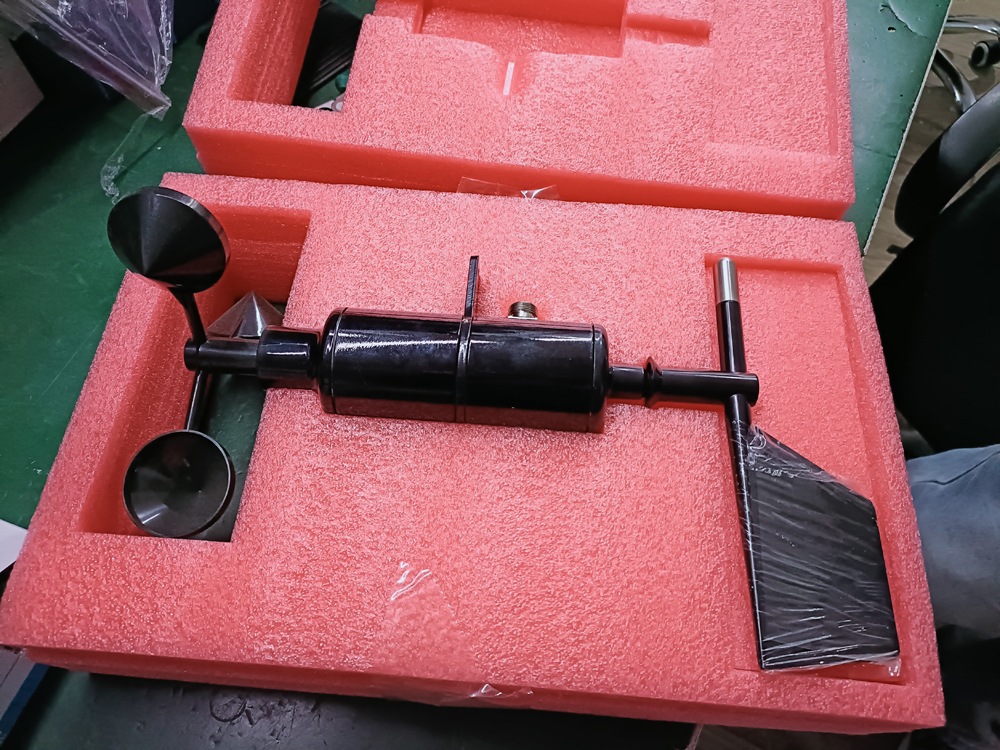
Integrated wind speed and direction sensors are indispensable infrastructure in modern meteorological monitoring and industrial control. The NiuBoL NBL-W-WSDS series, with high accuracy, low starting thresholds, and compact durable design, provides reliable and precise wind field data for meteorology, energy, environment, and other fields.
Through continuous application and maintenance of these cost-effective sensors, we can more effectively assess wind resources, optimize energy production, predict meteorological disasters, and improve operational efficiency and safety.
NiuBoL is committed to high-quality integrated wind speed and direction sensors to help your systems achieve more precise and efficient monitoring and control.
Prev:Illuminance Sensor Principle, Application, and NiuBoL Technology Analysis
Next:Smart Aquaculture: Key Water Quality Sensor Technologies and NiuBoL Product Solutions
Related recommendations
Sensors & Weather Stations Catalog
 Agriculture Sensors and Weather Stations Catalog-NiuBoL.pdf
Weather Stations Catalog-NiuBoL.pdf
Agriculture Sensors Catalog-NiuBoL.pdf
Water Quality Sensor Catalog-NiuBoL.pdf
Related products
 Combined air temperature and relative humidity sensor
 TDR Soil Moisture & Temperature Sensor for irrigation| RS485 |4-20mA| NBL-S-THR
 Soil pH sensor RS485 soil Testing instrument soil ph meter for agriculture |NBL-S-PH
 Wind Speed sensor Output Modbus/RS485/Analog/0-5V/4-20mA
 Tipping bucket rain gauge for weather monitoring auto rainfall sensor RS485/Outdoor/stainless steel
 Pyranometer Solar Radiation Sensor 4-20mA/RS485

Screenshot, WhatsApp to identify the QR code
WhatsApp number:+8615367865107
(Click on WhatsApp to copy and add friends)

