





— Blogs —
—Products—
 Consumer hotline +8618073152920
 WhatsApp:+8615367865107
Address:Room 102, District D, Houhu Industrial Park, Yuelu District, Changsha City, Hunan Province, China
Product knowledge
Time:2026-01-30 16:38:59 Popularity:636
In the implementation of smart agriculture and digital plant protection projects, the NiuBoL NBL-IoT-SRPMS intelligent remote insect monitoring and reporting system has become the preferred choice for system integrators and agricultural project contractors due to its high degree of automation and industrial-grade stability. This guide aims to provide comprehensive technical operation references for B2B partners—from engineering implementation, system configuration, logic operation to troubleshooting—ensuring the equipment achieves long-term, precise monitoring operations in harsh field environments.
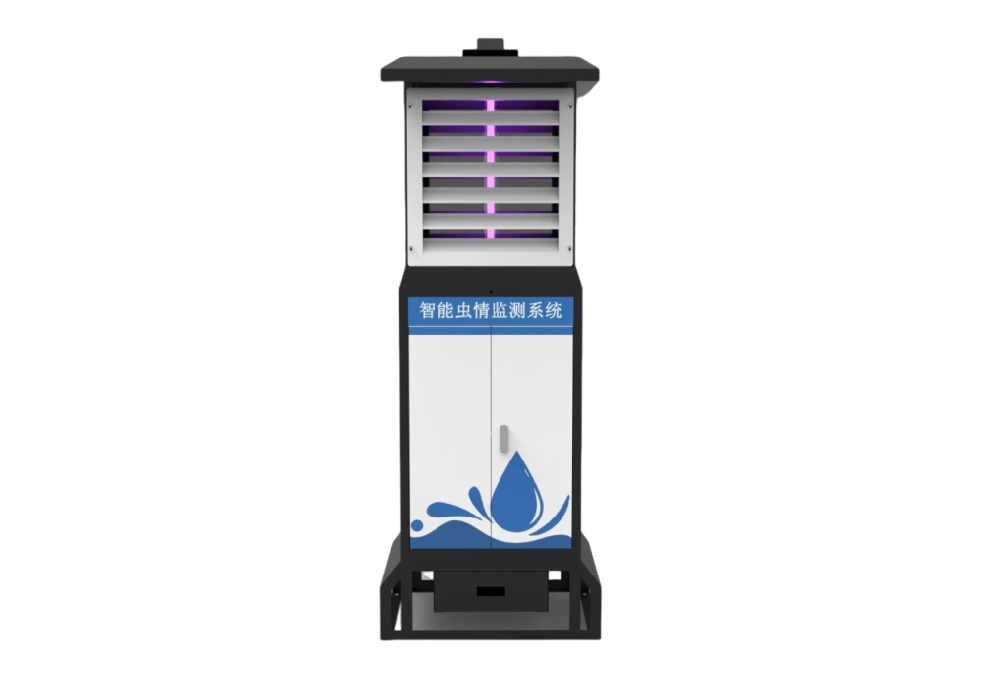
The R&D and production of NiuBoL NBL-IoT-SRPMS strictly comply with the national standard GB/T 24689.1-2009 (Plant Protection Machinery – Pest Forecasting Light). Its core architecture is based on an all-stainless steel structure, integrating photoelectric sensing, far-infrared thermal processing, 4G wireless communication, and an Android embedded control system.
The system can independently complete the full process of attracting, killing, drying, photographing, dispensing, and cleaning insects. It also features reserved RS485/232 interfaces for horizontal integration with meteorological monitoring, soil moisture, and other IoT systems, providing multi-dimensional ecological data support for research institutions and agricultural management departments.
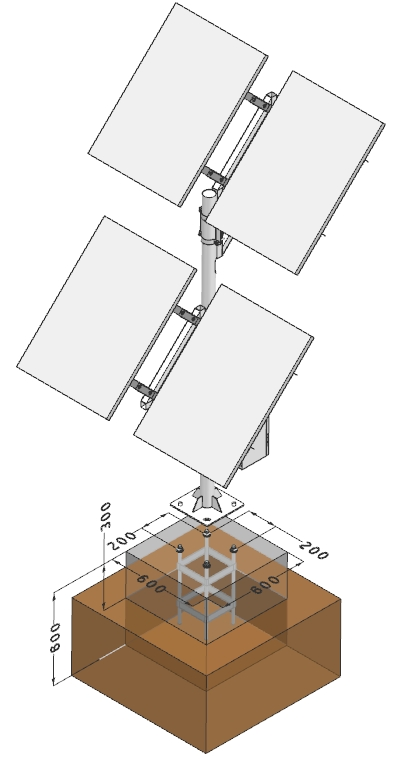
For large-scale agricultural engineering projects, the stability of the foundation construction directly affects the service life of the equipment. Below is the standard installation process for NBL-IoT-SRPMS.
1. Solar Bracket Foundation Construction
If the project selects the solar power supply scheme (400W solar panel & 200AH colloidal battery), an independent bracket foundation must be constructed first.
Foundation excavation: Reserved pit size 600mm × 600mm, depth 300mm.
Ground cage embedding: Use ground cage for fixation, with bolt length protruding 30mm above the cement surface. Key point: The bracket must face south to maximize light conversion efficiency.
Concrete pouring: Use C20 strength concrete, total pouring height 600mm (300mm underground, 300mm above ground).
Fixed installation: After the foundation is fully dry, secure the assembled bracket using M16 nuts.
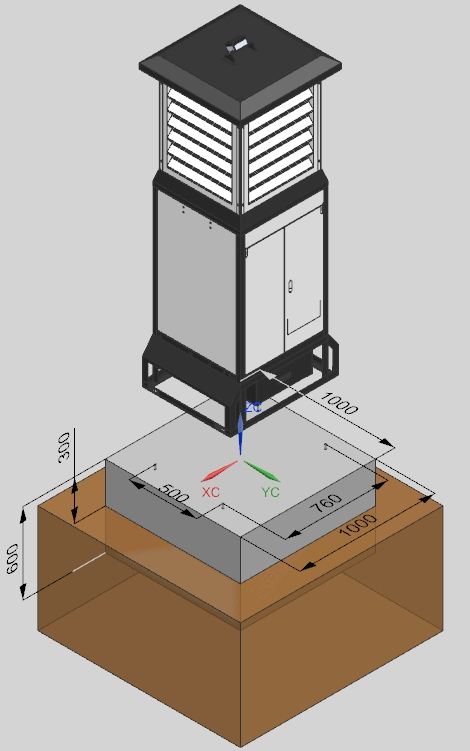
2. Insect Monitoring Light Main Unit Installation
The main unit foundation must bear the weight of the entire machine and wind load, requiring higher stability.
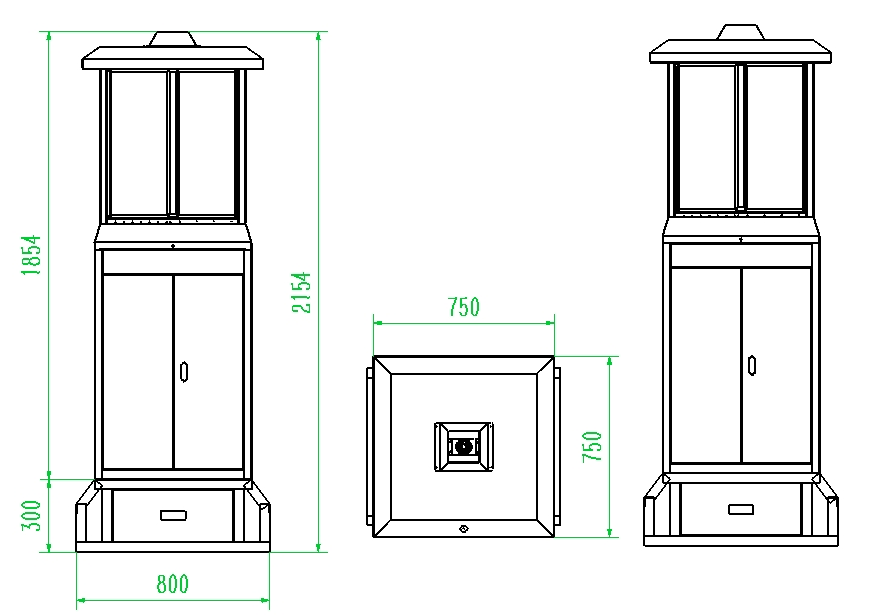
Foundation specifications: Excavate 1000mm × 1000mm × 300mm reserved pit.
Positioning and drilling: After concrete is fully dry, use an impact drill to make holes at 760mm × 500mm center spacing.
Fixing components: Install M12 expansion screws, ensuring verticality.
Overall hoisting: Align the NiuBoL forecasting light main unit with the bolt positions, place it steadily, and reinforce.
Safety reminder: In areas prone to thunderstorms, a lightning rod must be installed on top of the equipment, and grounding must be completed according to the grounding mark on the lamp body.
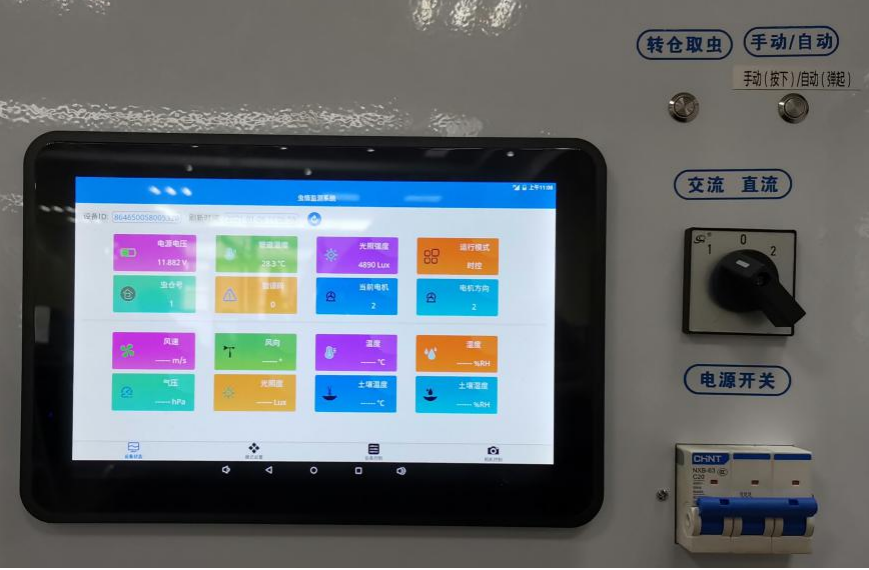
NBL-IoT-SRPMS is equipped with a 10-inch Android industrial-grade color touchscreen, supporting multi-mode switching and parameter customization.
1. Power Supply Mode Self-Check
AC 220V mode: Turn on the main power switch and switch to “AC Power” in system settings.
DC solar mode: Switch to “DC Power”, ensure stable voltage input.
2. Detailed Explanation of Three Core Operating Modes
Time Control Mode: Users can customize up to 4 working periods based on the activity patterns of target pests (e.g., cutworms, cotton bollworms). Note: The shortest recommended photo interval is 20 minutes to match the far-infrared drying time cycle.
Light Control Mode: The system monitors ambient light intensity in real time. When illuminance is below 850Lux and lasts for 30s (dusk), the device automatically starts; when above 850Lux and lasts for 30s (dawn), it enters standby.
Rain Control Mode: This is the system’s active protection logic. When the rain sensor is triggered, the system immediately turns off the insect-attracting light and activates the drainage mechanism to ensure rainwater is discharged through louvers and dedicated channels without entering the precision processing chamber.
3. Manual Debugging Mode
This mode is specifically designed for engineering acceptance and troubleshooting. In manual mode, the operator can independently control:
On/off of the insect-attracting light;
Heating self-check of the far-infrared processing chamber;
Vibration of the insect collection board and cleaning action of the stepper motor brush;
Remote simulated photography by the industrial camera.
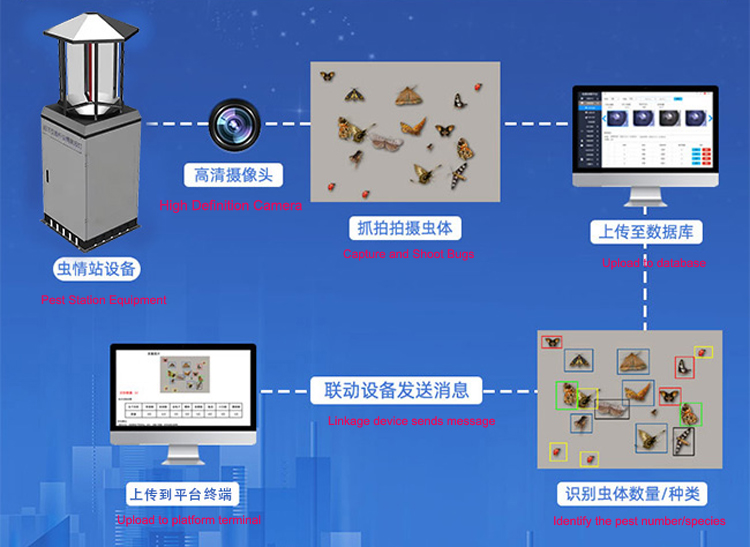
The technical barrier of the NiuBoL forecasting system lies in its ability to process insect bodies with “high quality and integrity.”
Attraction and Impact: Insects are attracted by 365-395nm wavelength LED insect light and fall into the insect funnel after impacting the 5mm four-sided glass screen.
Far-Infrared Killing: Live insects enter the processing chamber, where the infrared module causes rapid death within 3-5 minutes.
High-Temperature Drying: The drying chamber heats to 90℃ and maintains for 15 minutes. This ensures insects do not rot or deform, creating conditions for high-definition photography.
Automatic Spreading: Vibration device evenly distributes dried insects on the rectangular insect collection tray.
Image Acquisition: 12-megapixel industrial camera takes high-definition photos at timed intervals and uploads them to the NiuBoL IoT platform via 4G/Ethernet.
AI Identification and Cleaning: The platform uses AI technology to automatically identify pest species and quantities, then the stepper motor drives the brush to clean the collection board, and insects fall into the bottom collection drawer.
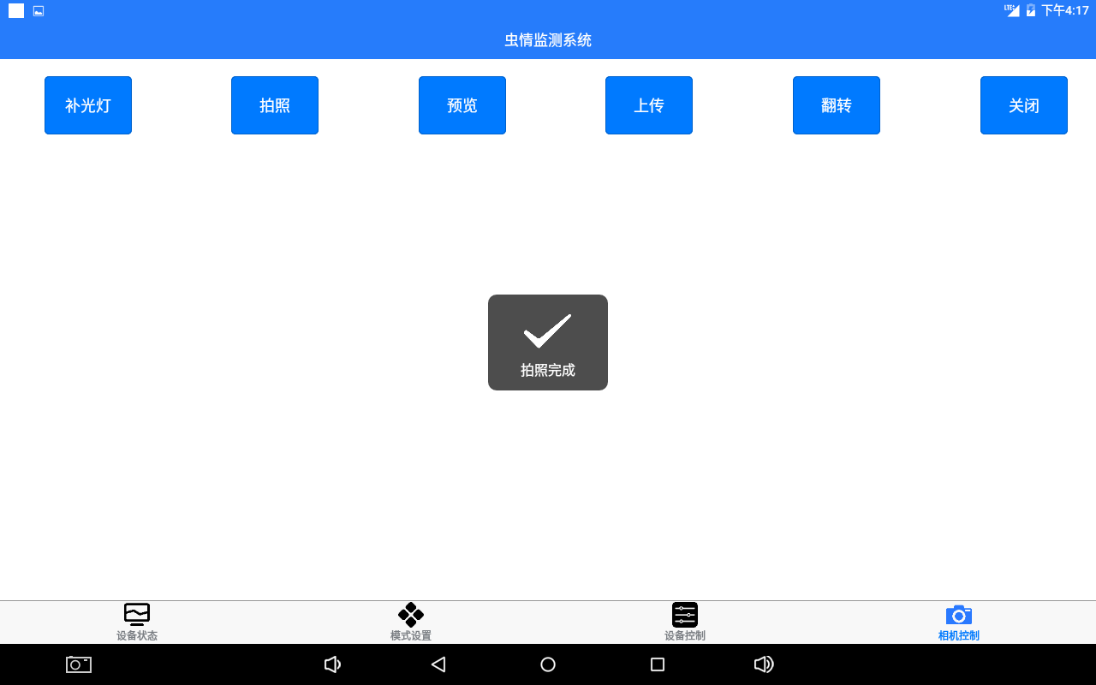
To ensure the NiuBoL forecasting system maintains high-precision operation throughout its full life cycle, the O&M team should strictly follow these procedures:
Orientation Alignment: During installation, the front of the forecasting light must face east to optimize light control sensing and trapping efficiency.
Sensor Cleaning: Regularly wipe the rain control sensor and light sensor probe to prevent malfunctions caused by bird droppings or dust accumulation.
Glass Screen Cleaning: Dirt on the impact screen reduces light transmittance and should be cleaned regularly with a damp cloth.
Environmental Matching: Set working intervals must be greater than the 15-minute baking time to avoid logic conflicts causing insect accumulation.
Weather Warnings: In case of typhoons or extreme heavy rain, it is recommended to remotely shut down via the platform and resume operation two hours after the weather improves.
As a system integrator, mastering basic troubleshooting capabilities can significantly reduce after-sales costs.
| Fault Phenomenon | Possible Cause | Handling Countermeasure |
|---|---|---|
| Insect-attracting light does not turn on at night | Light sensor probe blocked or plug loose | Clean the surface of the light sensor probe and check the connector |
| Indicator light does not illuminate | Power not supplied or fuse blown | Check power switch and replace fuse |
| High rate of live insects captured | Far-infrared heating chamber not reaching set temperature | Check heating tube voltage or controller parameters |
| Image blurry/unable to take photos | Industrial camera lens dusty or weak network signal | Wipe the lens and check 4G antenna connection |
| Insect accumulation on collection board | Cleaning motor stepper abnormality | Check if there are foreign objects blocking the brush track |
Q1: Does the AI identification library of NBL-IoT-SRPMS support custom extensions?
A1: Yes. The system currently has built-in identification models for 1326 pest species. For rare species in specific regions, integrators can upload sample images, and our backend algorithm team will perform annotation training and model deployment.
Q2: How is data transmitted in forest areas without 4G signal?
A2: The device supports Ethernet access. For extremely remote areas, it can be paired with satellite gateways or accessed to the main control room via local network repeaters.
Q3: How long can the device continue transmitting data after power outage?
A3: The system has power-off memory function. Once power is restored, it automatically processes accumulated insects from before the outage and re-synchronizes time to ensure the monitoring timeline remains uninterrupted.
Q4: How does solar power perform on consecutive cloudy and rainy days?
A4: With the optional 400W solar panel and 200AH battery, the system can still support 5-7 days of regular operation mode even in complete absence of light.
Q5: Can the equipment shell’s corrosion resistance adapt to coastal salt spray environments?
A5: The device uses stainless steel + galvanized spray plastic double-layer protection process, meeting industrial-grade anti-corrosion standards and effectively resisting salt spray and acid-alkali environments.
Q6: Can photographed insect samples be retained for manual review?
A6: Yes. After processing, insect bodies fall into the large-capacity 645×410×150mm bottom drawer, which can be periodically retrieved by personnel for laboratory specimen identification.
Q7: How to achieve linkage with on-site weather stations?
A7: Through the reserved RS485 interface on the host, using standard Modbus protocol, it can directly read real-time data from other NiuBoL sensors and display them on the same screen on the Android terminal.
Q8: What is the power consumption performance of the device?
A8: Peak power during operation ≤225W, standby power only ≤15W, greatly reducing the load pressure on the solar system.
Q9: Does it support remote firmware upgrade (OTA)?
A9: Yes. The system can remotely push the latest identification algorithms and firmware patches without requiring on-site engineers.
Q10: What is the expected overall service life of the device?
A10: The core mechanical structure is designed for a service life of no less than 8-10 years, and electronic components can operate stably for more than 5 years under regular maintenance.
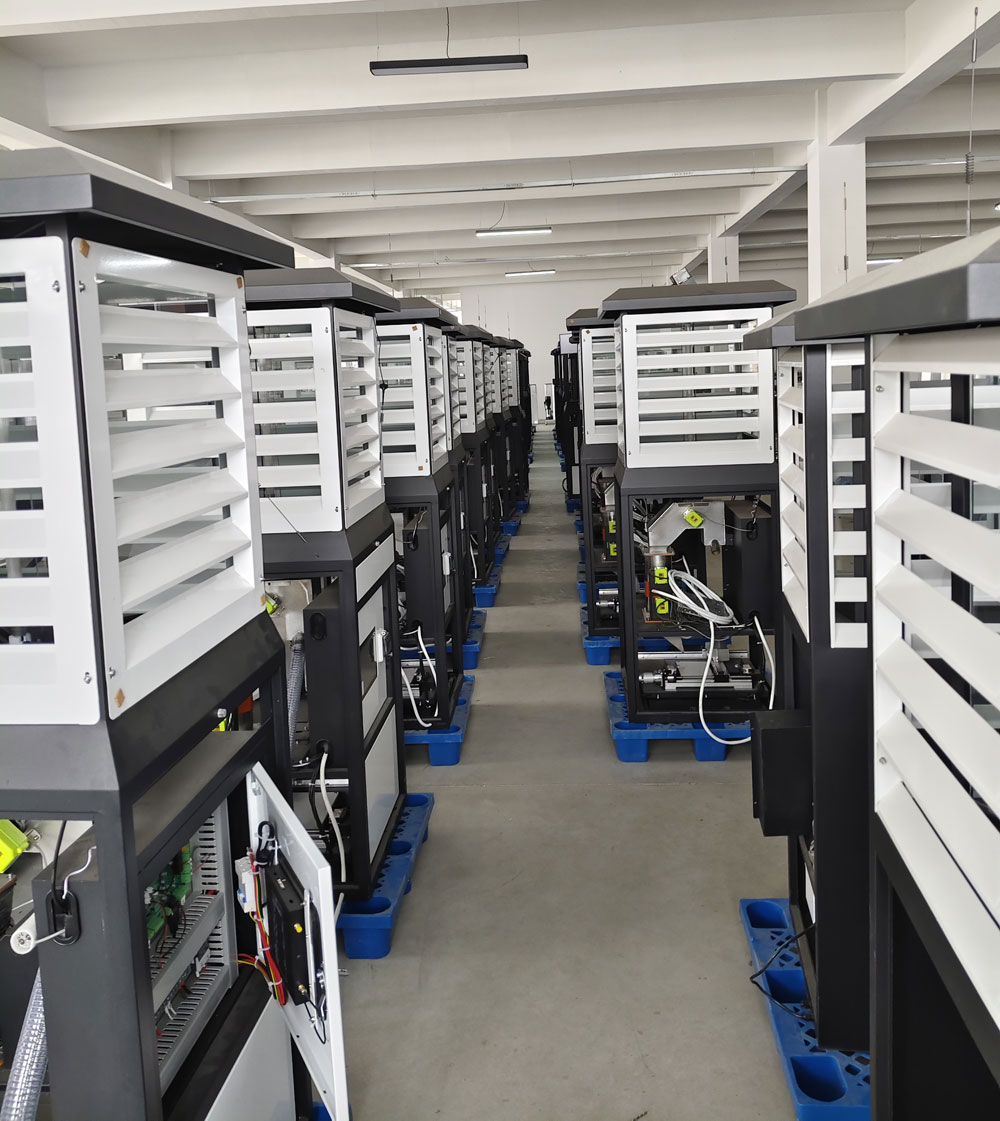
The NiuBoL NBL-IoT-SRPMS intelligent remote insect monitoring and reporting system, with its rigorous industrial design, compliance with national standards, and high friendliness toward IoT integration, has become a “benchmark-level” terminal in agricultural engineering projects. Through standardized foundation construction, scientific mode configuration, and regular professional maintenance, system integrators can deliver a highly reliable and accurate pest early warning platform to end users.
In the future layout of precision agriculture, NiuBoL will continue to open underlying interfaces and algorithm capabilities, working with global partners to promote the digital upgrade of plant protection work.
 Intelligent Remote Insect Monitoring and Reporting System(Insect Monitoring Device) Data Sheet.pdf
Prev:Deploying Robust Soil Moisture Meters for Long-Term Forestry Research and Soil Health Monitoring
Related recommendations
Sensors & Weather Stations Catalog
Agriculture Sensors and Weather Stations Catalog-NiuBoL.pdf
Weather Stations Catalog-NiuBoL.pdf
Agriculture Sensors Catalog-NiuBoL.pdf
Water Quality Sensor Catalog-NiuBoL.pdf
Related products
 Combined air temperature and relative humidity sensor
 TDR Soil Moisture & Temperature Sensor for irrigation| RS485 |4-20mA| NBL-S-THR
 Soil pH sensor RS485 soil Testing instrument soil ph meter for agriculture |NBL-S-PH
 Wind Speed sensor Output Modbus/RS485/Analog/0-5V/4-20mA
 Tipping bucket rain gauge for weather monitoring auto rainfall sensor RS485/Outdoor/stainless steel
 Pyranometer Solar Radiation Sensor 4-20mA/RS485

Screenshot, WhatsApp to identify the QR code
WhatsApp number:+8615367865107
(Click on WhatsApp to copy and add friends)

