





— Blogs —
—Products—
 Consumer hotline +8618073152920
 WhatsApp:+8615367865107
Address:Room 102, District D, Houhu Industrial Park, Yuelu District, Changsha City, Hunan Province, China
Product knowledge
Time:2026-02-01 09:42:06 Popularity:544
As photovoltaic system integrators, IoT solution providers, or EPC contractors, delivering reliable and efficient photovoltaic projects and meeting customer expectations for investment returns and operational stability is the core responsibility. Accurate weather data tailored to photovoltaic scenarios is the key to determining power plant efficiency, yet it is often overlooked.
Ordinary weather stations or low-precision sensors are prone to data deviations, poor compatibility, and unreliable measurements, directly leading to inaccurate power generation calculations, inefficient O&M, and increased project risks. For B2B buyers focused on long-term value, professional photovoltaic weather stations are essential for project success.
NiuBoL, as a professional manufacturer of industrial-grade photovoltaic weather equipment, has developed targeted solutions tailored to the needs of integrators. These solutions accurately address power plant operation pain points and achieve seamless integration with existing monitoring systems, helping to enhance project competitiveness. This article will analyze the core challenges for integrators, the value of professional weather monitoring, and the empowering advantages of NiuBoL.
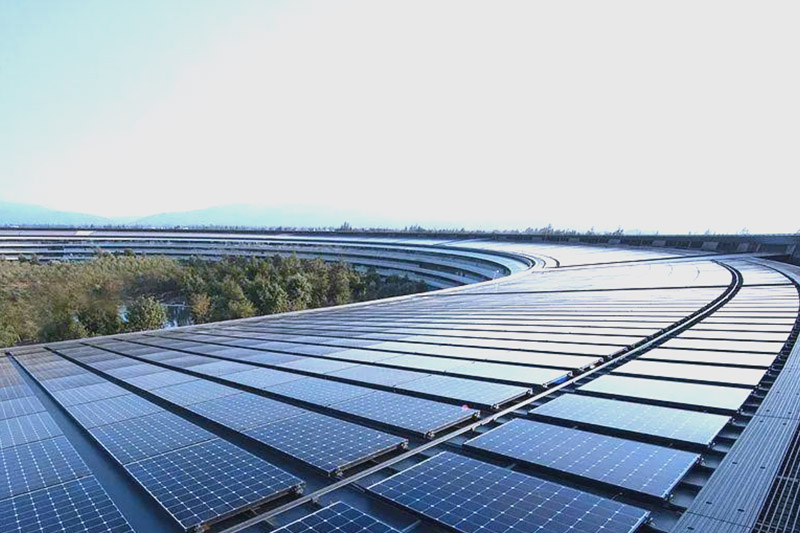
Photovoltaic power generation efficiency is directly affected by on-site weather conditions such as irradiance and module temperature. Without accurate and real-time photovoltaic-specific weather data, integrators face numerous operational and commercial risks. Below are the core pain points and shortcomings of ordinary weather equipment.
Pain Point: Inability to accurately measure key parameters such as irradiance, leading to large deviations in power generation calculations, difficulty in evaluating power plant PR values, troubleshooting performance anomalies, and providing reliable data for grid settlements; power generation losses caused by dust and module overheating cannot be quantified.
Impact on Integrators: Failure to meet expected power generation can lead to disputes and damage reputation; lack of data support when handling complaints increases commercial risks.
Shortcomings of Ordinary Equipment: Sensor spectrum and angle response do not match photovoltaic modules, with large temperature drifts and poor stability, resulting in systematic deviations in irradiance data; sensors are prone to contamination, leading to long-term low data that goes undetected.
Pain Point: Lack of reliable weather data prevents preventive O&M; when equipment fails, it's hard to distinguish between weather and equipment causes, leading to blind O&M where costs exceed benefits; ordinary weather equipment has high failure rates and unstable communications, resulting in misguided O&M decisions.
Impact on Integrators: O&M costs compress profits, blind O&M is seen as a lack of professionalism, equipment damage and extended downtime affect customer benefits, hindering future cooperation.
Shortcomings of Ordinary Equipment: Lack of design adapted to photovoltaic scenarios, insufficient protection levels, poor communication compatibility, frequent data interruptions, no fault self-diagnosis function.
Pain Point: Lack of effective means to monitor soiling losses, inability to scientifically determine module cleaning timing, commonly resulting in over-cleaning or under-cleaning issues.
Impact on Integrators: Over-cleaning increases costs, under-cleaning leads to power generation losses, customers tend to blame integrators, and blind cleaning may damage modules.
Shortcomings of Ordinary Equipment: No soiling monitoring function, low data precision in simple equipment, unable to provide reliable support for cleaning decisions.
Pain Point: Ordinary temperature sensors are improperly installed, insufficient in number, or lack precision, leading to large temperature data deviations and inability to reflect actual module operating temperatures.
Impact on Integrators: Distorted PR value calculations, difficulty in troubleshooting equipment hazards, expanded power generation calculation deviations, affecting project acceptance.
Shortcomings of Ordinary Equipment: General-purpose temperature sensors not adapted to photovoltaic scenarios, low precision, large temperature drifts, lack of scientific installation guidance.
Pain Point: Ordinary weather equipment has low protection levels and poor weather-resistant materials, prone to aging, corrosion, and damage in outdoor environments, requiring frequent maintenance and short lifespan.
Impact on Integrators: Frequent equipment damage increases spare parts and maintenance costs, data interruptions fail to support ongoing decisions, customers question integrator selection capabilities.
Shortcomings of Ordinary Equipment: General-purpose design not optimized for photovoltaic outdoor scenarios, protection level below IP67, narrow high-low temperature resistance range, no anti-UV or anti-corrosion capabilities.
Pain Point: Ordinary weather stations have non-unified communication protocols and non-standard interfaces, poor compatibility with photovoltaic monitoring and SCADA systems, easily forming data silos, complex installation and debugging.
Impact on Integrators: High integration difficulty and long cycles increase implementation costs and delay delivery, data cannot be linked for analysis, poor customer experience.
Shortcomings of Ordinary Equipment: Lack of industrial-grade integration design, does not support MODBUS and other mainstream protocols, no open API interfaces, no standardized installation and debugging processes.
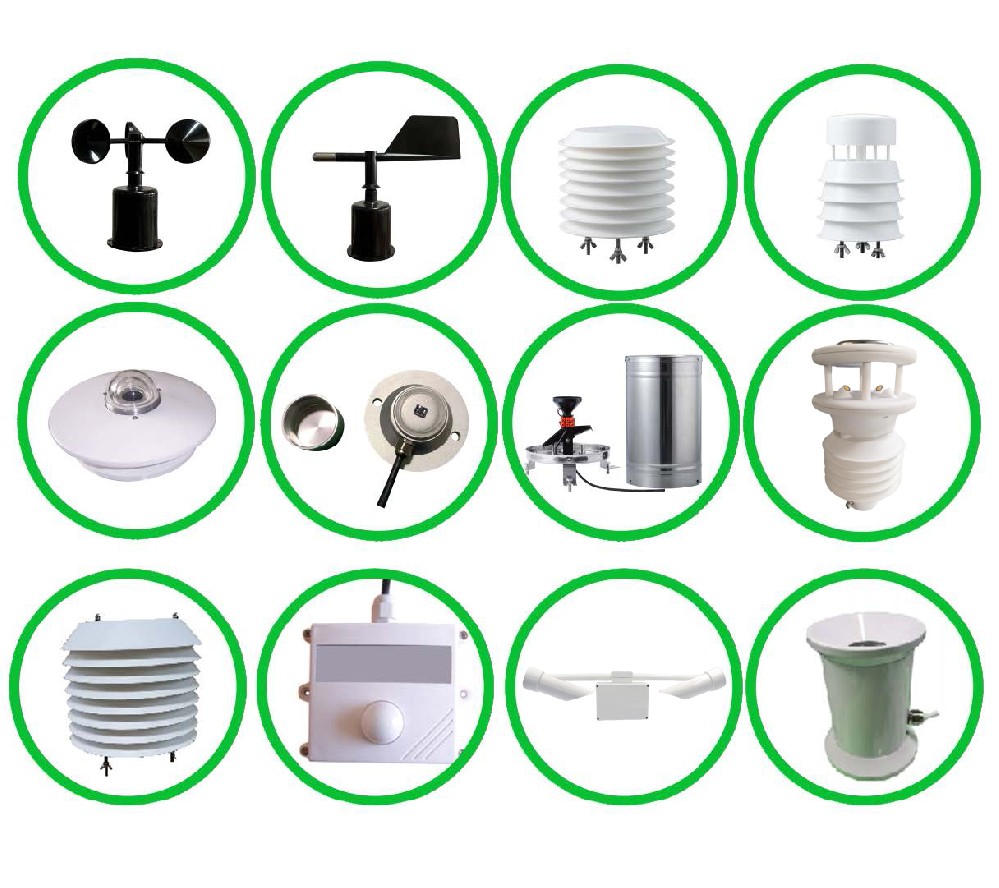
Addressing the above pain points, NiuBoL has developed a full series of professional photovoltaic weather stations and supporting sensors, with “high precision, high reliability, high compatibility, easy integration” as the core, providing one-stop solutions to help integrators reduce costs and increase efficiency.
Designed according to IEC 61724-1 and other international photovoltaic standards, focusing on photovoltaic scenario specificity, comprehensively ensuring data accuracy:
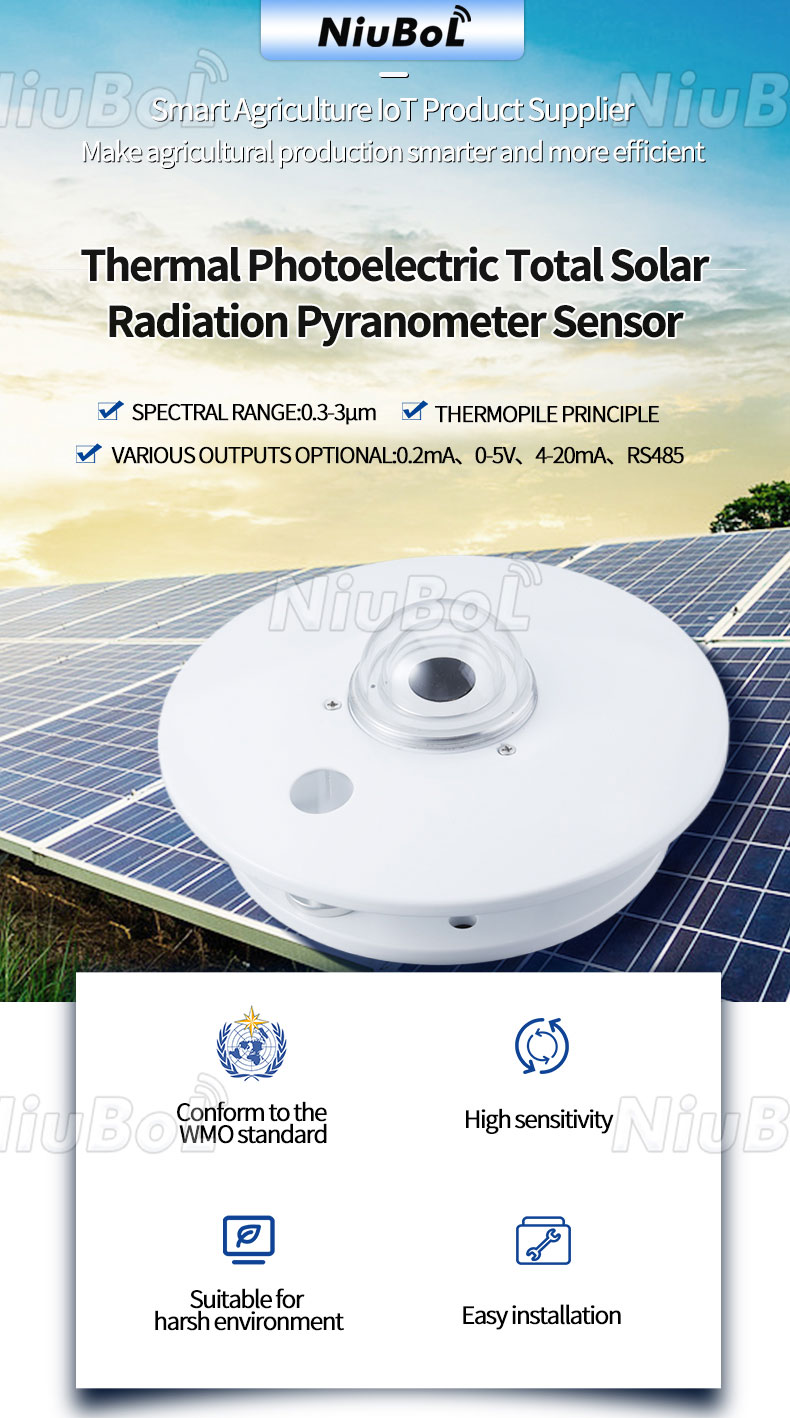
1. Irradiance Measurement: Using Class 2 and above photovoltaic-grade total radiometers, spectrum and angle response adapted to photovoltaic modules, equipped with temperature compensation technology, low zero offset design, truly reflecting effective module light reception.
2. Module Temperature Measurement: Equipped with NBL-W-PPT patch temperature sensors, accuracy up to ±0.5℃, providing standardized installation guidance, supporting multi-point measurement, providing precise input for PR value calculations.
3. Full Parameter Monitoring: Can integrate multiple types of weather sensors, fully covering power plant monitoring needs, all sensors strictly calibrated, annual stability ≤±2%.
Using blue light pollutant optical closed-loop measurement technology, launching dedicated soiling monitoring devices that can be directly integrated, providing scientific basis for cleaning decisions:
1. Working Principle: Dual-sensor design, accurately quantifying soiling loss percentage and power generation loss by comparing clean and exposed sensor outputs.
2. Core Advantages: High pollution measurement precision, supports MODBUS protocol, DC 12V power supply, power consumption only 1W, easy installation, maintenance-free, suitable for new and old power plants.
3. Core Value: Solves cleaning blindness, reduces costs and water resource consumption, decreases power generation losses, enhances customer recognition.
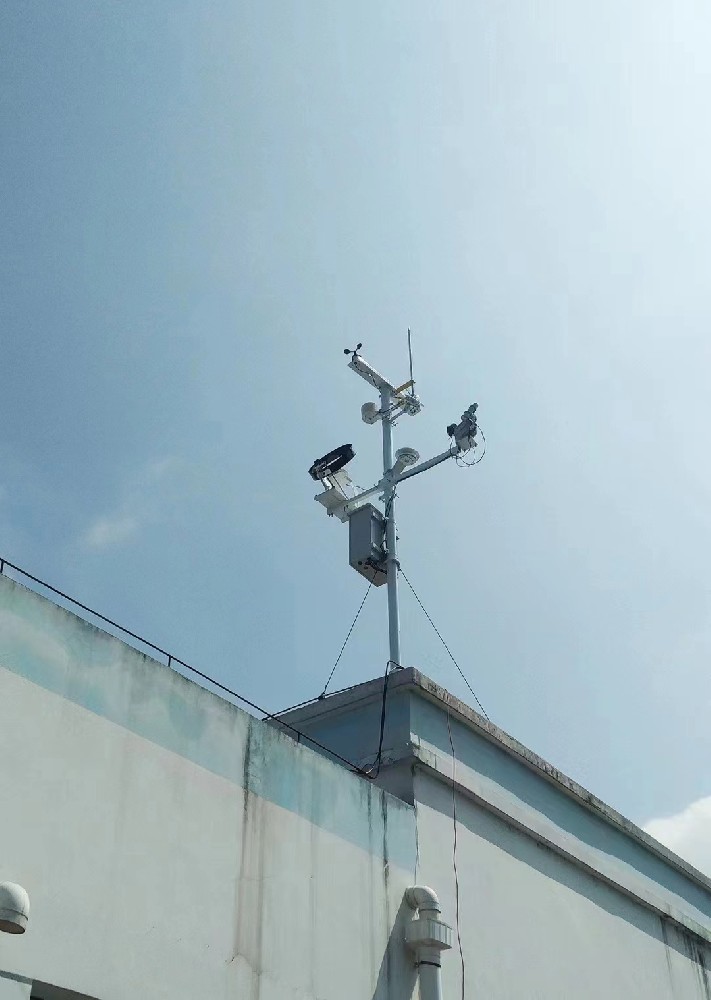
Specially strengthened protection design for photovoltaic outdoor scenarios, improving equipment stability and lifespan, reducing maintenance costs:
1. High Protection Level: IP67 and above protection, resisting sandstorms, heavy rain, and other harsh weather, avoiding equipment failures.
2. Weather-Resistant Materials: Anti-UV, anti-corrosion, coastal optional 316 stainless steel, operating temperature covering -50℃~100℃, suitable for various complex scenarios.
3. Lightning Protection and Self-Cleaning: Built-in/external lightning protection, pyranometer standard with ventilation drying device, optional automatic cleaning, reducing data contamination.
4. Stable Communication: Supports multiple communication methods, anti-electromagnetic interference, with data caching function, ensuring continuous data transmission.
Focusing on integrator core needs, strengthening product integration and compatibility, creating plug-and-play solutions:
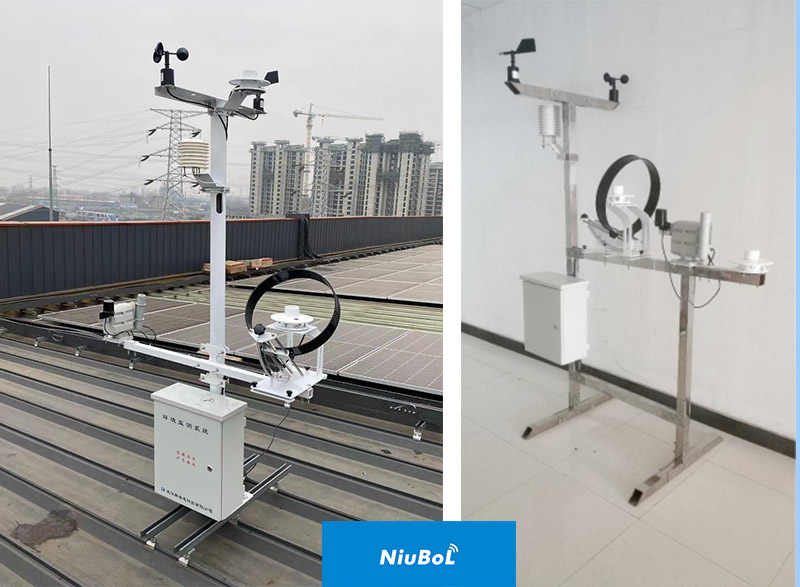
1. Integrated Design: Core sensors integrated on the same bracket, built-in data collector, reducing installation points and procurement costs, simplifying installation processes.
2. Standardized Protocols: Standard MODBUS RTU/TCP protocols, seamlessly docking with mainstream photovoltaic monitoring and SCADA systems, providing open API interfaces, breaking data silos.
3. Easy Debugging: Providing standardized installation guides and debugging software, plug-and-play, shortening project cycles, reducing labor costs.
Providing comprehensive localized services to help integrators improve delivery quality and customer satisfaction:
1. Technical Support: 7×24-hour response, professional engineers provide remote or on-site assistance, ensuring project progress.
2. Calibration and Spare Parts: Regular calibration services, national layout of spare parts warehouses, reducing fault downtime.
3. Personalized Customization: Combined with local market and integrator needs, providing customized solutions, creating differentiated advantages.
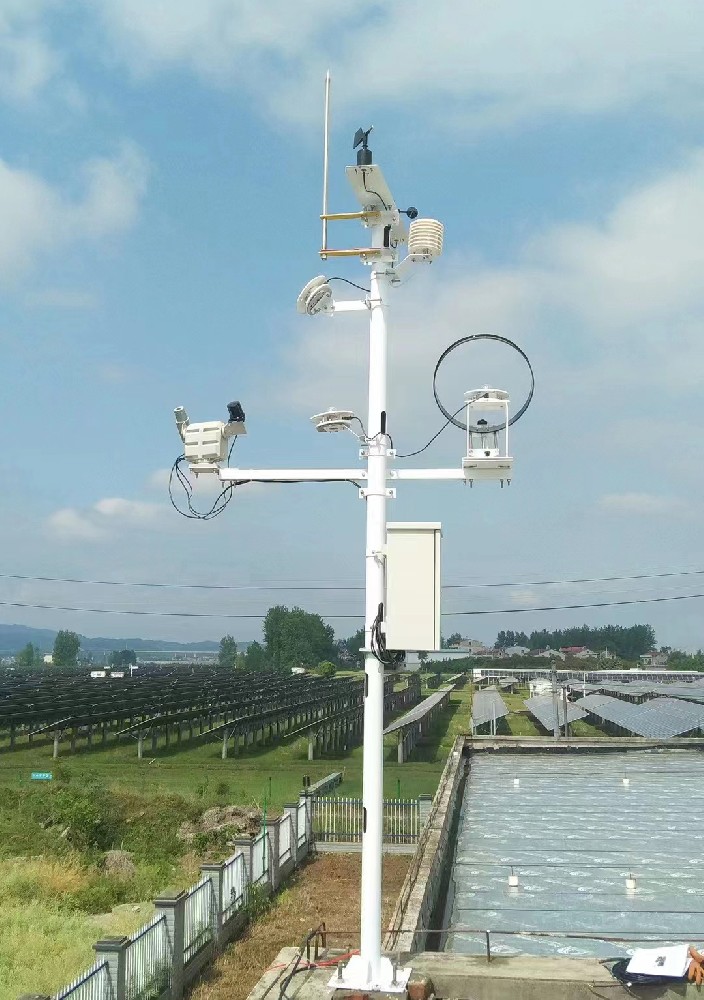
Selecting adapted, efficient, and reliable photovoltaic weather stations is key to ensuring project success. NiuBoL combines industry experience to summarize core selection points:
Core Principle: Focus on adaptation to photovoltaic scenarios, pay attention to parameters such as sensor spectrum and angle response, prioritize products compliant with IEC 61724-1 standards, ensuring data meets professional monitoring needs.
1. Pyranometer: Class 2 and above precision, sensitivity 7~14μV/w.m⁻², spectral range 0.3-3μm, cosine and azimuth response compliant.
2. Temperature Sensor: Photovoltaic-specific patch type, precision ≥±0.5℃, covering extreme temperatures, supporting multi-point measurement and providing installation guidance.
3. Equipment Stability: Protection level ≥IP67, annual stability ≤±2%, wide high-low temperature resistance range, reducing maintenance costs.
1. Communication Protocols: Support MODBUS RTU/TCP, prioritize products with open API interfaces, ensuring data interconnection.
2. Integration Convenience: Choose integrated designs, plug-and-play products, simplifying installation and debugging, shortening project cycles.
1. Soiling Monitoring: Essential for dusty scenarios, prioritize high-precision, easy-integration, maintenance-free products.
2. Communication Methods: Select LoRaWAN or 4G for outdoor no-network, Ethernet for stable network, ensuring signal stability.
3. Protection Design: Tailored selection for coastal, high-cold scenarios, etc.
Prioritize brands with strong localized service capabilities and rich photovoltaic integration experience, ensuring timely technical support, calibration, and spare parts supply.

Scientific integration, installation, and debugging are key to the weather station’s effectiveness. Summarizing core notes to reduce later O&M hazards:
1. Pyranometer: Avoid shading, install at optimal tilt or horizontal, height above modules by more than 1.5 meters, avoid reflected light influence.
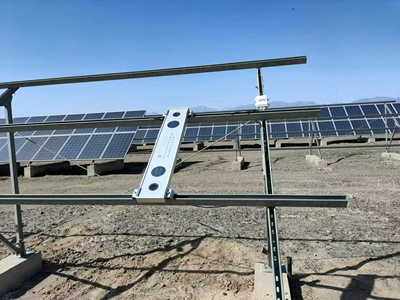
2. Temperature Sensor: Firmly attach to module backsheet, reserve ventilation space, multi-point measurement needs even distribution.
3. Overall Equipment: Choose open view, no electromagnetic interference location, away from high-voltage lines, reinforce bracket in windy areas.
1. Before Wiring: Check terminal correspondences, inspect line integrity, avoid damage or short circuits.
2. Line Layout: Away from high-voltage and interference sources, use waterproof anti-aging cables outdoors, add signal amplifiers for extra-long lines.
3. Protocol Debugging: Ensure normal communication, real-time data upload, set acquisition intervals of 1-5 minutes/times as needed.
1. Sensor Calibration: Comprehensive calibration after installation, annual calibration thereafter, correcting data deviations.
2. Data Comparison: Compare with standard equipment, troubleshoot deviations, test data stability under different weather conditions.
1. Regular Cleaning: Clean sensor surfaces, avoid shading, use soft tools to prevent coating damage.
2. Equipment Inspection: Regularly check brackets, lines, communication status, troubleshoot waterproof sealing hazards.
3. Data Backup: Guide customers to do data backups, ensuring needs for settlements, evidence, etc. are met.
NiuBoL has compiled high-frequency questions from integrators, answering them one by one to quickly resolve doubts on selection, integration, and O&M:
Q1. What is the core difference between professional and ordinary photovoltaic weather stations?
The core is photovoltaic specificity: Professional weather stations have sensors optimized for photovoltaic scenarios, compliant with IEC 61724-1 standards, high data precision, strong compatibility; ordinary weather stations have general designs, large data deviations, poor compatibility, unable to adapt to photovoltaic scenarios.
Q2. Which mainstream SCADA systems are compatible with NiuBoL photovoltaic weather stations?
Supports MODBUS RTU/TCP protocols, seamlessly compatible with mainstream photovoltaic SCADA systems such as Sungrow, Huawei, Sungrow Power, providing open API interfaces, customizable debugging.
Q3. Is the soiling monitoring device complex to install? Can it adapt to existing photovoltaic power plants?
Easy installation, no need to modify existing arrays: Compact size, can be fixed to photovoltaic panel frames, DC 12V power supply, simple wiring, suitable for new and old power plants, single unit installation time no more than 30 minutes.
Q4. How to ensure communication stability of NiuBoL photovoltaic weather stations in outdoor scenarios?
Uses high-reliability communication modules, supports multiple communication methods, optional 4G/LoRaWAN for no-network scenarios; built-in anti-electromagnetic interference design, with data caching function, avoiding data interruptions or losses.
Q5. Do sensors need regular calibration? What is the calibration cycle?
Regular calibration is needed, recommended once a year, core calibration for pyranometers and temperature sensors.
Q6. How to ensure data representativeness in module temperature sensor installation?
Follow “even distribution, avoid shading, attach to backsheet” principles: Arrange 1 per 500kW-1MW, covering different areas and orientations of modules, install per standards and reserve ventilation space.
Q7. What is the service life and maintenance cost of NiuBoL photovoltaic weather stations?
Overall equipment lifespan 5-8 years, core sensors 3-5 years; extremely low maintenance costs, annual average maintenance costs below 5% of equipment procurement costs.
Q8. Does NiuBoL have differentiated solutions for different scenarios?
Has scenario-specific customized solutions: Desert scenarios strengthen anti-sand, high-temperature resistance, and soiling monitoring; coastal scenarios enhance anti-salt fog, lightning protection; rooftop scenarios use small integrated designs.
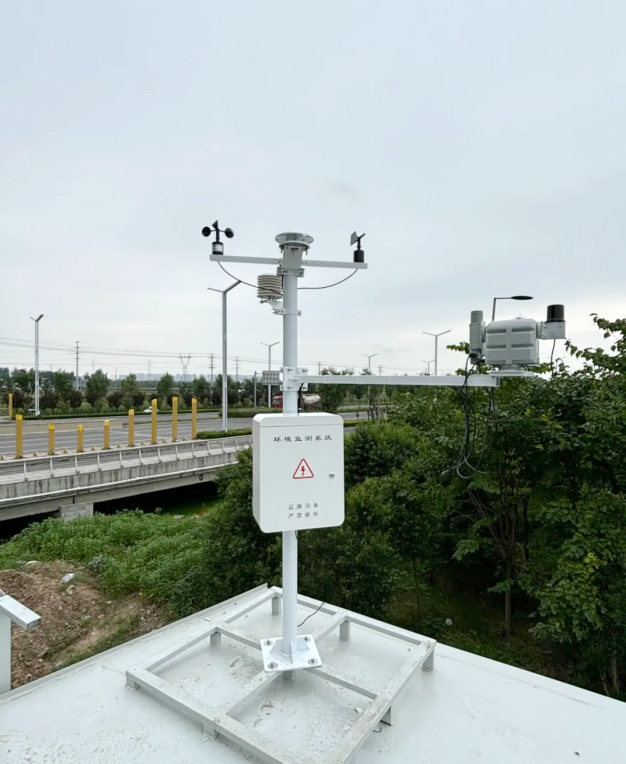
For integrators, the competitiveness of photovoltaic projects lies not only in design and selection but also in providing long-term stable and efficient value to customers, and accurate and reliable photovoltaic weather monitoring is the core support.
Ordinary weather equipment cannot solve core power plant pain points, instead increasing project risks and damaging reputation. NiuBoL, with photovoltaic specificity, high precision, high compatibility, and high reliability as the core, provides full series products and localized services, helping integrators simplify processes, reduce costs, and increase efficiency.
Choosing NiuBoL can provide precise data, seamless integration, scenario adaptation, and comprehensive service guarantees for photovoltaic projects, mitigating project risks and creating differentiated advantages. In the future, NiuBoL will continue to deepen in the photovoltaic weather monitoring field, partnering with integrators for win-win.
If you are facing pain points such as difficult selection of photovoltaic weather monitoring, inaccurate data, complex integration, and high O&M costs, welcome to contact the NiuBoL professional team. We will provide free selection consultation, personalized solution design, and professional technical support, helping your photovoltaic projects improve quality and efficiency, enhancing core competitiveness.
 NBL-W-SRS-Solar-radiation-sensor-instruction-manual-V4.0.pdf
NBL-W-HPRS-Solar-Radiation-Sensor-Instruction-Manual-V3.0.pdf
Related recommendations
Sensors & Weather Stations Catalog
Agriculture Sensors and Weather Stations Catalog-NiuBoL.pdf
Weather Stations Catalog-NiuBoL.pdf
Agriculture Sensors Catalog-NiuBoL.pdf
Water Quality Sensor Catalog-NiuBoL.pdf
Related products
 Combined air temperature and relative humidity sensor
 TDR Soil Moisture & Temperature Sensor for irrigation| RS485 |4-20mA| NBL-S-THR
 Soil pH sensor RS485 soil Testing instrument soil ph meter for agriculture |NBL-S-PH
 Wind Speed sensor Output Modbus/RS485/Analog/0-5V/4-20mA
 Tipping bucket rain gauge for weather monitoring auto rainfall sensor RS485/Outdoor/stainless steel
 Pyranometer Solar Radiation Sensor 4-20mA/RS485

Screenshot, WhatsApp to identify the QR code
WhatsApp number:+8615367865107
(Click on WhatsApp to copy and add friends)

