





— Blogs —
—Products—
 Consumer hotline +8618073152920
 WhatsApp:+8615367865107
Address:Room 102, District D, Houhu Industrial Park, Yuelu District, Changsha City, Hunan Province, China
Product knowledge
Time:2026-02-21 10:40:48 Popularity:532
In the current policy context of “Digital Twin Irrigation Districts” and “Rigid Constraints on Water Resources”, traditional open channel flow measurement methods are facing technological innovation. Traditional water measuring weirs and slots (such as Parshall flumes) are stable but involve high civil engineering costs and significant head losses; while contact ultrasonic flowmeters struggle to operate long-term in rivers with high sediment content.
As a professional manufacturer of sensing layer equipment, the radar flowmeter solution launched by NiuBoL has become the preferred choice for smart water conservancy projects due to its non-contact measurement, extremely low maintenance costs, and full cross-section adaptability.
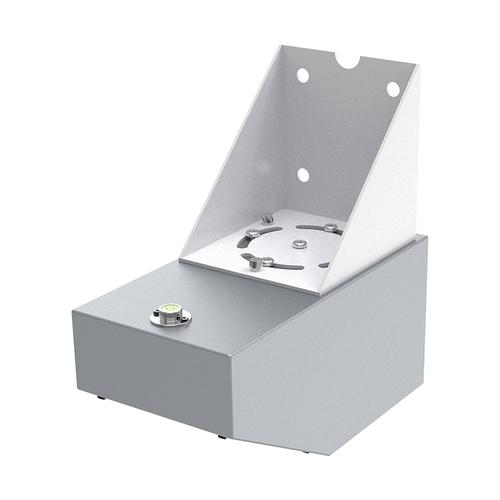
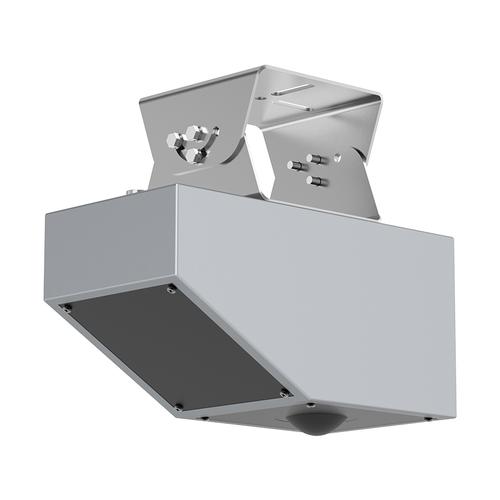
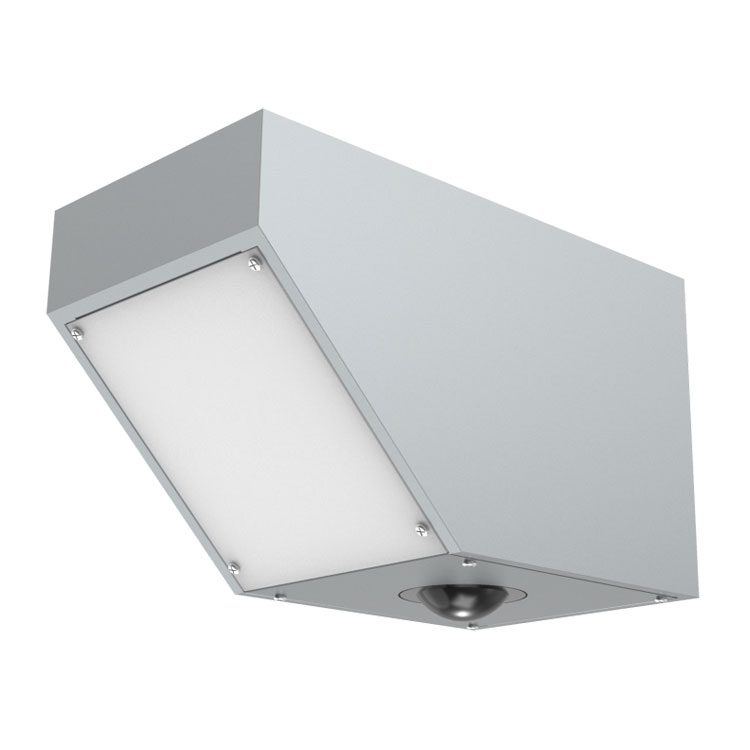
The NiuBoL radar flowmeter is not a simple single sensor but a finely integrated measurement unit.
Core Technical Principle of Irrigation District Flow Measurement: Velocity-Area Method
The NiuBoL radar flowmeter adopts the internationally recognized “Velocity-Area Method” for flow measurement. The system integrates microwave velocity detection and millimeter-wave radar ranging technology, with the core logic as follows:
Velocity Measurement (V): Using the Doppler effect, the velocimeter emits microwaves toward the water surface and receives echoes to calculate instantaneous surface velocity. Through built-in model correction, it is converted to cross-sectional average velocity.
Water Level Measurement (H): A high-frequency radar level gauge measures the distance from the sensor to the water surface, obtaining real-time water level height.
Area Conversion (S): During initial configuration, the physical parameters of the channel (such as bottom width, side slope ratio, shape) are input into the NiuBoL controller. The controller automatically calculates the current wetted area S based on real-time water level H.
Flow Calculation (Q): The final calculation formula is: Q = V_average × S.
Due to the non-contact design, the sensor is installed above the channel without contacting the water body, thus avoiding reading deviations caused by sewage corrosion, sediment abrasion, and floating object impacts.
Compared to traditional 24GHz water level radars, the 80GHz technology adopted by NiuBoL features a narrower beam angle, meaning that in narrow branch or lateral channels, the radar waves will not mistakenly hit the channel walls, resulting in smaller measurement blind zones and higher accuracy.
| Technical Parameter | Specification Index | Industrial-Grade Advantages |
|---|---|---|
| Operating Frequency | 24GHz (velocity) / 80GHz (water level) | High-frequency anti-interference, ranging accuracy reaches millimeter level |
| Velocity Range | 0.10 ~ 20.00 m/s | Supports extremely low velocity startup, suitable for dry season |
| Water Level Range | 0.1 ~ 65 m | Covers full scenarios from small branch channels to large dam reservoirs |
| Velocity Accuracy | ±2% | Meets trade-level accuracy requirements for irrigation district water fee settlement |
| Communication Interface | RS485 / Modbus-RTU | Wide compatibility, supports 2000 m long-distance transmission |
| Power Supply Range | DC 10-30V | Compatible with battery, solar, and mains power systems |
| Protection Rating | IP68 | Fully sealed design, resistant to long-term outdoor exposure and humidity |
| Power Consumption | <1.3W | Extremely low power consumption, suitable for deployment in remote areas without electricity |
1. 1-5m Small and Medium Channels (Rectangular/Trapezoidal)
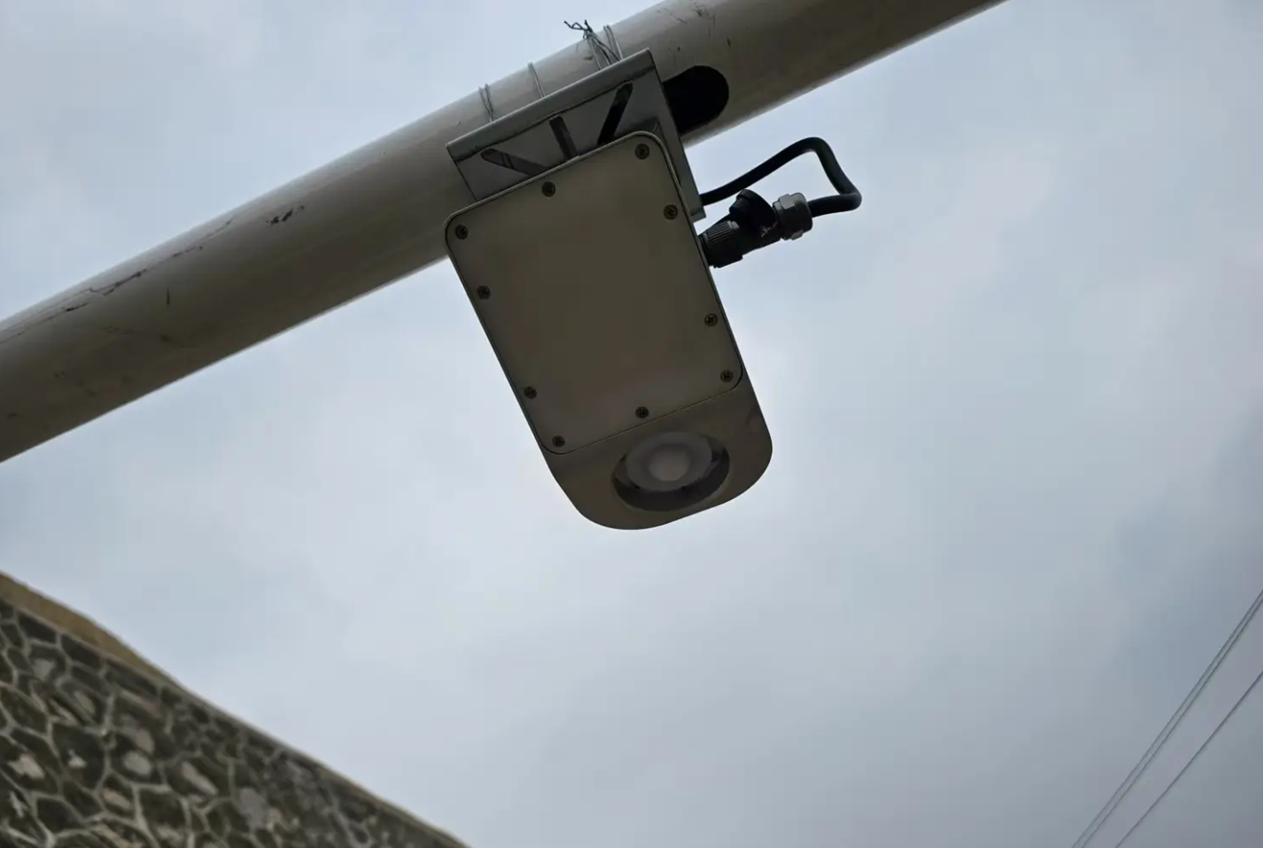
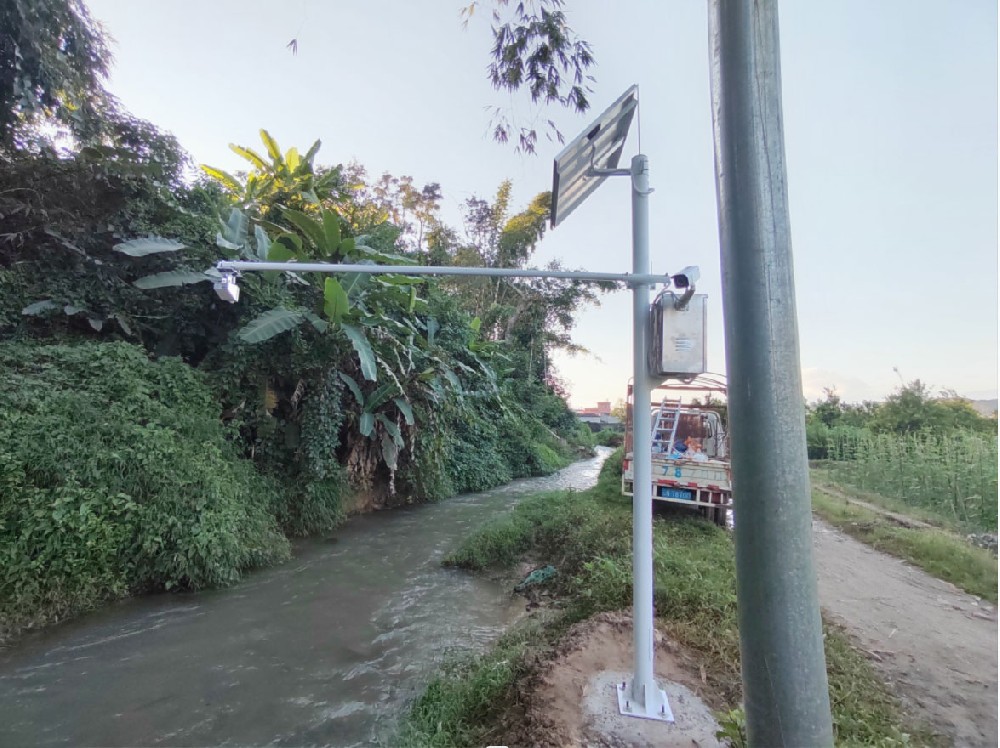
This is the most common cross-section in irrigation districts. The NiuBoL radar flowmeter can be directly suspended above the channel via a cross-arm bracket.
Pain Point Solved: Addresses the issue of contact sensors failing to work in shallow water.
Solution Features: No need to stop water flow for construction; installation completed in half an hour.
2. Culverts and Inverted Siphon Inlets
In closed or semi-closed sections, radar waves can penetrate certain mist interference.
Solution Features: For irregular cross-sections, the NiuBoL intelligent controller supports “coordinate point method” for entering cross-section shapes, with the system automatically performing area integration.
3. High-Sediment Rivers and Seasonal Channels
Pain Point Solved: Traditional equipment easily covered by sediment.
Solution Features: Non-contact measurement, sensor does not touch water, completely eliminating tedious maintenance for sediment cleaning.
NiuBoL provides a complete chain support from underlying sensors to top-level platforms:
Sensing Terminal: NiuBoL radar flowmeter.
Data Acquisition: Paired with NiuBoL telemetry terminal (RTU). The RTU features large-capacity data caching and automatically retransmits data when network signals are unstable.
Network Layer:
– LoRaWAN: Suitable for large-scale cluster deployment, achieving low-power long-distance transmission via self-built base stations.
– 4G/5G: In areas with good operator network coverage, achieving second-level data synchronization.
Display Layer: NiuBoL Smart Water Conservancy Cloud Platform, supporting Web and APP access, with one-click Excel report export and GIS map monitoring functions.
Selection Pitfall Avoidance Guide
Beam Angle Consideration: If the channel width is less than 1 meter, the 80GHz narrow-beam water level radar must be selected to prevent multipath reflections from channel walls.
Velocity Range Estimation: Ensure the minimum velocity is above 0.1 m/s; otherwise, the Doppler effect is not obvious. It is recommended to install a collecting weir in extremely low-velocity channel sections.
Installation Requirements (Professional Recommendations)
Parallelism: The velocity radar emission direction must remain parallel to the water flow direction, with horizontal deviation angle not exceeding 5°.
Verticality: The water level radar must be installed perpendicular to the water surface.
Stability: Installation columns should use channel steel or thickened stainless steel to prevent sensor shaking due to strong winds causing flow measurement errors.
Q1: Can the NiuBoL radar flowmeter operate at night or in no-light conditions?
A: Yes. Radar is active microwave remote sensing and does not rely on visible light; it operates stably 24 hours a day.
Q2: If the channel water level is very low (e.g., only 5 cm), can the radar still measure flow?
A: As long as the water level produces obvious surface ripples, the velocity radar can detect it. The water level radar maintains extremely high accuracy at 5 cm, but it is recommended to select a range-matched model for low water level scenarios.
Q3: Is the communication protocol open? Is it compatible with third-party PLCs?
A: Yes. We provide a complete standard Modbus-RTU register manual for 485 communication, making it easy for system integrators to connect the device to any industrial PLC, RTU, or third-party smart city/smart water affairs system that supports the protocol.
Q4: How long can the solar power system support continuous rainy days?
A: Depending on the configuration, our standard solution can support continuous device operation for 7-15 days without sunlight.
Q5: Does NiuBoL provide on-site installation guidance?
A: We provide detailed video tutorials and remote engineering guidance.
Q6: What is the typical service life of the device?
A: In standard outdoor environments, the design life of non-contact radar flowmeters is usually 3-5 years, far exceeding the 2-3 years of contact devices.
Q7: How does the radar flowmeter handle flow calculation for irregular cross-sections?
A: The NiuBoL controller supports multiple cross-section settings. For irregular cross-sections, users can enter coordinate point arrays or apply coefficient corrections, and the controller will automatically convert the wetted area based on water level.
Q8: Will rainy weather affect the accuracy of velocity measurement?
A: The system features rain-weather algorithm optimization, capable of identifying and filtering out interference from raindrops on surface ripples, ensuring measurement stability.
Q9: What are the installation height requirements for the device?
A: Recommended usage height is between 0-20 meters. Higher installation heights result in larger beam irradiation ranges; ensure no fixed obstructions within the irradiation area.
Q10: Does the NiuBoL radar flowmeter require regular calibration?
A: As it is non-contact measurement, the device has no mechanical wear and stable physical characteristics. Usually, only one coefficient calibration via actual measured velocity is needed at initial installation.

The NiuBoL radar flowmeter, through hardcore millimeter-wave sensing technology and intelligent integration solutions, addresses the long-standing challenges in irrigation district flow monitoring of “inaccurate measurement, difficult maintenance, and poor management”. Its high precision, low power consumption, and maintenance-free characteristics can significantly improve irrigation water use efficiency in irrigation districts and provide solid data support for agricultural water price reform.
If you are preparing an irrigation district water metering project or smart farmland project, welcome to contact NiuBoL. We will provide you with a free customized flow measurement integration solution based on your channel cross-section parameters.
Next:Reservoir Water and Rainfall Automatic Reporting System Architecture and Core Technical Advantages
Related recommendations
Sensors & Weather Stations Catalog
 Agriculture Sensors and Weather Stations Catalog-NiuBoL.pdf
Weather Stations Catalog-NiuBoL.pdf
Agriculture Sensors Catalog-NiuBoL.pdf
Water Quality Sensor Catalog-NiuBoL.pdf
Related products
 Combined air temperature and relative humidity sensor
 TDR Soil Moisture & Temperature Sensor for irrigation| RS485 |4-20mA| NBL-S-THR
 Soil pH sensor RS485 soil Testing instrument soil ph meter for agriculture |NBL-S-PH
 Wind Speed sensor Output Modbus/RS485/Analog/0-5V/4-20mA
 Tipping bucket rain gauge for weather monitoring auto rainfall sensor RS485/Outdoor/stainless steel
 Pyranometer Solar Radiation Sensor 4-20mA/RS485

Screenshot, WhatsApp to identify the QR code
WhatsApp number:+8615367865107
(Click on WhatsApp to copy and add friends)

