





— Blogs —
—Products—
 Consumer hotline +8618073152920
 WhatsApp:+8615367865107
Address:Room 102, District D, Houhu Industrial Park, Yuelu District, Changsha City, Hunan Province, China
Product knowledge
Time:2026-01-26 11:05:23 Popularity:661
In forestry ecological research, desertification control, and large-scale land health monitoring projects, the continuity and accuracy of data are the lifeline of the project. Extreme temperature differences, high humidity, and soil acid-alkali corrosion in outdoor environments impose near-harsh requirements on perception-layer hardware. For system integrators (SI) and environmental engineering contractors, deploying a set of Soil moisture meters capable of long-term operation without frequent calibration is the prerequisite for ensuring the reliability of the entire IoT monitoring system.
As a professional soil sensor manufacturer, NiuBoL's NBL-S-THR industrial-grade soil moisture sensor is specifically designed to meet the long-term monitoring needs in harsh outdoor environments. This article deeply analyzes, from the dimensions of underlying technical principles, multi-level integration architecture, engineering practice, and full lifecycle commercial cost, how to build a robust soil monitoring network for high-standard projects.
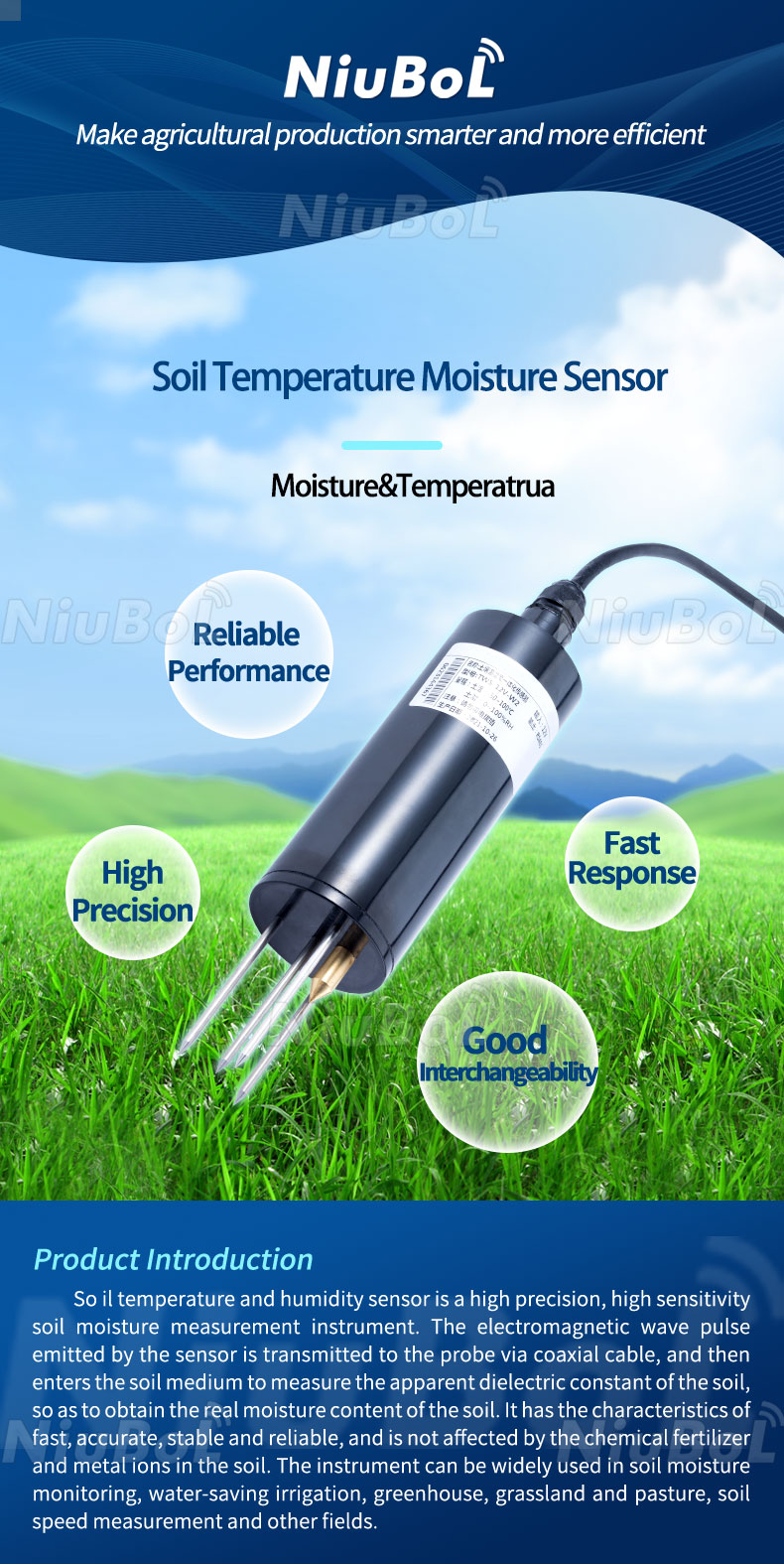
In forestry research, soil composition is extremely complex. High humus content, metal minerals, or long-term fertilizer application in forest land causes dramatic fluctuations in soil conductivity (EC value). Traditional resistive probes estimate moisture based on resistance between two electrodes and are highly susceptible to interference from salts and metal ions, leading to significant drift in readings during dry seasons.
1. Apparent Dielectric Constant Measurement Method (FDR Principle)
NBL-S-THR adopts advanced Frequency Domain Reflectometry (FDR). The sensor emits high-frequency electromagnetic pulses through the probe; after entering the soil medium, it measures the soil's apparent dielectric constant (ε). Since water has a dielectric constant of approximately 80 (far greater than dry soil 3-5 and air 1), a mathematical model between dielectric constant and volumetric water content (VWC) enables extremely high-precision readings.
2. Core Technical Advantages
Non-destructive measurement: Pulse energy is extremely low, does not alter soil physical properties or affect plant root growth.
Resistance to salt-alkali interference: This measurement method effectively shields interference from fertilizers and metal ions in soil, ensuring stable readings even in saline-alkali or mining environments.
Soil moisture sensor range: Moisture range 0–100%, resolution up to 0.1%, capable of capturing subtle moisture infiltration processes in the early stages of rainfall.
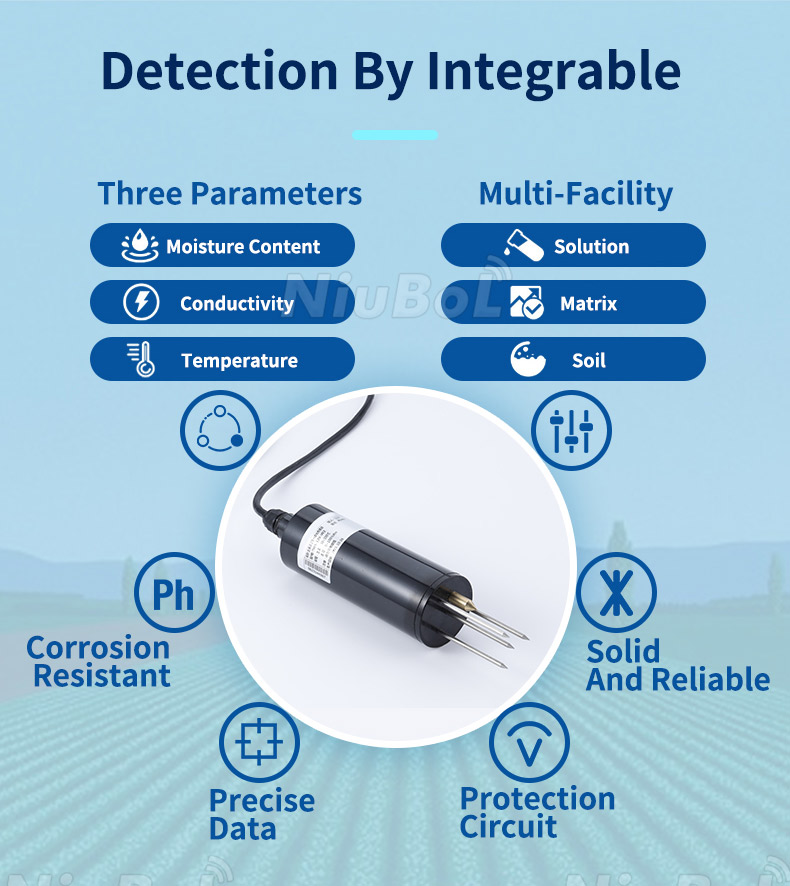
In forestry research and ecological restoration projects, single-depth readings only represent surface moisture. To study surface water infiltration patterns and deep root water requirements of plants, integrators typically need to design vertical monitoring profiles.
1. Vertical Profile Monitoring Solution (Soil Profile Monitoring)
Integrators can utilize the multi-interface characteristics of NBL-S-THR for equidistant deployment at 20 cm (active root layer), 40 cm (transition layer), 80 cm (deep water storage layer).
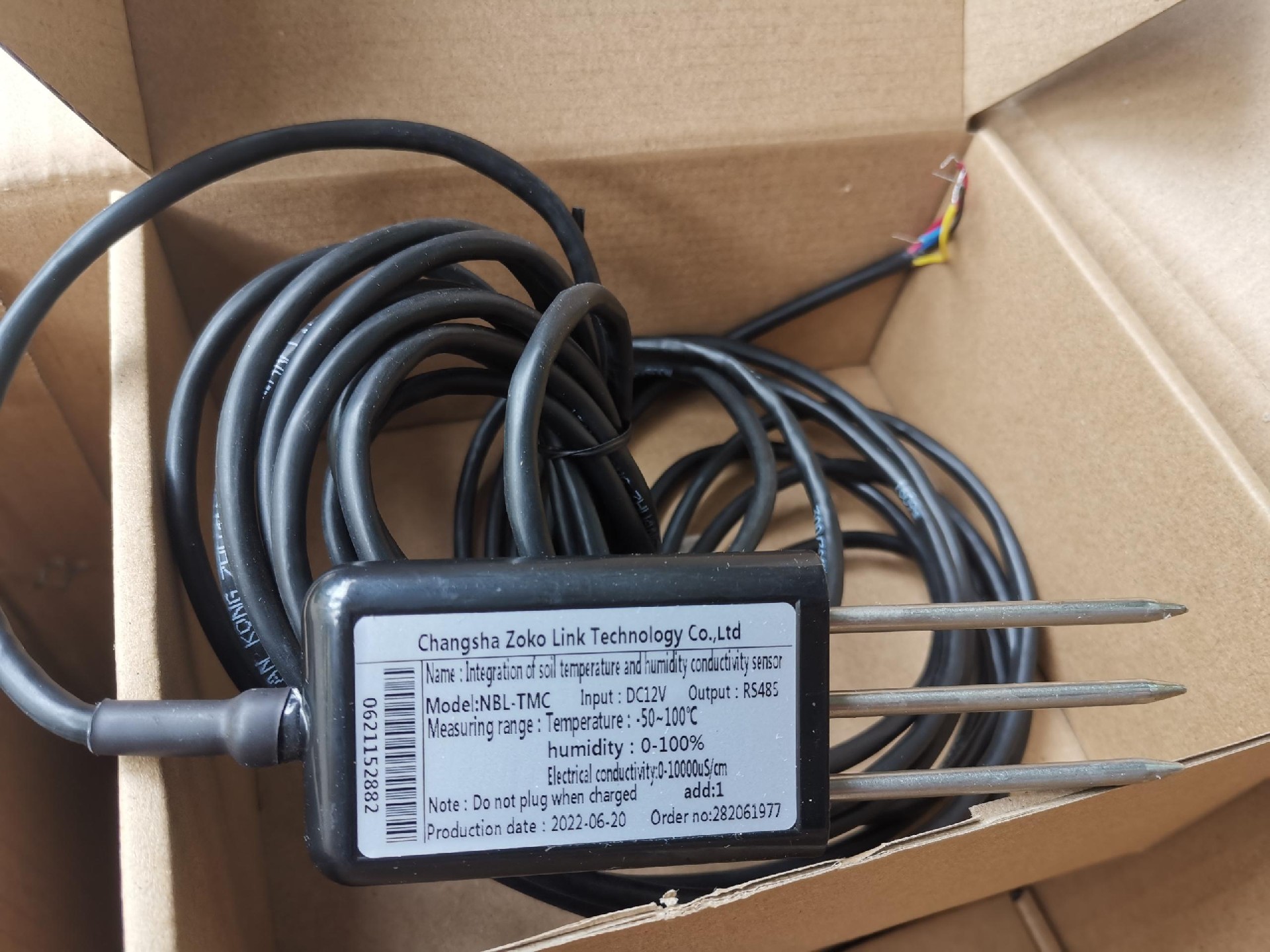
ID configurability: RS485 soil moisture sensors use standard Modbus RTU protocol, each sensor configurable with a unique address, enabling cascading monitoring of up to 32 nodes via a single shielded twisted-pair cable.
2. Data Fusion
Aggregating moisture data from different depths generates three-dimensional soil moisture heatmaps, providing core indicators for forest fire risk warning or afforestation survival rate research.
3. Seamless Integration Solutions and Interface Flexibility
NiuBoL provides full types of output interfaces, greatly reducing system development complexity:
RS485 digital interface: Suitable for large-scale, long-distance networking, direct docking with industrial gateways.
4–20mA current loop: Suitable for extremely complex electromagnetic environments in mining areas, providing strongest anti-interference transmission.
0-5V voltage output: Suitable for docking with low-power data loggers or certain specific models of telemetry terminals (RTU).
Even the highest-end Soil monitoring sensors can lead to data failure if installed improperly. Below are engineering specifications summarized by the NiuBoL technical team:
1. Installation Posture and Compaction
Vertical installation: Suitable for surface moisture monitoring. Use hole puncher for sampling, then insert probe completely vertically.
Horizontal installation: Suitable for deep profile excavation. Insert horizontally into sidewall to avoid “moisture leakage effect” along probe rod.
No air gaps allowed: If air gaps exist between probe and soil, measured dielectric constant will be low. Backfill with original soil in original layers and compact to ensure Moisture sensor soil probe is fully enveloped by soil.
2. Environmental Adaptability and Physical Protection
IP68 protection rating: NBL-S-THR uses special epoxy resin vacuum potting process. This means it can resist underground humidity and even operate stably in long-term flooded marsh environments.
Wide-temperature operation: Supports -40℃ to 80℃. In Siberian permafrost or Sahara extreme high temperatures, sensor internal circuitry maintains high consistency output.
| Indicator (Parameter) | Specification | Industrial/Research Value |
|---|---|---|
| Moisture Range | 0~100% | Covers full scenarios from extreme drought to saturated waterlogging |
| Temperature Range | -50~100℃ | Suitable for cold permafrost and tropical soil monitoring |
| Resolution | 0.1% / 0.1℃ | Meets research-grade high-sensitivity data acquisition |
| Accuracy | ±3% (VWC) / ±0.5℃ | Ensures monitoring data with academic and legal validity |
| Response Time | < 1s | Meets real-time closed-loop control requirements of automated irrigation systems |
| Operating Current | Approx. 25mA @ 12V | 0.3W ultra-low power consumption, greatly extends battery life |
In the B2B decision chain, initial purchase price is only the tip of the iceberg. Integrators should guide clients to focus on Total Cost of Ownership:
Zero drift and low maintenance: Cheap probes require recalibration every six months, otherwise data severely distorts. NiuBoL sensors achieve a maintenance-free period of over 3 years after burial due to FDR physical stability, significantly reducing labor maintenance costs.
Reduced rework rate: Many projects suffer data gaps due to sensor failure, preventing completion. Choosing industrial-grade soil moisture sensors guarantees project delivery success rate.
Customization services: As a soil sensor manufacturer, NiuBoL provides cable length customization, private protocol adaptation, etc., services that general distributors cannot offer.
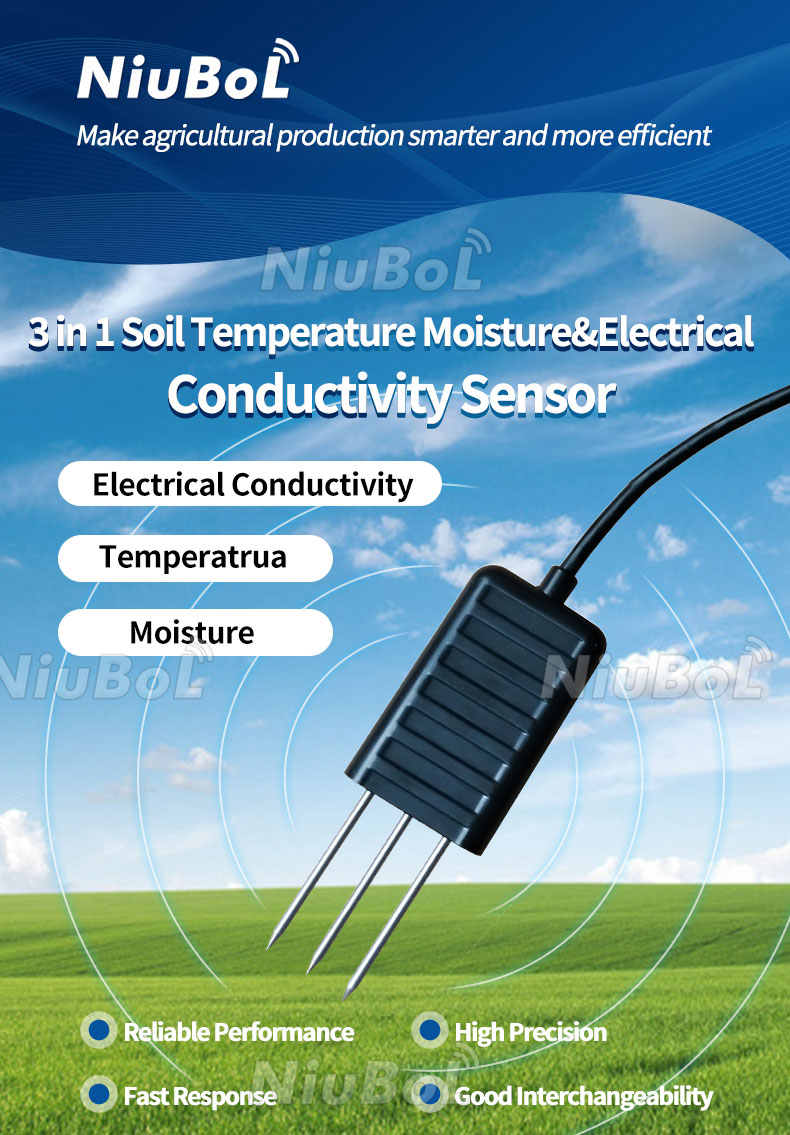
1. What is the measurement volume (sensing radius) of the sensor?
FDR sensor sensing range is mainly a cylindrical area around the probe with radius 3-5 cm and length 7 cm. Therefore, soil representativeness at the installation location is very important.
2. How to ensure accuracy in high saline-alkali land or coastal forest areas?
Although FDR principle has anti-interference capability, dielectric constant readings may shift in extremely high EC environments. We recommend integrators introduce real-time correction coefficients from NiuBoL conductivity (EC) sensors in upper computer logic.
3. How to prevent lightning damage to sensors?
Since sensors are buried underground, induced lightning is the greatest threat. We recommend integrators install dedicated lightning arrestors before RS485 bus enters the acquisition box and single-point ground the shield at the acquisition box end.
4. Does the sensor support direct 5V low-power gateway power supply?
Standard models support 12-24V. For special 5V battery power requirements, NiuBoL can provide OEM customized voltage versions to ensure optimal overall system power consumption.
5. Can this sensor connect directly to PLC?
Yes. Through RS485 interface, mainstream PLCs such as Siemens and Schneider can easily read moisture and temperature registers via Modbus commands.
6. What is the delivery cycle for bulk procurement?
As a source manufacturer, we maintain core component inventory. Orders within thousands of units are typically produced and shipped within 5-7 working days.
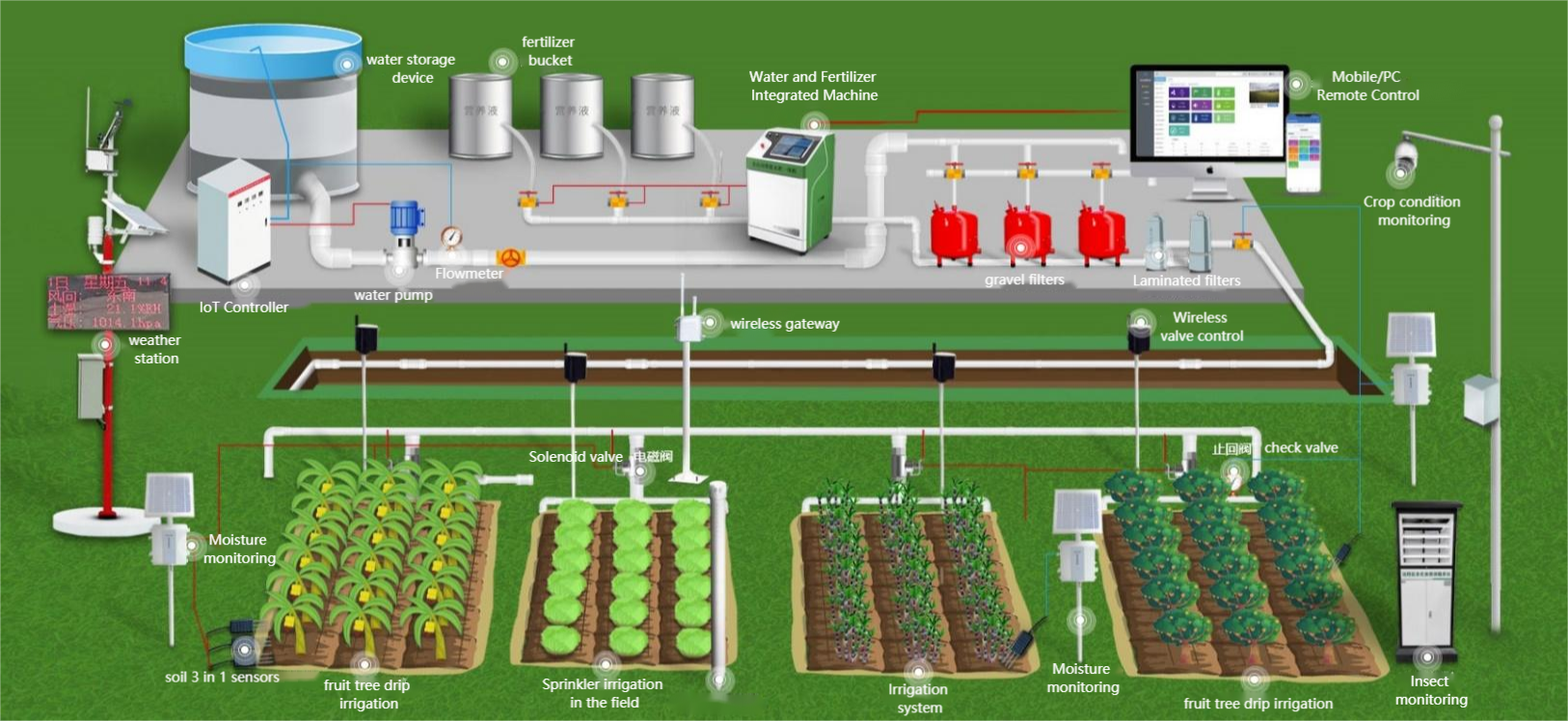
In forestry monitoring and soil health research, the reliability of underlying hardware determines the scientific value of data. The NiuBoL NBL-S-THR series sensors, with high-precision measurement algorithms, excellent industrial-grade protection ratings, and strong system compatibility, have become core hardware for global system integrators in smart irrigation system soil sensors and ecological monitoring solutions.
Preparing a large-scale soil monitoring project? Contact us to obtain NiuBoL product technical specification sheets and bulk supply quotes tailored for integrators. We will empower every integration vision of yours with professional technical support.
1.NBL-S-THR Soil Temperature Moisture Sensor datasheet
 NBL-S-THR-Soil-temperature-and-moisture-sensors-Instruction-Manual-V4.0.pdf
2. NBL-S-TMC Soil Temperature Moisture EC Sensor datasheet
NBL-S-TMC-Soil-temperature-and-moisture-conductivity-sensor.pdf
3. NBL-S-TM Soil Temperature Moisture Sensor datasheet
NBL-S-TM-Soil-temperature-and-moisture-sensor-Instruction-Manual-4.0.pdf
4. NBL-S-TMCS Soil Temperature, Moisture, Conductivity and Salinity Integrated Sensor
NBL-S-TMCS-Soil-Temperature-Humidity-Conductivity-and-Salinity-Sensor.pdf
Related recommendations
Sensors & Weather Stations Catalog
Agriculture Sensors and Weather Stations Catalog-NiuBoL.pdf
Weather Stations Catalog-NiuBoL.pdf
Agriculture Sensors Catalog-NiuBoL.pdf
Water Quality Sensor Catalog-NiuBoL.pdf
Related products
 Combined air temperature and relative humidity sensor
 TDR Soil Moisture & Temperature Sensor for irrigation| RS485 |4-20mA| NBL-S-THR
 Soil pH sensor RS485 soil Testing instrument soil ph meter for agriculture |NBL-S-PH
 Wind Speed sensor Output Modbus/RS485/Analog/0-5V/4-20mA
 Tipping bucket rain gauge for weather monitoring auto rainfall sensor RS485/Outdoor/stainless steel
 Pyranometer Solar Radiation Sensor 4-20mA/RS485

Screenshot, WhatsApp to identify the QR code
WhatsApp number:+8615367865107
(Click on WhatsApp to copy and add friends)

