





— Blogs —
—Products—
 Consumer hotline +8618073152920
 WhatsApp:+8615367865107
Address:Room 102, District D, Houhu Industrial Park, Yuelu District, Changsha City, Hunan Province, China
Product knowledge
Time:2026-01-26 10:47:22 Popularity:673
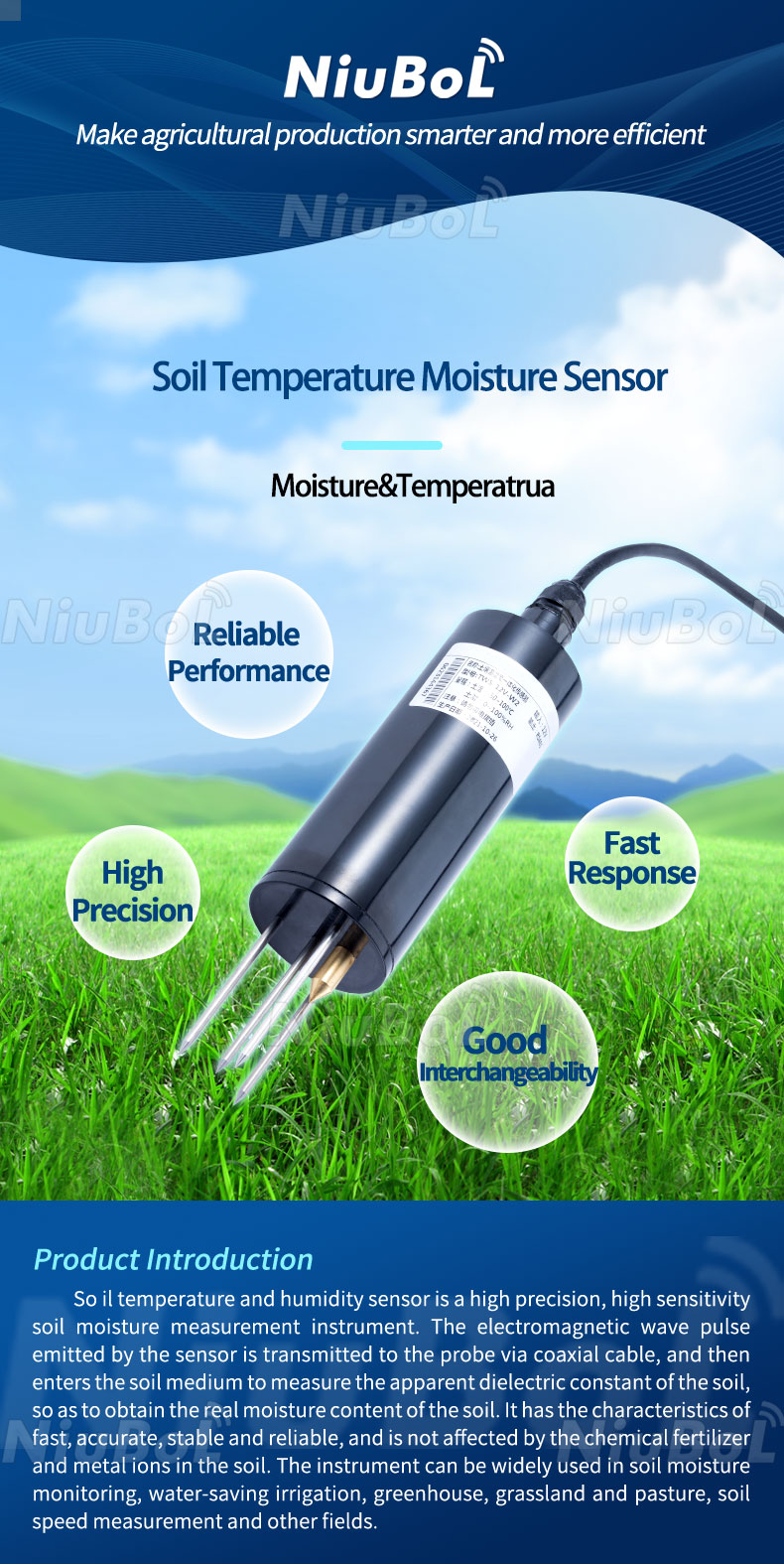
In the IoT architecture of smart agriculture (Smart Agriculture) and large-scale landscape engineering, the accuracy and stability of underlying perception directly determine the effectiveness of upper-layer decision logic. For system integrators (SI), IoT solution providers, and engineering contractors, selecting a Soil moisture sensor is no longer just purchasing a measurement tool, but choosing an industrial-grade terminal capable of supporting the entire automated irrigation chain with high environmental tolerance.
As a soil sensor manufacturer, NiuBoL focuses on developing sensing devices adapted to harsh industrial scenarios. This article explores, from four dimensions—system integration, signal stability, engineering practice, and commercial value—how to deeply integrate high-precision Soil monitoring sensors into automated irrigation ecosystems.
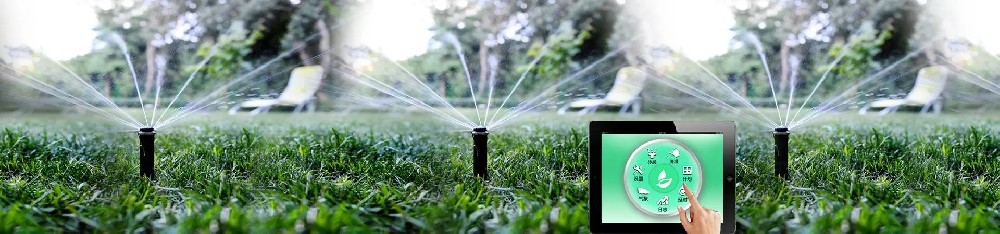
In soil moisture sensor integration solutions, the choice of communication interface and measurement principle determines the system's anti-interference capability and later maintenance frequency.
Compared to analog signals (such as 0-5V or 4-20mA), RS485 soil moisture sensors have become the industry standard for smart irrigation projects due to their differential signal transmission characteristics.
Long-distance transmission stability: In smart farms, sensors are often deployed hundreds of meters away from gateways. RS485 supports stable transmission up to 1200 meters, effectively avoiding voltage attenuation issues that increase with distance in analog signals.
Multi-node cascading architecture: Through the Modbus RTU protocol, a single RS485 interface can cascade up to 32 (or even 255 with repeaters) sensor nodes. This “daisy-chain” wiring mode greatly reduces cabling procurement and construction costs for engineering teams.
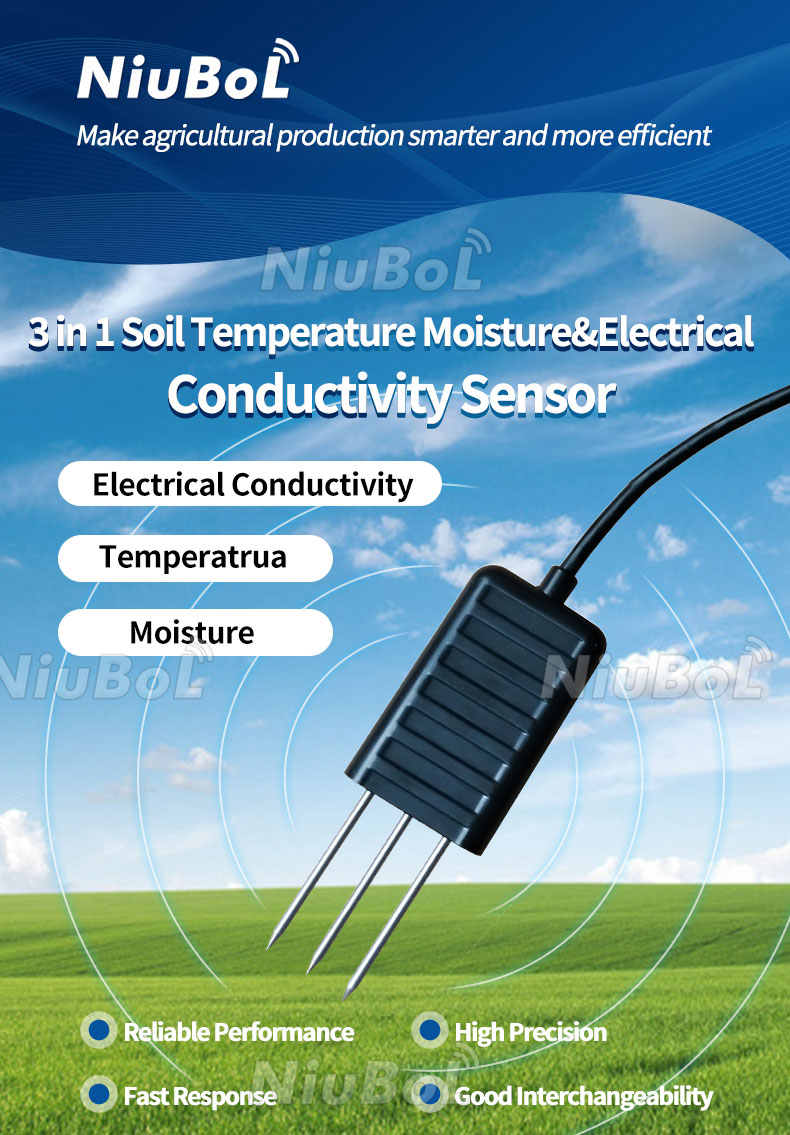
NiuBoL adopts advanced FDR (Frequency Domain Reflectometry) principle. Compared to traditional conductivity sensors, FDR is not directly interfered with by soil electrolytes and offers extremely fast measurement speed.
Soil moisture sensor range: Supports full-range monitoring from 0-100%, providing laboratory-grade ±2% accuracy in the critical plant growth interval (10%-50% VWC).
Dynamic response: Response time less than 1 second, meeting the real-time data flow requirements of automated control systems.
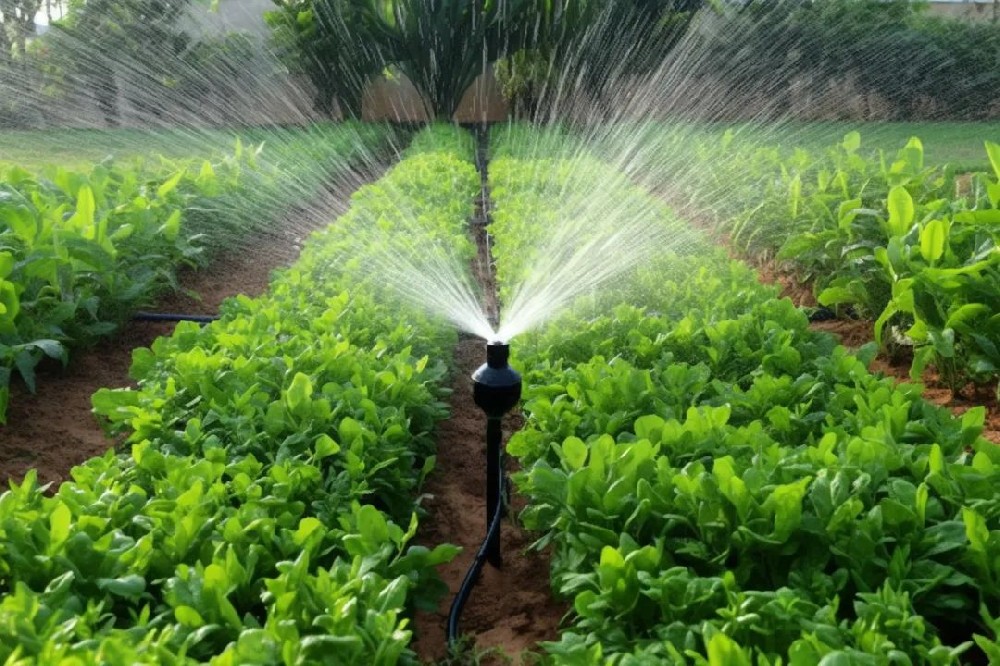
When designing solutions, system integrators need to adjust the deployment strategy of smart irrigation system soil sensors according to different business scenarios.
Scenario 1: Precision Irrigation for High-Value Crops (e.g., Vineyards, Medicinal Herb Bases)
Such scenarios require extremely high data representativeness. Integrators typically adopt a “multi-point + multi-depth” stereoscopic monitoring architecture. NiuBoL sensors' high consistency ensures minimal reading deviation across the same batch in different deployment points, facilitating unified global modeling by cloud algorithms.
Scenario 2: Urban Greening and Landscape Automation
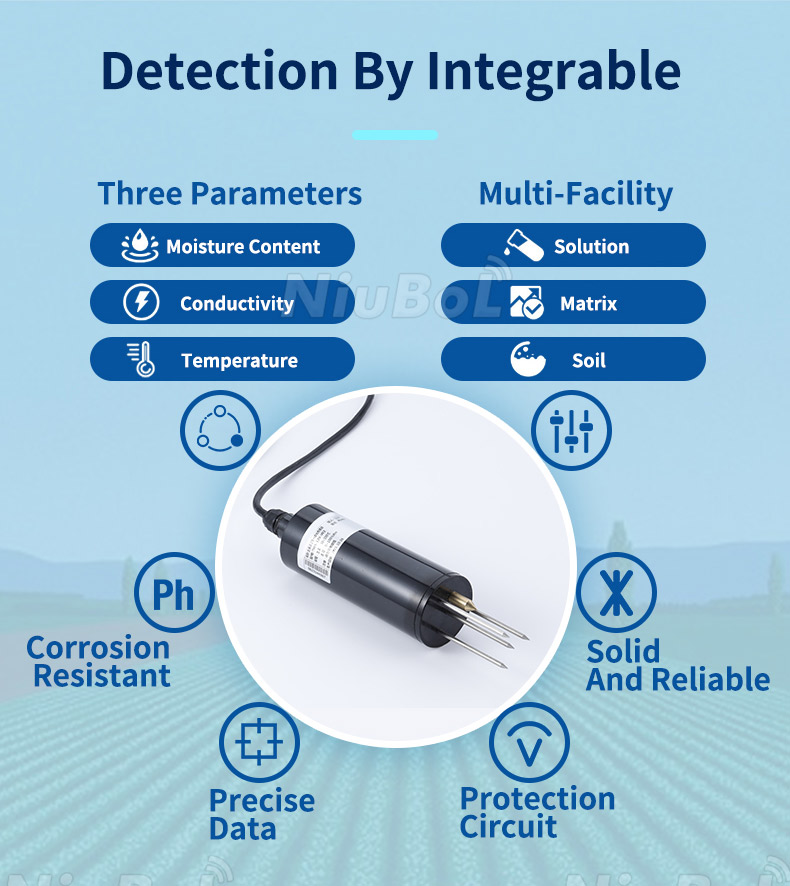
In urban environments, electromagnetic conditions are complex (many base stations and power line interference). The high EMC protection level of industrial-grade soil moisture sensors is particularly important. NiuBoL sensors have built-in multi-level ESD and surge protection circuits, effectively resisting complex electromagnetic interference.
Scenario 3: Greenhouses and Soilless Cultivation
In substrate cultivation, nutrient solution salinity (EC value) fluctuates dramatically. Moisture sensor for soil must have extremely strong corrosion resistance. NiuBoL uses 316L stainless steel probes that do not develop oxide layers even after long-term immersion in nutrient solution.
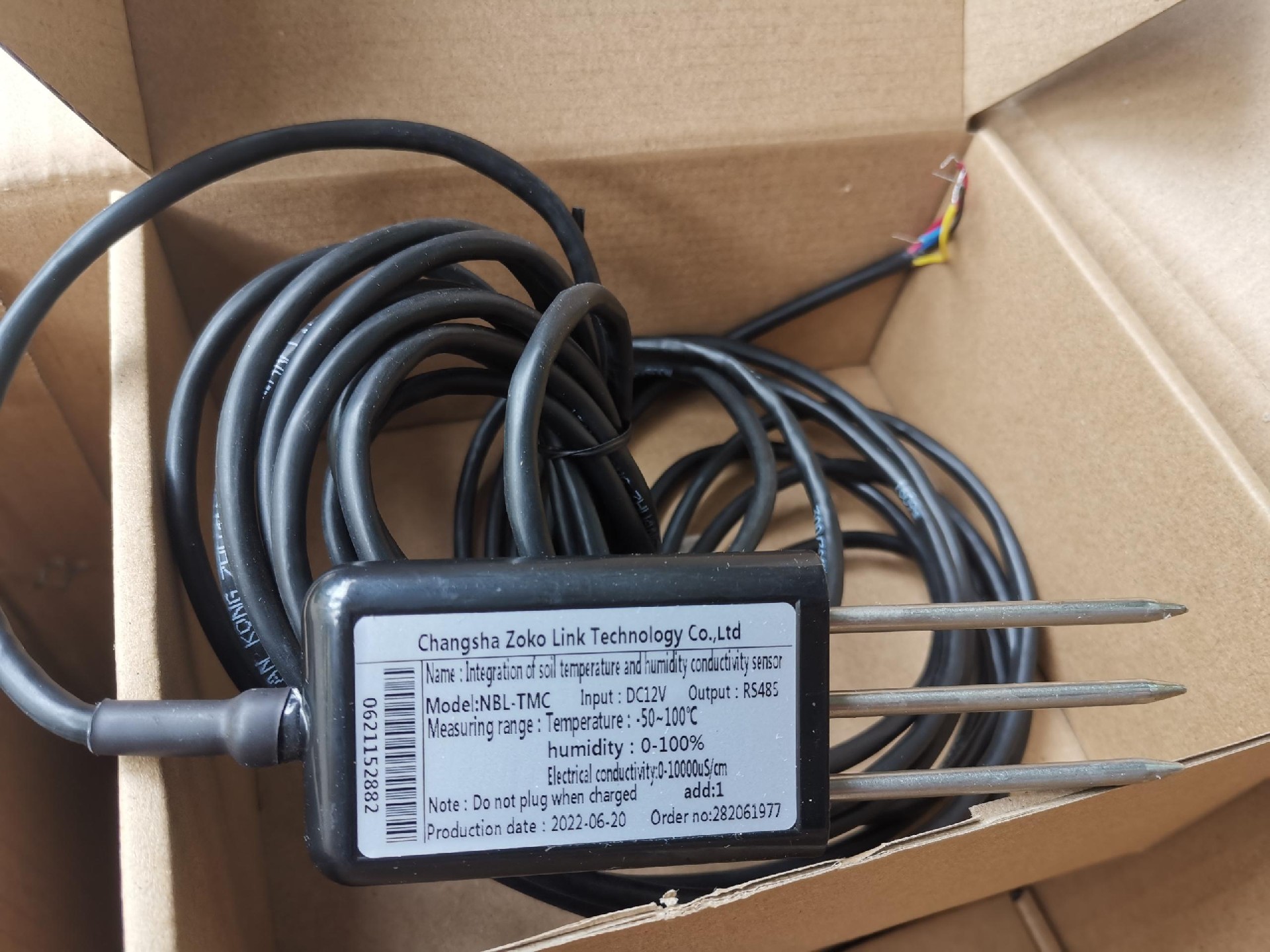
As experienced integrators, attention must be paid to installation details to ensure long-term operation of Soil sensors.
Underground environments involve not only moisture but also continuous hydrostatic pressure and corrosive gases. NiuBoL sensors use vacuum epoxy resin potting process to achieve IP68 protection rating. This design ensures that the sensor core circuitry remains dry even under long-term flooding or high-pressure irrigation conditions.
Sensor reading accuracy highly depends on probe-soil contact. During construction, it is recommended to use professional hole-punching tools and strictly avoid hammering the sensor top directly into the soil. Backfilling must ensure no air gaps around the probe, otherwise readings will be biased low.
B2B purchasers should evaluate from long-term commercial benefits rather than just unit price comparison.
| Evaluation Dimension | Consumer-Grade Probe | NiuBoL Industrial-Grade Sensor |
|---|---|---|
| Initial Procurement Cost | Low | Medium |
| Annual Failure Rate | > 20% | < 2% |
| O&M Labor Cost | Extremely high (frequent replacement and recalibration required) | Extremely low (buried for years with minimal maintenance) |
| System Data Value | Large reading drift, high decision risk | Precise readings enable true water and fertilizer savings |
| Brand Image | Affects integrator professionalism in clients' eyes | Improves project acceptance success rate and client reputation |
As a soil sensor manufacturer, we deeply understand integrators need stable, customizable underlying support.
Custom cable lengths: Support from 2 m to 100 m, all using industrial-grade shielded multi-core cables.
OEM branding service: We provide private labeling for many global IoT giants, supporting housing, communication protocol, and LOGO laser engraving customization.
Bulk supply stability: With strong production lines, we ensure fast delivery at the thousand-unit level for large government tender projects.
1. How far can NiuBoL RS485 signals transmit without a repeater?
Under 24AWG shielded twisted-pair cable, RS485 signals maintain extremely high stability within 800-1000 meters. For applications exceeding 1000 meters, RS485 isolation amplifiers are recommended.
2. How does the sensor perform in high saline-alkali soil environments?
High salinity significantly changes soil conductivity. NiuBoL sensors use FDR principle, offering stronger salt interference resistance than resistive sensors. For extreme saline-alkali lands, integrators are advised to combine with NiuBoL EC (conductivity) sensors for multi-parameter compensation.
3. Which integration protocols do your sensors support?
We default to Modbus RTU (function code 03). For special requirements, we can provide customized register tables.
4. What is the sensor service life and maintenance cycle?
Under normal burial conditions, NiuBoL sensors are designed for 3-5 years. Due to non-wear physical measurement technology, no regular calibration maintenance is required unless subjected to strong current impact or human physical damage.
5. Can this industrial-grade sensor connect directly to PLC?
Yes. As long as the PLC has an RS485 interface and supports Modbus master mode, data can be obtained by reading the corresponding register addresses.
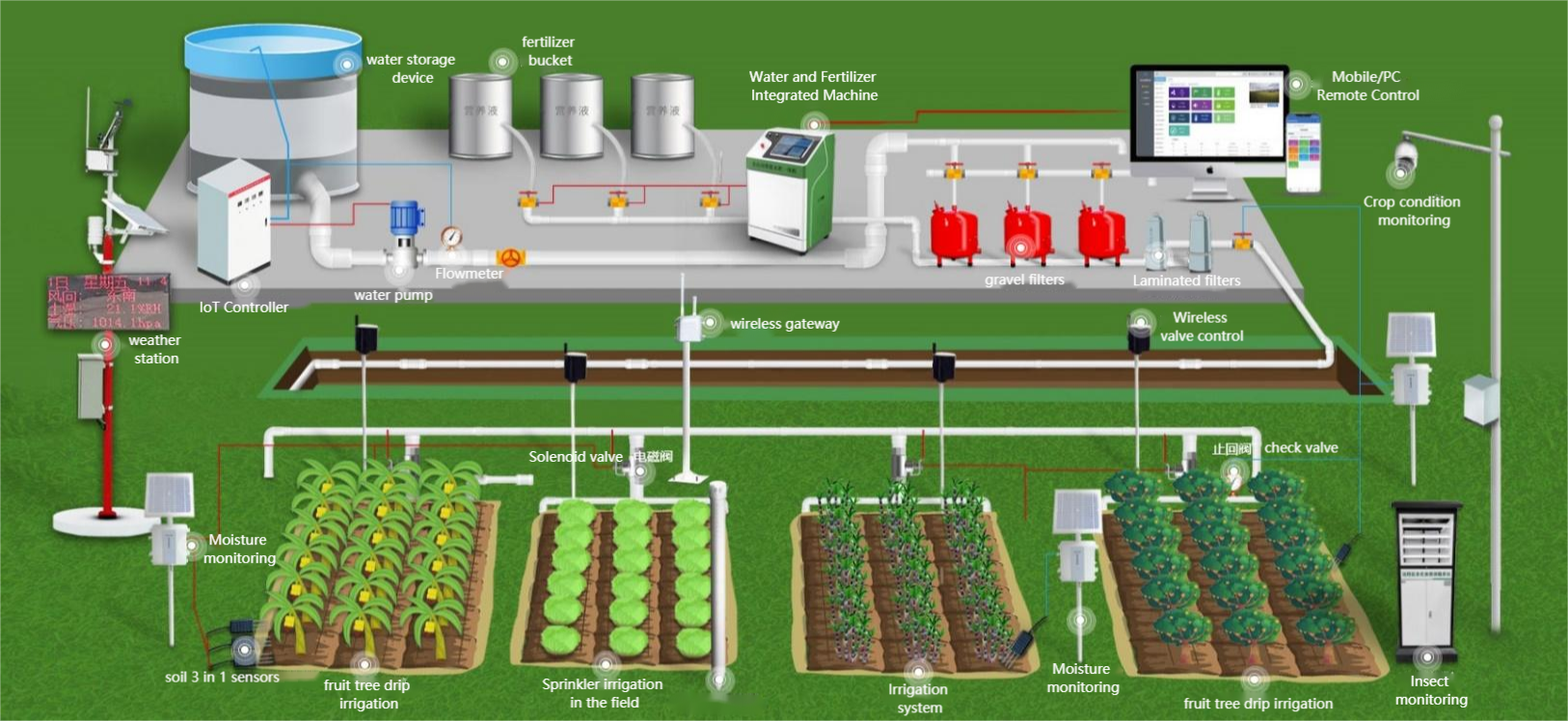
In the smart irrigation integration field, Soil moisture sensor selection is far from simple hardware purchase but a long-term investment in engineering stability. By choosing NiuBoL sensors with high protection rating, standard RS485 protocol, and stable range, system integrators can effectively reduce on-site maintenance costs later and improve overall project delivery quality.
Looking for a highly reliable hardware partner? Contact us to obtain NiuBoL industrial-grade Soil monitoring sensors technical specification sheets and bulk quotation solutions tailored for integrators. We will empower your smart agriculture integration vision with professional underlying technology.
1.NBL-S-THR Soil Temperature Moisture Sensor datasheet
 NBL-S-THR-Soil-temperature-and-moisture-sensors-Instruction-Manual-V4.0.pdf
2. NBL-S-TMC Soil Temperature Moisture EC Sensor datasheet
NBL-S-TMC-Soil-temperature-and-moisture-conductivity-sensor.pdf
3. NBL-S-TM Soil Temperature Moisture Sensor datasheet
NBL-S-TM-Soil-temperature-and-moisture-sensor-Instruction-Manual-4.0.pdf
4. NBL-S-TMCS Soil Temperature, Moisture, Conductivity and Salinity Integrated Sensor
NBL-S-TMCS-Soil-Temperature-Humidity-Conductivity-and-Salinity-Sensor.pdf
Next:Deploying Robust Soil Moisture Meters for Long-Term Forestry Research and Soil Health Monitoring
Related recommendations
Sensors & Weather Stations Catalog
Agriculture Sensors and Weather Stations Catalog-NiuBoL.pdf
Weather Stations Catalog-NiuBoL.pdf
Agriculture Sensors Catalog-NiuBoL.pdf
Water Quality Sensor Catalog-NiuBoL.pdf
Related products
 Combined air temperature and relative humidity sensor
 TDR Soil Moisture & Temperature Sensor for irrigation| RS485 |4-20mA| NBL-S-THR
 Soil pH sensor RS485 soil Testing instrument soil ph meter for agriculture |NBL-S-PH
 Wind Speed sensor Output Modbus/RS485/Analog/0-5V/4-20mA
 Tipping bucket rain gauge for weather monitoring auto rainfall sensor RS485/Outdoor/stainless steel
 Pyranometer Solar Radiation Sensor 4-20mA/RS485

Screenshot, WhatsApp to identify the QR code
WhatsApp number:+8615367865107
(Click on WhatsApp to copy and add friends)

