





— Blogs —
—Products—
 Consumer hotline +8618073152920
 WhatsApp:+8615367865107
Address:Room 102, District D, Houhu Industrial Park, Yuelu District, Changsha City, Hunan Province, China
Product knowledge
Time:2026-01-26 10:10:42 Popularity:819
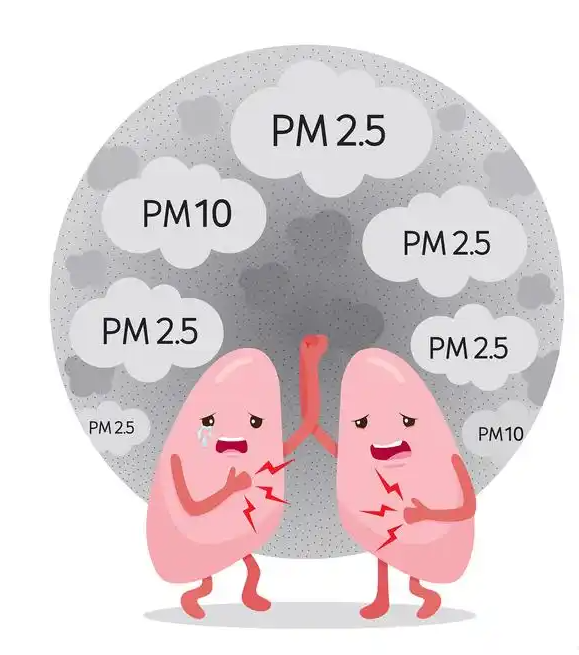
With the deepening advancement of smart city construction, industrial park environmental regulation, and construction site dust control, system integrators and IoT solution providers have seen continuous growth in demand for reliable Outdoor air quality monitoring equipment. PM2.5 and PM10, as core particulate indicators, have become the foundation for project compliance, data platform access, and O&M decision-making through online real-time monitoring.
The NiuBoL NBL-W-PM series PM2.5/PM10 integrated sensor adopts the laser scattering principle, integrating imported lasers and high-sensitivity photoelectric components with a built-in micro fan to ensure constant airflow and long-term stability. This series offers high cost-performance, flexible interfaces, and industrial-grade weather resistance, widely used in municipal grid monitoring, industrial emission boundary monitoring, smart construction sites, and environmental IoT projects. This article, from the system integrator's perspective, focuses on Outdoor air quality monitoring equipment price, configuration solutions, integration compatibility, and bulk procurement costs, providing practical selection and implementation references to help engineering teams achieve reliable deployment under budget control.
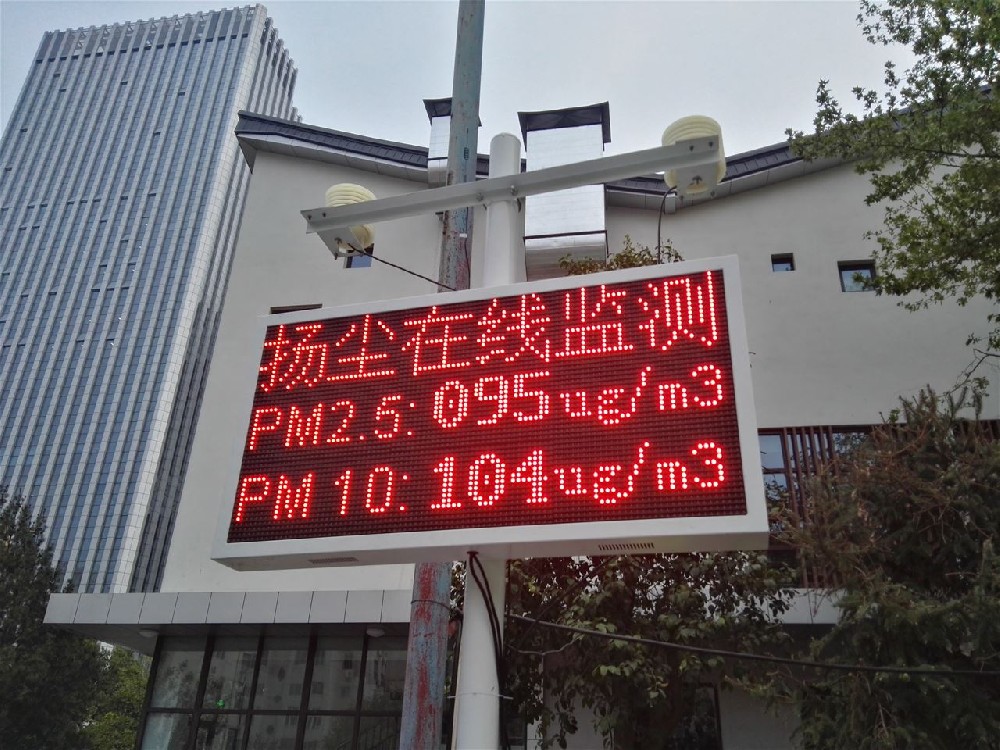
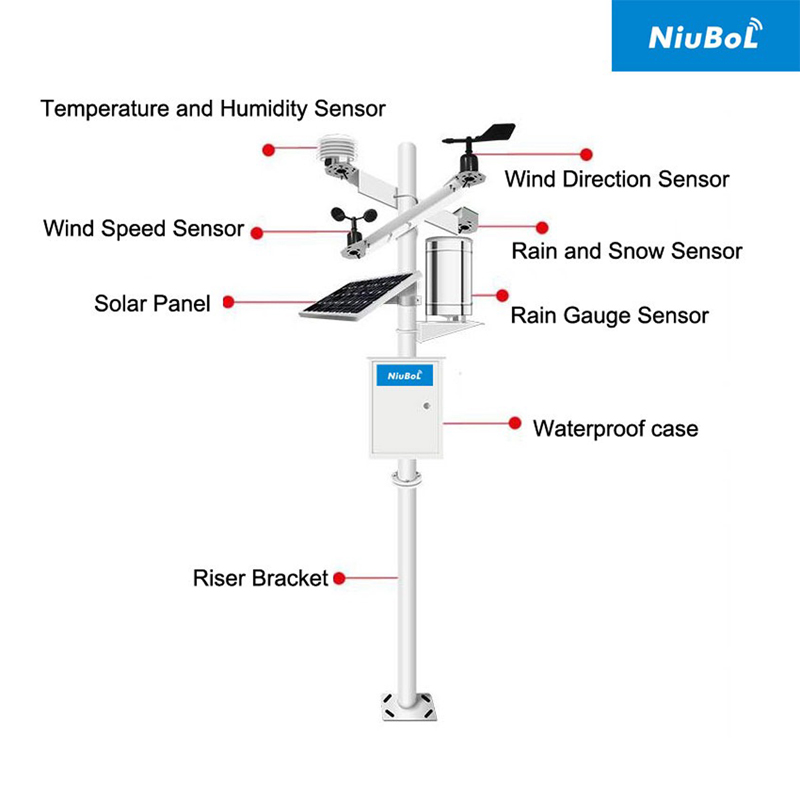
A standard outdoor air quality monitoring node typically includes the following core components:
Particulate module: PM2.5 + PM10 integrated sensor (laser scattering method)
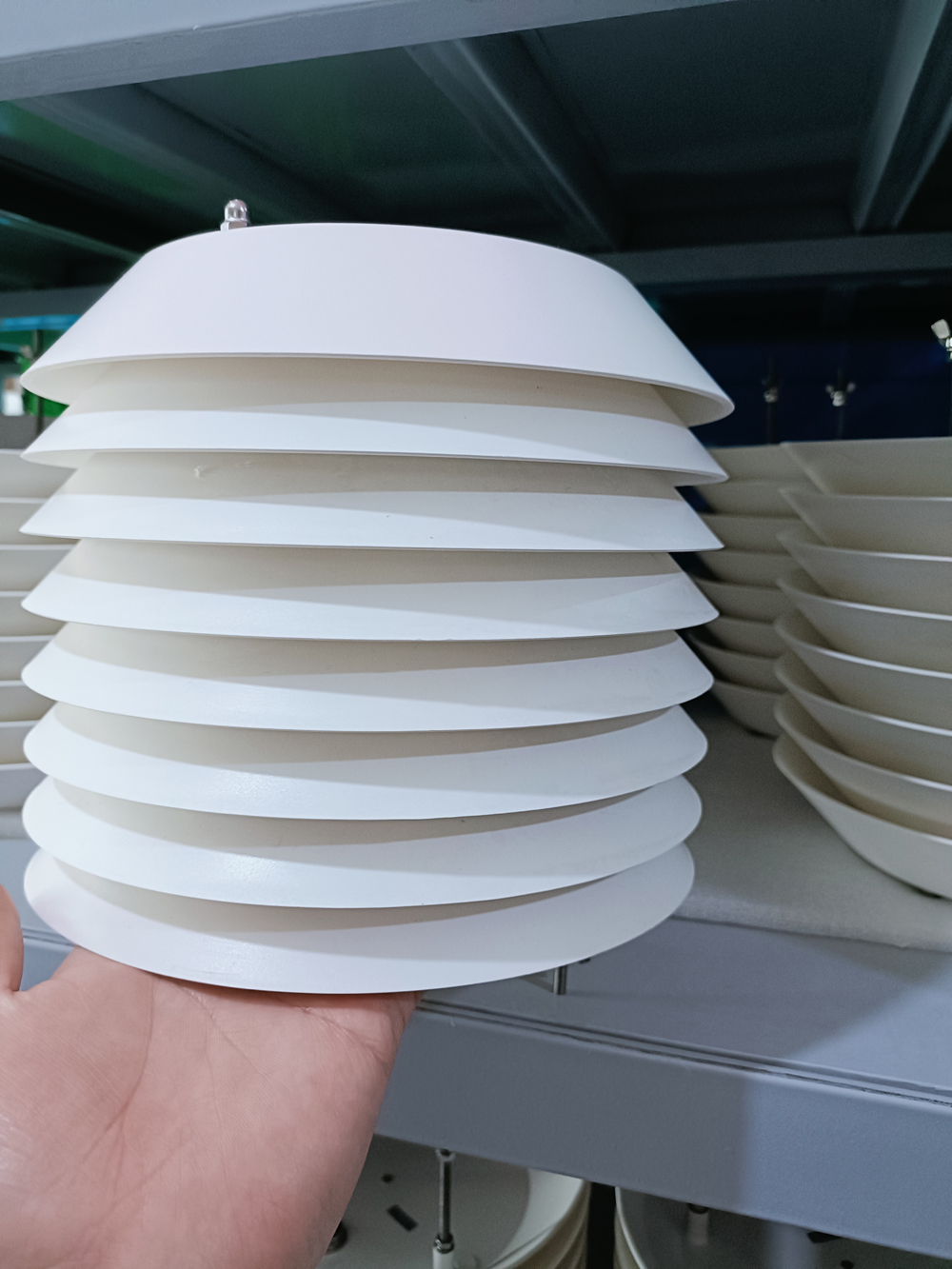
Meteorological parameters: Outside temperature sensor, humidity, wind speed/direction, atmospheric pressure (optional expansion)
Data acquisition and transmission: RS485/Modbus RTU gateway, 4G/NB-IoT module
Power system: DC 12–24V industrial power supply or solar + battery combination
Protective enclosure: IP65+ dustproof and waterproof wall-mounted/pole-mounted box
For IoT projects, integrators are most concerned with:
Single-node cost control within a reasonable range
Data stability and long-term drift control
Compatibility with existing SCADA, cloud platforms, or third-party gateways
The NiuBoL NBL-W-PM series, as the core particulate module, has a unit price range of 100–300 USD (depending on quantity, output type, and customization level) and offers significant cost-performance advantages in B2B bulk procurement.
Adopts laser scattering principle to detect particles above 0.3 μm, with built-in fan to maintain stable airflow, suitable for long-term continuous outdoor operation.
| Parameter | Specification |
|---|---|
| Measurement Range | PM2.5: 0–1000 μg/m³ PM10: 0–2000 μg/m³ |
| Relative Error | ±15% or ±10 μg/m³ (whichever is greater, at 25℃, 50% RH) |
| Minimum Detectable Particle | 0.3 μm diameter |
| Power Supply | DC 12V–24V (wide voltage input, other customizable) |
| Output Type | RS485 (Modbus RTU protocol, default) Customizable 4–20mA, 0–5V, etc. |
| Cable Length | Standard: 2.5 m (extendable or waterproof connectors customizable) |
| Operating Temperature | -20℃ ~ +60℃ |
| Operating Humidity | 0~99% RH (non-condensing) |
| Power Consumption | 350 mW |
Key advantages:
Low-power design, suitable for solar-powered nodes
Wide temperature and humidity adaptability, meets northern winter and southern high-humidity environments
RS485 interface compatible with mainstream industrial protocols, easy integration with Outside temperature sensor and meteorological five-parameter modules
1. Smart city grid monitoring: Deploy small nodes on main urban roads, residential areas, schools, etc., connected to city-level environmental platforms for real-time AQI calculation and pollution source tracing.
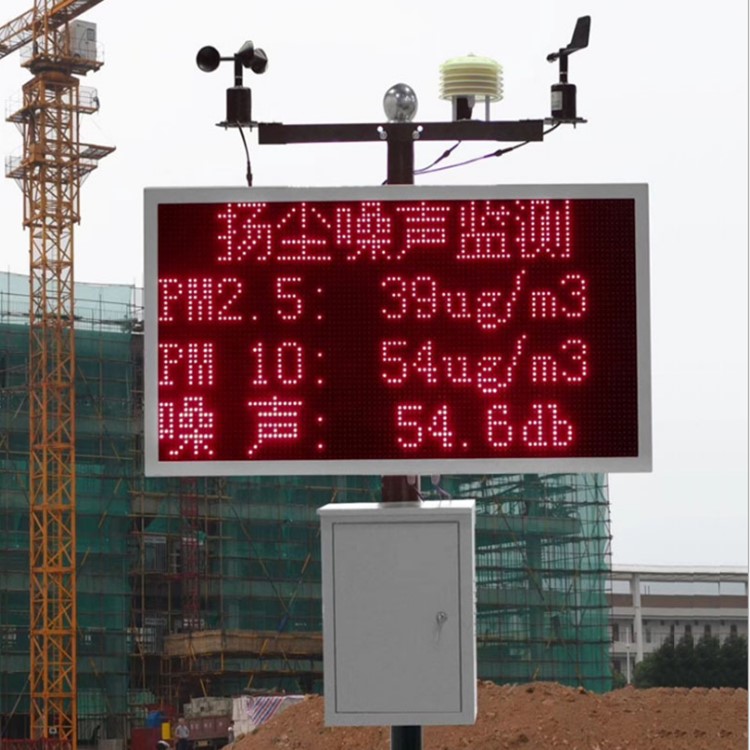
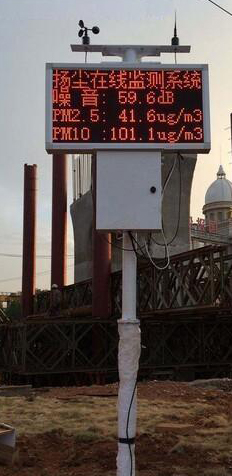
2. Construction site online dust monitoring: Linked with spraying systems to automatically trigger dust suppression when PM10 exceeds limits, meeting housing and urban-rural development department regulatory requirements.
3. Industrial park boundary monitoring: Deployed at emission boundaries for internal environmental management and external online reporting.
4. Traffic artery pollution monitoring: Installed at highway service areas or urban expressways, combined with wind direction data to analyze motor vehicle exhaust diffusion patterns.
5. Environmental IoT projects: As LoRaWAN/NB-IoT perception-layer nodes, combined with Outside temperature sensor and other meteorological sensors to form multi-parameter air quality stations.
NiuBoL sensor RS485 output supports standard Modbus RTU, enabling direct connection to PLCs, edge gateways, or cloud platforms with short integration cycles and strong compatibility.
In B2B procurement, Outdoor air quality monitoring equipment price is typically divided into the following tiers (in USD):
Single PM2.5/PM10 integrated sensor: 180–280 USD (1–49 units)
Bulk 50–99 units: 140–220 USD/unit
Bulk 100–499 units: 120–180 USD/unit
Bulk 500+ units: 100–150 USD/unit (including customized output, extended cables)
Complete node cost estimate (example: basic six-parameter station):
PM2.5/PM10 sensor: 120–200 USD
Meteorological five-parameter module (including Outside temperature sensor): 80–150 USD
Data acquisition gateway + 4G module: 50–120 USD
Power supply + enclosure + mounting bracket: 60–150 USD
Total per node: 310–620 USD (bulk can be reduced to 250–450 USD)
Cost optimization suggestions:
Prioritize RS485 output to avoid additional conversion modules
Bulk purchase uniform specifications to reduce customization costs
Solar power solutions can reduce long-term electricity costs but have slightly higher initial investment
NiuBoL provides transparent tiered pricing with fast response to project quotations.
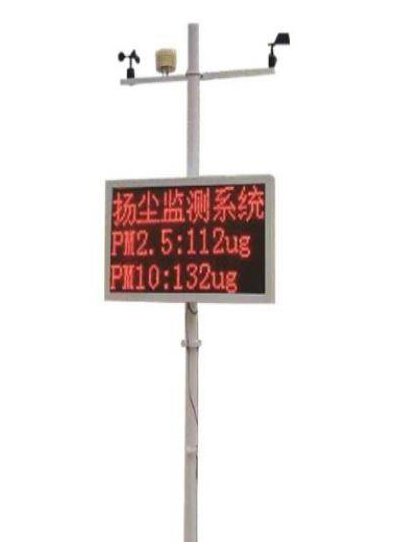
1. Particulate accuracy and range: Standard municipal/construction sites select PM2.5 0–1000, PM10 0–2000 μg/m³; high-concentration industrial scenarios confirm range coverage.
2. Interface and protocol: RS485 Modbus RTU as mainstream; select 4–20mA for analog output needs.
3. Power supply and consumption: DC 12–24V low power (350 mW) suitable for solar; prioritize low-power design for remote sites.
4. Environmental adaptability: -20℃~+60℃, 0–99% RH covers most outdoor scenarios; extreme areas optional heating/dehumidification accessories.
5. Expandability: Reserve interfaces for later addition of Outside temperature sensor, noise, VOC, etc.
6. Budget and bulk: For projects 100+ units, directly negotiate tiered pricing and OEM solutions.
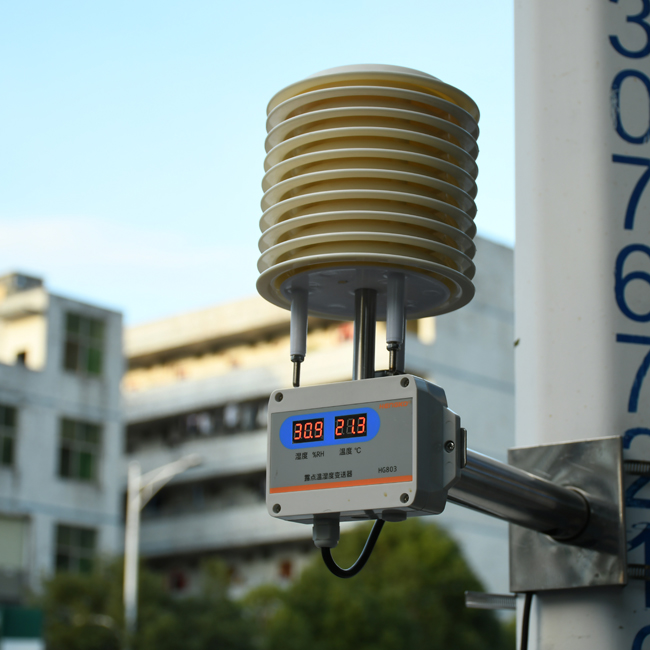
Installation location: Sensor air inlet 1.5–3 m above ground, avoid direct exposure to exhaust outlets or strong light sources; recommend adding rain cover.
Electromagnetic compatibility: Use shielded cable + surge protector, RS485 bus length<1200 m, add terminating resistor.
Data calibration: Compare with reference instrument after initial deployment, set offset in software; recommend on-site verification every 6–12 months.
Power protection: Configure voltage stabilization module and lightning protection to prevent voltage fluctuations from damaging the laser.
System fusion: At the platform level, implement linkage between PM values and meteorological parameters to generate AQI, pollution heatmaps, and alarm rules.
NiuBoL supports:
OEM private labeling (LOGO, housing customization, packaging design)
Interface customization (adding LoRa, multi-channel 4–20mA output)
Voltage/cable length/protection rating adjustment (IP65 to IP67)
Integrated air quality station (PM + meteorology + noise + LED screen)
Bulk supply (minimum order 50 units, better discounts for 500+ units)
Fast delivery (standard products within 4 weeks, customized 6–8 weeks)
Factory testing (temperature-vibration cycling, EMC, long-term stability testing)
These services help integrators enhance competitiveness in government tenders, PPP projects, and large parks.
Q1: How is Outdoor air quality monitoring equipment price calculated in bulk procurement?
A: Primarily depends on quantity, output type (RS485 vs. analog), whether voltage/cable length is customized; typically reduced to 120–180 USD/unit for 100+ units.
Q2: What are the core differences between the NBL-W-PM series and consumer-grade sensors?
A: Industrial-grade laser + built-in fan + self-calibration algorithm ensures long-term stability and wide-temperature operation from -20℃~+60℃, suitable for continuous outdoor monitoring.
Q3: How to seamlessly integrate sensors with existing IoT platforms or SCADA?
A: Standard RS485 Modbus RTU protocol, provides complete register table and SDK, supports mainstream platforms such as Alibaba Cloud, Huawei Cloud, AWS IoT.
Q4: Is the low-power design suitable for solar-powered nodes?
A: 350 mW ultra-low power consumption, paired with 12V solar systems enables year-round stable operation with minimal maintenance.
Q5: How to ensure data reliability for long-term outdoor operation?
A: Built-in fan prevents particle deposition, epoxy sealing prevents moisture, wide-temperature design; recommend on-site comparison calibration every six months.
Q6: Does it support OEM customization and private branding?
A: Yes, supports LOGO, housing, protocol extension, and bulk private labeling; has provided white-label products to multiple integrators.
In smart city, industrial environmental protection, and dust monitoring projects, the selection of Outdoor air quality monitoring equipment directly affects data quality, system stability, and total cost of ownership. The NiuBoL NBL-W-PM series, with a B2B price range of 100–300 USD, reliable laser scattering technology, and flexible integration capabilities, has become a stable choice for system integrators.
If you are advancing IoT air quality monitoring, smart construction sites, or industrial park environmental projects, welcome to contact the NiuBoL engineering team. We can provide free sample testing, detailed configuration quotes, customized solution discussions, and bulk procurement support. We look forward to collaborating with you to build efficient and compliant outdoor environmental monitoring networks.
Prev:Role of Snow Sensors and Outdoor Temperature Sensors in Smart City Infrastructure
Next:Integrating High-Precision Soil Monitoring Sensors into Automated Irrigation Systems
Related recommendations
Sensors & Weather Stations Catalog
 Agriculture Sensors and Weather Stations Catalog-NiuBoL.pdf
Weather Stations Catalog-NiuBoL.pdf
Agriculture Sensors Catalog-NiuBoL.pdf
Water Quality Sensor Catalog-NiuBoL.pdf
Related products
 Combined air temperature and relative humidity sensor
 TDR Soil Moisture & Temperature Sensor for irrigation| RS485 |4-20mA| NBL-S-THR
 Soil pH sensor RS485 soil Testing instrument soil ph meter for agriculture |NBL-S-PH
 Wind Speed sensor Output Modbus/RS485/Analog/0-5V/4-20mA
 Tipping bucket rain gauge for weather monitoring auto rainfall sensor RS485/Outdoor/stainless steel
 Pyranometer Solar Radiation Sensor 4-20mA/RS485

Screenshot, WhatsApp to identify the QR code
WhatsApp number:+8615367865107
(Click on WhatsApp to copy and add friends)

