





— Blogs —
—Products—
 Consumer hotline +8618073152920
 WhatsApp:+8615367865107
Address:Room 102, District D, Houhu Industrial Park, Yuelu District, Changsha City, Hunan Province, China
Product knowledge
Time:2026-02-16 10:52:22 Popularity:562
In the field of agricultural pest and disease control, early monitoring and prediction are key to reducing losses and lowering pesticide use. The NiuBoL intelligent remote insect forecasting system complies with the national standard GB/T 24689.1-2009, adopting far-infrared insect body treatment, LED insect-attracting light source, and IoT real-time transmission technology to achieve unattended trapping, identification, and data analysis. This article details its working principle, structural design, technical parameters, grassroots application value, and role in green prevention and control.
In agricultural production, pests and diseases often pose invisible threats, and a slight oversight can lead to yield reduction or even total crop failure. Traditional manual forecasting relies on experience and manpower, with low efficiency and susceptibility to weather and terrain limitations, making it unable to meet the large-scale demands of modern agriculture. As an innovative tool in the plant protection field, the NiuBoL automatic insect forecasting lamp acts like a “sentinel” in the field, monitoring pest dynamics 24 hours a day and providing real-time data support. It helps grassroots plant protection departments shift from passive response to active prevention. This not only enhances the scientific nature of control but also reduces pesticide abuse and promotes green agricultural development. Through equipment installed in fields and rural areas, users can quickly obtain insect situation data, analyze occurrence trends, guide precise pesticide application, and achieve the goal of “preventing before disease occurs.”
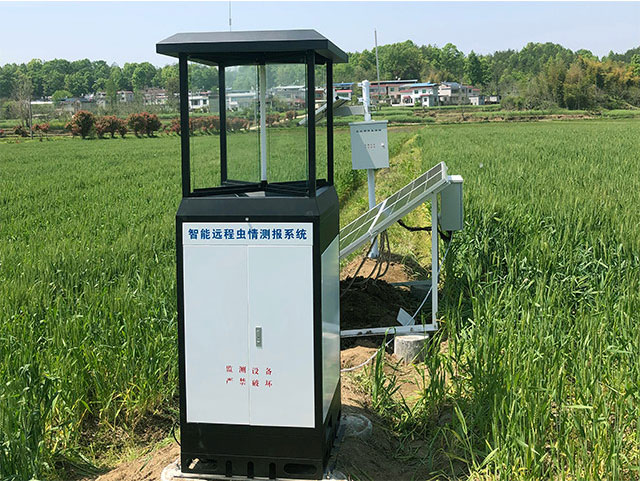
At the frontline of grassroots agricultural production, pest control often faces the problem of lagged information. In the past, forecasters had to frequently patrol fields and record pest numbers, but this method was highly subjective and had limited coverage. The emergence of the NiuBoL automatic insect forecasting lamp has changed this situation. It utilizes light, electricity, and digital control technology to automatically complete insect attraction, killing, collection, packaging, and drainage operations without human intervention, generating reliable insect situation data.
For example, in rice planting areas, pests such as rice leaffolder migrate rapidly and are difficult to control promptly once they outbreak. The device, through real-time monitoring, helps grassroots departments lay out control points, use data to guide the release of natural enemies or biological pesticides, and reduce chemical pesticide usage by more than 20%. This not only lowers production costs but also maintains farmland ecological balance and improves the quality and safety of agricultural products. In ecological agriculture demonstration zones, the long-term data accumulated by the equipment can also be used to study pest occurrence patterns, promote regional unified prevention and control, and assist the sustainable development of specialty crops such as tea and fruit trees.
From “experience-based governance” to “data-driven,” the technical support provided by the NiuBoL system to grassroots levels is evident. It reserves 485/232 communication interfaces, which can connect to meteorological systems to form multi-element linkage monitoring, further enhancing prediction accuracy.

| Parameter Item | Specification/Value | Remarks/Description |
|---|---|---|
| Production and Inspection Standard | GB/T 24689.1-2009 | National standard for plant protection machinery insect forecasting lamps |
| Overall Structure Material | Stainless steel main body + galvanized spray-coated treatment | Complies with GB/T4237 standard, flat outer surface, no sharp edges or corners, rust resistance ≥2 years |
| Overall Height and Appearance | Standard height (unspecified), flat and firm appearance | No burrs, no defects in welds |
| Insect Fall Drawer | 645mm×410mm×150mm | Requires regular manual cleaning |
| Insect Collection Tray | Rectangular shape | Used for insect body flattening and photography |
| Control Method | Light control + rain control + time control (up to 4 periods) | Automatic light switching, time periods set according to pest habits |
| Insect-Water Separation Mechanism | Automatic drainage separation | Effectively separates rain and insects, no obvious water accumulation (CMA/CNAS report) |
| Pest Drying Function | Dual insect collection chambers, infrared drying | Timed automatic drying to ensure insect bodies are dry and non-rotting |
| Temperature Regulator | After working 15 minutes, 85±5℃, time adjustable | Drying and killing efficiency 80-90℃ (CMA/CNAS report) |
| Image Acquisition | 12 megapixel industrial camera | Timed collection of pest photos, upload to platform |
| Cleaning Device | Motor-driven back-and-forth cleaning | Clean insect collection plate after photography |
| Power Failure Memory Function | Supported | Completes tasks before power failure upon recovery |
| Remote Function | Wireless restart + debugging | Via PC commands or remote support |
| Rain Control/Light Control Function | Automatic control, not interfered by strong light | CMA/CNAS test report |
| Power Input | AC220V or 400W solar panel + 200AH battery | Adapts to off-grid field scenarios |
| Lamp Tube Power | 18W | LED insect-attracting lamp tube |
| Overall Lamp Power | ≤225W (operating); ≤15W (standby) | CMA/CNAS report |
| Lamp Tube Startup Time | ≤5s | Quick response |
| Trapping Light Source | LED lamp tube, wavelength 365-395nm | Central vertical installation |
| Light Sensor | Photosensitive change control | Achieves automatic light switching |
| Rain Sensor | Rain signal transmission | Triggers drainage system |
| Far-Infrared Treatment Chamber | Lethal treatment + automatic import to insect collection tray | 3-5 minutes lethal, 15 minutes drying |
| Vibration Device | Slight vibration for 1 second | Uniform distribution of insect bodies on insect collection tray |
| Controller | Unified scheduling, 9 indicator lights | Controls light source, processor, cleaning, etc., fault diagnosis |
| Communication Method | 4G/Ethernet | Data exchange with IoT platform |
| Interface | 485/232 | Connects to meteorological systems, etc. |
| IoT Platform Functions | Real-time upload of status/images, AI insect body identification | Supports location mapping, remote viewing, species/quantity statistics |
| Insulation Resistance | ≥2.5MΩ | With leakage protection device |
| Rainproof Design | Louver isolates rainwater | Effectively prevents external influences |
| Compatibility | Connection ports for weather/soil equipment | Multi-monitoring data presented through platform |
| Lamp Tube Startup Time | ≤5s | Quick response |
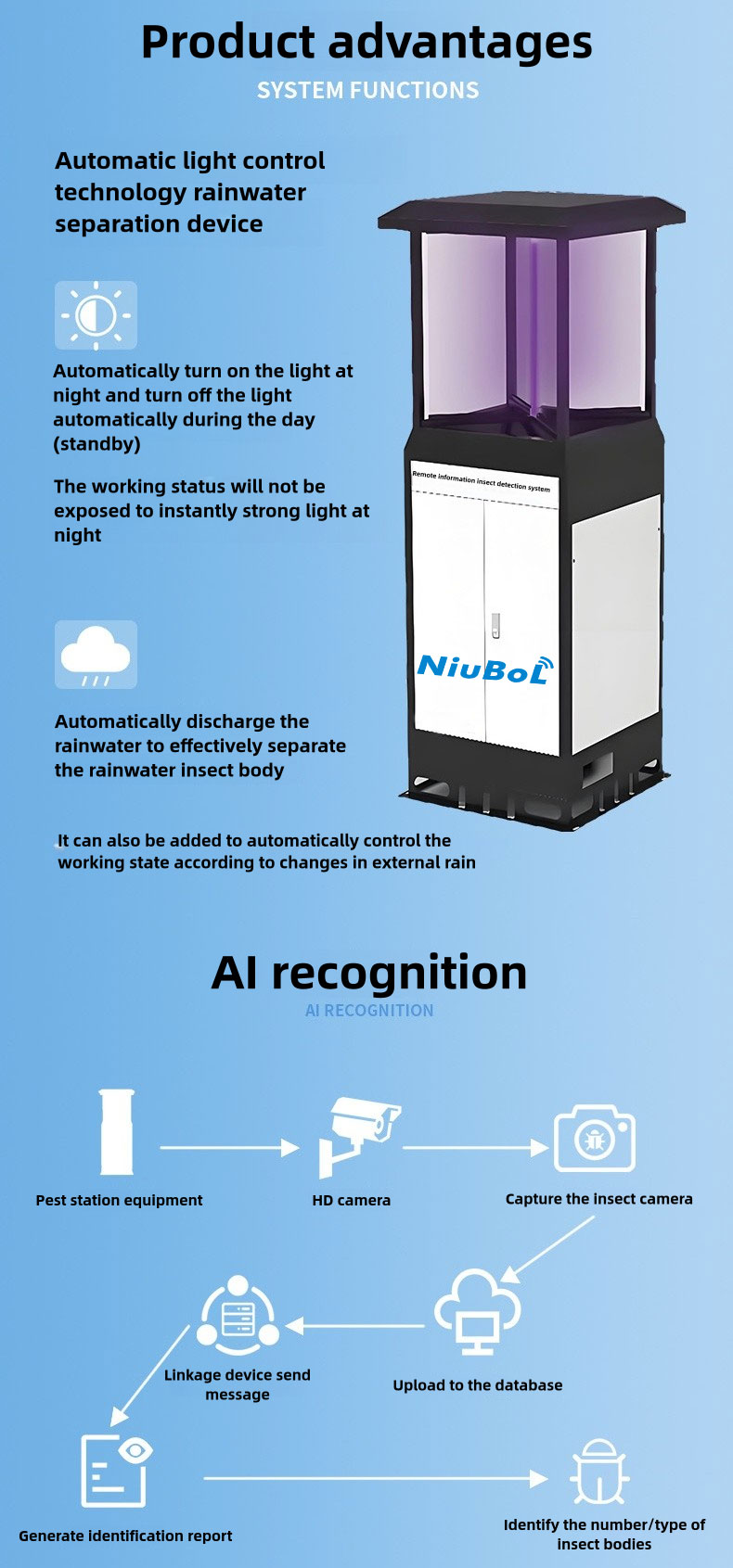
The working principle of the NiuBoL automatic insect forecasting lamp is based on multi-control linkage and automated processing, ensuring stable operation in complex field environments.
Light control is the foundation: during the day when ambient light is bright, the digital control circuit opens the contacts, and the device enters standby (light off); at night when light dims, it automatically turns on to avoid ineffective energy consumption. The time control function allows users to set multiple working periods (up to 4), adjusted according to pest habits such as nighttime activity peaks. For example, for corn borers, set 20:00-24:00 and 02:00-05:00 periods to cover peaks while saving power.
Rain control enhances weather resistance: during rain, the rain sensor triggers the drainage system, and rainwater is discharged through a dedicated channel to avoid entering the insect fall channel, which could cause short circuits or water-soaked insect bodies. After rain stops, the system automatically assesses conditions and resumes work when suitable. This three-control combination allows the device to operate continuously without supervision, with memory of status after power failure and completion of unfinished tasks upon recovery.
The processing principle focuses on efficiency and precision: LED insect-attracting lamp tube (wavelength 365-395nm) attracts insects to the light, they collide with the glass screen and fall into the funnel, then enter the far-infrared treatment chamber. Live insects die within 3-5 minutes after falling in, and after 15 minutes, they are moved to the 90℃ heating baking chamber for 15 minutes of drying (time adjustable) to ensure insect bodies are dry and intact without rotting. Subsequently, the insect group falls onto the collection plate, vibrated for 1 second to flatten, and the industrial camera (12 megapixel) takes timed photos and uploads to the cloud platform. After photography, the cleaning device sweeps the insect bodies into the bottom drawer for periodic sampling.
The key to this process is far-infrared technology: treatment chamber temperature 85±5℃, high drying efficiency, insect body integrity over 95%, facilitating AI identification. The system also features an insect-water separation mechanism to effectively drain rain and ensure no water accumulation in the box.
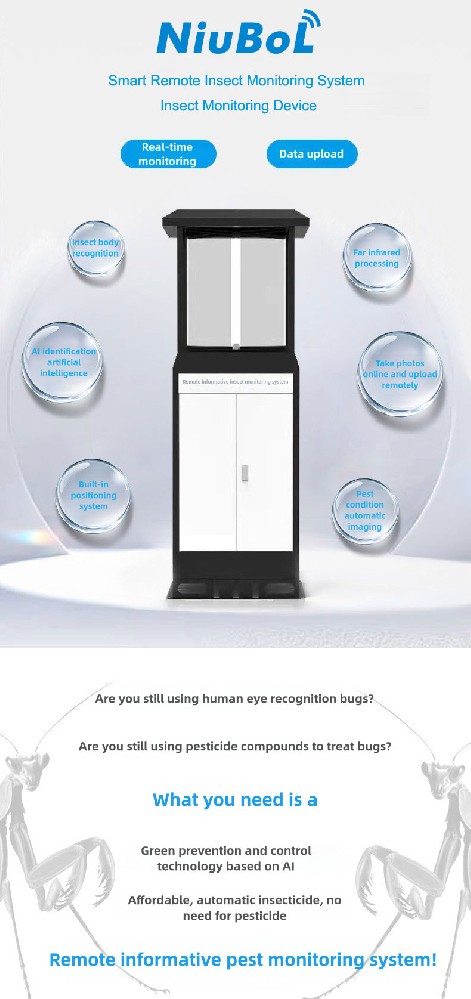
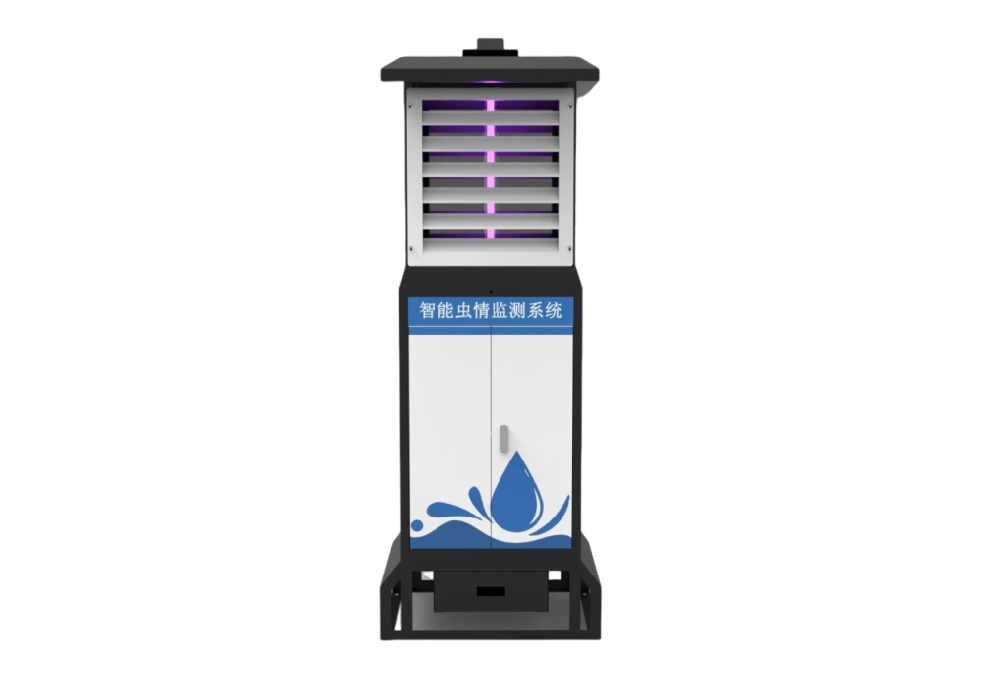
The NiuBoL system overall structure is divided into upper, middle, and lower parts, using stainless steel main body with galvanized spray-coated treatment, complying with GB/T4237 standard, smooth appearance without sharp edges, rust resistance over 2 years, total power ≤225W, standby ≤15W.
The upper trapping device includes a central LED insect-attracting lamp tube, four impact screens at 90 degrees to each other (single screen 608mm×330mm×5mm thick), and insect collection funnel. Insects fly toward the light, collide, and fall into the middle cabinet through the funnel.
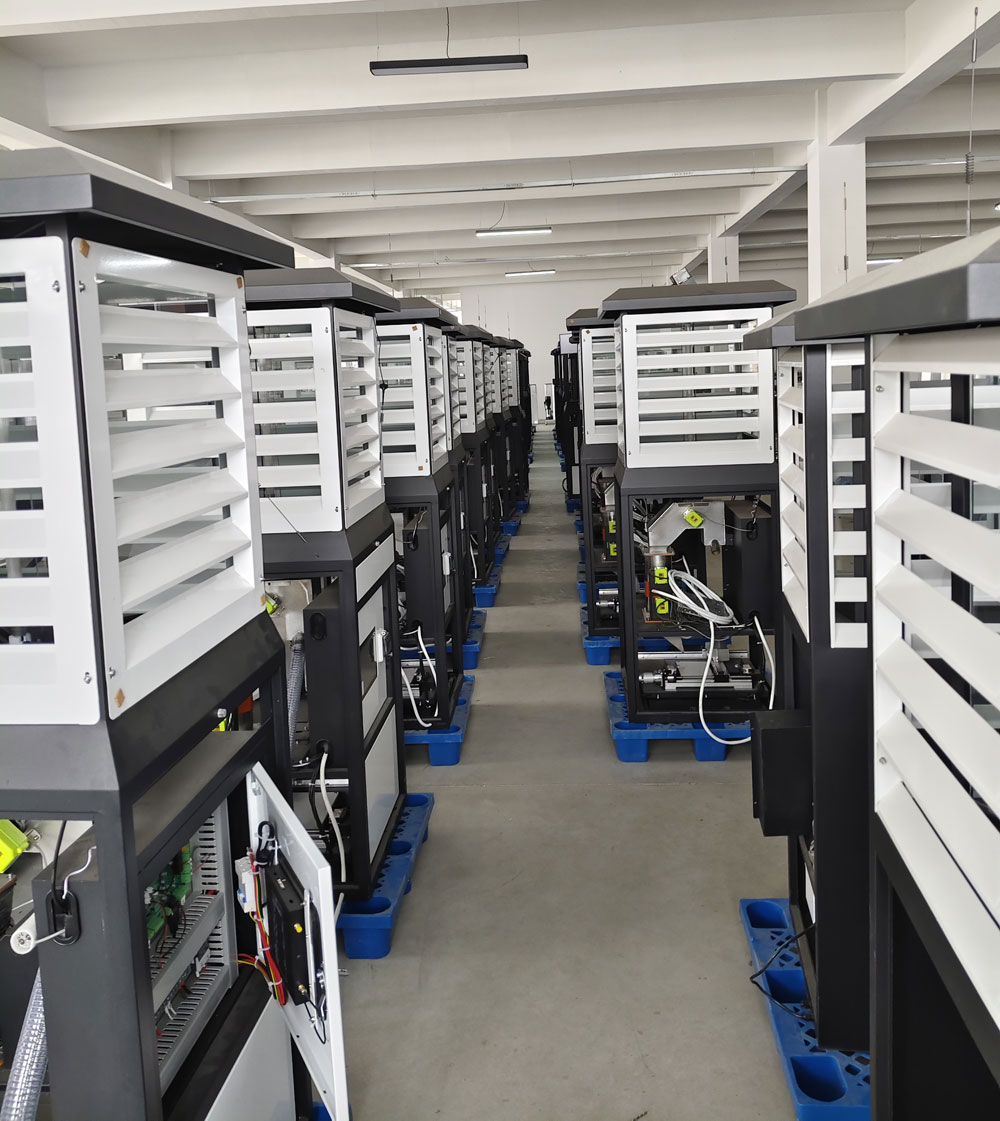
The middle cabinet houses the control circuit and processing devices: far-infrared treatment chamber for lethal insect treatment, dual collection chambers for simultaneous baking; vibration device for flattening insect group; cleaning device with motor-driven cleaning of collection plate. The controller uniformly schedules operations, with 9 indicator lights on the panel for status monitoring and fault diagnosis.
The bottom insect fall drawer (645mm×410mm×150mm) collects insect bodies and requires periodic manual cleaning. Auxiliary components include light sensor (photosensitive change control switch), rain sensor (rain signal transmission), and IoT module (4G/Ethernet data exchange).
This design ensures high integration of the device, startup time ≤5s, insulation resistance ≥2.5MΩ, with leakage protection, suitable for long-term outdoor deployment. The platform supports remote wireless restart and debugging, providing long-distance technical support.
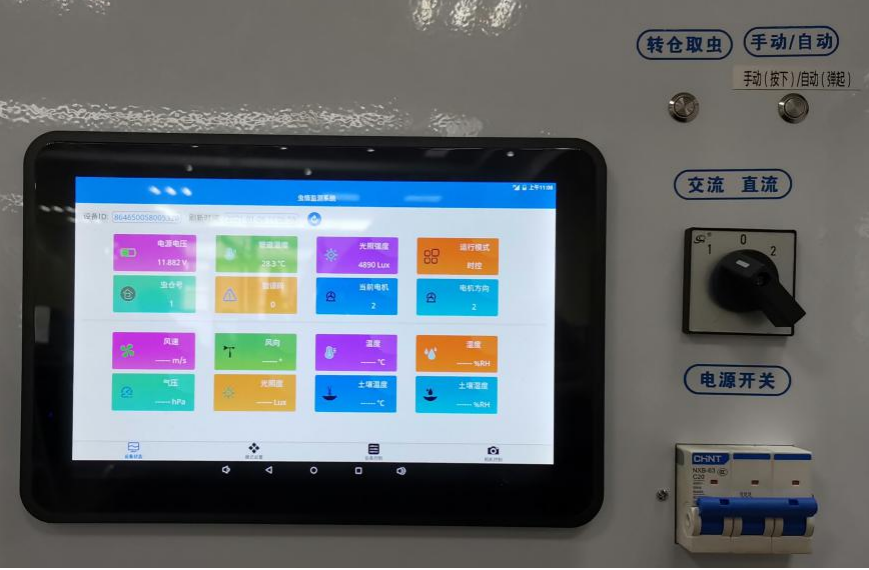
The NiuBoL automatic insect forecasting lamp is suitable for diverse scenarios: monitoring diamondback moth in vegetable bases with data guiding biological control; targeting fruit borers in orchards to predict peak periods and reduce spraying frequency; early warning of pine caterpillars in forestry to maintain ecological balance.
A typical case is in the rice areas of central China: after equipment deployment, grassroots stations analyzed Chilo suppressalis trends through the cloud platform, promptly organized unified control, reduced pesticide usage by 25%, and stably increased yield. Another example is southern tea gardens: combined with meteorological access, it predicts tea green leafhopper occurrence, promotes organic tea, and assists brand building.
These practices prove that the device not only provides data but also promotes pesticide reduction and pest control: through AI identification and trend curves, users achieve standard-compliant control and improve agricultural product safety levels.
1. How does the automatic insect forecasting lamp achieve unattended operation?
Through linkage of light control, time control, and rain control for automatic light switching and drainage; the full far-infrared processing process requires no intervention.
2. What pests does the system support monitoring?
Suitable for various agricultural pests such as Lepidoptera and Coleoptera, e.g., rice leaffolder and corn borer, with automatic species and quantity statistics via AI identification.
3. How does the power supply adapt to remote fields?
Optional AC220V or solar system (400W panel + 200AH battery), continuous operation without grid dependence.
4. How to set the insect body treatment temperature and time?
Far-infrared chamber 85±5℃, drying time customizable via tablet or remote platform, default 15 minutes.
5. How does the platform perform data analysis?
Supports real-time curves, trend prediction, and location mapping; AI automatically identifies insect bodies and provides decision reports.
6. How is the equipment's weather resistance?
Stainless steel structure + galvanized spray coating, rust resistance over 2 years; insect-water separation mechanism drains rain, louver isolates external influences.
7. Does it support extension to other systems?
Reserved 485/232 interfaces for connecting weather or soil monitoring, with data uniformly uploaded to the IoT platform.
8. What is the approximate maintenance frequency?
Regular cleaning of insect fall drawer (weekly or depending on pest density), remote debugging reduces on-site intervention.
With intelligent monitoring and green processing as the core, the NiuBoL automatic insect forecasting lamp builds a reliable technical system for grassroots pest and disease control. It not only provides real-time data but also drives the transformation of agriculture from traditional experience to data-driven approaches, reduces pesticide dependence, and maintains ecological balance. In today's pursuit of sustainable development, such equipment is quietly changing the face of the fields, fortifying the defenses for food security and agricultural product quality. In the future, with more grassroots applications, this technology will further deepen green plant protection practices and assist the modernization process of agriculture.
 Intelligent Remote Insect Monitoring and Reporting System(Insect Monitoring Device) Data Sheet.pdf
Related recommendations
Sensors & Weather Stations Catalog
Agriculture Sensors and Weather Stations Catalog-NiuBoL.pdf
Weather Stations Catalog-NiuBoL.pdf
Agriculture Sensors Catalog-NiuBoL.pdf
Water Quality Sensor Catalog-NiuBoL.pdf
Related products
 Combined air temperature and relative humidity sensor
 TDR Soil Moisture & Temperature Sensor for irrigation| RS485 |4-20mA| NBL-S-THR
 Soil pH sensor RS485 soil Testing instrument soil ph meter for agriculture |NBL-S-PH
 Wind Speed sensor Output Modbus/RS485/Analog/0-5V/4-20mA
 Tipping bucket rain gauge for weather monitoring auto rainfall sensor RS485/Outdoor/stainless steel
 Pyranometer Solar Radiation Sensor 4-20mA/RS485

Screenshot, WhatsApp to identify the QR code
WhatsApp number:+8615367865107
(Click on WhatsApp to copy and add friends)

