





— Blogs —
—Products—
 Consumer hotline +8618073152920
WhatsApp:+8615367865107
Address:Room 102, District D, Houhu Industrial Park, Yuelu District, Changsha City, Hunan Province, China
Product knowledge
Time:2026-02-16 10:42:04 Popularity:637
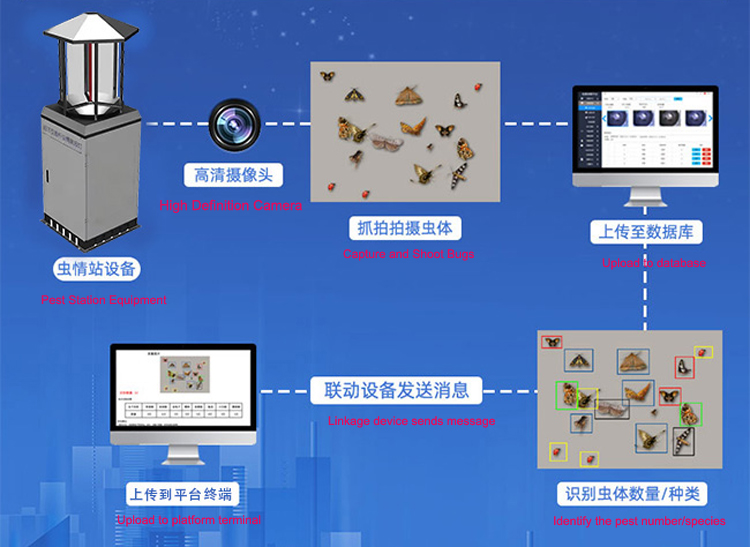
Insect recognition accuracy is not one number that can be transferred between crops, species and camera conditions. Before buying automated monitoring equipment, ask how target insects were labelled, which mistakes were counted and whether the test used independent local images. A NiuBoL NBL-IoT-SRPMS image stream can support that assessment, but camera resolution and successful uploading do not establish species-level recognition performance.
Suppose a reference review finds 100 target insects among 1000 insect objects. In a hypothetical test, the software finds 80 of those targets, misses 20 and incorrectly labels 20 other insects as the target. Its reported target total is still 100. The count agrees perfectly, although 40 object-level decisions are wrong.
| Reference class | Labelled as target | Labelled as other |
|---|---|---|
| Target insect | 80 true positives | 20 false negatives |
| Other insect | 20 false positives | 880 true negatives |
Precision is the fraction of reported targets that are correct: 80 divided by 100, or 80%. Recall is the fraction of reference targets found: also 80 divided by 100, or 80%. Overall binary classification accuracy is 960 divided by 1000, or 96%. Neither the 96% headline nor the matching total explains the 20 missed targets. These are illustrative calculations, not measured NiuBoL results or acceptance limits.
Keep the evaluation task explicit. This simplified table assumes objects have already been matched between the reference and software results. An end-to-end image test must also define how duplicate detections, missed objects and ambiguous overlaps are matched. Object detection, species classification and final sample counting are related but separate checks.
A large number of easy non-target examples can make an overall score look high while a rare but important target is frequently missed. Request the number of reference objects, predicted objects and errors for each target species or agreed taxonomic group. Keep an unidentified or uncertain category instead of forcing every insect into a confident species label.
Some operational programmes need only a reliable group count, while others require a particular species. Agree the required label level before testing. A family-level identification cannot be scored as a correct species identification just because the two labels are biologically related. Where two species are difficult to distinguish in the available view, define when expert review or a physical specimen is required.
The cost of errors also differs. A missed target may delay field inspection; an incorrect target identification may generate unnecessary alerts. Set performance requirements around that use, with sample sizes appropriate to the decision. Do not turn a generic recognition percentage into a universal guarantee of safe crop-management decisions.
Use images covering the local species, relevant seasons and realistic sample conditions. Include sparse and crowded trays, damaged specimens, debris and images that are difficult to interpret. A demonstration using only clean, isolated examples does not test the conditions that commonly cause disagreement in a field monitoring cabinet.
Keep validation images independent from model development. Images from the same sample or near-identical captures should not be split casually between training and acceptance sets. Otherwise the result may reflect familiarity with that sample rather than performance on a new night. Record how images were selected, including rejected or unreadable ones.
Reference labels need their own quality control. Have qualified reviewers resolve disagreements and retain the relevant image or specimen reference. If the experts cannot determine the species from the image, record that limitation. Excluding difficult cases without reporting how many were excluded makes the final percentage hard to interpret.
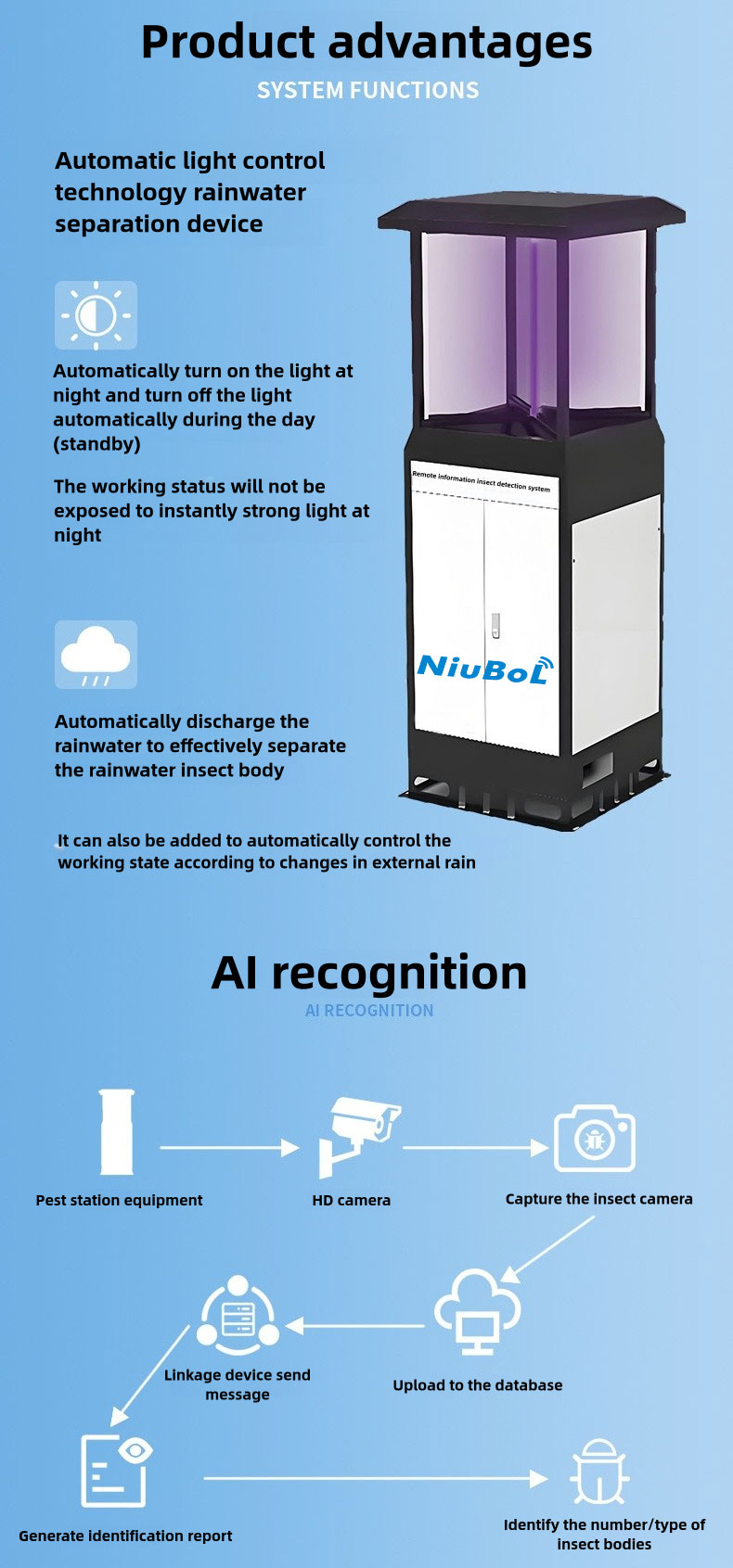
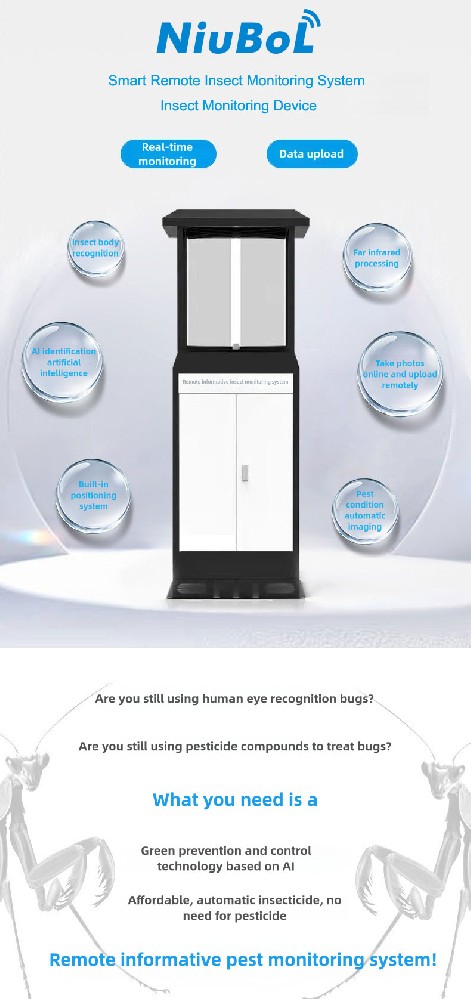
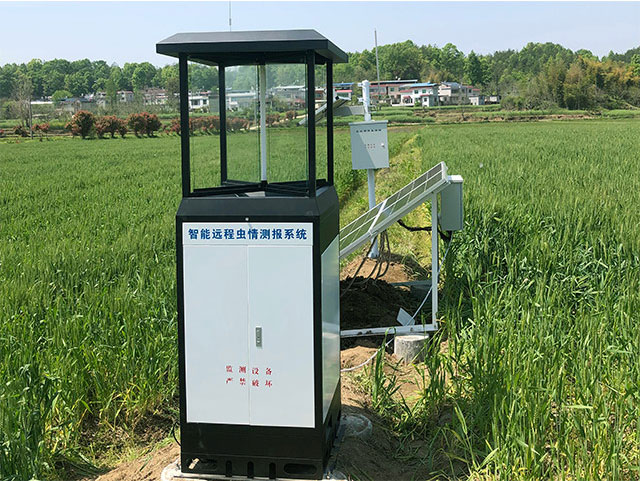
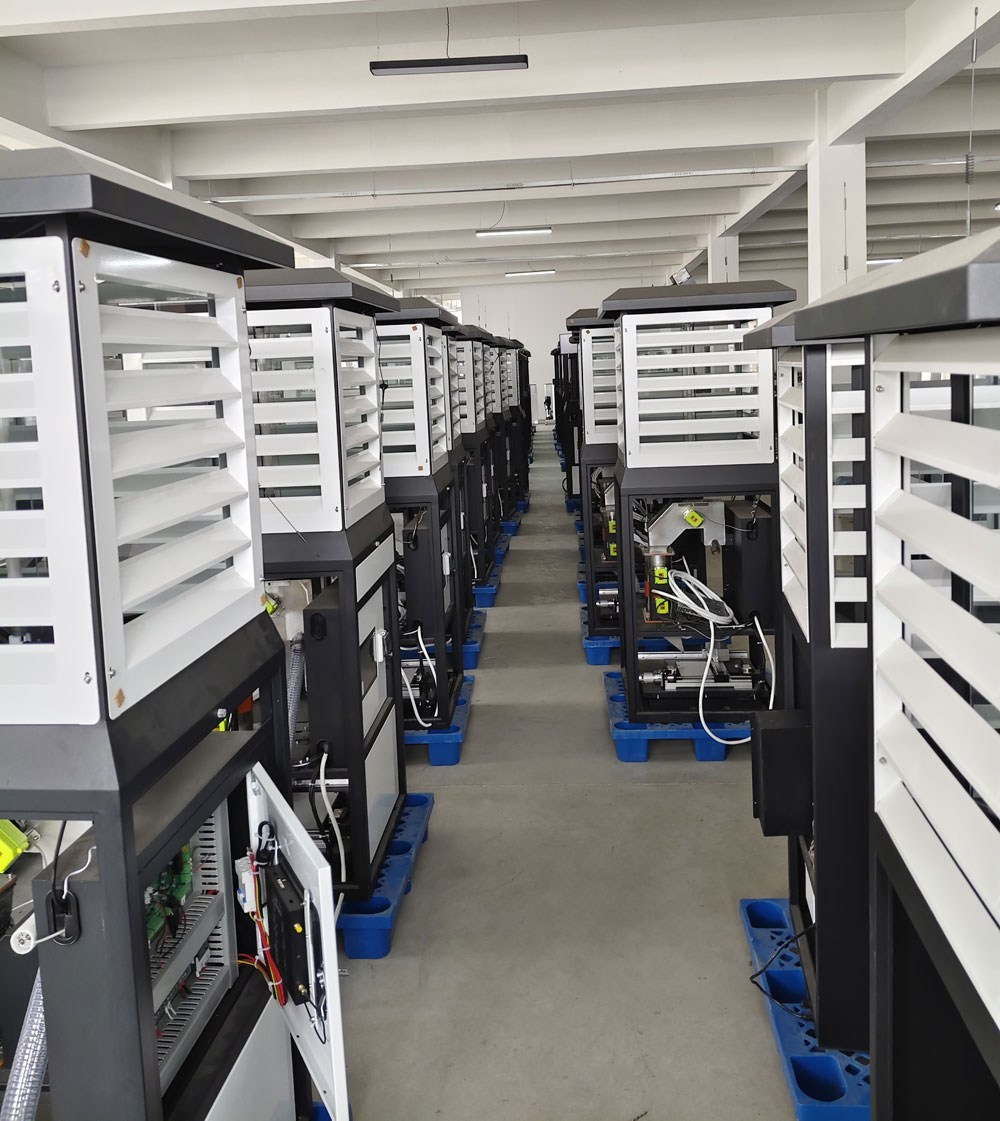
The NBL-IoT-SRPMS remote insect monitoring system combines light attraction, infrared processing, presentation of specimens and image capture. It is not a pheromone-specific trap or a high-voltage insect killer merely because those mechanisms exist in other products. Its physical sample preparation affects what the recognition system can see.
| Equipment detail | Relevant specification | What to verify |
|---|---|---|
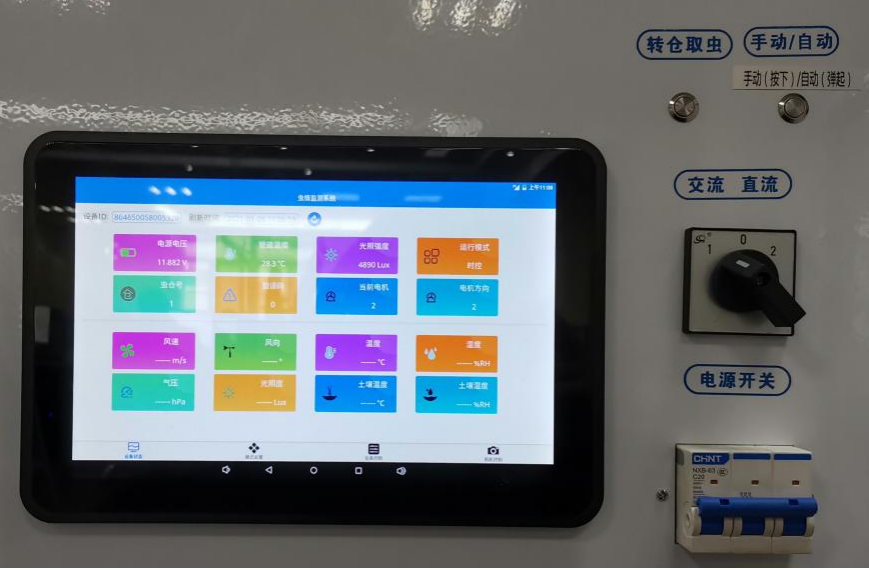
| Image capture | 12-megapixel industrial camera | Focus, exposure and detail at the actual specimen plane |
| Attracting source | 18 W LED; 365-395 nm | Suitability of the capture method for the target programme |
| Processing | Infrared treatment and automatic specimen presentation | Recognisable specimens and manageable overlap in actual samples |
| Reporting | 4G/Ethernet | Image-to-result association at the intended destination |
A 12-megapixel file can still be blurred, compressed or dominated by a small specimen area. Check the images used for inference, not only an attractive sample photograph. When bodies overlap or leave the frame, separate a capture limitation from a classification error. Both affect practical usefulness, but correcting them requires different work.
Compare counts for each target and each sample interval. If one interval is overcounted by 20 and another is undercounted by 20, the combined total has zero signed error. It does not mean both intervals are correct. Report the distribution of errors or an appropriate absolute-error measure alongside total agreement.
For empty reference samples, a percentage error based on division by the reference count is undefined. Record false detections explicitly rather than assigning an arbitrary perfect or catastrophic percentage. For sparse samples, show actual counts; one missed insect can be more informative than a rounded average across many busy trays.
Recognition performance applies to visible captured specimens, not to every insect in the surrounding field. A model cannot identify an insect that the trap did not capture. Keep the capture programme and the image-analysis assessment separate, then consider the resulting records with crop inspection before making plant-protection decisions.

Retain the image identifier, observation window, model version, original result and any reviewed correction in the required project record. Ask for a demonstration of export or access if the result must enter another platform. Reserved RS485/RS232 interfaces alone do not prove that images, object annotations and recognition revisions can be retrieved through Modbus RTU.
A software update can change the interpretation of the same image. Test a retained independent set before accepting the update for a continuing series. Preserve the earlier output when historical counts are reprocessed, so an apparent population change is not confused with a changed classifier. Specify who approves corrections and which version enters operational reports.
For a quotation, provide the target list, crop and deployment region, required label level and proposed validation approach. Separate the cabinet, recognition service, image retention, expert review and integration work. Do not assume a fixed subscription, unlimited image storage or a guaranteed species list unless those terms are expressly included.
No. False positives and false negatives can cancel in the total. Review target-level precision and recall as well as per-sample count error using independently checked reference labels.
Numerous correctly rejected non-target objects can dominate overall accuracy. Recall measures the fraction of actual targets found, so it can reveal missed targets hidden by a high overall score.
No. Focus, lighting, specimen condition, overlap and visible features also matter. Evaluate images from the actual capture chain and define when the available view is insufficient.
They may need a separate category, but their number and handling must be reported. Quietly removing difficult cases can overstate practical performance.
No. Request results for the target species or agreed groups and the relevant conditions. Rare targets and visually similar species need particular attention.
Check the update against a retained independent set before treating the output as comparable with the existing series. Record the version and preserve any historical reprocessing history.
Include the labelled test set definition, sample sizes, matching rules, class-level errors, count results and exclusions. State the deployment conditions and software version rather than supplying a percentage alone.
Insect recognition accuracy becomes meaningful when it identifies what was tested and which errors remain. NiuBoL image acquisition can support a local validation programme; acceptance should examine precision, recall, sample-level counts and the review record rather than relying on a camera specification or a single headline percentage.
 Intelligent Remote Insect Monitoring and Reporting System(Insect Monitoring Device) Data Sheet.pdf
Prev:Insect Forecasting Lamp Samples: Processing and Image Quality
Next:Insect Forecasting Lamp Records: Zero Catch or Missing Sample?
Related recommendations
Sensors & Weather Stations Catalog
Agriculture Sensors and Weather Stations Catalog-NiuBoL.pdf
Weather Stations Catalog-NiuBoL.pdf
Agriculture Sensors Catalog-NiuBoL.pdf
Water Quality Sensor Catalog-NiuBoL.pdf
Related products
 Combined air temperature and relative humidity sensor
 TDR Soil Moisture & Temperature Sensor for irrigation| RS485 |4-20mA| NBL-S-THR
 Soil pH sensor RS485 soil Testing instrument soil ph meter for agriculture |NBL-S-PH
 Wind Speed sensor Output Modbus/RS485/Analog/0-5V/4-20mA
 Tipping bucket rain gauge for weather monitoring auto rainfall sensor RS485/Outdoor/stainless steel
 Pyranometer Solar Radiation Sensor 4-20mA/RS485


Screenshot, WhatsApp to identify the QR code
WhatsApp number:+8615367865107
(Click on WhatsApp to copy and add friends)

