





— Blogs —
—Products—
 Consumer hotline +8618073152920
 WhatsApp:+8615367865107
Address:Room 102, District D, Houhu Industrial Park, Yuelu District, Changsha City, Hunan Province, China
Product knowledge
Time:2026-02-15 15:20:05 Popularity:536
In the vast farmland, pests often move quietly at night, making it difficult for traditional manual inspections to capture early dynamics. Insect forecasting lamps utilize the phototaxis of insects and become the “sentinels” of agricultural plant protection. The reason why NiuBoL insect forecasting lamps stand out among many similar products is not only because they can “attract, kill, and collect” insects, but more importantly, due to the comprehensive upgrade in insect body treatment methods, degree of automation, and data quality. These distinctive features directly determine the accuracy, continuity, and value of subsequent control decisions based on insect situation data.
| Parameter Category | Parameter Item | Specification/Value | Remarks/Value Description |
|---|---|---|---|
| Overall Structure | Main Material | 304 stainless steel + galvanized spray-coated bracket | Corrosion-resistant, wind-resistant and rain-resistant, suitable for long-term outdoor deployment |
| Overall Structure | Overall Height | 2.0–2.5 m | Insect-attracting port height 1.2–2.0 m adjustable, suitable for different crop canopies |
| Overall Structure | Protection Rating | IP65 | Fully sealed, dustproof and waterproof, adaptable to rainy and dusty environments |
| Insect Attraction System | Insect-Attracting Light Source | LED tube, wavelength 365–395 nm | Main wavelength targets the strongest phototaxis of most agricultural pests, high trapping efficiency |
| Insect Attraction System | Tube Power | ≥8–18 W (typical 12–18 W) | Energy-saving and efficient, tube lifespan ≥20,000 hours |
| Insect Attraction System | Impact Screen | 5 mm transparent glass plate, radial 4 pieces | Multi-path induction of light transmission/reflection/direct exposure, enhanced trapping effect |
| Insect Body Treatment | Treatment Method | Far-infrared lethal + 90℃ high-temperature baking | Insect body intact, dry and flat, convenient for AI identification and specimen preservation, no chemical residue |
| Insect Body Treatment | Lethal Time | 3–5 minutes after falling in | Natural death, preventing escape |
| Insect Body Treatment | Baking Time/Temperature | Default 15 minutes / 90℃ ±5℃ (adjustable) | Thorough drying, insect body not prone to mildew |
| Insect Body Treatment | Insect Clearing Method | Vibration flattening + automatic cleaning device | After photography, automatically falls into bottom drawer, reducing manual intervention |
| Camera & Identification | Image Sensor | ≥12 megapixel industrial camera | Supports timed/quantitative photography, high-definition images for AI species identification and counting |
| Control & Intelligence | Control Method | Light control + time control (up to 4 periods) + rain control | Light control: automatic day/night; time control: custom periods; rain control: automatic drainage to prevent short circuit |
| Control & Intelligence | Communication Interface | RS485 / RS232 (Modbus RTU) + 4G / Ethernet | Supports connection to weather stations and cloud platforms for real-time data upload |
| Data Transmission | Data Transmission | 4G (optional NB-IoT/LoRa) | Remote viewing of insect situation curves, early warning push notifications |
| Power Supply System | Power Supply Method | Solar + lithium battery | Solar panel ≥60 W monocrystalline silicon; battery 12V 40Ah lithium iron phosphate |
| Power Supply System | Operating Power / Standby Power | ≤15 W / ≤5 W | Ultra-low power consumption, ≥7–10 days endurance in continuous rainy days |
| Other | Compliance Standard | GB/T 24689.1-2009 | National standard for plant protection machinery insect forecasting lamps, full coverage of safety and technical requirements |
| Other | Operating Temperature Range | -20℃ ~ +60℃ | Adaptable to various climates in north and south |
| Other | Design Lifespan | ≥5 years | Low maintenance cost |
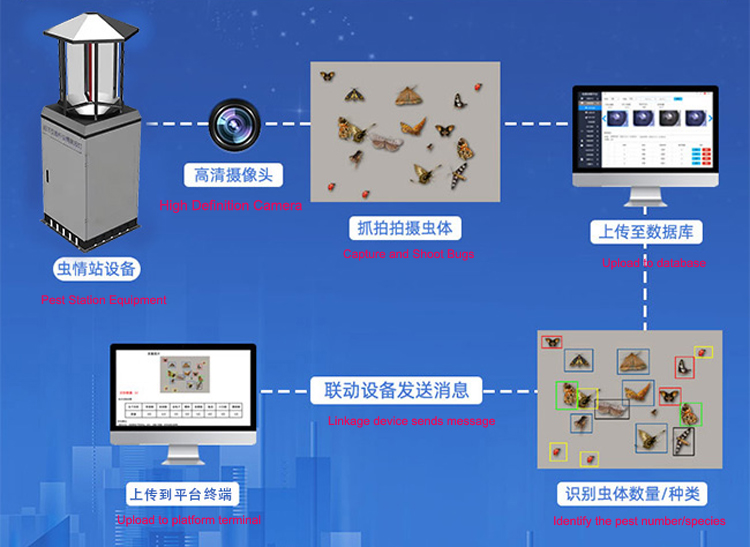
Traditional insect-attracting lamps mostly use high-voltage grid electrocution or poison bottle fumigation. Insect bodies are prone to deformation, fragmentation, or sticking together. During subsequent photography and identification, overlapping or incomplete bodies easily cause AI algorithm misjudgments or manual counting deviations. Especially during high-density pest periods, hundreds or even thousands of pests may be captured in one night. If the insect bodies are not properly treated, the insect collection box fills up quickly, interrupting monitoring continuity.
The NiuBoL insect forecasting lamp adopts a dual process of far-infrared heat treatment + high-temperature baking, completely solving this pain point. After live insects fall into the far-infrared treatment chamber, they die naturally within 3-5 minutes, and then enter the 90℃ baking chamber for 15 minutes of continuous drying. The entire process uses no chemical agents. The insect bodies maintain intact morphology, dry and flat, facilitating subsequent uniform spreading and high-definition photography. The special features of this treatment method are:
Minimal damage to insect bodies, with wings, antennae, and other features fully preserved, resulting in higher AI identification accuracy;
Non-toxic, no residue, meeting green plant protection and organic certification requirements;
After drying, insect bodies are not prone to mildew and deterioration, suitable for long-term specimen preservation and scientific analysis.
In comparison, although poison fumigation can prevent escape, insect bodies often carry chemical odors or color changes, affecting specimen quality; high-voltage grid electrocution easily causes charring and fragmentation of insect bodies. Therefore, far-infrared treatment has become the preferred choice for users pursuing high-precision insect situation monitoring.
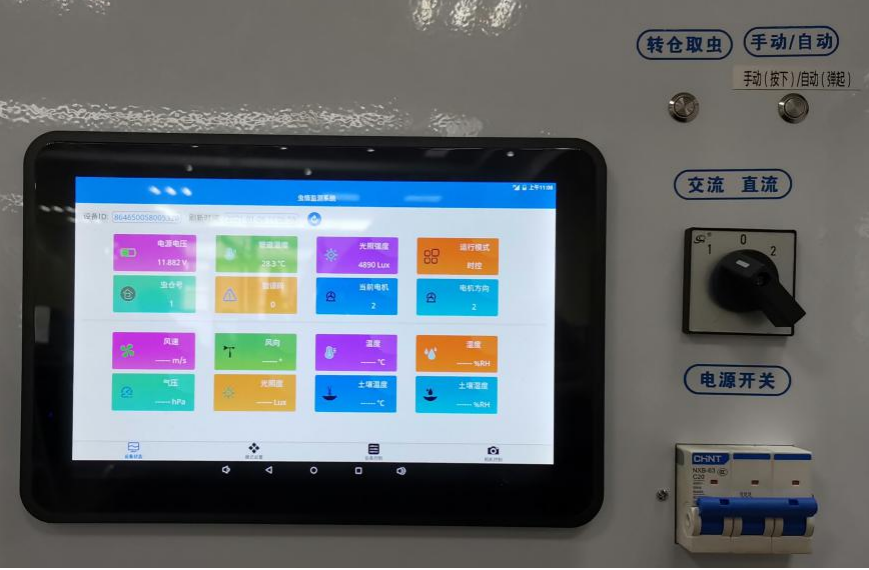
The automated operation logic of the NiuBoL insect forecasting lamp is another major highlight, truly achieving “unattended, all-weather reliable” performance.
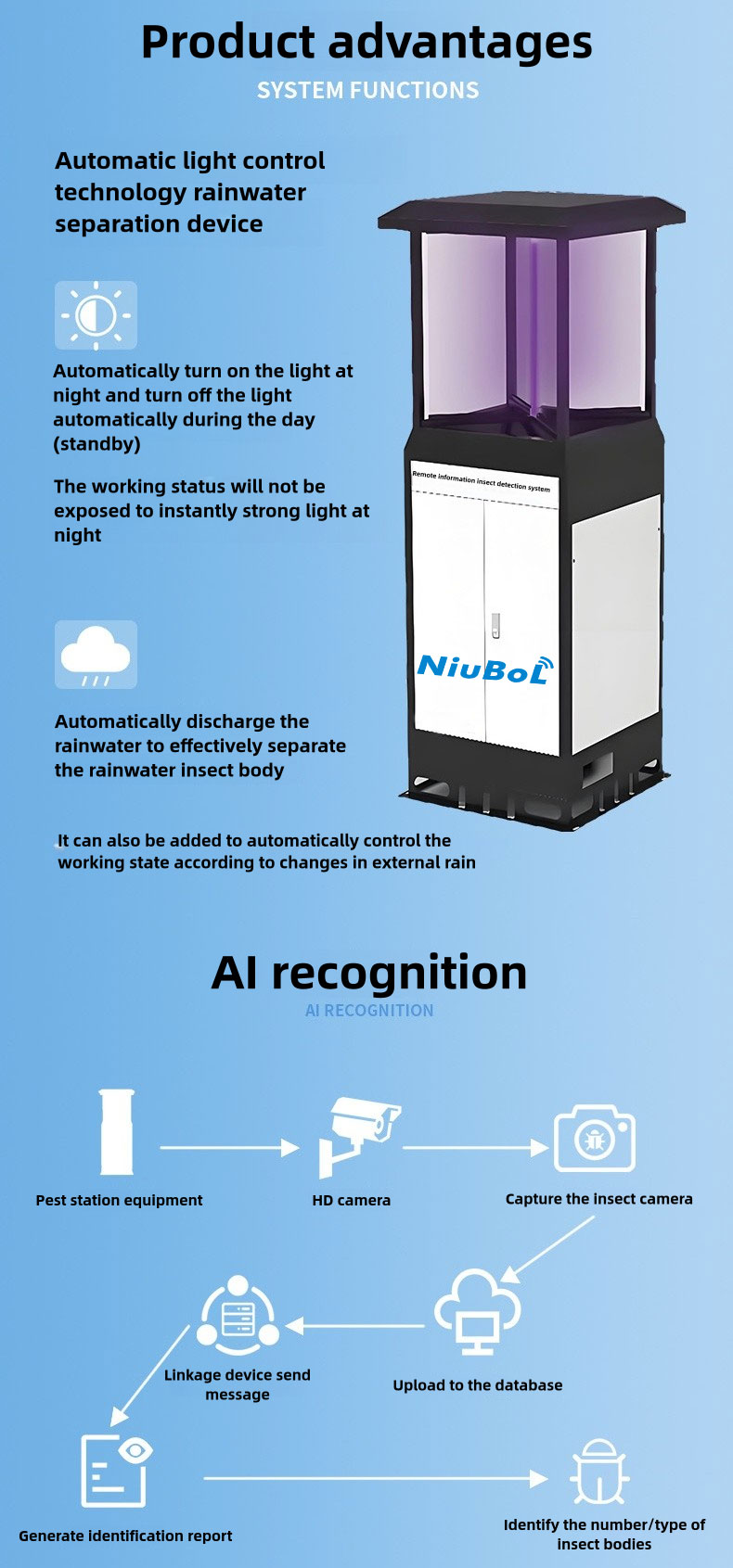
Light control is the most basic switching mechanism: when ambient light is bright during the day, the digital control circuit opens the contacts, and the lamp remains in standby; when night falls, it automatically turns on, avoiding ineffective daytime power consumption.
The time control function goes further. Users can set up to 4 independent working time periods on the platform. For example, for certain pests that are active at night but calm down in the early morning (such as rice leaffolder), it can be set to 20:00-24:00 and 02:00-05:00, covering peak periods while saving energy. After exceeding the set periods, it automatically turns off, and data is uploaded to the server in real time.
Rain control is the “life protection” mechanism for outdoor equipment. When it rains, the rain sensor immediately triggers the drainage system, and rainwater is directed through a dedicated channel and discharged from the bottom, preventing entry into the insect fall funnel which could cause short circuits or water-soaked insect bodies. After the rain stops, the system automatically determines whether to resume working conditions, ensuring safe operation of the equipment in harsh weather.
The linkage of these three controls allows the equipment to maintain optimal working status under different crops and climate conditions, greatly improving data continuity and credibility.
To ensure long-term stable operation in the field, the NiuBoL insect forecasting lamp has also been optimized in power supply and protection. The equipment uses a solar panel of more than 60W monocrystalline silicon paired with a 12V 40Ah lithium iron phosphate battery pack, which can maintain normal sampling and transmission even during 7-10 consecutive rainy days. The overall lamp operating power is controlled within 15W, standby power consumption below 5W, and design lifespan over 5 years. Protection rating reaches IP65, main body made of 304 stainless steel, operating temperature range -20℃~+60℃, insect-attracting port height adjustable to 1.2-2.0 meters, perfectly adapting to different crop canopies.
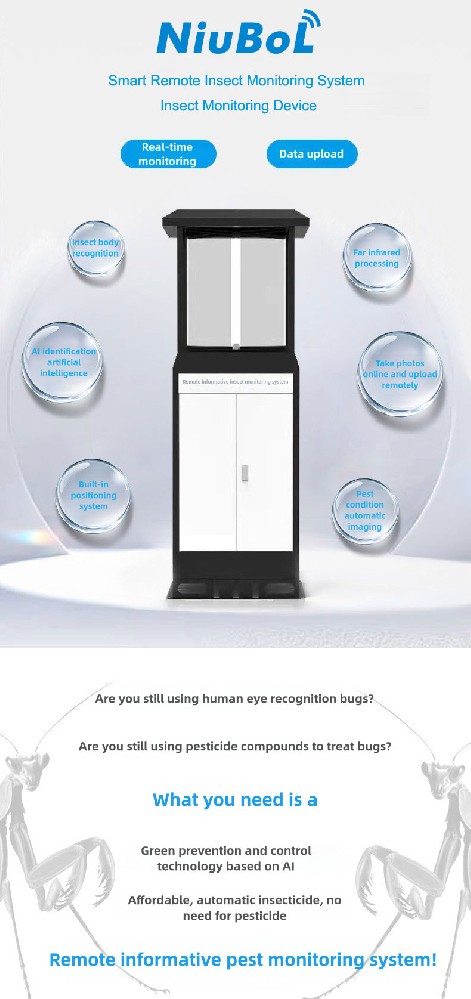
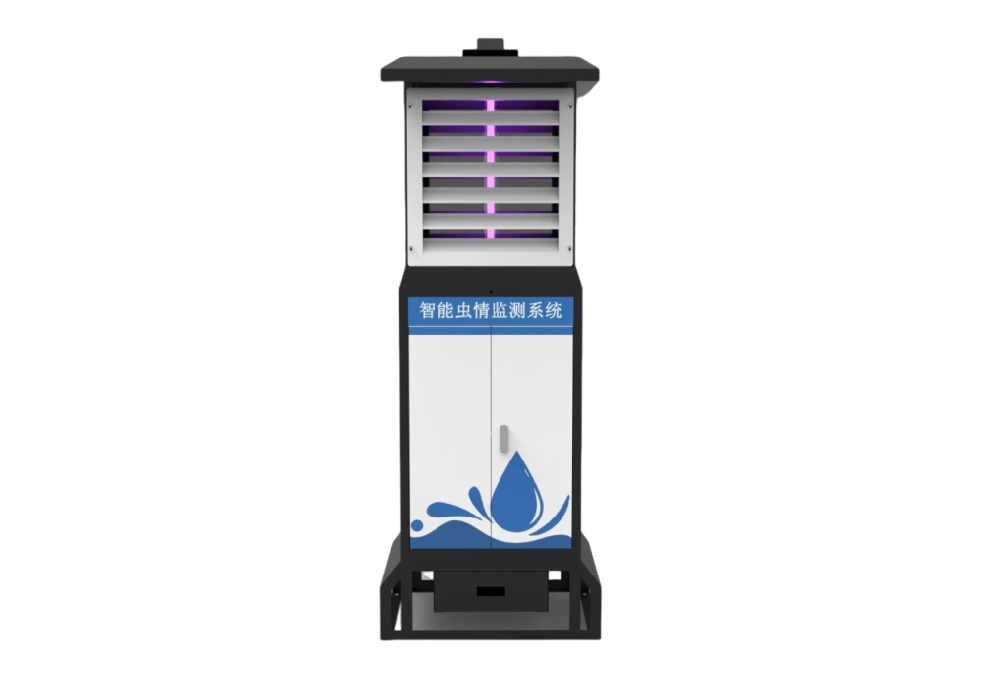
The NiuBoL insect forecasting lamp adopts an overall stainless steel structure, divided into upper, middle, and lower parts, corrosion-resistant, wind-resistant and rain-resistant, suitable for long-term outdoor deployment.
The upper trapping device consists of a central LED insect-attracting tube (main wavelength 365-395nm), four radial 5mm transparent glass impact screens, and a lower insect collection funnel. Insects are attracted by the light source, fly toward the glass screens, and then fall into the middle cabinet through the funnel.
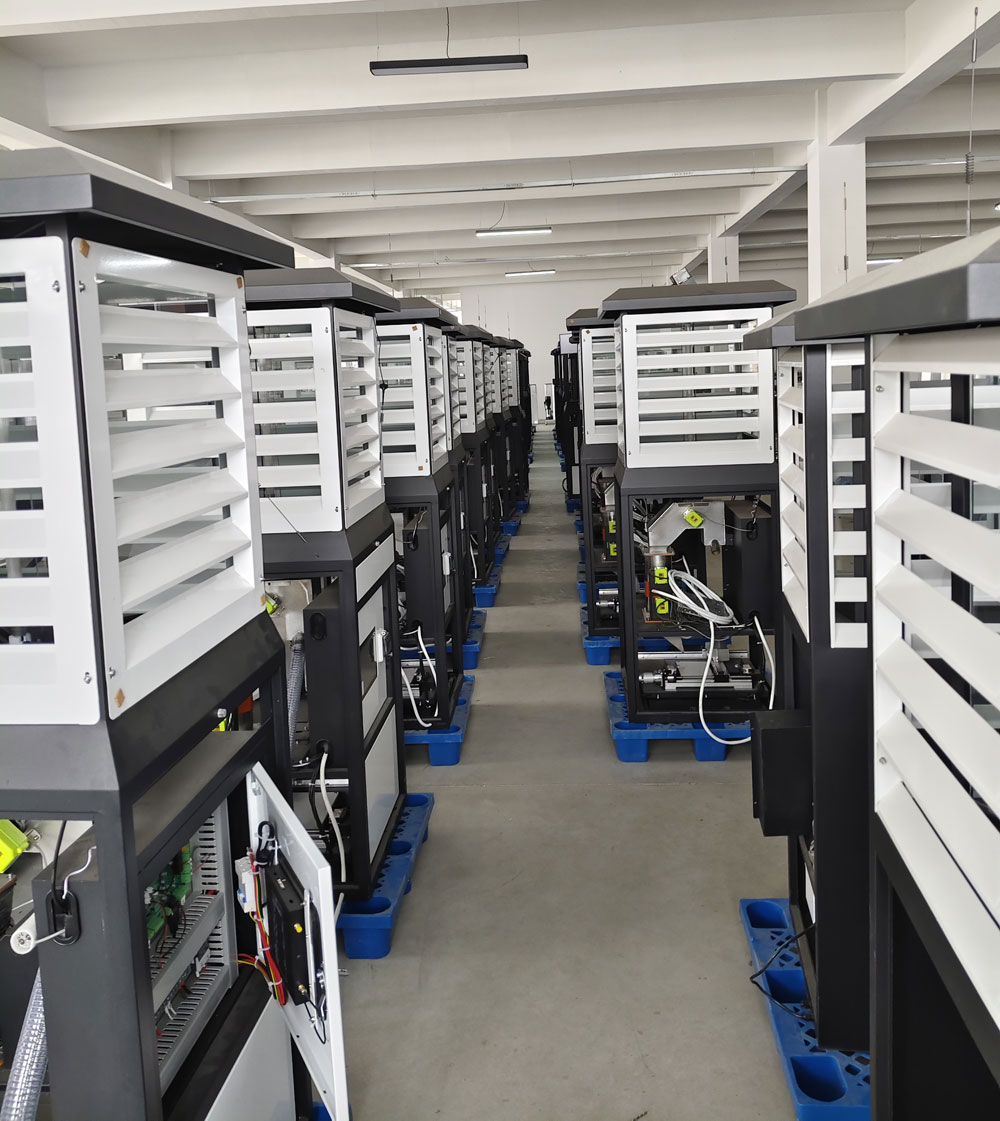
The middle cabinet is the core processing area, equipped with far-infrared treatment chamber, 90℃ baking chamber, vibration device, cleaning device, and industrial-grade camera. After live insects fall in, they sequentially complete lethal treatment, drying, vibration flattening, high-definition photography, and cleaning to fall into the bottom drawer.
The bottom is a pull-out insect collection drawer, convenient for periodic sampling or specimen collection. The entire process is uniformly scheduled by the controller, and the panel has 9 status indicator lights for quick on-site judgment of operating conditions.
This modular and process-oriented structural design not only improves processing efficiency but also facilitates maintenance and upgrades.
The NiuBoL insect forecasting lamp reserves RS485/RS232 interfaces, which can seamlessly connect to weather stations, soil moisture sensors, etc., forming a multi-element environmental monitoring network. Captured data (species, quantity, time distribution) is uploaded to the cloud platform in real time via 4G or Ethernet. Users can remotely view insect situation curves, trend analysis, and occurrence warnings.
In actual projects, this data capability is widely used for:
Regional unified prevention and control: county and city plant protection stations aggregate multi-point data to predict migration paths;
Scientific research specimen collection: dry and intact insect bodies directly used for morphological studies or molecular identification;
Green certification support: providing chemical-free treatment insect situation records to assist organic/green food base certification.
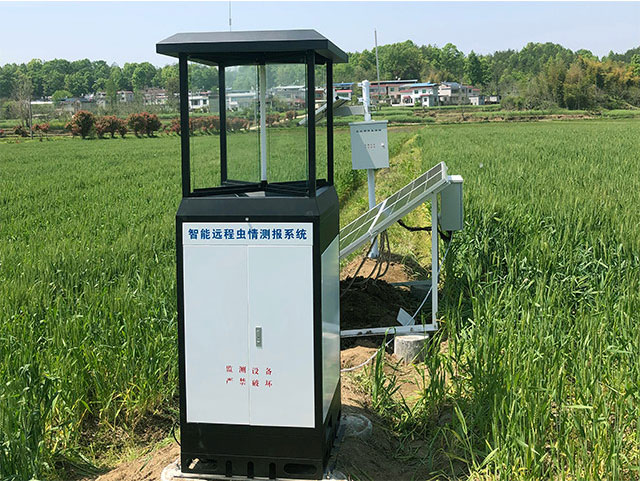
In large rice field bases, NiuBoL insect forecasting lamps are commonly used to monitor boring pests such as Chilo suppressalis and Cnaphalocrocis medinalis. The equipment automatically operates during peak attraction periods, and far-infrared treatment ensures clear and readable data every night. Farmers make precise applications of biological pesticides or release natural enemies based on peak warnings pushed by the platform, significantly reducing pesticide usage.
In southern orchards, for pests such as Carposina sasakii and Grapholita molesta, the lamp height is adjustable to adapt to tree canopy trapping. Intact insect body photos provide high-quality samples for pesticide efficacy trials and resistance monitoring.
In northern corn and cotton producing areas, the equipment helps provide early warnings of cotton bollworm migration peaks, guiding unified prevention and control to avoid large-scale outbreaks.
The common benefits in these scenarios are: earlier monitoring, more accurate decisions, less pesticide use, and more stable ecology.
1. What is the biggest advantage of far-infrared treatment compared to high-voltage grid electrocution?
Far-infrared treatment keeps insect bodies intact, dry, and flat, suitable for AI identification and specimen preservation; high-voltage grids easily cause fragmentation and charring, affecting data quality.
2. Can the equipment still work normally during continuous rainy weather?
The rain control sensor + dedicated drainage channel can effectively isolate rainwater. After the rain stops, it automatically resumes judgment to ensure equipment safety.
3. Can working time periods be customized?
Yes, up to 4 independent periods can be set. Users can flexibly adjust through the platform to adapt to different pest activity patterns.
4. What is the wavelength of the insect-attracting light source? Why choose this range?
Main wavelength 365-395nm LED tube. This band has the strongest phototaxis for most agricultural pests, with high trapping efficiency.
5. How are insect bodies handled after photography?
Vibration flattening → high-definition photography → automatic cleaning and falling into the bottom drawer, convenient for periodic cleaning or sampling.
6. What remote transmission methods does the equipment support?
Supports 4G and Ethernet, with reserved RS485/RS232 interfaces for connection to weather and other systems.
7. What crops and pests is it suitable for?
Widely suitable for rice, corn, fruit trees, vegetables, cotton, etc., targeting various common pests such as Lepidoptera and Coleoptera.
8. How often is maintenance required?
Depending on pest density, generally clean the insect collection drawer every 7-15 days. Solar-powered versions require even less maintenance.

With far-infrared intact treatment as the core, combined with intelligent light/time/rain control, LED precise insect attraction, and IoT data transmission, the NiuBoL insect forecasting lamp builds an efficient, reliable, and green insect situation monitoring system. It transforms pest dynamics from “vague perception” to “clear data” and shifts control decisions from “experience-based” to “evidence-based,” providing solid technical support for pest and disease control in modern agriculture. In the era of green plant protection and sustainable development, such equipment is becoming the preferred tool for more and more planting bases and plant protection departments, silently guarding the harvest and ecological balance of every season.
 Intelligent Remote Insect Monitoring and Reporting System(Insect Monitoring Device) Data Sheet.pdf
Related recommendations
Sensors & Weather Stations Catalog
Agriculture Sensors and Weather Stations Catalog-NiuBoL.pdf
Weather Stations Catalog-NiuBoL.pdf
Agriculture Sensors Catalog-NiuBoL.pdf
Water Quality Sensor Catalog-NiuBoL.pdf
Related products
 Combined air temperature and relative humidity sensor
 TDR Soil Moisture & Temperature Sensor for irrigation| RS485 |4-20mA| NBL-S-THR
 Soil pH sensor RS485 soil Testing instrument soil ph meter for agriculture |NBL-S-PH
 Wind Speed sensor Output Modbus/RS485/Analog/0-5V/4-20mA
 Tipping bucket rain gauge for weather monitoring auto rainfall sensor RS485/Outdoor/stainless steel
 Pyranometer Solar Radiation Sensor 4-20mA/RS485

Screenshot, WhatsApp to identify the QR code
WhatsApp number:+8615367865107
(Click on WhatsApp to copy and add friends)

