





— Blogs —
—Products—
 Consumer hotline +8618073152920
 WhatsApp:+8615367865107
Address:Room 102, District D, Houhu Industrial Park, Yuelu District, Changsha City, Hunan Province, China
Product knowledge
Time:2026-02-15 10:14:09 Popularity:615
In agricultural planting, pests are often key factors affecting yield and quality. Traditional methods rely on manual patrols and experience-based judgment, easily leading to improper timing of control: early intervention wastes resources, while delays cause yield reduction. More seriously, excessive use of chemical pesticides not only increases costs but may also damage soil and ecosystems. Facing these challenges, NiuBoL’s intelligent remote pest forecasting system combined with air-suction solar insect killer lamp emerges as an efficient, environmentally friendly alternative. This innovative technology achieves precision control through data-driven monitoring and physical extermination, safeguarding farmland abundance and sustainability.
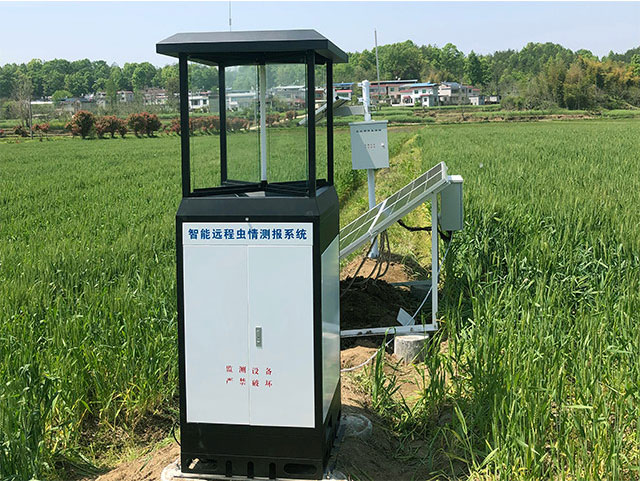
NiuBoL intelligent remote pest forecasting system is an advanced tool integrating light, electricity, numerical control, and IoT technologies, specifically designed for agricultural pest monitoring. It complies with the national standard GB/T 24689.1-2009 for plant protection machinery pest forecasting lamps, using stainless steel structure for durability and stability. The system reserves 485/232 communication interfaces for easy integration with meteorological systems or other devices to achieve multi-system linkage.
The system is equipped with an automatic insect trapping module that uses specific attractants to directionally lure field pests. These attractants are based on pest biological habits and effectively aggregate common crop pests such as Lepidoptera insects or piercing-sucking pests. Once attracted, the built-in AI pest image data recognition function quickly processes images, identifies species, and counts quantities. This process requires no human intervention, with high accuracy and the ability to distinguish different pest types, avoiding misjudgment.
Through IoT technology, data is transmitted in real time to user terminals. Whether at home or away, growers can view pest dynamics—including occurrence trends and spread paths—via mobile phones or computers. This not only helps formulate timely control strategies but also reduces field patrol frequency, saving labor. Imagine knowing field conditions without going out in rainy or nighttime conditions—this convenience greatly improves agricultural management efficiency.
The system’s high degree of automation is one of its highlights. It can automatically complete trapping, killing, collection, dispensing, and drainage operations. Even without supervision, it handles far-infrared automatic processing of insect bodies to ensure continuous operation. This design is particularly suitable for large-area farmlands or remote regions, reducing operational complexity and maintenance costs. At the same time, the system reduces pesticide abuse risk from the source, promoting ecological balance and helping users shift to greener planting practices.
In practical applications, this system has been widely used in agriculture, forestry, and horticulture. For example, in vegetable or tea planting, it monitors outbreaks of leaf rollers or aphids, issuing early warnings to avoid economic losses.
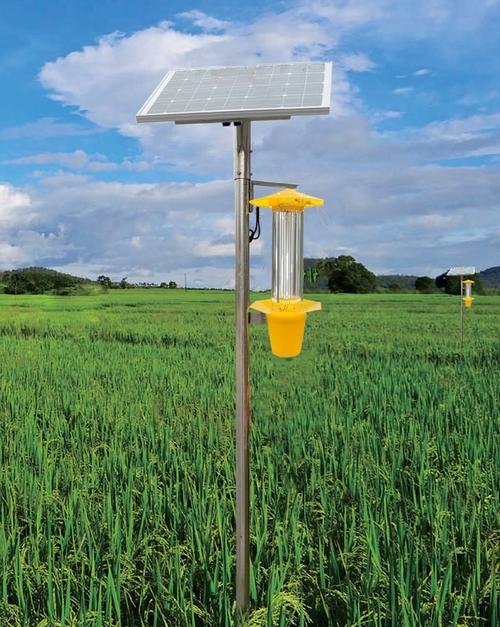
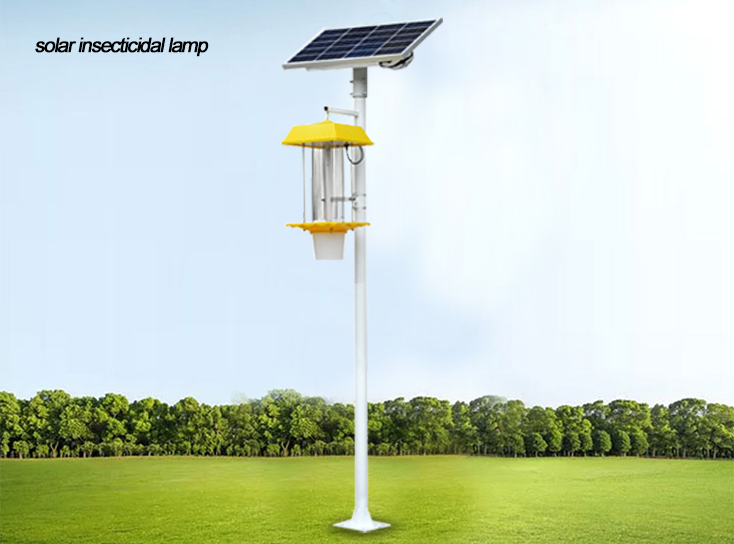
As the “executor” of pest control, the air-suction solar insect killer lamp exterminates pests physically, complying with GB/T 24689.2-2017 plant protection machinery insect killer lamp standard. It uses long ultraviolet light based on pests’ phototaxis and wave tropism to precisely attract targets, then kills them via high-voltage grid or fan. This method avoids chemical residues and maintains biological chain balance.
The lamp uses solar panels for power, storing energy via monocrystalline silicon panels (power ≥40 WP, conversion efficiency ≥21%) during the day and automatically supplying power at night. Built-in lithium battery capacity is 12 Ah, DC 12.8 V, with overcharge, over-discharge, and short-circuit protection for stable operation. Lamp tubes use 365 nm and 395 nm LED tubes, power ≥3 W, startup time ≤5 s, attracting light source covering 320 nm–680 nm range to attract various pests.
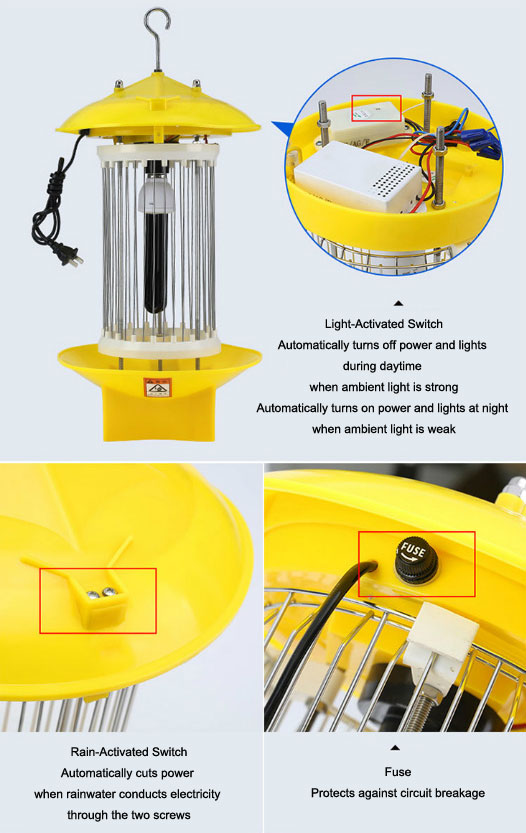
Intelligent control is the core, including light control (automatic on/off based on day/night), time control (multiple time modes configurable, e.g., 8 segments adjusted per pest habits), rain control (protection mode when humidity >95% RH), and temperature control (hibernation when temperature<5±2°C). These functions optimize energy consumption and avoid ineffective operation. The fan uses spiral design, power 20 W/12 V, speed 2200 rpm, generating negative pressure airflow to suck pests into the collection box for air-drying and dehydration.
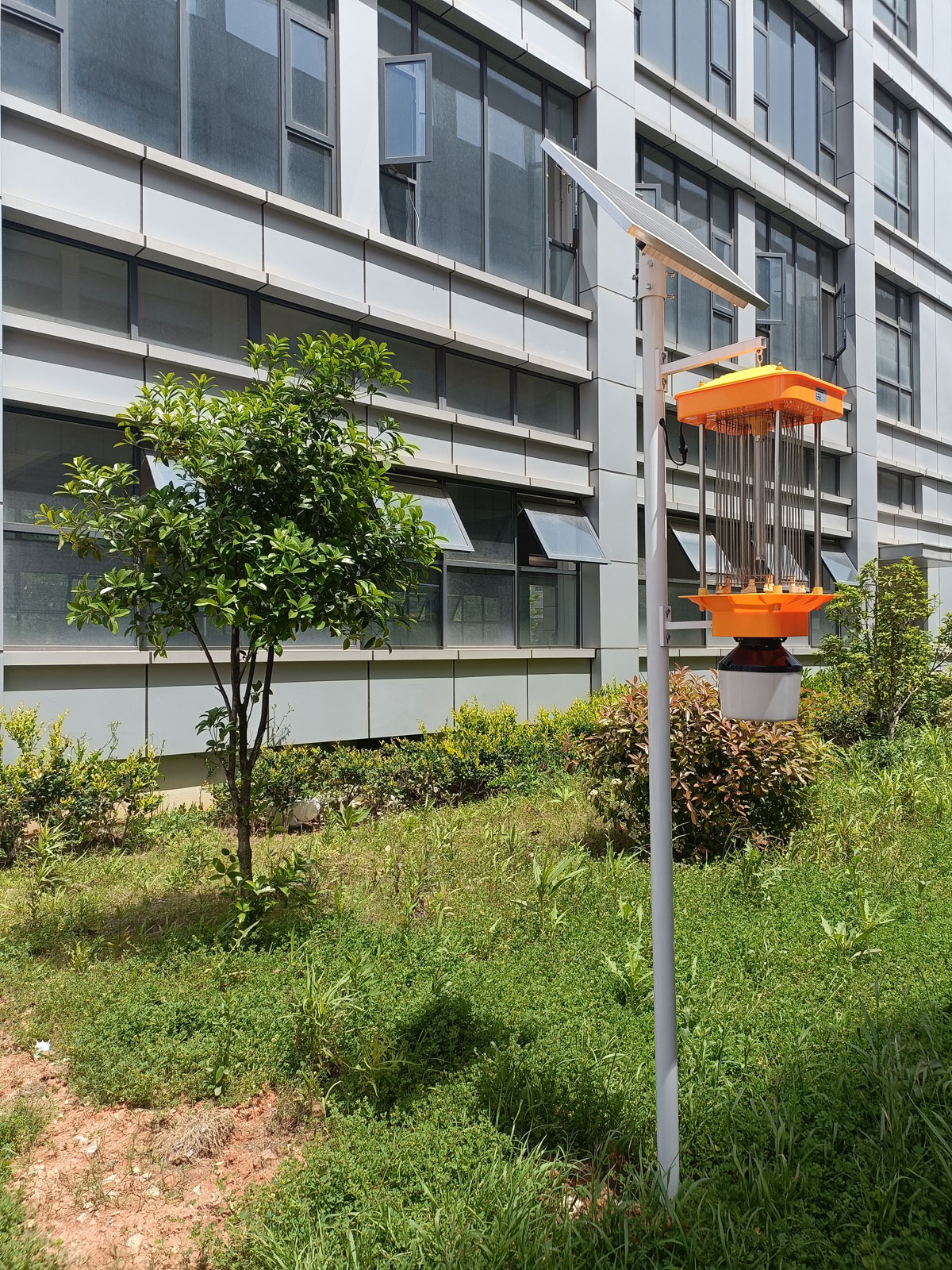
The lamp pole uses 60 mm diameter galvanized pipe, wall thickness 2.0 mm, total height 3 m, protection rating IP65 for outdoor durability. The collection box is plastic rotary type, easy to clean. Maintenance cost is low, requiring only periodic removal of insect corpses and dust. Control area reaches 50–60 mu; scientific placement based on pest density can build full-domain protection network.
Compared with other extermination methods, this lamp kills a wide range of species with broad coverage and is safe and environmentally friendly. It is particularly effective against small-bodied pests, breaking through limitations of traditional lamps. In fish ponds or orchards, it reduces Lepidoptera pest damage to crops while protecting beneficial insects such as natural enemies, forming a “physical + biological” dual extermination effect.
The combination of NiuBoL intelligent forecasting system and insect killer lamp is not simple superposition but forms a “monitoring-warning-control” closed loop. The forecasting system provides real-time data and analyzes pest trends; the insect killer lamp activates precisely based on data to target high-density areas. This synergistic logic ensures precise control and avoids pesticide waste. For example, when the system detects rising pest base numbers, the lamp can automatically extend operating hours to quickly reduce pest populations.
In practice, this 1+1>2 efficiency significantly lowers planting costs. In traditional methods, manual patrols and spraying may account for over 20% of total expenditure, while intelligent solutions can reduce this by more than half. At the same time, it improves control efficiency, helping users shift from experience-dependent to data-driven management.
This combined solution is applicable to various fields including agriculture, forestry, animal husbandry, vegetables, tobacco, tea, medicinal herbs, gardens, orchards, and urban greening. Whether large-scale farms or small family plantings, all can benefit. In quarantine or research institutions, it can also be used for pest forecasting and specimen collection, providing valuable data support.
Benefits extend beyond economics. It promotes sustainable agricultural development, reduces chemical pesticide pollution to soil and water sources, and protects biodiversity. User feedback shows stable yield improvement and faster ecological recovery after use. This is not only technological progress but also a manifestation of agriculture’s green transformation.
For clarity, key parameters are briefly listed below:
Forecasting System: Stainless steel structure, photoelectric numerical control technology, IoT transmission, reserved 485/232 interfaces. Automatic insect body processing, suitable for all-weather monitoring.
Insect Killer Lamp: Solar powered, lithium battery 12 Ah, lamp tube power ≥3 W, fan 20 W/12 V. Control area 50–60 mu, lamp tube lifespan 6000 hours.
These parameters ensure reliable operation in various environments; users can adjust configurations based on specific needs.

1. How does the NiuBoL system achieve remote monitoring?
Through IoT technology, the system transmits AI-recognized data in real time to user devices, supporting viewing on mobile phones or computers without on-site operation.
2. Does the insect killer lamp affect beneficial insects?
Design considers pest habits; operating periods avoid peak activity times of beneficial insects (e.g., automatic shutdown after 6 hours), protecting natural enemies and maintaining ecological balance.
3. Does installation require professional skills?
Structure is simple; lamp pole fixed installation can be completed by users themselves. Detailed instructions are provided, and maintenance requires only periodic cleaning.
4. Which crops is the system suitable for?
Widely applicable to vegetables, tea, orchards, etc., with significant effect against Lepidoptera and piercing-sucking pests.
5. How does the equipment work in rainy or low-temperature conditions?
Rain control and temperature control functions automatically protect: enters hibernation when humidity >95% RH or temperature<5°C to avoid damage.
6. How does the cost compare with traditional pesticides?
After initial investment, maintenance cost is low, pesticide expenditure reduced; long-term view is more economical.
7. How is data accuracy ensured?
AI recognition is trained on large image datasets combined with trapping factors to ensure precise species and quantity statistics.
8. Does it support extension to other systems?
Yes, reserved interfaces can connect to meteorological systems for more comprehensive environmental monitoring.
The innovative combination of NiuBoL intelligent remote pest forecasting system and air-suction solar insect killer lamp is quietly changing the landscape of agricultural pest control. From precise monitoring to targeted extermination, this solution not only improves efficiency and yield but also promotes green agricultural practices. Facing climate change and resource pressure, adopting such intelligent tools enables growers to achieve abundant harvests without worry while contributing to ecological protection. In the future, with technological iteration, this field will see more possibilities, making agricultural production smarter and more sustainable.
Prev:Agricultural Four-Condition Monitoring System: Core Role in Smart Agriculture
Next:Insect Forecasting Lamp: One of the Core Tools for Precise Monitoring of Agricultural Pest Control
Related recommendations
Sensors & Weather Stations Catalog
 Agriculture Sensors and Weather Stations Catalog-NiuBoL.pdf
Weather Stations Catalog-NiuBoL.pdf
Agriculture Sensors Catalog-NiuBoL.pdf
Water Quality Sensor Catalog-NiuBoL.pdf
Related products
 Combined air temperature and relative humidity sensor
 TDR Soil Moisture & Temperature Sensor for irrigation| RS485 |4-20mA| NBL-S-THR
 Soil pH sensor RS485 soil Testing instrument soil ph meter for agriculture |NBL-S-PH
 Wind Speed sensor Output Modbus/RS485/Analog/0-5V/4-20mA
 Tipping bucket rain gauge for weather monitoring auto rainfall sensor RS485/Outdoor/stainless steel
 Pyranometer Solar Radiation Sensor 4-20mA/RS485

Screenshot, WhatsApp to identify the QR code
WhatsApp number:+8615367865107
(Click on WhatsApp to copy and add friends)

