





— Blogs —
—Products—
 Consumer hotline +8618073152920
WhatsApp:+8615367865107
Address:Room 102, District D, Houhu Industrial Park, Yuelu District, Changsha City, Hunan Province, China
Product knowledge
Time:2026-02-16 11:19:24 Popularity:822
Solar insect lamps in vineyards should be evaluated against the target pest and the condition of the crop, not the total number of insects in a collection box. A lamp may attract adults without establishing that larval damage or harvest loss has fallen. For a NiuBoL vineyard proposal, use a local pilot to check target capture, non-target effects, dependable operation and repeatable fruit or foliage inspections before expanding the installation.

Vineyard pests differ in activity, life stage and response to a light source. An adult attracted to the lamp is not the same observation as a larva feeding inside a cluster. Establish the locally important pest with a qualified adviser and determine which stage the equipment is intended to affect or observe.
UC IPM guidance for monitoring vineyard caterpillars uses direct foliage and cluster inspections at relevant growth stages. It distinguishes feeding injury from adult activity. Its regional pest guidance is not a validation of a particular lamp, but it illustrates why a vineyard equipment trial needs crop observations as well as catches.
Do not group all moths, beetles and other flying insects into a single target count. A high catch can consist largely of non-target organisms. Conversely, a damaging pest that responds poorly to the selected light may remain important even when the collection box looks busy.
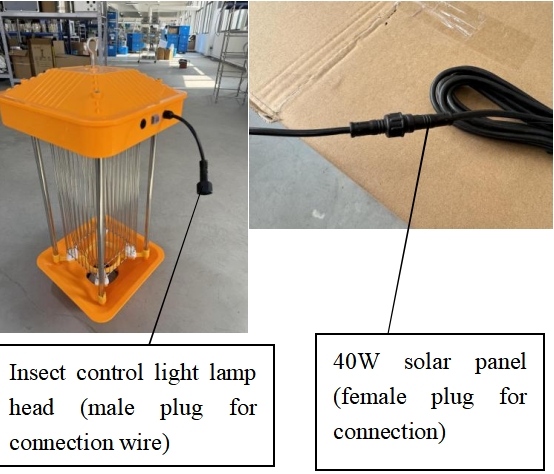
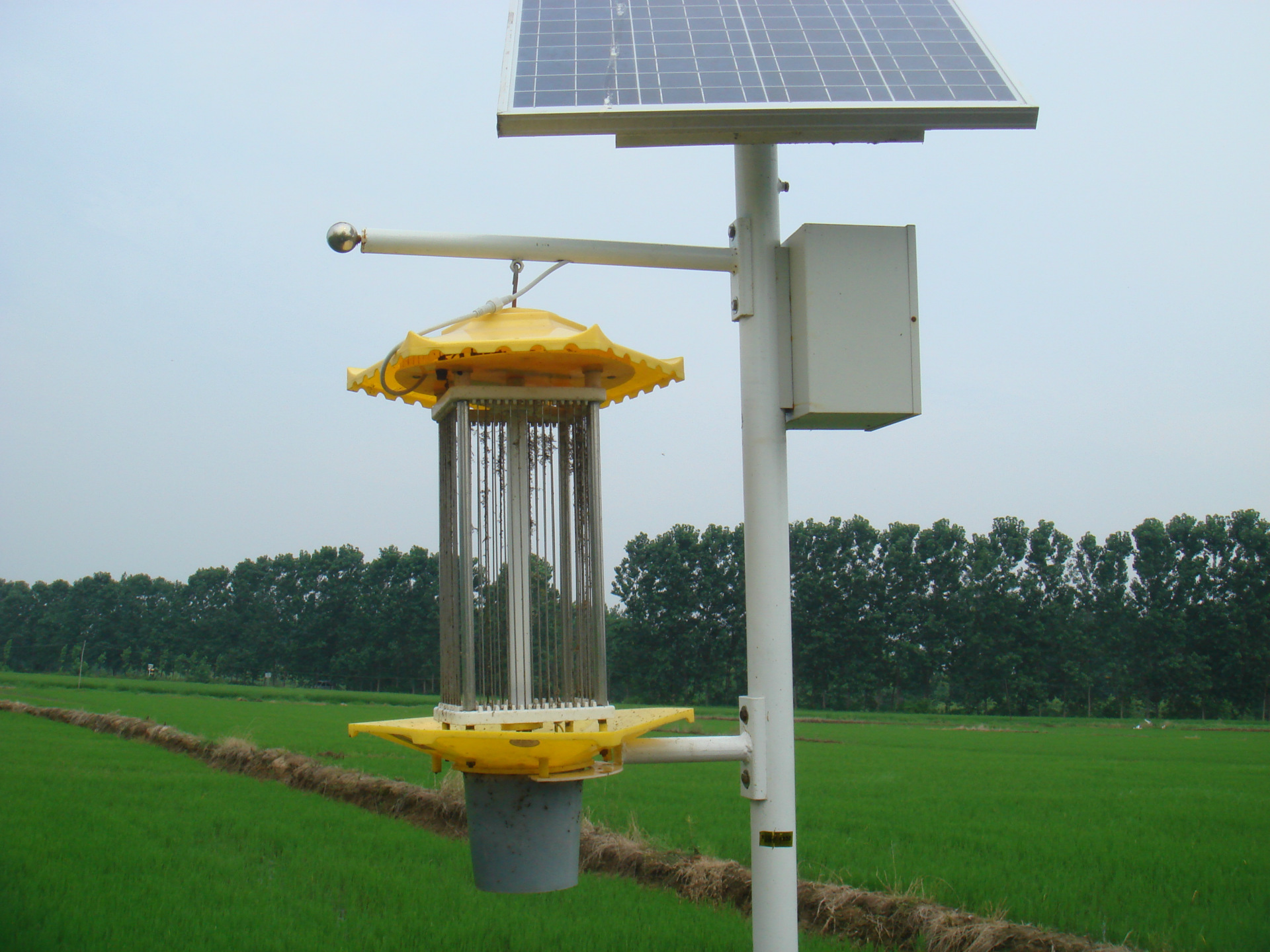
The NiuBoL frequency-vibration solar insect trap attracts responsive insects and uses an electric grid. It is different from a pheromone-specific monitoring trap or a cabinet that prepares insect images for review. A grower may need more than one observation method, but their counts should not be treated as directly interchangeable.
Nor does a lamp diagnose grape disease or control an organism simply because its name appears in a general pest list. Where fruit damage has several possible causes, retain diagnostic field checks. A physical insect-control device does not establish organic certification, residue compliance or a guaranteed reduction in spray applications.
| Configuration item | Relevant value or feature | Vineyard decision |
|---|---|---|
| Attracting source | Specified wavelength family 320-680 nm; lamp source up to 20 W | Confirm the offered source and response of the local target |
| Capture mechanism | High-voltage electric grid | Plan safe placement and access; not equivalent to a suction or pheromone trap |
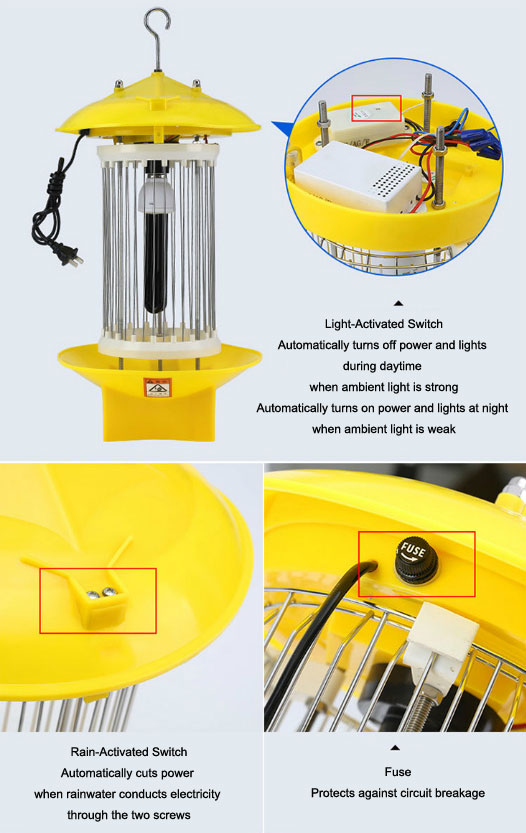
| Control functions | Light, time and rain protection | Test actual enabled periods during the target season |
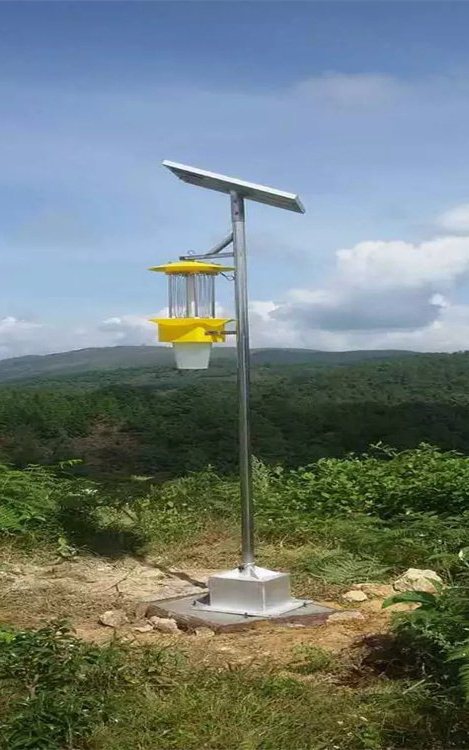
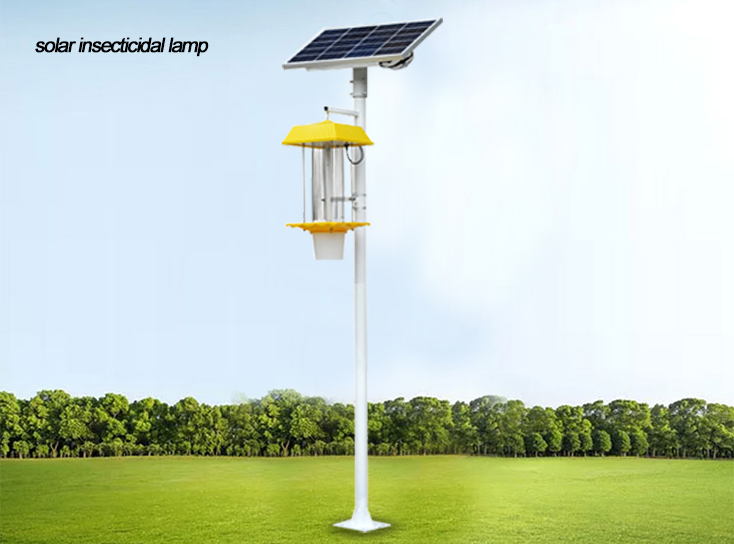
| Reference solar configuration | At least 40 Wp panel; 12.8 V, 12 Ah battery | Assess seasonal shading and load rather than promising uniform endurance |
| Protection | IP65 | Check installed connections and service access; not immunity to every weather condition |
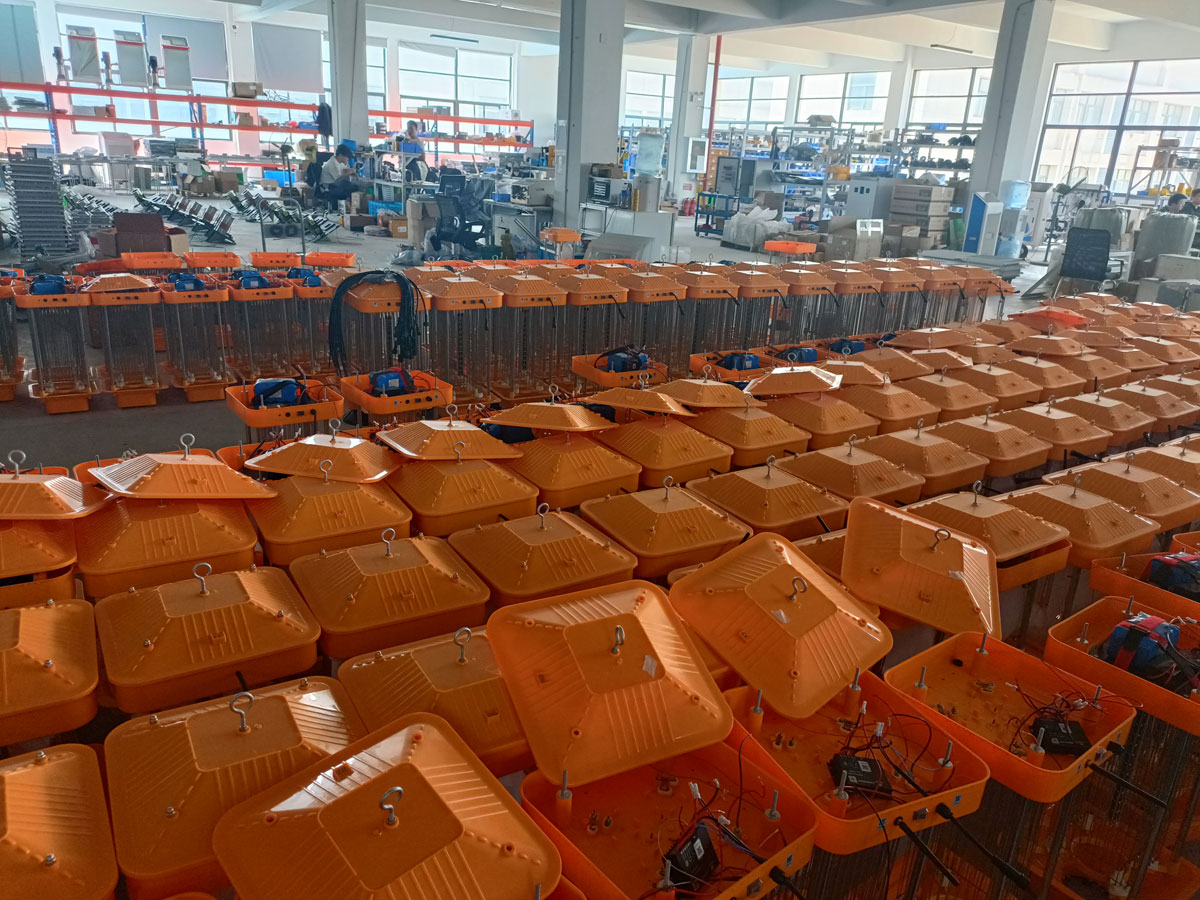
These are equipment characteristics, not biological performance results. Illustrated lamp variants may have different collection or electrical arrangements; identify the offered version on the quotation. Do not use a housing photograph to assign a fixed effective area, a target-species guarantee or a remote counting function.
A stand-alone lamp's control functions also do not imply RS485 Modbus RTU or an image-reporting service. If the vineyard needs remote operating records, specify the controller and data destination separately and request an actual demonstration. Electrical operation and crop protection require different acceptance evidence.
Select trial and comparison areas that are reasonably comparable in cultivar, crop stage, canopy and pest history. Document other interventions and relevant weather. Where feasible, use replication and a design reviewed by the responsible crop adviser, rather than comparing one convenient lamp position with a visibly different block.
Keep observation methods and sampling effort consistent. A reduction in catch after a rainy night could reflect reduced flight, protective shutdown or a blocked collection path. It cannot automatically be credited to pest suppression. Record enabled hours and maintenance alongside the catch observations.
A lamp may influence adjacent areas, so trial independence also needs attention. Do not place a nominal comparison row next to a light and assume it is unaffected. The suitable arrangement depends on the pest and site; a universal spacing rule cannot substitute for the trial design.
Record what was examined, not only the number of damaged clusters. In a hypothetical inspection, 4 damaged clusters among 200 examined is 2%. In another area, 2 damaged clusters among 50 examined is 4%. Comparing only four against two would reverse the impression. This is an arithmetic example, not a NiuBoL field result or an action threshold.
Use a sampling method appropriate to the locally identified pest and record uncertainty. Small samples, uneven distribution and different crop stages can make apparent differences unreliable. Distinguish existing injury from new injury where the assessment requires it, and retain the inspection dates and locations.
Follow relevant crop outcomes through the agreed period. Catch totals, damaged-cluster proportion and marketable harvest are different endpoints. Sugar content, fruit weight and selling price also depend on many factors. Do not attribute changes in those measures to the lamp without a suitable comparison and supporting evidence.
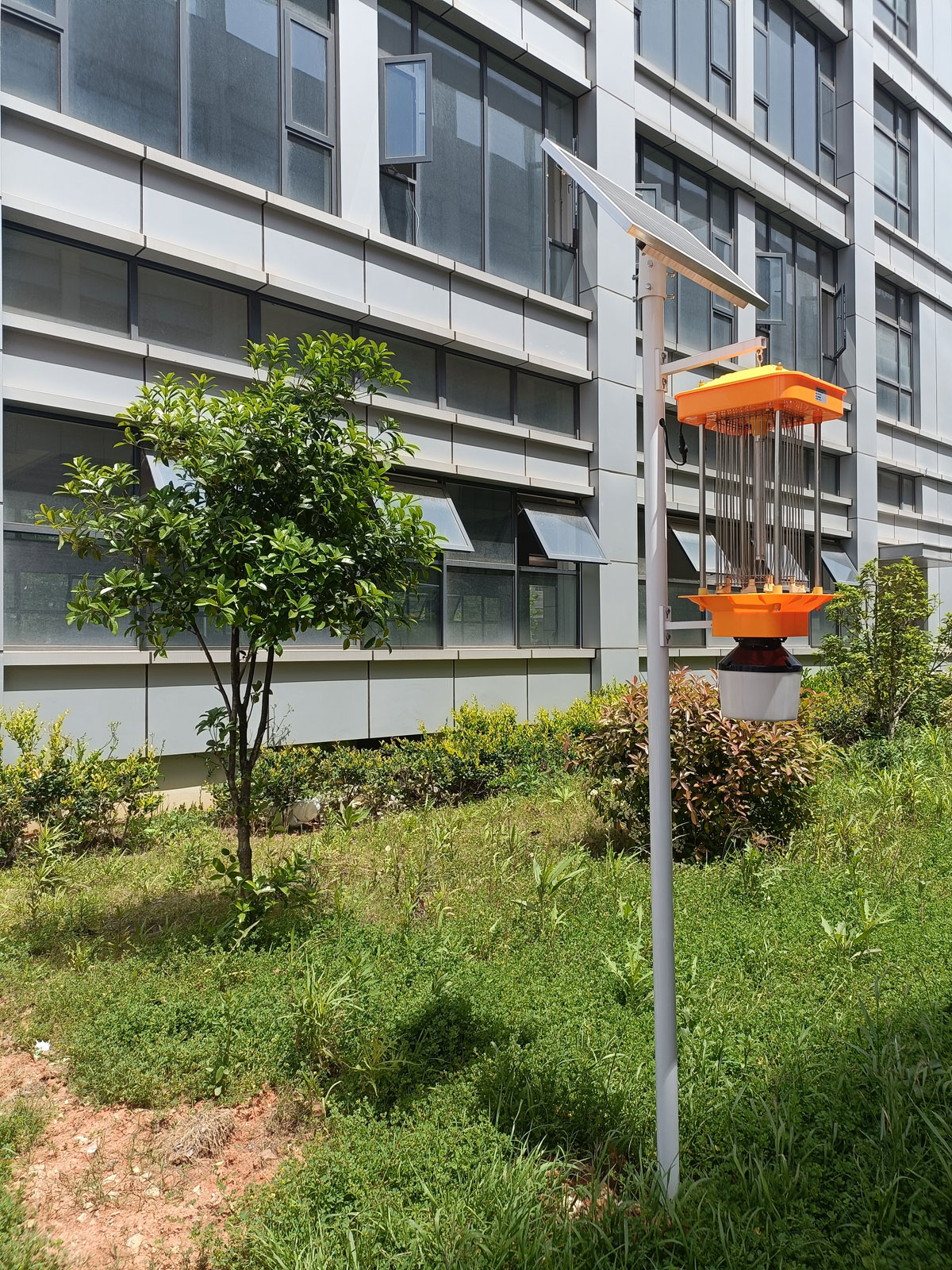
Time control can restrict when the source operates, but nighttime operation does not make a light selective for pests. Review collected organisms and the surrounding habitat. If non-target capture is unacceptable, reconsider the operating period, placement or method with the responsible adviser rather than claiming that all beneficial insects are protected.
Keep the installation clear of routine worker contact and machinery routes, with safe access for the collection container, panel and electrical components. Trellis growth can obscure the source and shade the panel as the season progresses. Recheck both the capture environment and power exposure after canopy development.
Use the manufacturer's electrical isolation and discharge procedure before service. Do not infer touch safety from a current-limiting specification. Collected insects should not automatically enter poultry or aquaculture feed: pesticide exposure, contamination and applicable feed requirements need a separate assessment.
Agree the pilot's decision criteria before seeing the results. These may include reliable operating hours, confirmed target capture, acceptable non-target impact and a defensible crop-outcome comparison. Keep technical faults separate from biological performance so an ineffective trial is not explained away solely by changing the equipment count.
For a NiuBoL enquiry, provide the vineyard layout, target pest, crop stage, canopy, competing lights and proposed assessment method. Identify power and service access and whether operating records are needed. Request the exact lamp configuration and written service terms; do not infer warranty periods, fixed area coverage or a financial return from a generic application description.
No. Identify the target organisms and compare relevant crop injury using a consistent method. Catch can change with weather, operating time and non-target activity.
Not automatically. The attraction method and organisms sampled differ. Choose the method required by the local pest programme and avoid transferring thresholds between trap types.
Determine layout from the target, canopy, terrain and trial results. A general product area estimate is not a guaranteed biological-control radius for every vineyard.
That cannot be assumed. Inspect non-target catches and review the proposed operating period and position against the site's ecological requirements.
Do not assume they are suitable. Exposure history, contamination and applicable feed requirements need separate review; capture by a physical device is not a feed-safety assessment.
Include configuration, location, operating periods, target and non-target observations, crop samples with denominators, comparison design and other interventions. Separate equipment uptime from crop efficacy.
Solar insect lamps in vineyards need a crop-specific evaluation. NiuBoL equipment can be assessed for the selected duty and capture method, while a well-designed local trial establishes whether the installation adds useful control value without unacceptable non-target effects. Expand on evidence, not a full collection box alone.
Prev:Solar Insect Killer Lamp Power Budget: Panel, Battery and Run Time
Next:Soil Moisture Monitoring Applications: Match Readings to Decisions
Related recommendations
Sensors & Weather Stations Catalog
 Agriculture Sensors and Weather Stations Catalog-NiuBoL.pdf
Weather Stations Catalog-NiuBoL.pdf
Agriculture Sensors Catalog-NiuBoL.pdf
Water Quality Sensor Catalog-NiuBoL.pdf
Related products
 Combined air temperature and relative humidity sensor
 TDR Soil Moisture & Temperature Sensor for irrigation| RS485 |4-20mA| NBL-S-THR
 Soil pH sensor RS485 soil Testing instrument soil ph meter for agriculture |NBL-S-PH
 Wind Speed sensor Output Modbus/RS485/Analog/0-5V/4-20mA
 Tipping bucket rain gauge for weather monitoring auto rainfall sensor RS485/Outdoor/stainless steel
 Pyranometer Solar Radiation Sensor 4-20mA/RS485


Screenshot, WhatsApp to identify the QR code
WhatsApp number:+8615367865107
(Click on WhatsApp to copy and add friends)

