





— Blogs —
—Products—
 Consumer hotline +8618073152920
WhatsApp:+8615367865107
Address:Room 102, District D, Houhu Industrial Park, Yuelu District, Changsha City, Hunan Province, China
Product knowledge
Time:2026-01-05 09:25:25 Popularity:858
Soil sampling for nutrient testing determines what a result can represent. A portable analyzer may repeat a reading consistently, yet the fertilizer recommendation can still be wrong if the sample combines different soil types or contains material from a fertilizer band. For agricultural service teams, the first purchasing decision is therefore the sampling and test workflow, followed by the instrument capacity needed to handle it.

A pre-season fertility assessment, an investigation of poor growth and an in-season nitrogen test are not interchangeable jobs. A fertility assessment needs representative samples from defined management areas. A poor-growth investigation needs separate samples from affected and normal areas. An in-season test needs the timing, depth and handling required by that particular agronomic method.
Write the intended analysis on the field sheet before collecting soil: for example, available phosphorus, available potassium or nitrate nitrogen. Total nutrient content is not the same as an extractable fraction. Even two tests described as available phosphorus may use different extraction procedures and interpretation scales. The test method and the local fertilizer recommendation system must be compatible.
For repeated surveys, retain the field boundaries, sampling depth, time of year and management history. A higher reading after fertilization is not evidence of instrument drift by itself. Without those records, a service team may spend time recalibrating the analyzer when it has actually sampled a different part of the field or a different nutrient pool.
Use soil type, slope, drainage, previous fertilizer treatment and crop performance to divide management areas. Do not combine a poorly drained corner with an otherwise uniform block merely because both share a field name. Conversely, a small unusual patch should not dominate the routine sample. Test it separately when it is important to the customer's decision.
A zigzag or diagonal route can distribute sampling points across a reasonably uniform area. It does not correct an unsuitable boundary. Recent manure piles, gateways and localized fertilizer spills need separate treatment rather than being included accidentally. Where fertilizer was banded, follow a method that accounts for the band position instead of always sampling either the enriched band or the space between bands.
The University of Maryland nutrient-management sampling procedure uses multiple cores collected in a clean container to form a representative sample. Its guidance includes 15-20 subsamples. Treat this as an example within a defined sampling program, not a universal number for every crop, field size or test.
Depth is part of the analytical result. A shallow sample can contain a different concentration of accumulated phosphorus or organic matter than a deeper sample. Select the depth required by the intended recommendation method, mark it on the sampling tool and use the same reference surface throughout the management area. Remove loose surface debris without arbitrarily removing mineral soil.
Take comparable core volumes at each selected location. A large scoop from one point mixed with tiny scoops from the others changes the weighting. Break down and mix the composite as required by the preparation method, then take the retained portion from that mixture. Do not simply fill the sample bag from the first convenient section of the bucket.
| Field situation | Sampling decision |
|---|---|
| Routine assessment before fertilizer application | Sample each management area consistently, using the depth and preparation required by the chosen fertility method. |
| Banded fertilizer or localized fertigation | Define positions relative to the band or emitter. Keep that approach consistent between surveys. |
| Uneven crop growth | Keep affected and comparison areas separate. Record drainage, rooting and recent treatment differences. |
| Intercropped field | Sample the crop strip being evaluated when management differs between strips; do not dilute it with unrelated strips. |
| Mobile nitrogen assessment | Use the specified depth, timing and preservation procedure. Do not apply a routine dry-soil workflow automatically. |
Do not pour water into the sampling location to make nutrient testing easier. That changes the local solution and may move soluble nutrients. If a separate direct-insertion probe requires a particular moisture condition, treat that as a different measurement procedure and record the preparation. Its reading is not automatically equivalent to a laboratory extraction result.
Label the container before leaving the sampling area. Include a unique sample identifier, location, depth, date and intended test. Record recent irrigation and fertilizer application. Use clean tools and containers compatible with the analytes; equipment suitable for routine nutrient work may not be suitable for trace-metal analysis.
Decide handling before the sampling trip. Some routine fertility workflows accept prepared, air-dried soil; mineral nitrogen work may require prompt cooling, drying or another specified procedure to limit biological changes. The receiving laboratory or validated field method should define which treatment applies. Leaving moist samples in a hot vehicle is not a controlled storage method.
Retain sufficient material for the planned assays, duplicates and any confirmation tests. The required quantity depends on the analytical package. A nominal 0.5 kg bag is not a universal requirement, and a large bag cannot compensate for an unrepresentative composite. Keep the submitted portion traceable to the original management area after preparation.
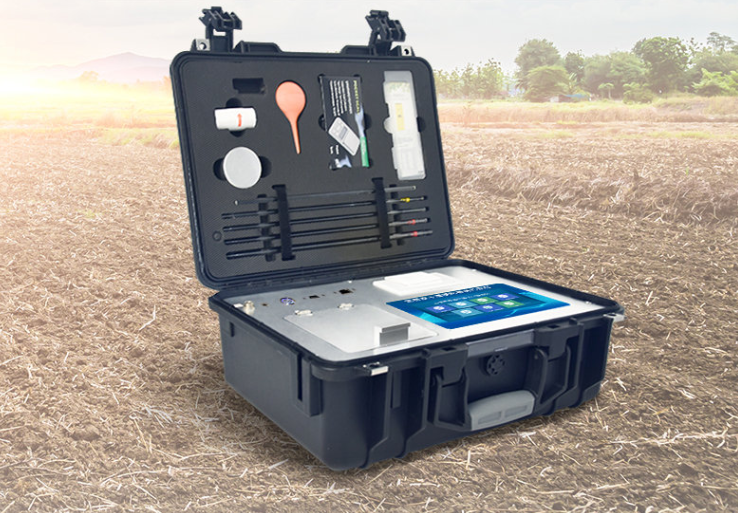
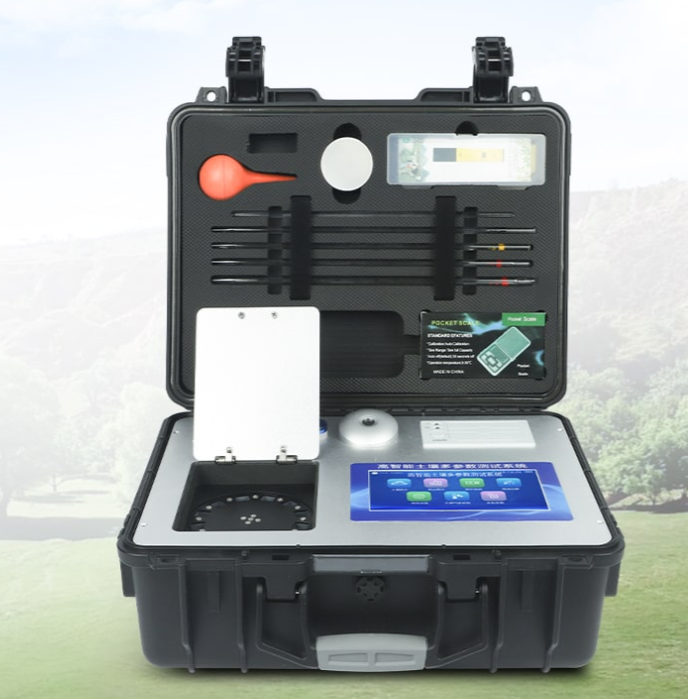
A reagent-based soil nutrient rapid tester analyzes prepared samples. The workflow can include weighing, extraction, filtration or settling, reagent addition, timed color development and optical measurement. It is different from a permanently buried soil sensor transmitting values through RS485. Optical channels should not be described as continuous field NPK monitoring points.
NiuBoL offers GT2, GT5 and GT6 nutrient testing instruments. Choose among them by the required assays, preparation workload and batch organization. Extra measurement positions are useful only when the operator can prepare and time the corresponding samples consistently.
| Instrument | Optical configuration and comparison point |
|---|---|
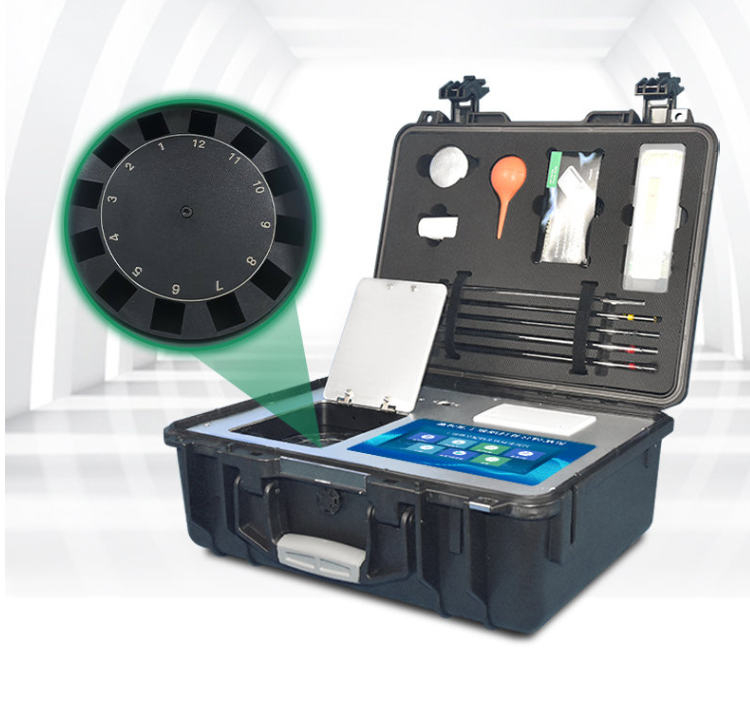
| GT2 | Dual-row 12-channel fixed arrangement. Optical repeatability specification: no more than 0.03% with the specified potassium dichromate solution test. |
| GT5 | 8-channel rotating arrangement. Optical repeatability specification: no more than 0.02% with the specified potassium dichromate solution test. |
| GT6 | 12-channel rotating arrangement. Optical repeatability specification: no more than 0.02% with the specified potassium dichromate solution test. |
| GT6 optical test details | Light sources at 680 +/-2, 420 +/-2, 510 +/-2 and 590 +/-4 nm. |
These optical figures are not whole-method uncertainty for a field nutrient result. They do not include sampling variation, extraction recovery, dilution, reagent condition or operator technique. The required concentration range must be established for each assay and sample matrix; a general numerical display span is not a validated range for every nutrient.
Request the exact reagent package with the analyzer. A menu entry for an analyte does not establish that all reagents, digestion equipment or reference standards are included. For total-element analysis or contamination investigations, specify the required method and reporting purpose first. A screening result should not be presented as a regulatory clearance or a definitive identification of counterfeit fertilizer.
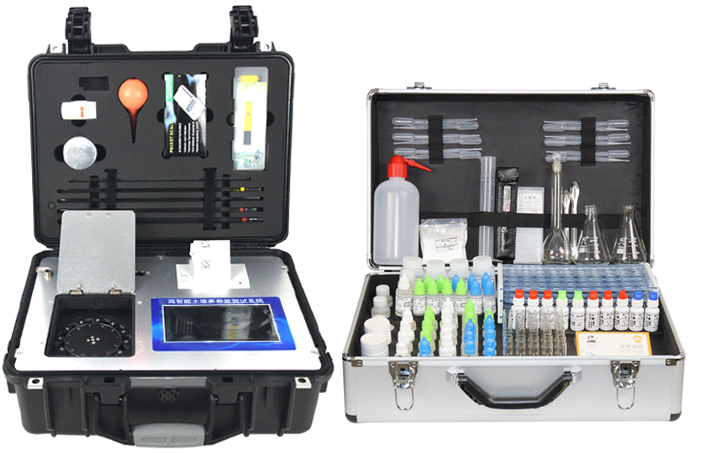
Repeatedly reading the same cuvette tests a different part of the process from preparing a second extraction. For a useful trial, separate these checks: repeated optical readings, independently prepared portions of one mixed sample, and separately collected field composites. If the field composites disagree while repeat readings are stable, changing the instrument's calibration is unlikely to solve the sampling problem.
Include the blank and control material specified by the assay. Check cuvette cleanliness, orientation and liquid level, and observe the reaction time. A cloudy extract can affect an optical reading; use only preparation or correction procedures suitable for that method. Do not invent a dilution or filtration step simply to obtain a plausible number.
Compare a subset of samples with a competent laboratory using the same nutrient fraction and compatible extraction method. Define the comparison criteria before reviewing results. Where methods differ, investigate the reason rather than forcing a numerical match. A local agronomist should review how the result translates into a crop recommendation.
Count completed, usable sample reports rather than advertised channel positions. The daily workload includes travel, collection, preparation, blank and control checks, repeat tests and cleaning. A demonstration with one prepared solution does not establish how many field samples the team can process during a working day.
For a quotation, list expected samples per day, assays per sample, reporting language and destination. Ask for reagent quantities, storage conditions, batch expiry dates and the cost of replacement cuvettes and standards. Battery operation helps field work, but sample preparation still requires a stable work surface, suitable water and controlled timing. Confirm the included power adapter against the local supply.
USB export or an Ethernet connector should not be assumed to provide Modbus RTU, a live API or automatic linkage to a farm platform. Request a sample data file and check that it carries sample identifiers, methods, units and test times. A printed result that cannot be traced to its sampling area has limited value in repeat advisory work.
No. A composite sample is collected and prepared for a defined analytical method. A direct-insertion probe observes a local volume under its operating conditions. Compare their reported nutrient fractions, units and validation results before treating them as substitutes.
No. Depth depends on the crop, tillage, nutrient and recommendation method. Routine fertility and deeper nitrate assessments may require different layers. Preserve the required depth consistently and label layers separately rather than mixing them into one unspecified sample.
No. It can measure the submitted material more consistently, but it cannot reconstruct the nutrient distribution of soil that was not sampled. Separate field variability from preparation and optical repeatability before choosing a more expensive instrument.
Match the recommendation to the assay, local soil interpretation, crop target and nutrient credits from previous applications. A built-in crop calculation is a starting point for review, not a universal prescription across countries, soils and fertilizer products.
Request the model-specific configuration, supported assays, consumable list, reagent transport requirements and a representative exported report. Include a practical training and sample-comparison plan. Confirm that replenishment reagents match the installed method rather than ordering only by instrument name.
Do not assume so. Closed-case protection and operation with open optical cells are different conditions. Keep the measurement area dry and use the specified operating environment. An IP rating describes ingress protection, not shock resistance or chemical resistance.
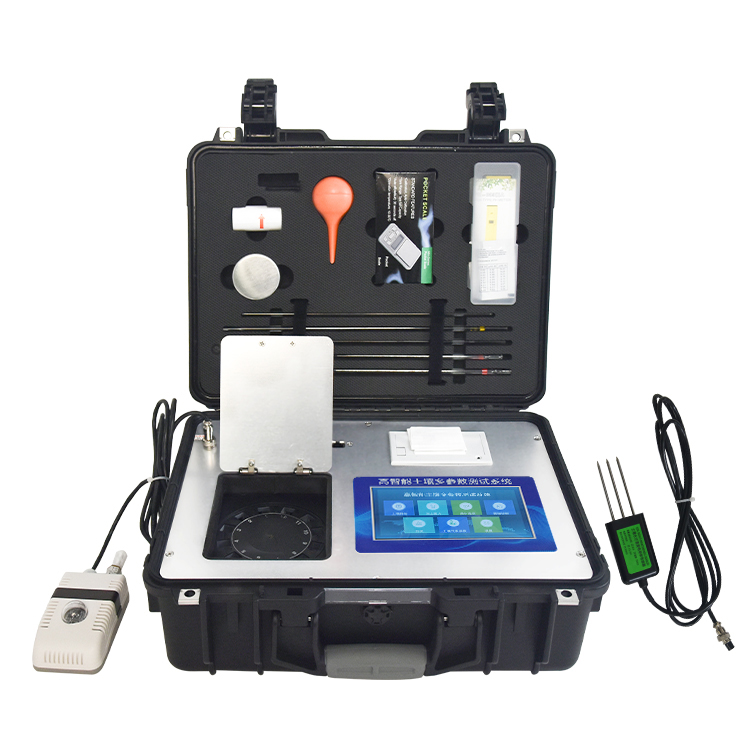
Useful soil sampling for nutrient testing starts with a defined management area, a consistent depth and a compatible analytical method. NiuBoL GT-series instruments can support prepared-sample testing, but the equipment choice should follow the assays and workload. Send the target nutrient fractions, sample types and daily volume when requesting a configuration so that the instrument, consumables and training address the same task.
Prev:Greenhouse Control System Integration: Sensors and Actuator Feedback
Next:How NiuBoL Soil Moisture Tester Reshapes Modern Planting Management Technology
Related recommendations
Sensors & Weather Stations Catalog
 Agriculture Sensors and Weather Stations Catalog-NiuBoL.pdf
Weather Stations Catalog-NiuBoL.pdf
Agriculture Sensors Catalog-NiuBoL.pdf
Water Quality Sensor Catalog-NiuBoL.pdf
Related products
 Combined air temperature and relative humidity sensor
 TDR Soil Moisture & Temperature Sensor for irrigation| RS485 |4-20mA| NBL-S-THR
 Soil pH sensor RS485 soil Testing instrument soil ph meter for agriculture |NBL-S-PH
 Wind Speed sensor Output Modbus/RS485/Analog/0-5V/4-20mA
 Tipping bucket rain gauge for weather monitoring auto rainfall sensor RS485/Outdoor/stainless steel
 Pyranometer Solar Radiation Sensor 4-20mA/RS485


Screenshot, WhatsApp to identify the QR code
WhatsApp number:+8615367865107
(Click on WhatsApp to copy and add friends)

