





— Blogs —
—Products—
 Consumer hotline +8618073152920
WhatsApp:+8615367865107
Address:Room 102, District D, Houhu Industrial Park, Yuelu District, Changsha City, Hunan Province, China
Product knowledge
Time:2025-10-08 16:15:03 Popularity:1138
Quick Answer: Solar insect trap price depends on the capture mechanism, complete power system and installed supply scope. Compare a fan-assisted trap with another fan-assisted configuration, or an electric-grid trap with an equivalent grid configuration. Ask NiuBoL for a dated, model-specific quotation that identifies the battery, panel, pole, accessories and delivery scope. A unit price without those details is not a dependable project budget.
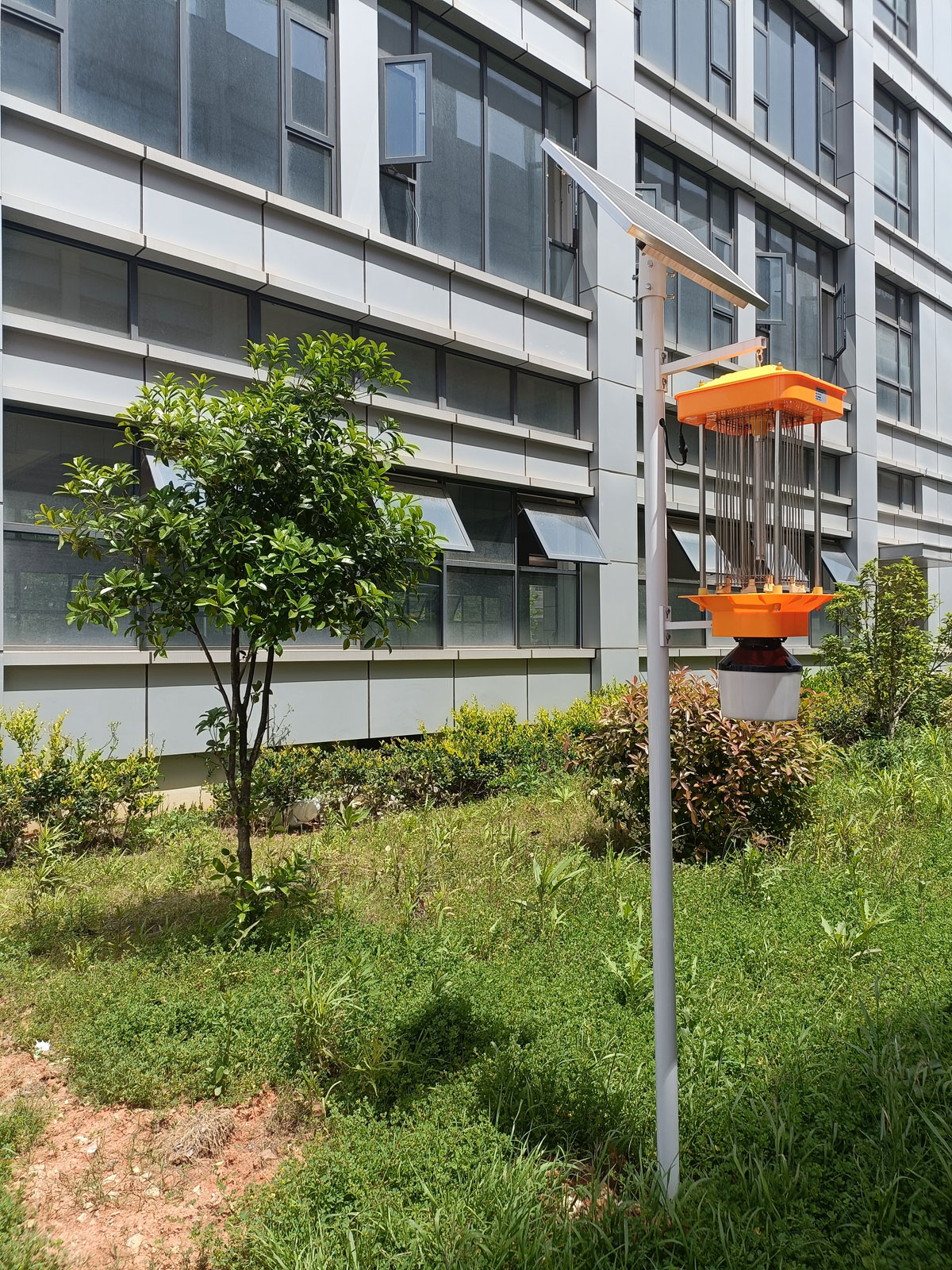
A low figure can describe a lamp head, a complete pole-mounted assembly or equipment delivered to a specified destination. Those are different purchases. Before ranking quotations, put their included items beside each other. Check whether the panel, controller, battery, ground anchor, collector and connecting cables are supplied, and whether site construction is included or remains the contractor's work.
NiuBoL offers frequency-vibration electric-grid traps and wind-suction traps. Both use an attracting light, but the capture components and service tasks differ. Fan-assisted airflow is not wind-turbine generation. Neither product name establishes a camera, automatic insect identification or a cellular connection.
| Quotation line | Specify the included equipment | Cost comparison question |
|---|---|---|
| Trap head | Capture mechanism, light source and collector | Are the mechanism and intended duty equivalent? |
| Solar and storage | Panel Wp, battery voltage and Ah, controller and operating schedule | Does the quoted package cover the same seasonal energy requirement? |
| Structure | Pole, brackets, fasteners and ground anchor | Which foundation and installation items remain outside supply? |
| Service parts | Light sources, collectors, fan or grid components as applicable | Are initial spares included or priced separately? |
| Optional monitoring | Specific status sensors, communications hardware and software service | Is remote functionality demonstrated for this configuration? |
| Delivered scope | Packaging, destination and agreed delivery terms | Are quotations expressed on the same cost basis and currency? |
Separate the equipment subtotal from destination-dependent costs. Identify which party arranges transport, unloading, local installation and any applicable import or tax payments. These items belong in the project budget, but their amounts depend on the destination and transaction. Do not compare one supplier's delivered total with another supplier's factory collection figure.
For remote installations, compare the packing list with what the field team can actually assemble. Buying poles locally may change freight and site work, but the base plate, anchor spacing, brackets and cable route must still fit the selected head and panel. Ask for dimensions before local fabrication. Otherwise a lower equipment subtotal can leave unpriced adapters, missing connections and an additional site visit.
A basic light trap collects insects for manual inspection. A wind-suction design uses a fan to move attracted insects into the collection section. A connected monitoring unit may add remote status or image functions. These are different project scopes, so their quotations should not be compared as though they were the same product.
For fan-assisted equipment, inspect the fan rating, airflow path and collector access. A blocked intake, dirty fan or damaged collector can reduce capture even when the light still turns on. For an electric-grid configuration, safe access, grid condition, insulation and removal of accumulated material become different service requirements. The surrounding protective structure alone does not identify the mechanism.
The agricultural light trap also needs a defined purpose. Collecting specimens for identification is different from evaluating population suppression across a field. The purchase specification should identify the target insect, crop and intended observation or management task. A high catch count is not proof of a measured reduction in crop damage, and a light trap does not address every pest life stage.
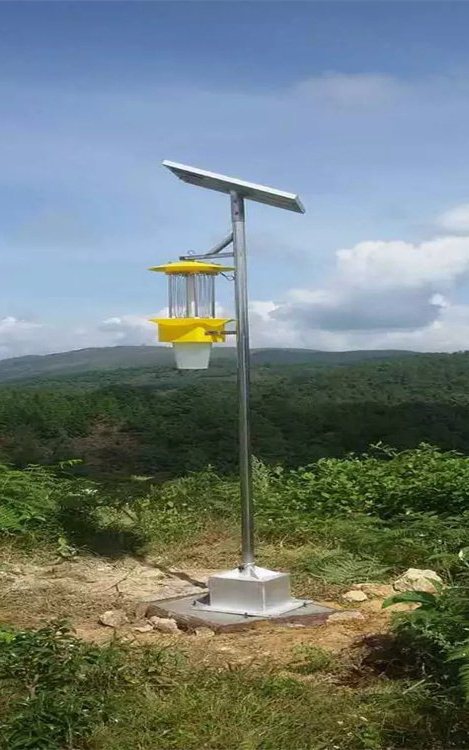
Panel watt-peak rating, battery capacity and operating hours need to be considered together. A larger panel does not repair an undersized battery for a long night, while a larger battery does not solve persistent inadequate charging. Compare the intended working season and the lowest-sun period in which the trap is expected to operate.
| Technical item | NiuBoL wind-suction configuration example | Meaning for the quotation |
|---|---|---|
| Battery | 12.8 V, 12 Ah lithium iron phosphate | 153.6 Wh nominal energy; usable energy is lower |
| Panel | Monocrystalline, at least 40 Wp | Wp is rated power, not a daily energy guarantee |
| Light source | 365 nm and 395 nm LED configuration | Confirm selected spectrum and actual light-source power |
| Fan | 20 W at 12 V, 2200 rpm version | Other versions require their own complete power budget |
| Whole-unit power | Up to 30 W for this configuration | Measure operating demand and define the duty schedule |
| Structure | 3 m galvanized pole; 60 mm diameter and 2.0 mm wall reference | Site foundation and wind exposure still need assessment |
| Protection | IP65 | Installed entries and connections must retain weather protection |
| Connections | Matched solar, battery and trap connections | Specify cable length, jacket and connector arrangement |
This is one configuration, not a combined specification for every trap in the range. The permitted ambient temperature, protection settings, cable materials and any communications option should be stated for the ordered version. A low-temperature sleep threshold is not an operating-temperature qualification. Avoid transferring the grid voltage or lamp power of an electric-grid model to the fan-assisted model.
For an illustrative solar power sizing calculation, a 15 W average load operating for six hours uses 90 Wh. A 30 W load for the same period uses 180 Wh. The second demand exceeds a 12.8 V, 12 Ah battery's 153.6 Wh nominal energy even before losses. These examples are energy checks, not promises of measured runtime for a particular trap.
Ask how the proposed controller schedule, usable battery fraction, charging losses and seasonal sunlight were applied. Timer changes may reduce energy consumption, but they also change the hours during which insects are sampled or captured. A claimed number of cloudy days is meaningful only with its load, starting charge, temperature and operating schedule attached.
Do not multiply a universal attraction radius into the farm area and order that number of traps. Terrain, canopy, competing lights, target behavior and maintenance access affect the layout. For orchard pest management, a unit under dense foliage and a unit beside an open field do not experience the same conditions, even when their hardware is identical.
Define a field trial that records species or groups captured, operating hours, interruptions, crop observations and service effort. Include non-target catch. The FAO integrated pest management approach considers several suitable management measures together; a trap should not be budgeted as an automatic replacement for all other crop protection work.
Provide installation country, crop, pest-management purpose, operating season, expected sunlight, mounting surface and maintenance frequency. Shading from trees or structures can reduce charging. Cold weather, repeated cloudy days and frequent night operation affect the battery calculation.
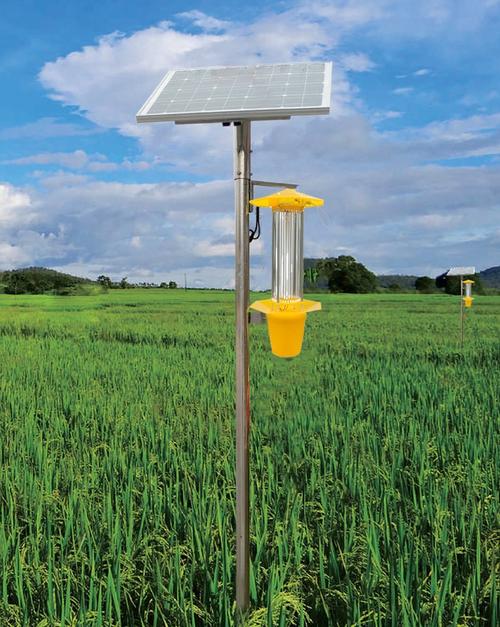
Include cleaning, lamp inspection, battery replacement, fan service, collection work and travel to remote fields. Connected models may also require SIM or platform service. Avoid fixed pesticide-saving or payback claims unless they are calculated from the farm's own baseline and operating method.
A simple workload estimate can expose a difference hidden by the unit price. If 20 units each need an illustrative ten-minute inspection every week, the hands-on task totals 200 minutes per week, or 3 hours 20 minutes, before travel and preparation. The ten-minute interval is only an example; use a site trial to estimate the actual task and frequency.
Request prices and identifiers for the service parts that fit the selected version. A visually similar replacement light may have a different spectrum or load. Confirm battery electrical compatibility, charging limits and mechanical fit before specifying a spare. Keep the service instructions and an isolation procedure accessible to the field team; stored electrical energy and moving or energized capture components require appropriate precautions.
Send the proposed quantity and deployment layout, but distinguish firm requirements from trial options. Identify whether poles and anchors will be purchased together or fabricated locally. Supply the destination and required delivery date, then ask which schedule and documentation can be committed for that actual configuration. Do not assume a stock lead time applies to a customized power or monitoring package.
Ask for an itemized solar insect trap quotation containing the model revision, capture method, power components, mounting scope, initial spares and optional services. Request the quotation validity period and identify exclusions. For a distributor, confirm which accessories and documents are supplied per unit and which are shared across the order.
Acceptance should cover the specified equipment and functions: correct components, charging, intended night schedule, collector operation and protection-state behavior. Test remote functions only when they are part of the order. Separate those equipment checks from a longer field evaluation of pest-management performance; switching on successfully does not establish crop-loss reduction.
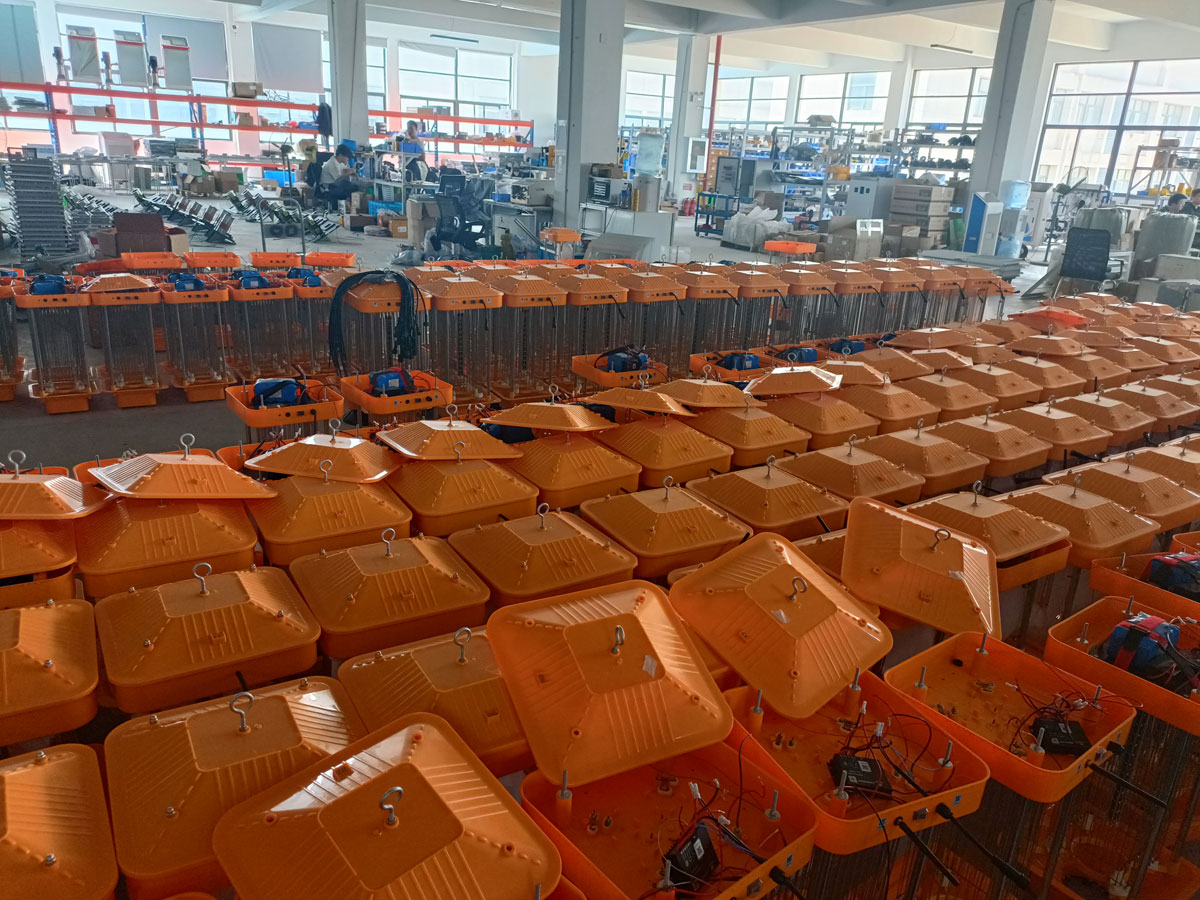
A fixed quotation can be issued for a defined model, quantity, power package and delivery scope. Obtain a current dated quotation for that configuration; an undated general range cannot establish the amount payable for your project.
The capture mechanism, battery, light source, controller, pole, collector and included services may differ. Equal panel ratings do not establish equal equipment or runtime.
Only after adding compatible power, mounting, connections and field construction. A replacement head price should not be compared directly with a complete station price.
Do not assume it. Specify any required remote status, local interface, gateway and data service as separate functions and verify the selected hardware. A standalone timer-controlled trap is not automatically a networked instrument.
No. Establish target relevance and layout through field evaluation. Crop damage, catch composition, operating time and other management actions must be considered before judging the result.
Request applicable spare-part prices, service labor requirements and any recurring communication or software fees. Replacement frequency depends on operating conditions and should not be presented as a fixed lifetime for every installation.
Compare solar insect trap price only after the complete supply and operating task are defined. A useful enquiry gives NiuBoL the crop, target, layout, season, power requirement and destination, allowing the quotation to separate essential equipment from optional functions and site costs.
Frequency-vibration solar insect trap manual
Wind-suction solar insect trap manual

Related recommendations
Sensors & Weather Stations Catalog
Agriculture Sensors and Weather Stations Catalog-NiuBoL.pdf
Weather Stations Catalog-NiuBoL.pdf
Agriculture Sensors Catalog-NiuBoL.pdf
Water Quality Sensor Catalog-NiuBoL.pdf
Related products
 Combined air temperature and relative humidity sensor
 TDR Soil Moisture & Temperature Sensor for irrigation| RS485 |4-20mA| NBL-S-THR
 Soil pH sensor RS485 soil Testing instrument soil ph meter for agriculture |NBL-S-PH
 Wind Speed sensor Output Modbus/RS485/Analog/0-5V/4-20mA
 Tipping bucket rain gauge for weather monitoring auto rainfall sensor RS485/Outdoor/stainless steel
 Pyranometer Solar Radiation Sensor 4-20mA/RS485


Screenshot, WhatsApp to identify the QR code
WhatsApp number:+8615367865107
(Click on WhatsApp to copy and add friends)

