





— Blogs —
—Products—
 Consumer hotline +8618073152920
WhatsApp:+8615367865107
Address:Room 102, District D, Houhu Industrial Park, Yuelu District, Changsha City, Hunan Province, China
Product knowledge
Time:2026-01-17 10:50:50 Popularity:735
Wireless level meter selection should begin with the installed measurement point and the required response, not a promise of universal coverage. A sensor in a well, a terminal inside a metal cabinet and an antenna above ground form different parts of the system. For a NiuBoL project, specify the level measurement and remote-data path separately, then prove that the selected combination works with the actual enclosure closed and the final antenna position.

An integrated wireless terminal can combine acquisition, a selected radio and a power arrangement in one assembly. A separate sensor connected to an RTU or data logger offers another route, especially where several channels share a station or an existing PLC must be retained. Compare replacement access, interface requirements and service ownership rather than assuming that fewer boxes always reduce project cost.
The NiuBoL level-sensor range includes instruments with different outputs and mechanical arrangements. RS485 Modbus RTU is a local sensor interface, not a cellular network. An RS485 probe becomes part of a remote system through suitable acquisition and communications equipment unless a wireless function is explicitly included in the ordered assembly.
Keep the procurement schedule specific: sensor model, measuring span, head or logger, modem variant, antenna, power supply and receiving platform. A choice between 4G and NB-IoT is not just a menu setting that every terminal supports. Confirm the delivered hardware, operator support and service plan for the destination country and site.

| Technical item | What the order must state | Field acceptance |
|---|---|---|
| Level range and uncertainty | Maximum head, liquid density, pressure reference and required absolute allowance. | Compare a known level using the same datum and units. |
| Liquid and materials | Composition, temperature, solids and wetted construction. | Verify the ordered assembly and intended exposure conditions. |
| Local interface | Selected RS485 Modbus RTU or analog output; receiver requirements. | Check raw acquisition separately from wireless delivery. |
| Wireless service | Modem type, operator, bands, SIM or equivalent provisioning and server destination. | Register and deliver data from the final installation. |
| Power and protection | Exact battery or external supply, enclosure and probe ratings. | Test startup, low supply and the installed cable entries. |
For a hydrostatic probe, check that the pressure span covers maximum water head and any additional pressure. A vented reference needs a dry, open termination even when the communications enclosure is sealed. The probe's immersion rating does not transfer to its radio head, antenna connector or cabinet. Specify protection for each component rather than listing one IP grade for the entire package.
Where the selected arrangement includes a local display, define its actual channels and update behaviour. A displayed level can assist service work, but it does not prove that a fresh value has reached the server. Treat local indication, radio registration and accepted platform data as three separate acceptance checks.

A coverage map is a starting point. Test at the intended depth or enclosure position, using the planned modem, antenna and network subscription. Metal covers, concrete, terrain and nearby equipment can change the result. A strong signal on a technician's phone above the chamber is not equivalent to a different radio technology operating below its lid.
Record registration, successful uploads, reconnect time and failed attempts over representative conditions. Use available signal-quality metrics as supporting evidence, not the only pass criterion. The project needs delivered measurements and a predictable response to failure. Where the terminal supports an external antenna, check connector type, cable loss, routing and environmental protection before assuming that moving the antenna solves the problem.
NB-IoT can suit small remote measurements where the chosen operator provides the required service. It is not a guarantee of communication through a fully metal enclosure or of identical behaviour on every network. Power-saving and reachability settings also affect when a backend can contact the device. Agree the required uplink and downlink behaviour with the integrator rather than inferring it from the radio name.
Specify the local sampling interval, upload interval and maximum acceptable age of a reading. A device can sample more frequently than it uploads if its acquisition and storage support that arrangement. A low-energy periodic reporting mode may be appropriate for a slowly varying tank, but unsuitable as the only path for a rapid overflow response.
For illustration, if a terminal uploads every fifteen minutes, a new measurement made just after a reporting opportunity can wait almost that long before transmission, excluding network and server delay. Faster web-page refresh does not remove that wait. If a local threshold can trigger an earlier upload, demonstrate the function and its battery implications on the ordered equipment.
Keep required protective actions independent of an unverified public-network path. A tank needing local pump interlocks may require a separate control arrangement even when remote level monitoring is available. Define manual override, stale-data behaviour and operator escalation within the project; a wireless display is not automatically a safety control system.

Determine who supplies the endpoint, credentials, data format and subscription. Ask whether the service exposes device identifiers, measurement timestamps, units and quality states to the receiving system. A screenshot on one supplier's dashboard does not establish integration with the customer's server. Where a gateway translates to another protocol, test that translation with the actual destination.
Provision one pilot point before ordering a large quantity. Demonstrate a normal upload, a lost connection, recovery and a change made through the supported configuration path. Confirm whether remote commands are applied immediately or only when the device becomes reachable. Log the accepted settings so later battery or radio changes do not silently alter observation coverage.
Do not specify encryption or account isolation from a generic wireless description. Ask for the supported connection method, credential management, update procedure and access roles for the ordered service. Keep the supplier's provisioning task distinct from the site's network and platform responsibilities. These details should be settled before installation crews leave the site.
At a site with protected mains power and an existing analog input, a wired transmitter can remain practical. The NiuBoL NBL-L-SMP4601 split-type level transmitter is a 4-20 mA product option; it should not be described as a self-contained wireless terminal merely because another assembly has a similar field housing.
For a digital station, a suitable RS485 probe and shared gateway may preserve existing infrastructure. For a distant isolated tank, an integrated battery-powered arrangement may reduce cable work when its service conditions are met. Compare installed cable work, subscriptions, battery visits, spares and data access over the intended operating period. No fixed saving follows from removing a signal cable.
For a quotation, provide tank or well geometry, liquid and temperature, measurement range, sampling and alarm requirements, final enclosure and antenna position, power options and the destination platform. Include pilot-test findings and any local-control requirement. NiuBoL can then assess the sensing arrangement without treating network availability or cloud functions as guaranteed features of every probe.
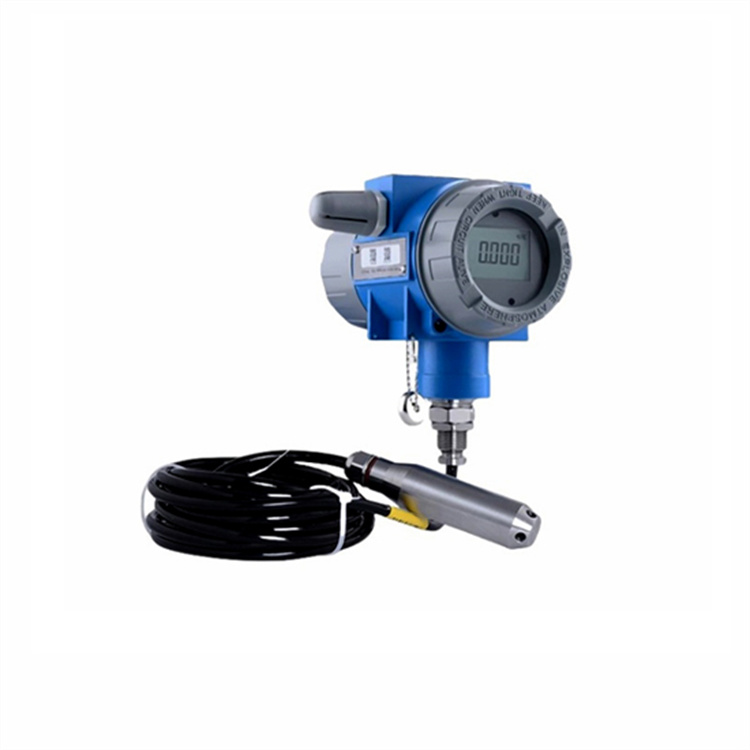
No. A submerged probe may still connect to a head or logger, and an external antenna or power source may require wiring. The wireless link usually replaces a particular backhaul connection, not the complete physical installation.
No. Check the operator's actual service and test the intended terminal in its final position. A radio technology name cannot establish coverage through the specific cover, cabinet or surrounding structure.
Do not assume it. Verify modem bands, service provisioning, supported operator features and the destination endpoint before ordering. A regional modem or subscription may not provide the intended service elsewhere.
No. Compare the physical level, local indication and server value separately, including timestamps and units. The display can remain functional while communications or platform mapping is wrong.
Only after a separately justified control design. Remote observation over a public network should not silently replace a local protective function with different availability and timing.
Correct measurement, reliable delivery at the final location, appropriate alarm timing, known outage behaviour and a supported maintenance procedure. Demonstrate these with the selected hardware and platform rather than a generic demonstration device.
Wireless level meter selection should match a valid level measurement with a demonstrated communications service. Define the NiuBoL sensor configuration, test the final antenna location and settle platform and maintenance responsibilities before scaling the installation. Keep radio coverage, local indication and accepted measurement data distinct so a convenient installation does not conceal an unreliable observation path.
Prev:Submersible Level Transmitter Density Correction: Span and Process Errors
Next:Wireless Level Meter Battery Life: Uploads and Offline Recovery
Related recommendations
Sensors & Weather Stations Catalog
 Agriculture Sensors and Weather Stations Catalog-NiuBoL.pdf
Weather Stations Catalog-NiuBoL.pdf
Agriculture Sensors Catalog-NiuBoL.pdf
Water Quality Sensor Catalog-NiuBoL.pdf
Related products
 Combined air temperature and relative humidity sensor
 TDR Soil Moisture & Temperature Sensor for irrigation| RS485 |4-20mA| NBL-S-THR
 Soil pH sensor RS485 soil Testing instrument soil ph meter for agriculture |NBL-S-PH
 Wind Speed sensor Output Modbus/RS485/Analog/0-5V/4-20mA
 Tipping bucket rain gauge for weather monitoring auto rainfall sensor RS485/Outdoor/stainless steel
 Pyranometer Solar Radiation Sensor 4-20mA/RS485


Screenshot, WhatsApp to identify the QR code
WhatsApp number:+8615367865107
(Click on WhatsApp to copy and add friends)

