





— Blogs —
—Products—
 Consumer hotline +8618073152920
 WhatsApp:+8615367865107
Address:Room 102, District D, Houhu Industrial Park, Yuelu District, Changsha City, Hunan Province, China
Product knowledge
Time:2026-07-17 10:10:30 Popularity:269
An agricultural insect trap is not the same as a household or commercial mosquito lamp. The buyer should compare target pests, working area, installation height, power supply, collection method and maintenance workload before choosing equipment for field pest control.
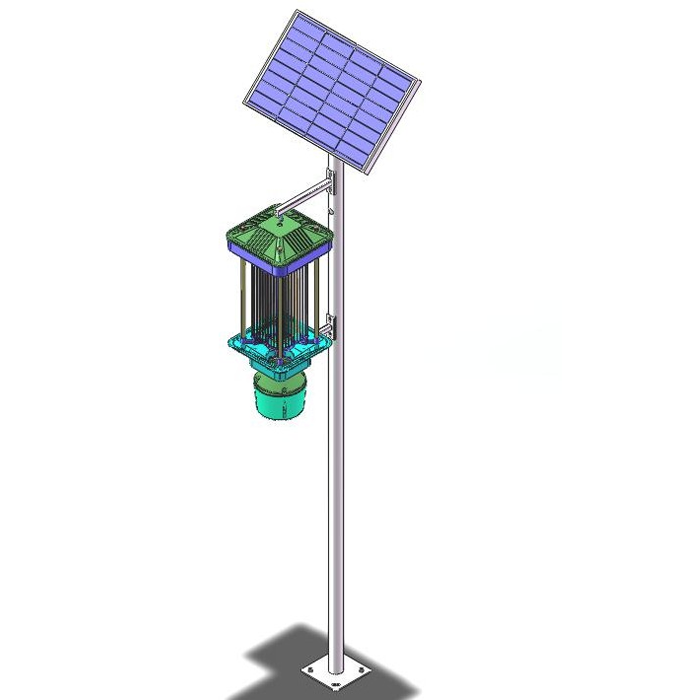
A common purchasing mistake happens when farm buyers see that insect traps and mosquito lamps both use light attraction, then assume one can replace the other. For agricultural projects, that assumption is risky. Mosquito lamps are mainly designed for mosquitoes and small flying insects around people. Agricultural insect traps are selected around crop pests, orchard pests and field deployment conditions.
For procurement teams, the practical question is not whether the two products look similar. The question is whether the device can attract the target pest, work over the required area, survive outdoor agricultural conditions and fit the maintenance capacity of the farm or contractor.
| Item | Typical Specification | Buyer Meaning |
|---|---|---|
| Attraction principle | Phototaxis attraction with frequency vibration light source | Targets field and orchard pests that respond to light wavelength |
| Power supply | Solar panel with rechargeable battery, project configuration varies by model | Suitable for orchards and fields without mains power |
| Control mode | Light control, time control and rain protection functions | Reduces unnecessary operation and protects equipment in wet weather |
| Killing method | High-voltage electric grid | Physical pest reduction without routine chemical spraying |
| Protection | Outdoor structure with weather-resistant design, commonly IP65 class for field use | Supports seasonal outdoor deployment |
| Application | Orchards, vegetable fields, forestry, nurseries and agricultural bases | Suitable where phototactic adult pests are part of the control target |
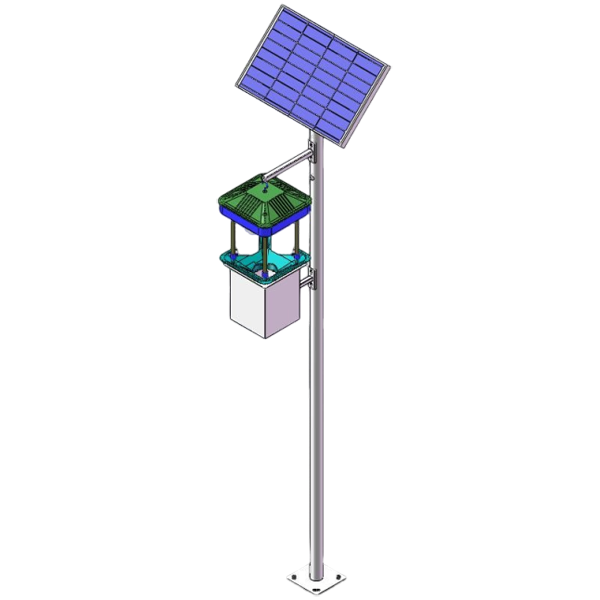
A mosquito lamp usually targets mosquitoes through light, heat, carbon dioxide simulation or sticky capture. Its working area is relatively small and the design is usually suitable for courtyards, rooms, restaurants or livestock surroundings. A farm insect trap must handle different insects, larger field areas, rain, dust, wind, crop canopy changes and seasonal maintenance.
Mosquito lamps may cover only a small area, while agricultural insect traps are used over much larger farm plots depending on terrain, crop and target pest. This difference changes the whole purchasing logic. A farm project needs layout planning, not just a single product purchase.
A frequency vibration solar insect trap is suitable for orchards, vegetable fields, forestry, nurseries and ecological agriculture projects where phototactic adult pests are part of the control target. It is not suitable as the only control method for pests that do not respond to light, soil-borne pests, disease pathogens or projects without maintenance access.
A wind-suction solar insect trap light may be selected when the buyer wants physical trapping and collection rather than only electric-grid contact. It still requires correct placement and cleaning. Neither product should be treated as a universal replacement for scouting, biological control or targeted pesticide use when pest pressure is severe.
A useful comparison starts from pest biology. Mosquito control is normally built around human comfort and disease-vector reduction in a limited area. Farm pest control is built around crop damage, adult population reduction, seasonal pressure and field layout. The two purchases therefore have different success criteria. A mosquito lamp may be judged by nuisance reduction around a building, while an agricultural insect trap should be judged by target-pest capture, equipment uptime, maintenance records and whether pest pressure is reduced at the right crop stage.
Buyers should also separate pest reduction from pest monitoring. A frequency vibration solar insect trap or wind-suction trap light is mainly a physical control device. A smart remote insect monitoring system is a data device. If the project requires pest trend reports, image records or regional warning, a trap light alone cannot provide the same evidence. If the project only needs field pest reduction, a remote monitoring system may be more than the site requires.
| Buyer Situation | Recommended Direction | Reason |
|---|---|---|
| Small mosquito nuisance near workers or buildings | Mosquito lamp | The target is human comfort, not crop pest management |
| Orchard with phototactic adult pests | Frequency vibration solar insect trap | The equipment is designed for agricultural outdoor pest reduction |
| Field project wanting collected insects with less grid dependence | Wind-suction solar insect trap light | Suction collection can suit some project preferences |
| County monitoring or smart farm warning | Remote insect monitoring system | The buyer needs image records and platform data |
| Unknown pest target | Confirm pest species before purchase | No device should be selected only by appearance |
For tenders, the specification should avoid vague wording such as insect lamp or pest lamp. It should state the target pest group, operating season, power supply, installation height, control area, maintenance method and whether data records are required. This protects both the buyer and the supplier.
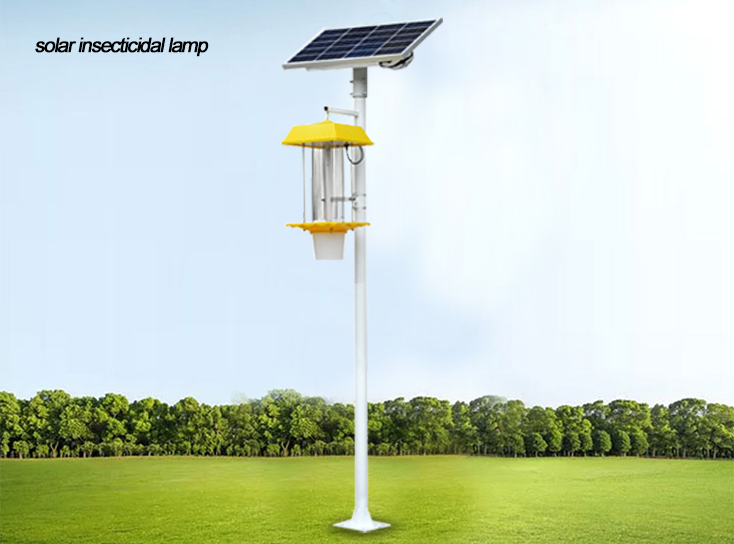
Site challenge: Adult pests such as scarabs, longhorn beetles and moths can affect growth and yield. Integration or deployment plan: Use solar insect trap spacing based on orchard terrain, pest target and maintenance route. User value: The orchard reduces adult pest base while lowering routine pesticide dependence.
Site challenge: Short crop cycles require fast pest reduction and low residue risk. Integration or deployment plan: Install traps at field edges and pressure points; combine with scouting. User value: Growers can reduce chemical frequency when pest pressure is suitable for light trapping.
Site challenge: Power supply is often limited and pest pressure varies by season. Integration or deployment plan: Use solar-powered trap lights with stable foundations and scheduled cleaning. User value: Operators gain a physical control method without laying long power cables.
Site challenge: Projects need visible green-control measures and documentation. Integration or deployment plan: Combine insect trap installation records, maintenance logs and seasonal pest observations. User value: Contractors can deliver a practical green-control package for inspection and buyer reporting.
| Question | Mosquito Lamp | Agricultural Insect Trap |
|---|---|---|
| Target | Mosquitoes and small insects around people | Crop, orchard, forestry and field pests |
| Deployment | Indoor, courtyard or small outdoor area | Field, orchard, nursery or farm boundary |
| Coverage | Small local area | Planned by crop area, terrain and pest pressure |
| Power | Mains or small battery | Solar or field power configuration |
| Maintenance | Simple cleaning | Collection box, light source, grid or suction parts, seasonal inspection |
The safest procurement method is to start from the pest list. If the buyer cannot name the target pests, the supplier cannot responsibly recommend spacing, wavelength, power configuration or collection method. For distributors, this is also the easiest way to avoid after-sales disputes.
Before requesting a quotation, send the crop type, target pests, field or orchard area, installation layout, power condition, local rainfall and wind conditions, expected working season, maintenance responsibility, and whether the project requires monitoring data or only physical pest reduction. These details determine whether the right solution is a frequency vibration solar insect trap, a wind-suction insect trap light, or a smart remote insect monitoring system.
For export orders and engineering projects, buyers should also confirm packaging, spare lamps or wearing parts, installation accessories, shipping method, documentation language, warranty terms and after-sales response method. A clear bill of materials prevents disputes during installation and helps local contractors prepare foundations, poles, batteries and maintenance tools before equipment arrives.
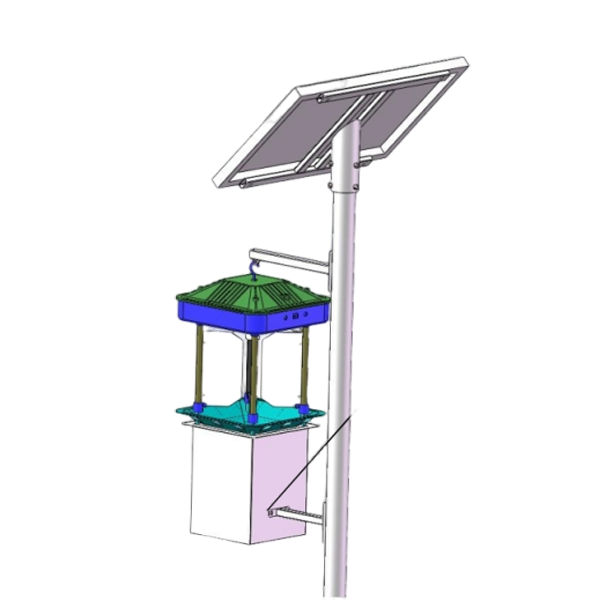
A: No. They may both use light attraction, but they are designed for different targets, working areas and operating environments. A mosquito lamp is usually for mosquitoes around people, while an agricultural insect trap is selected for crop and orchard pests in outdoor farm conditions.
A: A farm should not use mosquito lamps as a direct replacement for agricultural insect traps. The coverage, light source, structure and pest target are usually not matched to field pest-control needs. It may create a low-cost purchase but weak pest reduction.
A: Choose it when the target pests have clear phototaxis and the project needs physical pest reduction in fields, orchards or forestry areas. It is especially useful where solar power is preferred and routine pesticide reduction is part of the management goal.
A: A wind-suction solar insect trap is suitable when the project wants light attraction plus suction collection. It can be useful where pest collection cleanliness, lower direct grid contact or easier inspection is important. The final choice still depends on target pest behavior.
A: The buyer should provide crop type, target pests, field area, installation environment, local rainfall, expected working months, power condition and maintenance plan. Without this information, a supplier can only quote a device, not a working pest-control solution.
A: The main risk is buying by appearance instead of pest target. Devices that look similar may have different wavelength, power, grid structure, collection method and coverage. The result can be poor trapping efficiency and buyer complaints after installation.
A: They can reduce pesticide pressure when target pests respond to trapping and the farm combines trapping with scouting and integrated pest management. They should not be sold as a complete replacement for all pest-control measures.
A: Acceptance should check installation quantity, working status after dusk, solar charging, light source operation, collection or killing function, cleaning access and first monitoring records. A visual power-on check alone is not enough.
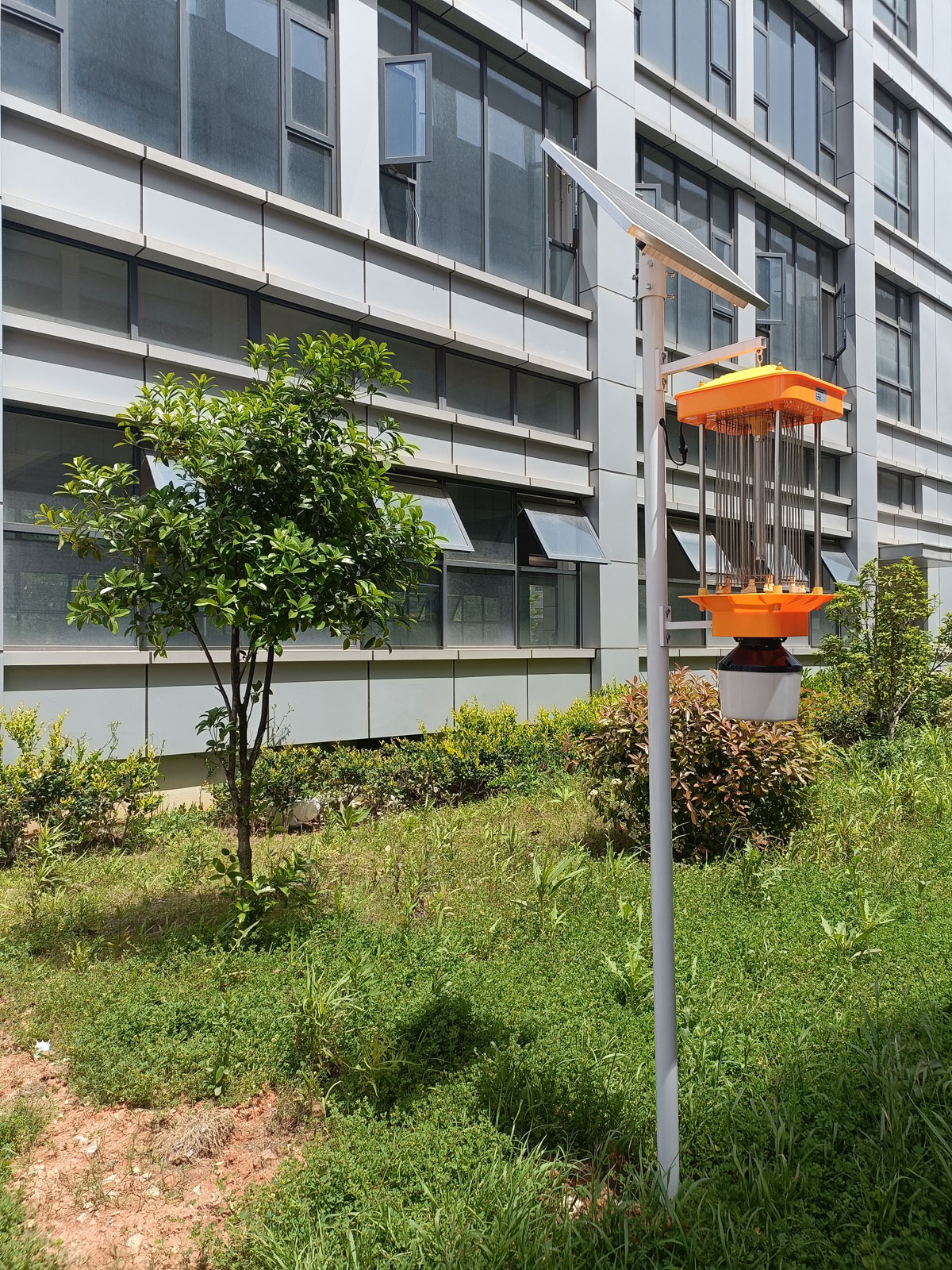
Agricultural insect traps and mosquito lamps are different procurement categories. Buyers should select equipment by target pest, field area, power condition and maintenance plan. NiuBoL frequency vibration and wind-suction solar insect trap products can support farm pest-control projects when they are specified as part of an integrated field plan.
Prev:Agricultural IoT Pest Monitoring System Implementation Guide for Smart Farms
Next:Solar Frequency Vibration Insect Trap for Walnut Pest Control: Project Selection Guide
Related recommendations
Sensors & Weather Stations Catalog
 Agriculture Sensors and Weather Stations Catalog-NiuBoL.pdf
Weather Stations Catalog-NiuBoL.pdf
Agriculture Sensors Catalog-NiuBoL.pdf
Water Quality Sensor Catalog-NiuBoL.pdf
Related products
 Combined air temperature and relative humidity sensor
 TDR Soil Moisture & Temperature Sensor for irrigation| RS485 |4-20mA| NBL-S-THR
 Soil pH sensor RS485 soil Testing instrument soil ph meter for agriculture |NBL-S-PH
 Wind Speed sensor Output Modbus/RS485/Analog/0-5V/4-20mA
 Tipping bucket rain gauge for weather monitoring auto rainfall sensor RS485/Outdoor/stainless steel
 Pyranometer Solar Radiation Sensor 4-20mA/RS485

Screenshot, WhatsApp to identify the QR code
WhatsApp number:+8615367865107
(Click on WhatsApp to copy and add friends)

