





— Blogs —
—Products—
 Consumer hotline +8618073152920
 WhatsApp:+8615367865107
Address:Room 102, District D, Houhu Industrial Park, Yuelu District, Changsha City, Hunan Province, China
Product knowledge
Time:2026-06-20 15:45:08 Popularity:229
An agricultural observation station is a field monitoring system designed to record the environmental conditions that influence crop growth, irrigation planning, cultivation decisions, and agricultural research. For integrators and project contractors, the station is not just a set of sensors on a pole. It is a structured data source that connects crop blocks, weather exposure, soil water status, radiation conditions, and platform reporting into one deployable monitoring node.
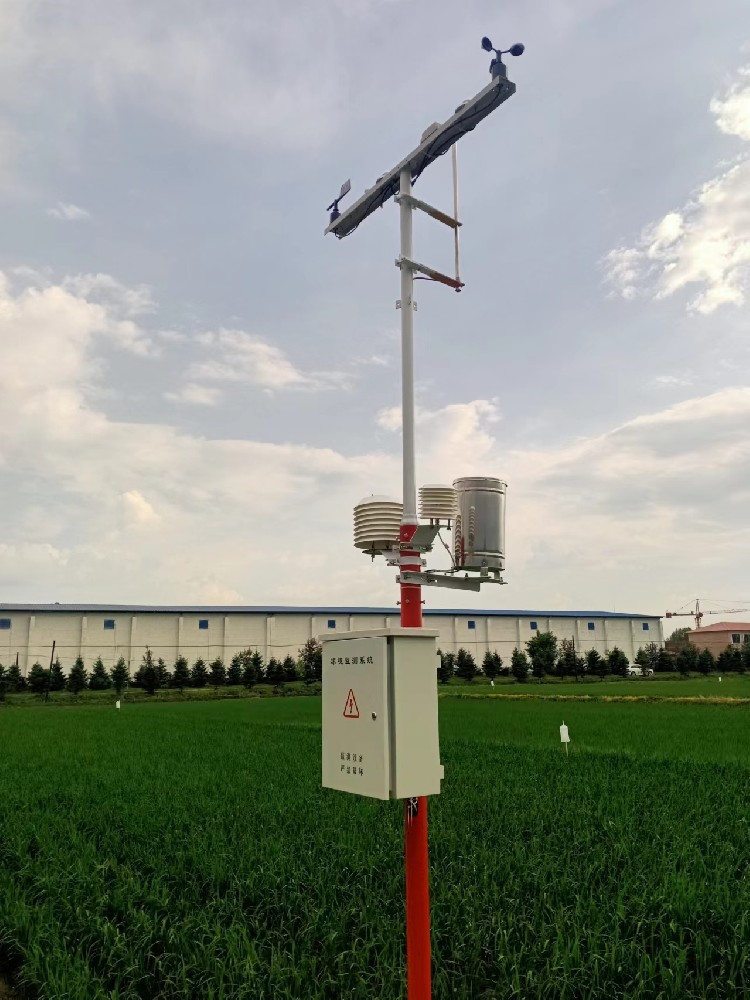
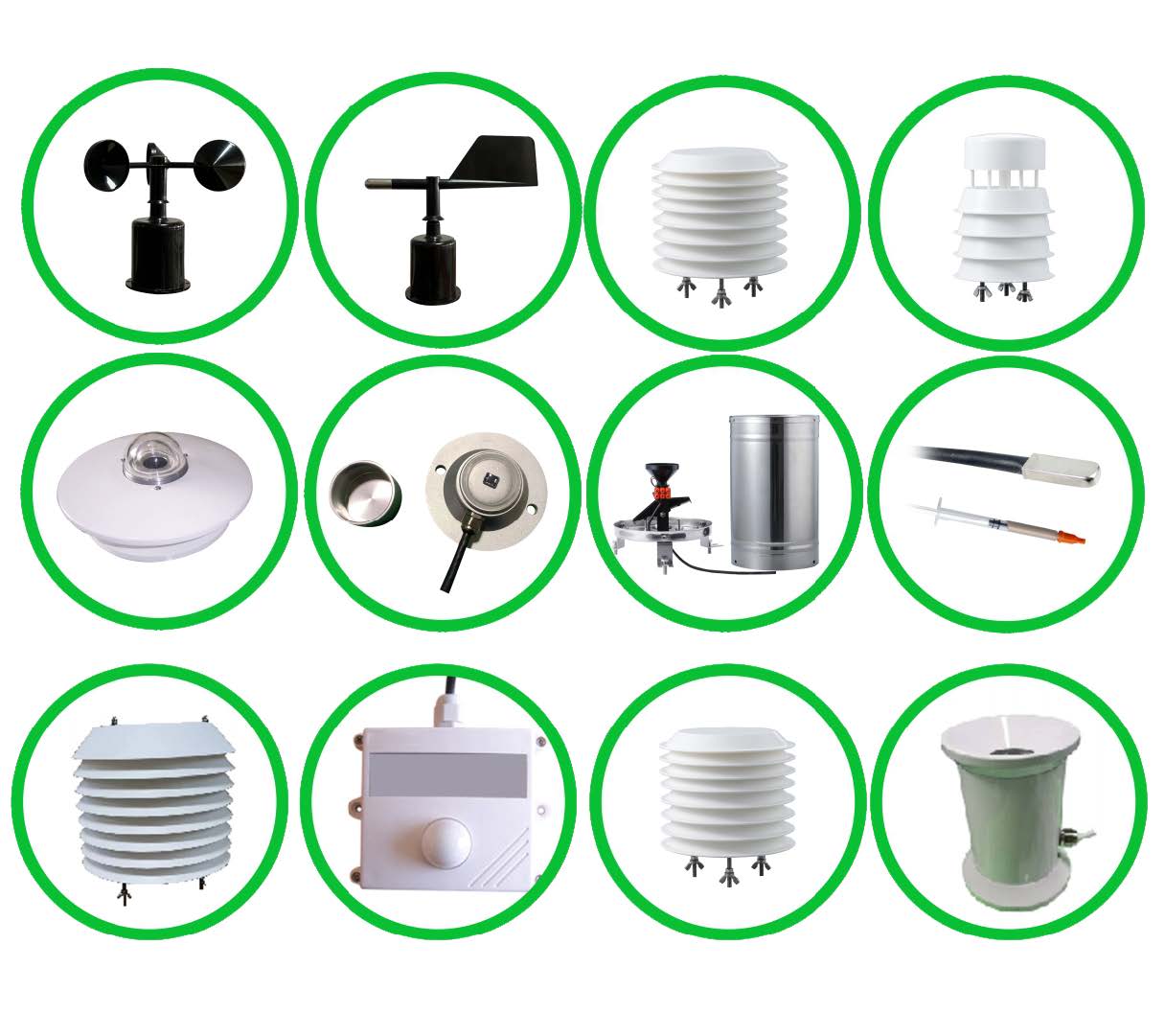
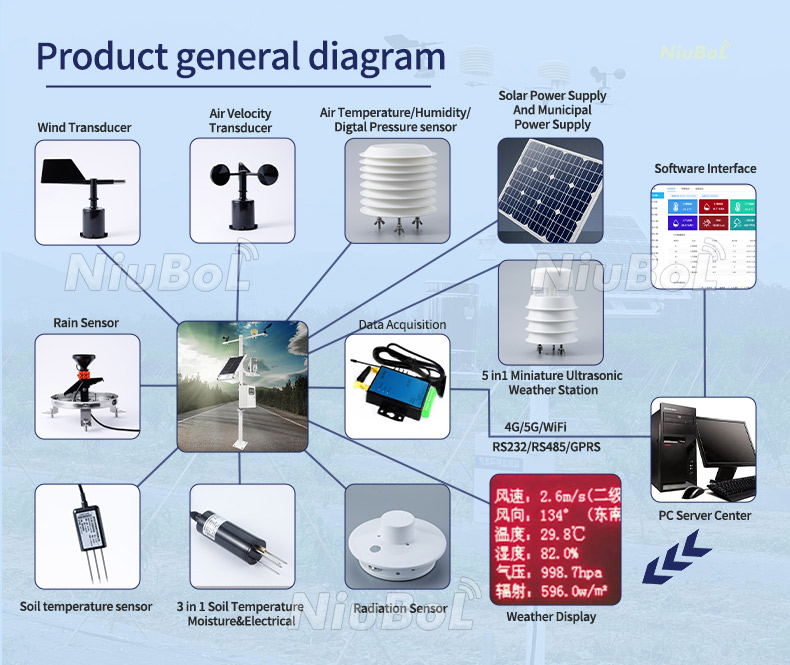
A complete agricultural observation station usually includes air temperature, relative humidity, wind speed, wind direction, atmospheric pressure, rainfall, solar radiation, photosynthetically active radiation, soil temperature, and soil moisture. These parameters describe the exchange of water, heat, and energy between the crop canopy, soil layer, and surrounding atmosphere.
The practical value comes from combining parameters rather than reading them separately. Rainfall without soil moisture does not show whether water reached the active root zone. Radiation without temperature and humidity does not explain crop stress. Wind data helps judge evaporation, spraying windows, and open-field exposure. This is why procurement teams should evaluate the monitoring objective before confirming the sensor list.
For a standard outdoor crop monitoring node, a contractor can start with air temperature and humidity, wind speed and direction, atmospheric pressure, rainfall, and solar radiation. Where irrigation decisions are included, soil moisture and soil temperature should be added by depth. For crop physiology, greenhouse research, or high-value planting, photosynthetically active radiation is often required.
NiuBoL supports flexible configuration, so the system can be matched to field crops, orchards, greenhouses, experimental farms, and agricultural service platforms. This flexibility is important when the owner wants the same platform to support different plots while keeping the data format consistent.
| Monitoring Need | Recommended Sensor | Integration Value |
|---|---|---|
| Crop climate baseline | Air temperature, humidity, pressure | Creates long-term records for growth environment analysis |
| Field exposure | Wind speed and wind direction | Supports spraying, ventilation, evaporation, and safety decisions |
| Water input | Rainfall sensor | Connects precipitation records with irrigation planning |
| Crop energy balance | Solar radiation and photosynthetically active radiation | Helps evaluate light resources and canopy activity |
| Root-zone water | Soil moisture and soil temperature | Supports irrigation timing, drought review, and soil profile comparison |
| Remote projects | RS485 collector, 4G gateway, solar power | Allows unattended data upload from distributed field sites |
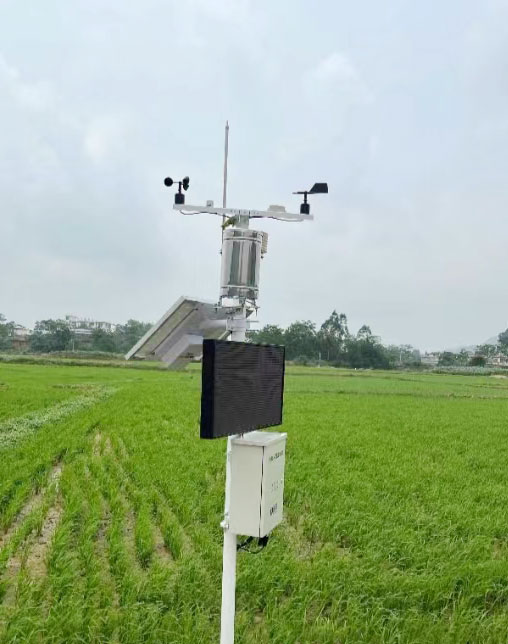
Before ordering hardware, the project team should define station names, crop block names, parameter units, sensor depth labels, reporting interval, alarm fields, and data export requirements. This prevents a common problem: the hardware works, but the platform becomes difficult to interpret because each site uses different naming logic.
A clear data model also makes future expansion easier. If the first phase includes only weather and rainfall, the platform should still reserve fields for soil moisture, radiation, and additional agronomic sensors. When more sensors are added, the owner should not need to rebuild dashboards or historical reports.
In a smart irrigation project, the station provides rainfall, temperature, humidity, wind, and soil water data for irrigation scheduling. In an agricultural research base, several stations can be installed across plots to compare microclimate differences and crop response. In an orchard, wind, radiation, humidity, and rainfall records can support disease prevention and frost or heat stress assessment.
For project contractors, the strongest delivery approach is to connect the station with a platform that provides live data, charts, alarms, and exportable history. The owner can then use the station for daily decisions and seasonal review rather than treating it as a display-only device.
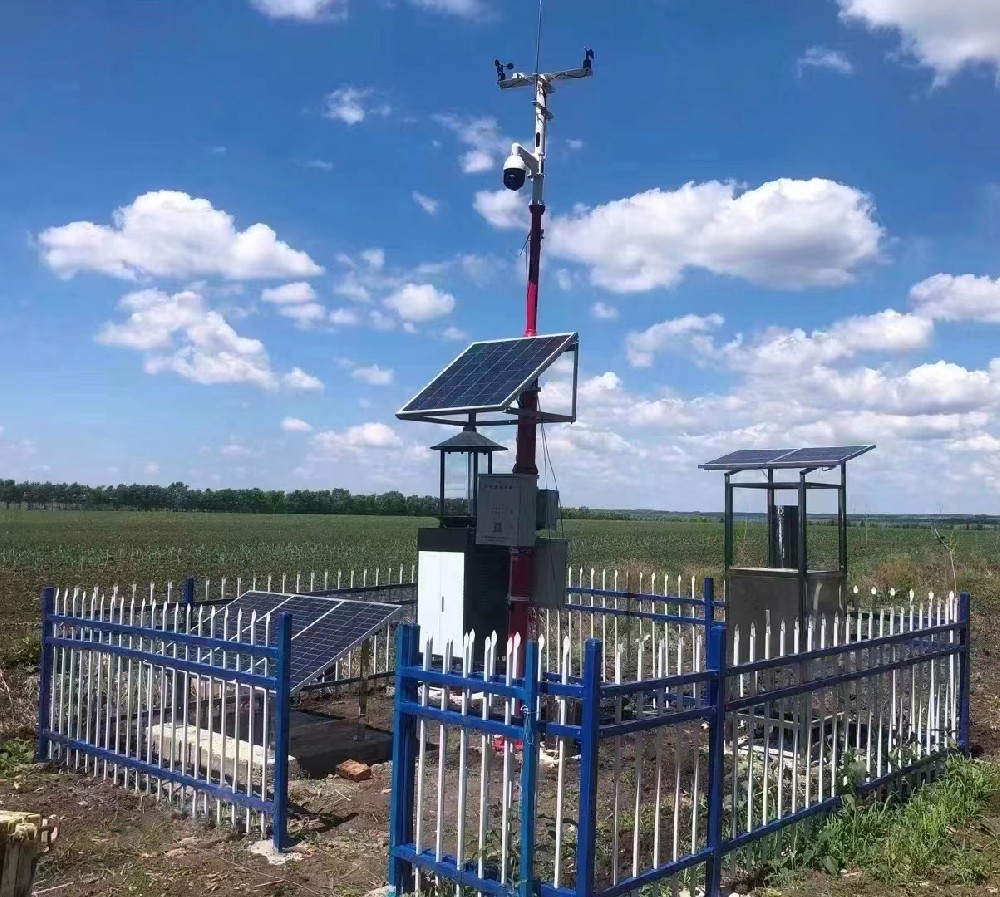
Agricultural stations are often installed far from stable power and network infrastructure. A practical design normally combines low-power sensors, a data logger, RS485 communication, solar charging, battery backup, and 4G transmission. Wired communication can be used inside cabinets or short sensor routes, while wireless upload is suitable for remote project sites.
Reliability depends on simple details: waterproof connectors, lightning protection, cable routing, sensor height, bracket stability, battery capacity, and maintenance access. A station that is easy to inspect will remain useful longer than a complicated system that is difficult to service after handover.
Procurement should start with the decision the data must support. If the owner needs crop climate records, weather and radiation sensors may be enough. If irrigation control is included, soil moisture sensors at appropriate depths are essential. If the project compares different crop varieties, multiple observation points may be more valuable than one station with too many parameters.
The quotation should include sensor parameters, communication protocol, mounting hardware, power supply, platform access, installation guidance, and data export capability. For multi-site projects, confirm whether the platform can group stations by farm, plot, crop, or region, because this will affect daily operation.
Integrators should request register maps, wiring diagrams, unit definitions, calibration information, and recommended maintenance procedures. For RS485 MODBUS systems, address planning and polling intervals should be defined before installation. For 4G systems, SIM card management and signal strength should be checked during commissioning.
Data quality checks should include missing data alarms, low battery warnings, unreasonable value filtering, and regular comparison with field conditions. These controls help the owner trust the system when the station is used for irrigation evidence, crop research, or project acceptance.
Acceptance should not be limited to whether the station is powered on. The contractor should verify live values, platform units, upload interval, sensor naming, time synchronization, export format, and alarm status. A short acceptance period with continuous records can reveal communication gaps, wrong sensor labels, or unreasonable parameter units before the system is handed over.
For farms with several monitoring points, the acceptance report should include station coordinates, installation photos, sensor list, power mode, communication method, and platform screenshots. These details help the owner maintain the system later and make future expansion easier when more plots or additional sensors are added.
Agricultural managers often use monitoring data to compare irrigation blocks, evaluate field improvement measures, and justify equipment investment. When a station shows that rainfall does not translate into root-zone moisture, the owner can decide whether irrigation scheduling, soil improvement, or drainage design should be adjusted.
This is why procurement should evaluate total project value instead of only the device price. A lower-cost station without clear data output, maintenance access, or platform support may create more service work later. A well-designed station reduces repeated visits and gives the owner usable evidence for management.
A first-phase agricultural station can begin with weather and rainfall, then expand to soil profile monitoring, radiation analysis, or water quality depending on the project. If the platform is prepared for future fields, the additional devices can be added under the same data structure without changing user habits.
Integrators should discuss this expansion path during early design. The owner may not purchase every sensor at once, but the cabinet, power budget, communication capacity, and platform account structure should leave space for future growth.
A station is easier for procurement teams to approve when its role is clearly connected to irrigation evidence, crop growth records, field comparison, or research data. The proposal should describe what decisions the station supports and which parameters are essential for those decisions.
This practical explanation is often more persuasive than a long sensor list. It shows the owner how the station will be used after installation and why each selected parameter belongs in the project.
At minimum, the platform should preserve station name, parameter unit, sensor depth where applicable, upload time, battery or power status, and communication status. These fields make troubleshooting and seasonal review much easier.
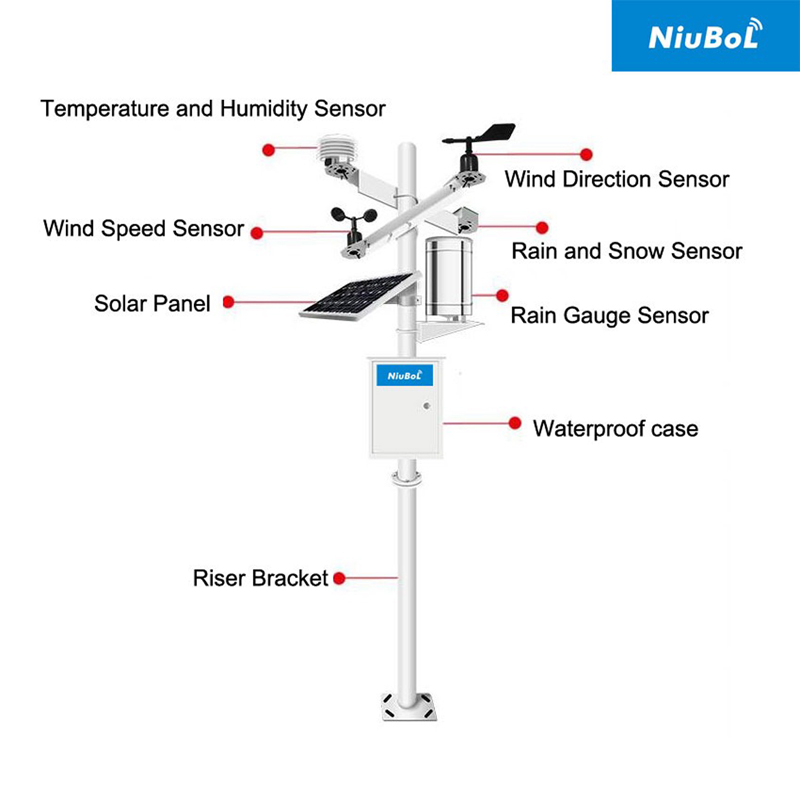
A standard station usually includes air temperature, relative humidity, wind speed, wind direction, atmospheric pressure, rainfall, and solar radiation. Projects related to irrigation or crop research often add soil moisture, soil temperature, and photosynthetically active radiation. The final list should be matched to the crop type, monitoring objective, installation environment, and platform reporting requirements.
Weather data shows atmospheric conditions, but soil moisture shows whether water is available in the root zone. By comparing rainfall, temperature, wind, radiation, and soil moisture, the platform can help determine whether irrigation should be started, delayed, or adjusted. This is especially useful in distributed irrigation projects where field conditions differ by soil texture and crop stage.
One station can provide a useful baseline, but it may not represent every plot if the farm has different elevations, crop types, wind exposure, irrigation zones, or soil conditions. For larger projects, several stations or additional soil monitoring points should be deployed at representative locations. The goal is to capture meaningful differences rather than simply increase device quantity.
RS485 is suitable for stable local communication between sensors, data loggers, and gateways. For remote upload, 4G is commonly used because it avoids long cable runs and supports unattended sites. Solar power with battery backup is often selected where mains power is unavailable or unreliable.
The project team should confirm sensor height, mounting direction, lightning protection, solar panel exposure, cable protection, communication signal, and maintenance access. Soil sensors should be installed at depths that match crop root activity and irrigation decisions. The station location should be representative and not blocked by buildings, trees, or machinery.
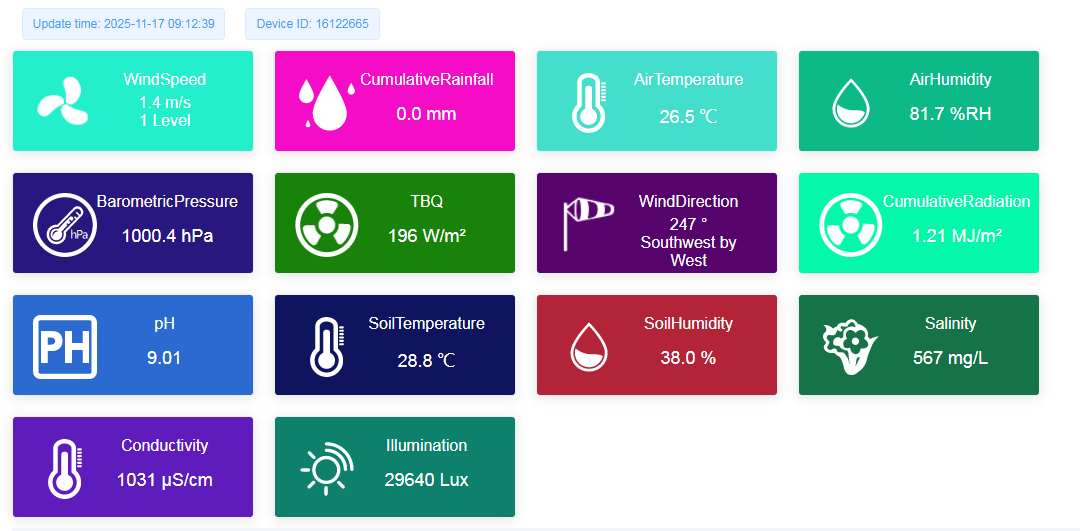
Useful operation includes live dashboards, trend charts, alarm rules, seasonal reports, and exportable history. The platform should show parameter units clearly and allow managers to compare weather, rainfall, radiation, and soil water status. Long-term records are valuable for irrigation review, crop performance evaluation, and field management planning.
Yes. Observation elements can be selected according to project needs, including radiation, photosynthetically active radiation, soil profile moisture, and other agricultural sensors. Research projects usually require clearer metadata, stable sampling intervals, and reliable historical export, while demonstration farms often need an easy-to-read platform and display interface.
NiuBoL provides configurable agricultural monitoring equipment, outdoor weather sensors, soil sensing options, data acquisition, and communication support. For integrators, the important advantages are flexible sensor selection, standard communication interfaces, field-oriented installation, and the ability to build a complete monitoring node around the project objective.
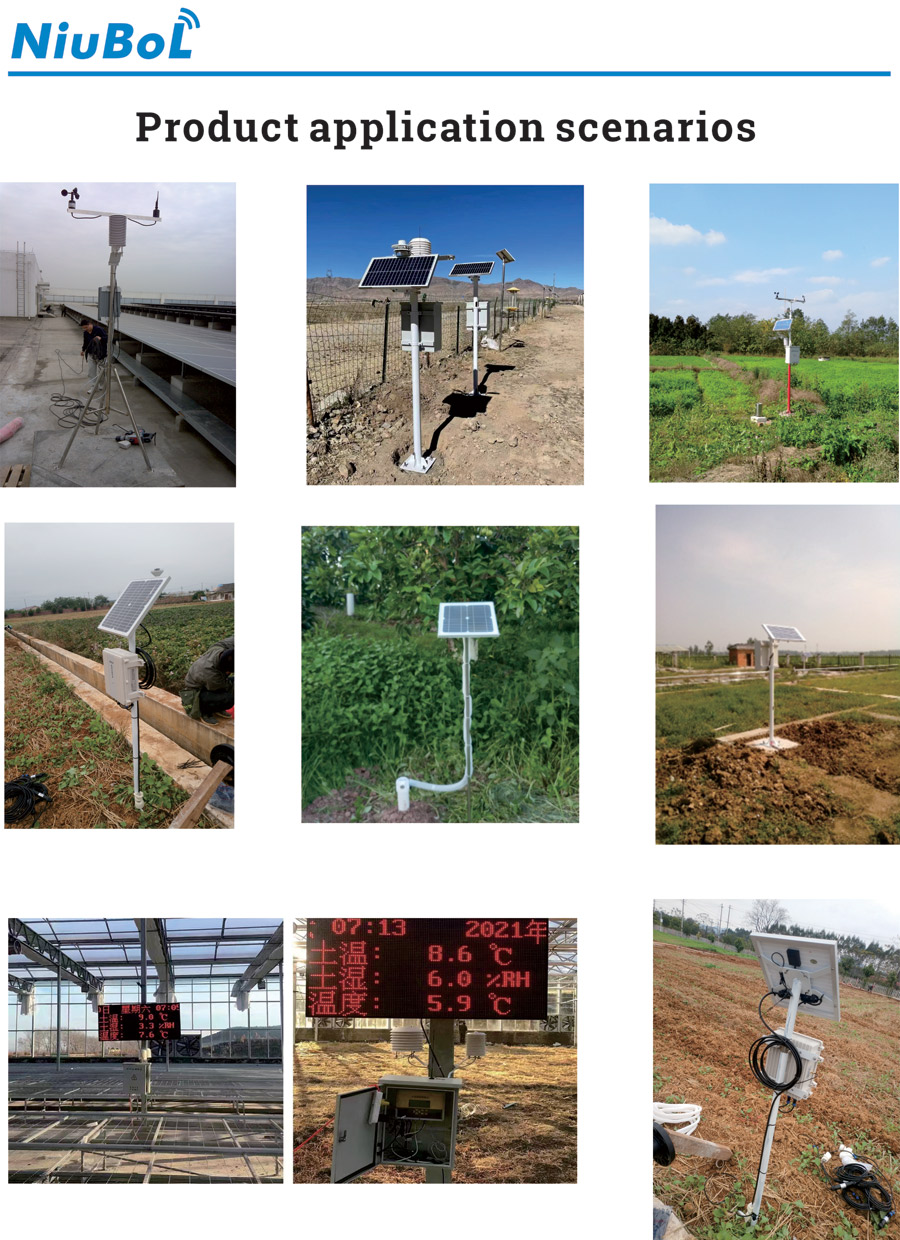
An agricultural observation station should be selected as a project data system, not only as an outdoor instrument. The most successful deployments connect weather, radiation, rainfall, and soil measurements with a clear platform structure, reliable communication, and practical maintenance access. For integrators, NiuBoL provides a flexible foundation for crop environment monitoring, irrigation support, agricultural research, and multi-site field management.
Prev:Campus Weather Station Components and System Integration for Education and Monitoring Projects
Next:Farmland Microclimate Observation Station Product Features for Smart Agriculture Projects
Related recommendations
Sensors & Weather Stations Catalog
 Agriculture Sensors and Weather Stations Catalog-NiuBoL.pdf
Weather Stations Catalog-NiuBoL.pdf
Agriculture Sensors Catalog-NiuBoL.pdf
Water Quality Sensor Catalog-NiuBoL.pdf
Related products
 Combined air temperature and relative humidity sensor
 TDR Soil Moisture & Temperature Sensor for irrigation| RS485 |4-20mA| NBL-S-THR
 Soil pH sensor RS485 soil Testing instrument soil ph meter for agriculture |NBL-S-PH
 Wind Speed sensor Output Modbus/RS485/Analog/0-5V/4-20mA
 Tipping bucket rain gauge for weather monitoring auto rainfall sensor RS485/Outdoor/stainless steel
 Pyranometer Solar Radiation Sensor 4-20mA/RS485

Screenshot, WhatsApp to identify the QR code
WhatsApp number:+8615367865107
(Click on WhatsApp to copy and add friends)

