





— Blogs —
—Products—
 Consumer hotline +8618073152920
 WhatsApp:+8615367865107
Address:Room 102, District D, Houhu Industrial Park, Yuelu District, Changsha City, Hunan Province, China
Product knowledge
Time:2026-07-22 12:11:28 Popularity:196
Ammonia sensor for water price is often misunderstood because buyers compare a probe-only quote with a complete monitoring point. A complete quote may include ammonia nitrogen sensor, controller or gateway, mounting, cable, calibration solution, documents and after-sales support.
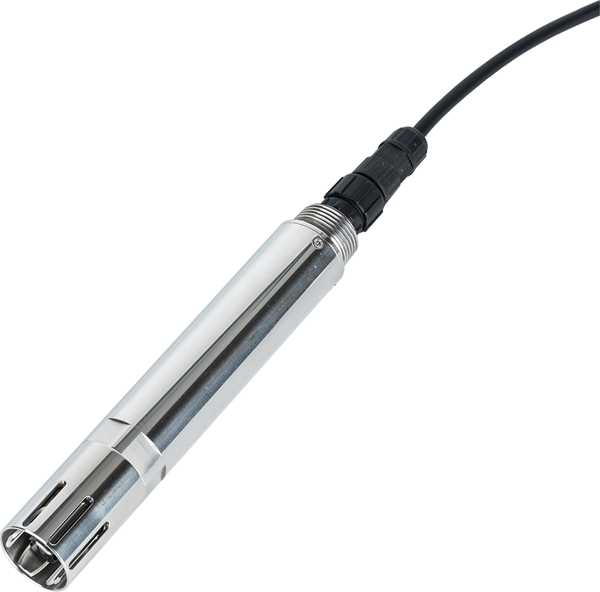
For aquaculture, surface water and wastewater, ammonia is a process risk indicator. The risk depends on pH, temperature, water exchange and treatment process. A useful purchase decision therefore needs the measuring range, site condition and maintenance ability to be clear before price comparison.
This article explains what should be included when requesting an ammonia meter for water and how to avoid incomplete quotations.
One supplier may quote a low-range ammonium ion selective electrode, while another quotes a broader range with controller, calibration support and installation accessories. Without a shared scope, the lower number is not necessarily the lower project cost.
Ammonia monitoring also depends on water chemistry. The NiuBoL ammonia nitrogen sensor works in medium pH 4 to 10 and should be selected with awareness of pH and temperature. In aquaculture, those parameters influence the toxic un-ionized ammonia fraction.
| Quote component | Why it matters |
|---|---|
| NHN sensor range | Low-range aquaculture and high-range wastewater do not use the same selection logic. |
| Calibration materials | Two-point calibration must be practical for the maintenance team. |
| pH and temperature data | Needed for risk interpretation, especially in aquaculture. |
| Installation accessories | A poor mounting point can cause deposits and unstable readings. |
Online ammonia monitoring is useful when the site needs trend data, early warning or process control. It is less useful if the buyer only needs occasional laboratory confirmation. Many serious projects still use lab tests for formal reporting and online sensors for continuous operational awareness.
The buyer should decide whether the sensor is for early warning, treatment optimization, discharge trend or research. The purpose affects range, alarm threshold and acceptance method.
| Technical item | Verified value or project note |
|---|---|
| Measurement principle | Ammonium ion selective electrode |
| Range options | 0 to 10.00 mg/L, 0 to 100.00 mg/L, or 0 to 1000.0 mg/L |
| Resolution | 0.01 mg/L or 0.1 mg/L by selected range |
| Accuracy | +/-10% or +/-0.5 mg/L; temperature +/-0.5 deg C |
| Working condition | 0 to 40 deg C; pressure below 0.1 MPa; medium pH 4 to 10 |
| Communication | RS485 Modbus RTU, default 9600, N, 8, 1 |
| Calibration | Two-point calibration supported |
| Material and protection | PVC and POM wetted material; 3/4 NPT; IP68 |
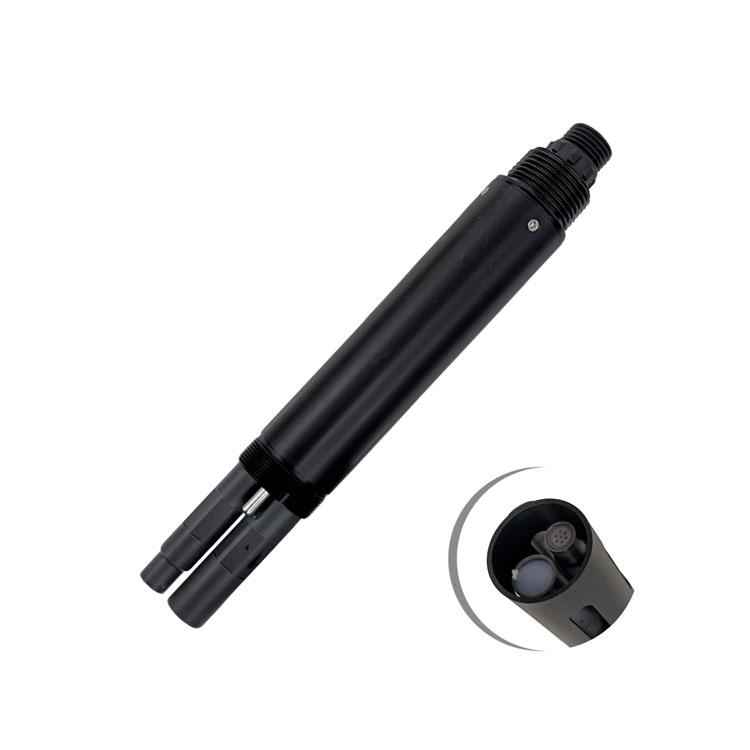
The NiuBoL ammonia nitrogen sensor has range options from low mg/L to high concentrations. A 0 to 10.00 mg/L range is useful when the buyer needs better resolution for cleaner water or aquaculture. Higher ranges may fit wastewater or process monitoring where concentration can rise sharply.
Choosing a very high range for a low-concentration site can make the data less useful. Choosing too low a range for wastewater can lead to over-range readings during abnormal events.
Field environment challenge: Ammonia toxicity changes with pH and temperature.
System integration plan: Use NHN sensor with pH, temperature and DO monitoring, plus alert thresholds based on species risk.
User value: Helps operators act before ammonia stress becomes visible.
Field environment challenge: Ammonia can rise after discharge events or agricultural runoff.
System integration plan: Install online NHN sensor with RTU, power system and scheduled calibration checks.
User value: Creates trend evidence for event investigation.
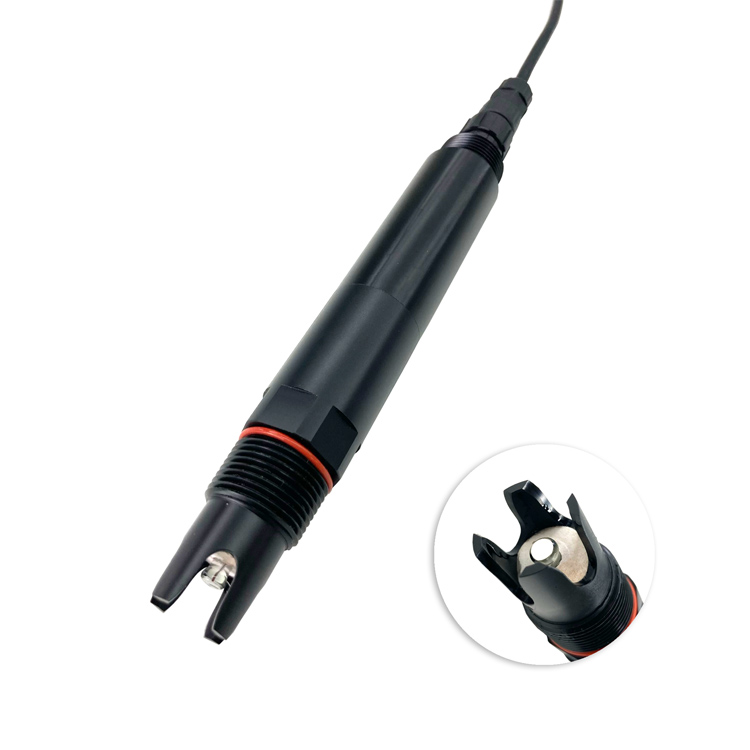
Field environment challenge: Nitrification problems may create unstable ammonia levels.
System integration plan: Place sensor at relevant process or effluent point and compare with lab samples during commissioning.
User value: Supports process adjustment and early fault detection.
Field environment challenge: Intermittent discharge may be missed by manual sampling.
System integration plan: Use continuous monitoring and alarm records where permitted by project scope.
User value: Improves response time and documentation.
A complete ammonia sensor quotation should state not only the model but also the selected range, cable, output, calibration method, controller requirement and maintenance items. If the project is remote, spare parts and cleaning access should be discussed before ordering.
| Buyer requirement | Include in quote |
|---|---|
| Aquaculture warning | NHN sensor, pH, temperature, DO link and alarm strategy. |
| River station | Sensor, RTU or gateway, solar power interface and cleaning schedule. |
| Wastewater control | Range selection, mounting location and comparison sampling method. |
| Distributor stock | Common range, manuals, packaging, spare parts and batch consistency. |
| Check | Engineering note |
|---|---|
| 1 | Confirm whether the project needs ammonium nitrogen trend control or formal laboratory-grade compliance reporting; the measurement method and acceptance plan differ. |
| 2 | Check pH and temperature because un-ionized ammonia risk in aquaculture depends on both values, not only on the NHN reading. |
| 3 | Use two-point calibration records and comparison samples during acceptance, especially for low-range surface water or aquaculture projects. |
| 4 | Avoid installing the sensor in dead zones where sludge deposits around the membrane or electrode body. |
| RFQ field | Why it changes selection or quote |
|---|---|
| Expected concentration | Determines 0-10, 0-100 or 0-1000 mg/L range selection. |
| Water pH and temperature | Defines suitability and interpretation of ammonia risk. |
| Monitoring purpose | Early warning, process control and compliance support require different acceptance plans. |
| Output and data platform | RS485 Modbus RTU, controller or gateway affects total cost. |
| Maintenance plan | Calibration solution, cleaning interval and spare sensor strategy affect long-term budget. |
Ammonia projects benefit from a written alarm philosophy. In aquaculture, a small concentration change can be more important at high pH and high temperature. In wastewater, the same value may have a different meaning depending on process stage. The quote should support the way the customer will act on the data.
During site acceptance, compare online readings with a fresh sample and record pH and temperature at the same time. This creates a defensible baseline and helps distinguish sensor drift from real process change.
Ammonia monitoring has a stronger interpretation burden than many single parameters. In aquaculture, the same ammonia nitrogen value may be tolerable at one pH and dangerous at another. In wastewater, a sudden rise may indicate nitrification stress, high load or process imbalance. A quote that ignores the surrounding parameters is incomplete.
Buyers should decide whether they need only NHN measurement or a combined package with pH, temperature and dissolved oxygen. For many farms and treatment sites, the combined package gives better operational decisions than a single number.
| Project type | Recommended quote scope |
|---|---|
| Aquaculture | NHN plus pH, temperature and DO context, with alarm guidance. |
| River station | NHN sensor, RTU or gateway, power system and field calibration plan. |
| STP effluent | Range selection, mounting, lab comparison and maintenance records. |
| Distributor stock | Common range, spare parts, manual and packaging consistency. |
A quote should not hide calibration, cable, communication document or installation accessories. If the sensor is delivered without these items, the customer may still need to buy them locally, which delays commissioning and weakens trust in the supplier.
For high-risk aquaculture, the buyer should connect the ammonia alarm with practical action: reduce feeding, increase water exchange, check biofilter condition or add aeration where appropriate. The sensor creates value only when the site has a response plan.
For wastewater applications, ammonia trend should be reviewed together with DO and pH. If DO is too low in a biological process, ammonia may rise because nitrification is limited. A single-parameter quote may still be valid, but the operator should understand what supporting measurements are needed.
For quotation comparison, ask whether the supplier includes calibration guidance for the selected range. A low-range ammonia project and a high-range wastewater project may need different calibration habits, even when the communication interface is the same.
If the customer is a system integrator, request the Modbus register information before shipment. This allows the PLC or gateway engineer to prepare the data template and reduces on-site waiting time during commissioning.
For farm and wastewater buyers, the inquiry should state whether the alarm will be used for operator warning only or for automatic control action. This affects how conservative the alarm threshold should be and whether supporting pH, temperature and DO data must be quoted together.
An online ammonia sensor fits farms, river stations and treatment plants that need trend and early warning. It is not a complete replacement for laboratory compliance testing, and it should not be quoted alone when the buyer's risk decision depends on pH and temperature.
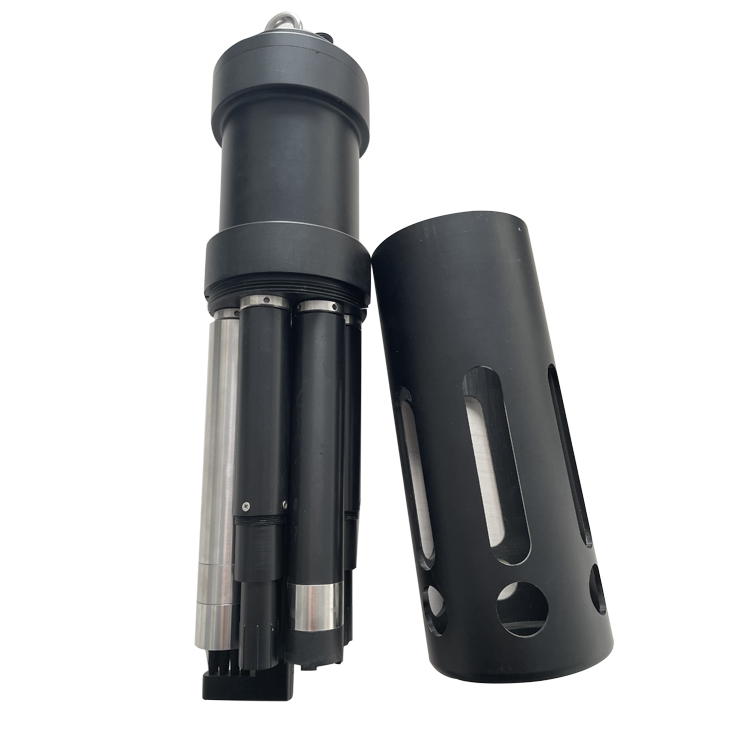
A: A complete price should specify range, sensor body, cable, RS485 output, mounting, calibration method, controller or gateway if needed, documents and spare parts.
A: Low-range aquaculture or river monitoring needs useful resolution. Wastewater may need higher range to avoid over-range readings during process upset.
A: Online sensors are useful for continuous trend and early warning. Formal compliance may still require laboratory methods depending on the project or local rules.
A: In aquaculture, toxic un-ionized ammonia depends on ammonia nitrogen, pH and temperature. A single NHN value does not fully describe biological risk.
A: Request RS485 Modbus RTU settings and register map before shipment so PLC, RTU or gateway engineers can prepare the data template.
A: Install it in representative moving water, away from sludge deposits, chemical pockets and dead zones that can make the reading unrepresentative.
A: Record two-point calibration, live reading, pH and temperature, communication value, comparison sample and the alarm rule used by operators.
A: It is incomplete if it omits selected range, cable length, output, calibration guidance, mounting, controller requirement or maintenance supplies.
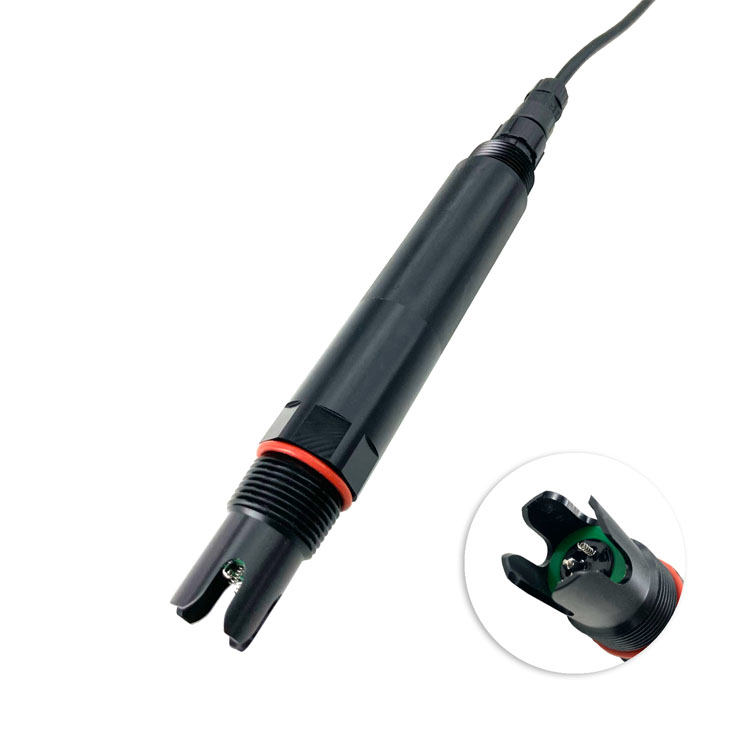
Ammonia sensor for water price should be evaluated by complete monitoring scope, range, calibration and site risk. NiuBoL ammonia nitrogen sensors provide RS485 Modbus RTU output, several concentration ranges and IP68 construction for aquaculture, river and wastewater projects. Buyers should define concentration, pH, temperature, installation and maintenance before requesting a quote.
Prev:Turbidity Meter Price Guide: Portable, Online and Self-Cleaning Options
Next:TDS Meter Price and Quality: How to Compare Industrial Offers
Related recommendations
Sensors & Weather Stations Catalog
 Agriculture Sensors and Weather Stations Catalog-NiuBoL.pdf
Weather Stations Catalog-NiuBoL.pdf
Agriculture Sensors Catalog-NiuBoL.pdf
Water Quality Sensor Catalog-NiuBoL.pdf
Related products
 Combined air temperature and relative humidity sensor
 TDR Soil Moisture & Temperature Sensor for irrigation| RS485 |4-20mA| NBL-S-THR
 Soil pH sensor RS485 soil Testing instrument soil ph meter for agriculture |NBL-S-PH
 Wind Speed sensor Output Modbus/RS485/Analog/0-5V/4-20mA
 Tipping bucket rain gauge for weather monitoring auto rainfall sensor RS485/Outdoor/stainless steel
 Pyranometer Solar Radiation Sensor 4-20mA/RS485

Screenshot, WhatsApp to identify the QR code
WhatsApp number:+8615367865107
(Click on WhatsApp to copy and add friends)

