





— Blogs —
—Products—
 Consumer hotline +8618073152920
 WhatsApp:+8615367865107
Address:Room 102, District D, Houhu Industrial Park, Yuelu District, Changsha City, Hunan Province, China
Product knowledge
Time:2026-07-22 12:11:24 Popularity:246
Turbidity meter price depends strongly on whether the buyer needs a handheld checker, an online probe or a self-cleaning monitoring point. These products may all show NTU, but they solve different project problems.
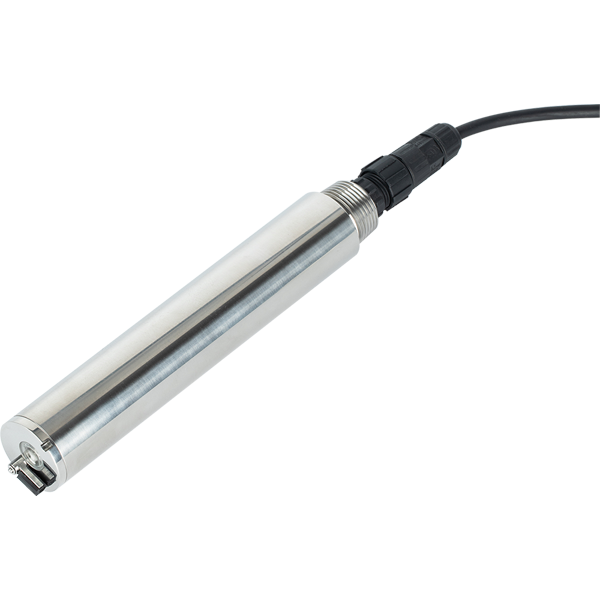
For water treatment, river monitoring and wastewater discharge, online turbidity data is useful only when the optical window stays clean, the range is correct and the output can be integrated into the control or reporting system.
Before purchasing a turbidity meter or turbidity sensor, compare the expected NTU range, cleaning access, output signal, mounting point and how operators will respond when turbidity rises.
A portable turbidity meter is mainly a testing instrument. An online turbidity sensor is a fixed measuring point. A self-cleaning solution adds mechanical cleaning or a station-level arrangement for sites where fouling is expected. Comparing these as one product category creates confusion.
The project should define whether turbidity is used for inspection, process control, alarm, discharge evidence or trend monitoring. Each decision requires a different scope.
| Option | Use when |
|---|---|
| Portable meter | Operators need spot checks or verification samples. |
| Online turbidity sensor | The site needs continuous NTU trend, alarm or SCADA data. |
| Self-cleaning point | The water contains biofilm, solids, algae or long unattended service intervals. |
| Multiparameter probe | Turbidity is one part of a compact station with pH, DO, EC or COD. |
The main cost drivers are NTU range, optical structure, cleaning requirement, controller or gateway, cable length, installation hardware, calibration standard and after-sales support. Buyers should ask suppliers to list these items separately.
A cheaper turbidity quote may be suitable for clean water but fail in wastewater with high solids. A higher-cost self-cleaning setup may be unnecessary for a staffed water treatment room where cleaning is easy.
| Technical item | Verified value or project note |
|---|---|
| Measurement principle | Scattered light turbidity measurement |
| Range options | 0 to 20.00 NTU, 0 to 100.0 NTU, or 0 to 1000.0 NTU |
| Resolution | 0.01 NTU or 0.1 NTU by selected range |
| Accuracy | +/-3% or +/-1.5 NTU; +/-3% or +/-2 NTU; +/-5% or +/-3 NTU by range |
| Temperature compensation | Pt1000 automatic compensation |
| Power supply | 12 to 24 VDC |
| Output signal | RS485 Modbus RTU |
| Installation and protection | 3/4 NPT immersion mounting; 5 m customizable cable; IP68 |
Low-turbidity drinking water needs a different range and resolution from stormwater or wastewater. NiuBoL turbidity sensors have range options such as 0 to 20.00 NTU, 0 to 100.0 NTU and 0 to 1000.0 NTU. Selecting the range from expected site data is more reliable than choosing the largest number.
Accuracy statements should be read with the range. At high turbidity, particle size and color can affect optical readings, so site correlation with laboratory samples is part of serious commissioning.
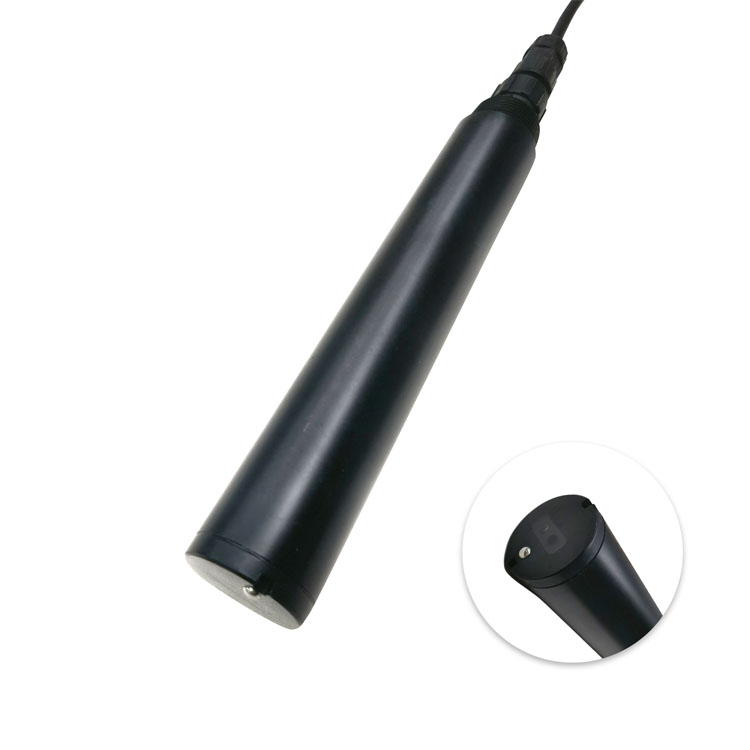
Field environment challenge: Low NTU values require stable resolution and careful installation.
System integration plan: Use correct low-range sensor, avoid bubbles and record calibration standard.
User value: Supports filter performance checks and early alarm when turbidity rises.
Field environment challenge: Sediment changes quickly after rain and may foul the optical window.
System integration plan: Use online turbidity sensor with station cleaning plan and RS485 data logging.
User value: Creates continuous event data instead of relying only on manual sampling.
Field environment challenge: Solids and biofilm can cause drift or blocked optical paths.
System integration plan: Select suitable range, install where flow is representative and plan cleaning access.
User value: Helps operators identify process upset before discharge quality is affected.
Field environment challenge: Fine particles can indicate corrosion, leakage or filter issues.
System integration plan: Integrate turbidity trend into plant SCADA with alarm thresholds.
User value: Improves maintenance response before visible water quality problems appear.
For procurement, the question is not only 'how much is the turbidity meter'. It is 'what is included and will it survive the site'. The following comparison helps buyers normalize offers.
| Comparison item | Ask supplier to confirm |
|---|---|
| NTU range | Which range is quoted and why it fits the expected water. |
| Cleaning method | Manual cleaning, wiper, flow design or other fouling control. |
| Output | RS485 Modbus RTU, local display, analog output or gateway. |
| Calibration | Required standard solution and field verification method. |
| Mounting | Immersion, pipe, tank, open channel or buoy installation. |
| Check | Engineering note |
|---|---|
| 1 | Install the optical window where solids do not settle on the face and where bubbles are not continuously trapped. |
| 2 | Select the NTU range from actual site data or laboratory records. Oversizing the range can reduce useful resolution in clean water. |
| 3 | Plan cleaning access before civil work is closed. Turbidity probes fail most often from fouling and poor maintenance access, not from communication problems. |
| 4 | Use trend comparison with laboratory samples during commissioning, especially where color and particle size vary by process. |
| RFQ field | Why it changes selection or quote |
|---|---|
| Expected NTU range | The range affects resolution, accuracy and model selection. |
| Water source | Clean water, wastewater, river and stormwater have different fouling profiles. |
| Cleaning requirement | Unattended sites may need self-cleaning or more accessible mounting. |
| Output and controller | Digital integration, display or analog output changes system cost. |
| Calibration and acceptance | Standard solution and sample comparison should be included for serious projects. |
A useful turbidity purchase document should also state what data quality the project expects. For example, a filtration alarm may need stable low-NTU response, while a stormwater station may need to capture sudden high peaks. These two objectives should not be quoted as the same sensor package.
For long-term installations, the hidden cost is usually site access. If a technician must travel several hours to clean a window, a better installation position or self-cleaning design can be more economical than a cheaper probe.
Turbidity is an optical measurement, so the installation position is part of the instrument. A low-price probe installed where bubbles strike the window or solids settle on the face will create false alarms and extra site visits. The buyer should request mounting advice together with the price.
For open channels and rivers, the cleaning plan should be priced realistically. Manual cleaning may be acceptable near a staffed plant. Remote stations may need a self-cleaning probe, a protective installation or a maintenance contract. The correct choice depends on access cost and data continuity requirement.
| Site risk | Procurement response |
|---|---|
| Air bubbles | Avoid turbulent discharge points or use a calmer bypass location. |
| Sediment | Mount where solids do not settle directly on the optical surface. |
| Algae or biofilm | Plan cleaning interval or self-cleaning configuration. |
| Low NTU requirement | Select proper low range and calibration standard. |
A higher price is justified when it reduces field visits, improves low-range stability, includes the correct controller or provides a cleaning design that matches the water. It is not justified if the extra features do not solve the site's real problem.
A turbidity project should include a response plan for high readings. If the alarm only tells operators that NTU is high but no one knows whether to backwash, inspect a discharge, clean the sensor or take a lab sample, the monitoring point has limited operational value.
For distributors, stocking one online turbidity model without asking about range can create mismatched sales. Clean water projects, river stations and wastewater outlets need different range assumptions, so the inquiry form should always ask for expected normal and peak NTU.
For low turbidity water, buyers should ask how the sensor is verified at the lower part of the range. For high turbidity water, they should ask how often the optical window needs inspection and whether the installation can be cleaned without shutting down the process.
If the project uses turbidity as a substitute indication for suspended solids, state that clearly. Turbidity and TSS are related but not identical, so the site may need correlation samples before using NTU trend as a solids management signal.
Turbidity acceptance should include a clean-window check, a stable reading test, communication verification and a comparison sample. If the site uses turbidity as an early warning for TSS or filtration problems, the acceptance record should also state how operators respond to a high NTU alarm.

A: Price changes with NTU range, optical design, online output, self-cleaning requirement, controller, mounting hardware, calibration standard and cleaning access.
A: Portable testing is enough for occasional inspection or sample verification. It is not enough for continuous alarms, event monitoring or SCADA records.
A: Specify self-cleaning or easier cleaning access when the site has algae, biofilm, sludge, stormwater sediment or long unattended intervals.
A: Use historical data or expected normal and peak turbidity. A range that is too high may hide small changes in clean water; a range that is too low may over-range during events.
A: Differences can come from sample timing, particle settling, color, bubbles, calibration standard, optical geometry and whether the online point is representative.
A: It can be used as a trend indicator only after site correlation. NTU and TSS are not the same measurement, so solids management should be validated with samples.
A: Avoid bubble zones, settled sludge, grease layers and locations where the optical face cannot be cleaned. Optical access is part of the measurement.
A: Include water type, expected NTU range, installation location, cleaning plan, output interface, controller need, cable length and calibration standard.
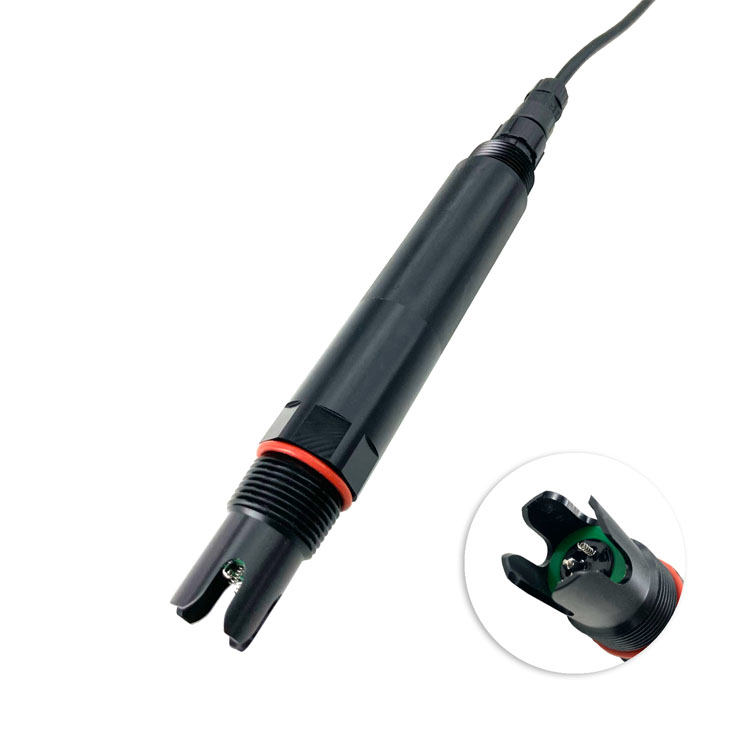
Turbidity meter price should be judged by application, range, installation and maintenance scope. NiuBoL online turbidity sensors provide RS485 Modbus RTU output, IP68 immersion construction and several NTU range options for clean water, wastewater and environmental stations. Buyers should compare complete system scope rather than only sensor unit price.
Prev:Dissolved Oxygen Meter Price: What Buyers Should Compare Beyond Unit Cost
Next:Ammonia Sensor for Water Price: What Is Included in a Complete Quote?
Related recommendations
Sensors & Weather Stations Catalog
 Agriculture Sensors and Weather Stations Catalog-NiuBoL.pdf
Weather Stations Catalog-NiuBoL.pdf
Agriculture Sensors Catalog-NiuBoL.pdf
Water Quality Sensor Catalog-NiuBoL.pdf
Related products
 Combined air temperature and relative humidity sensor
 TDR Soil Moisture & Temperature Sensor for irrigation| RS485 |4-20mA| NBL-S-THR
 Soil pH sensor RS485 soil Testing instrument soil ph meter for agriculture |NBL-S-PH
 Wind Speed sensor Output Modbus/RS485/Analog/0-5V/4-20mA
 Tipping bucket rain gauge for weather monitoring auto rainfall sensor RS485/Outdoor/stainless steel
 Pyranometer Solar Radiation Sensor 4-20mA/RS485

Screenshot, WhatsApp to identify the QR code
WhatsApp number:+8615367865107
(Click on WhatsApp to copy and add friends)

