





— Blogs —
—Products—
 Consumer hotline +8618073152920
 WhatsApp:+8615367865107
Address:Room 102, District D, Houhu Industrial Park, Yuelu District, Changsha City, Hunan Province, China
Product knowledge
Time:2026-07-22 12:11:21 Popularity:197
Dissolved oxygen meter price should be compared by complete working scope, not by the probe price alone. Optical DO sensors, controllers, mounting accessories, cable length, calibration support and spare optical caps all change the real project cost.
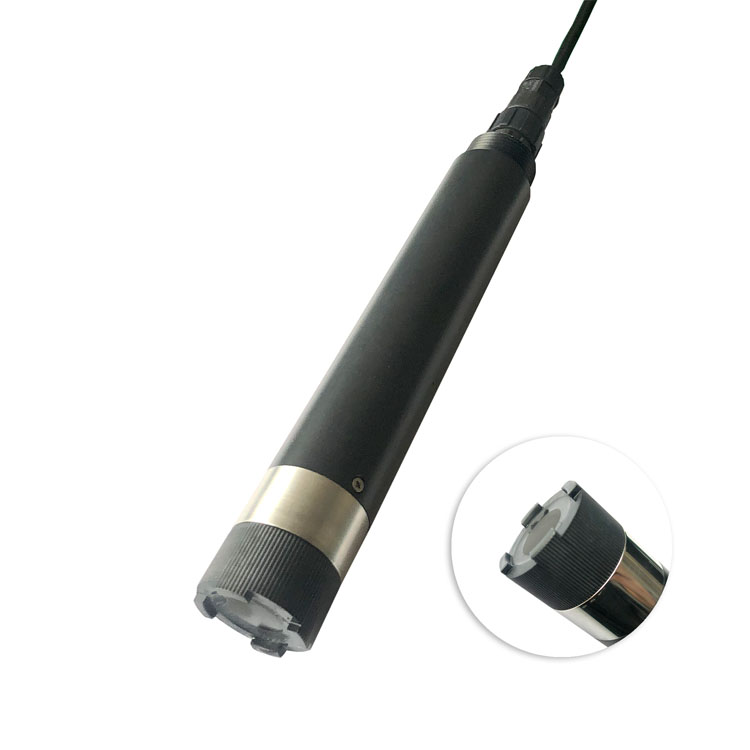
For aquaculture, wastewater aeration and surface water stations, the dissolved oxygen value often drives operating action. A low-cost device that cannot communicate with the control system or cannot be maintained locally may cost more after installation.
This guide gives buyers a practical way to compare DO meter quotations and decide what should be included before ordering.
A DO probe may be quoted as a sensor only, while another offer includes transmitter, display, cable, bracket and commissioning support. These are not equal offers. Buyers should request a line-item scope so engineering teams can see what is missing.
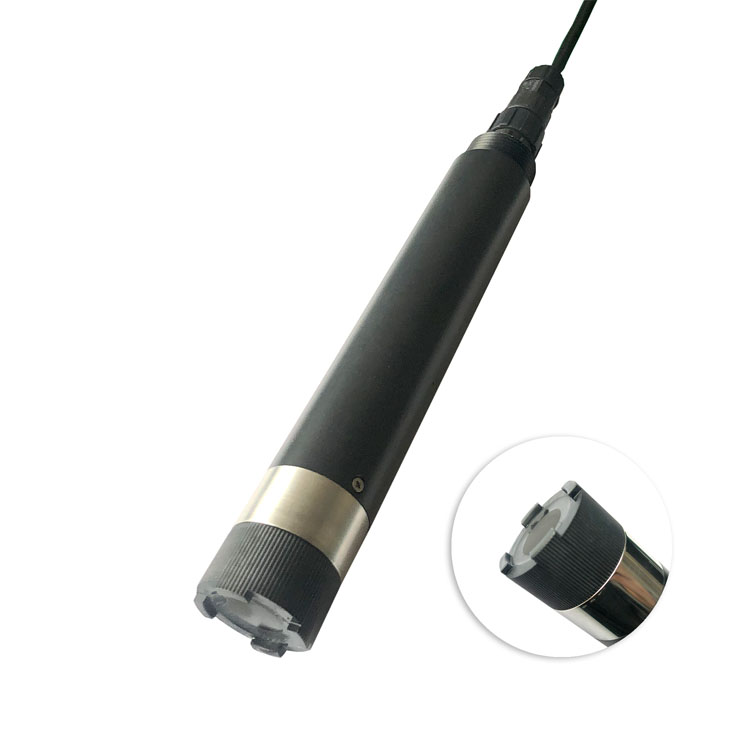
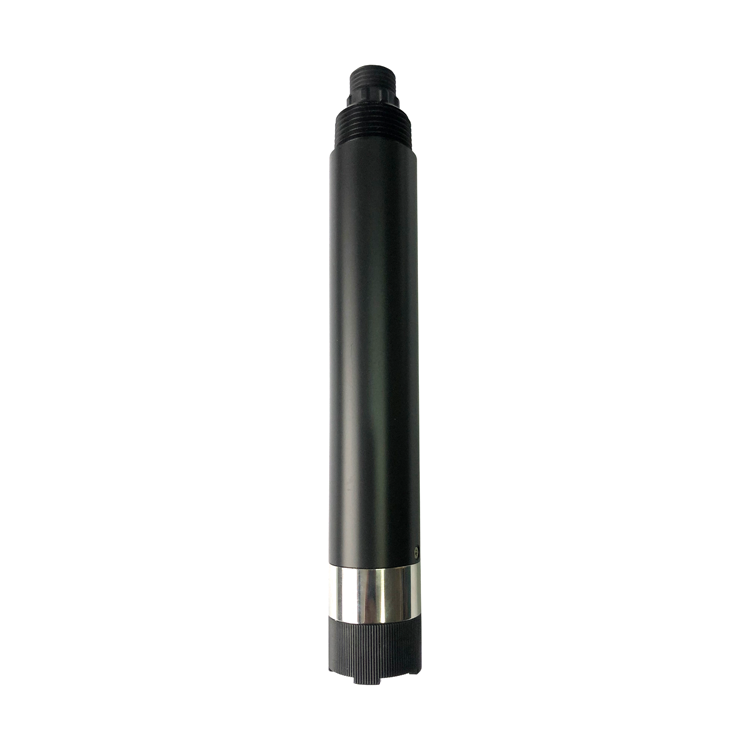
The optical cap is also part of the lifetime cost. NiuBoL fluorescence DO sensors use an optical method that avoids membrane and electrolyte maintenance, but the fluorescent cap remains a planned spare under normal service.
| Cost item | Buyer decision |
|---|---|
| Sensor probe | Check measuring range, accuracy, output and pressure condition. |
| Controller or display | Needed when local operation, relay or analog output is required. |
| Mounting accessories | Depends on pond, tank, aeration basin, buoy or pipe arrangement. |
| Spare optical cap | Include for critical projects and planned maintenance budgets. |
Portable DO meters fit patrol inspection and spot verification. Online DO sensors fit continuous alarms, aeration control and data records. Many projects need both: online sensors for trend and portable instruments for maintenance checks.
If the buyer asks only for a low price, suppliers may quote a portable unit even when the project needs automatic alarms. The RFQ should state whether the requirement is spot testing or continuous monitoring.
| Technical item | Verified value or project note |
|---|---|
| Measurement principle | Fluorescence dissolved oxygen |
| Measurement range | 0 to 20 mg/L; 0 to 200% saturation at 25 deg C |
| Resolution and accuracy | 0.01 mg/L; +/-2% F.S.; temperature +/-0.3 deg C |
| Working condition | 0 to 45 deg C; pressure below 0.2 MPa |
| Power supply | 12 to 24 VDC |
| Output signal | RS485 Modbus RTU; optional 4-20 mA on 4A model |
| Maintenance part | Fluorescent cap has one-year guarantee under normal use |
| Protection and material | IP68; POM and 316L stainless steel shell |
The 0 to 20 mg/L range and 0.01 mg/L resolution are suitable for most aquaculture and wastewater applications. Price changes more from output, housing, controller, cable, installation method and project documentation than from the measuring range itself.
RS485 Modbus RTU is valuable where DO data enters a PLC, RTU, gateway or cloud platform. If aerator control requires analog input, confirm whether 4-20 mA output is included in the quoted model.
Field environment challenge: DO can fall at night or during cloudy weather, and losses happen quickly.
System integration plan: Install online DO sensors at representative depth, connect alarms to gateway or aerator logic.
User value: Gives early warning before low oxygen becomes a production loss.
Field environment challenge: Air bubbles and mixed liquor conditions can disturb readings.
System integration plan: Place the optical DO sensor away from direct bubble blast and integrate trend data with blower control.
User value: Improves aeration decisions and reduces manual checking.
Field environment challenge: Remote sites need low-maintenance sensors and stable digital output.
System integration plan: Use RS485 DO sensor with solar-powered station or RTU, plus scheduled cleaning.
User value: Creates continuous dissolved oxygen data for environmental assessment.
Field environment challenge: System builders need stable wiring and repeatable documents.
System integration plan: Specify sensor, output, address, controller and cable in the BOM.
User value: Reduces integration time across repeat projects.
A fair comparison separates purchase cost, installation cost and yearly maintenance cost. Optical sensors often reduce routine consumables compared with electrochemical DO probes, especially when the site has limited maintenance staff.
For fish farms, the cost of missing a low-oxygen event may be far higher than the instrument cost. For wastewater plants, poor DO control can increase energy use or disturb biological treatment.
| Comparison point | Low-scope quote risk |
|---|---|
| No communication document | PLC integration may be delayed. |
| No mounting plan | Sensor may be placed in bubbles or dead water. |
| No spare cap plan | Maintenance may stop data collection later. |
| No acceptance method | Disputes may occur when lab or portable readings differ. |
| Check | Engineering note |
|---|---|
| 1 | Optical DO sensors reduce membrane and electrolyte work, but the optical cap is still a planned spare part and should appear in the maintenance budget. |
| 2 | In aeration tanks, avoid direct placement in violent bubble zones because bubbles can create false high readings and unstable control action. |
| 3 | Document air calibration, zero check if required, temperature reading and comparison sample during site acceptance. |
| 4 | For aquaculture alarms, connect DO with time of day, aerator status and water temperature rather than treating one threshold as universal. |
| RFQ field | Why it changes selection or quote |
|---|---|
| Application | Aquaculture, wastewater, river or lab verification changes configuration. |
| Output | RS485, 4-20 mA or controller relay changes model and price. |
| Installation | Pond, tank, buoy or aeration basin affects bracket and cable. |
| Spare parts | Optical cap and cleaning items should be included for long-term sites. |
| Quantity and schedule | Batch orders need consistent model, packaging and delivery planning. |
For tender comparison, ask every supplier to separate the sensor, controller, cable, mounting, spare parts and documents. This makes price differences visible and avoids rejecting a complete offer in favor of an incomplete one.
A DO meter purchase also needs an operation plan. The site should know who cleans the sensor, who checks calibration, what alarm level triggers action and what spare part is available if the probe is damaged during the season.
Put each offer into the same structure before choosing. The first line is the sensor model and method. The second line is the output and controller. The third line is installation hardware. The fourth line is maintenance parts and documents. This simple structure often reveals why one offer is cheaper.
For aquaculture and wastewater, downtime has a cost. If one quote includes spare optical cap planning and another does not, the first quote may be more practical for a site where DO alarms protect production or aeration performance.
| Offer line | Question to ask |
|---|---|
| Sensor method | Is it optical fluorescence or electrochemical, and what maintenance is required? |
| Output | Does the price include RS485 documentation or 4-20 mA configuration? |
| Mounting | Does the supplier include bracket, immersion hardware or tank installation advice? |
| Spare plan | Is the optical cap or replacement part listed for critical operation? |
The common failure is not that the sensor cannot measure oxygen. It is that the probe is installed in a poor hydraulic position, the cable is routed with power lines, alarms are not tested, or no one owns the maintenance routine. These issues should be solved in the purchase stage, not after fish losses or aeration complaints occur.
The quotation should also state what is excluded. Civil brackets, local panel wiring, cloud platform fees, SIM cards, freight insurance and site labor are sometimes outside the sensor supplier scope. Listing exclusions does not weaken the offer; it makes the project budget more accurate.
For a new aquaculture customer, a phased purchase may be better than buying every point at once. Start with representative ponds, confirm alarm thresholds and maintenance routine, then duplicate the same model and communication settings across the farm.
For pricing requests that involve several ponds or tanks, ask the supplier to quote the same DO sensor configuration for all normal points and a separate option for any high-risk point. This prevents a mixed installation where operators cannot easily compare readings between locations.
If the project includes remote alerts, confirm whether the price includes only the DO sensor or also the gateway, antenna, cloud account, alarm rules and enclosure. These items are often outside a sensor-only quote but essential for the buyer's actual objective.
An online dissolved oxygen meter is justified when low-oxygen risk needs a fast response or when aeration operation must be recorded. It is not justified as the only tool for a small site that only needs occasional spot checks and has no alarm or data logging requirement.
A: One offer may include only the DO probe, while another includes controller, cable, mounting, RS485 document, spare optical cap and commissioning support. Compare complete scope, not one line.
A: Optical DO sensors can cost more initially, but they avoid membrane and electrolyte maintenance. They are often better for sites where labor is limited or continuous uptime matters.
A: Include online DO sensor, mounting depth, alarm method, gateway or controller, cable length, spare cap and the relationship with aerator control or farm alarm rules.
A: No, not when low oxygen events must trigger alarms or aerators. Portable meters are useful for verification, patrol and backup checks.
A: Avoid direct bubble impact, stagnant corners and positions that do not represent the pond or aeration tank. Bad hydraulics can make a good sensor look unstable.
A: Check air calibration, temperature reading, stable water reading, output communication, alarm rule and comparison with a portable meter under the same condition.
A: The fluorescent cap, cleaning tools and sometimes a spare probe affect long-term cost. Critical aquaculture and wastewater projects should budget these before operation starts.
A: It is wrong when it lacks the output, documents, mounting or maintenance parts required for the project. The saving disappears if integration or alarm operation fails.
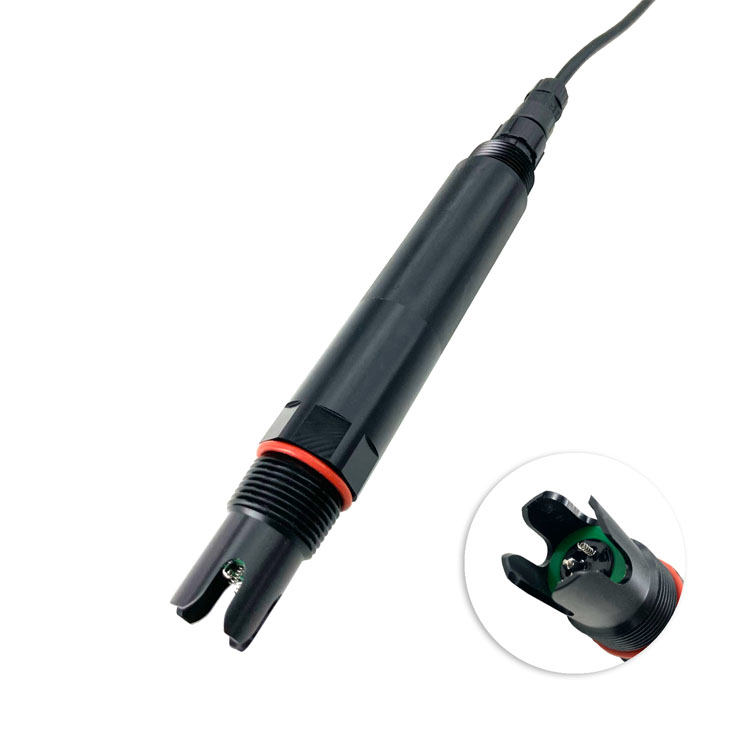
Dissolved oxygen meter price is meaningful only when the complete scope is defined. For continuous aquaculture, wastewater and environmental monitoring, NiuBoL optical DO sensors provide RS485 Modbus RTU integration, stable online measurement and planned maintenance parts. Buyers should compare lifetime cost, installation, output and acceptance method before choosing a quote.
Prev:pH Meter for Industrial Use: Specification Checklist for Engineers and Buyers
Next:Turbidity Meter Price Guide: Portable, Online and Self-Cleaning Options
Related recommendations
Sensors & Weather Stations Catalog
 Agriculture Sensors and Weather Stations Catalog-NiuBoL.pdf
Weather Stations Catalog-NiuBoL.pdf
Agriculture Sensors Catalog-NiuBoL.pdf
Water Quality Sensor Catalog-NiuBoL.pdf
Related products
 Combined air temperature and relative humidity sensor
 TDR Soil Moisture & Temperature Sensor for irrigation| RS485 |4-20mA| NBL-S-THR
 Soil pH sensor RS485 soil Testing instrument soil ph meter for agriculture |NBL-S-PH
 Wind Speed sensor Output Modbus/RS485/Analog/0-5V/4-20mA
 Tipping bucket rain gauge for weather monitoring auto rainfall sensor RS485/Outdoor/stainless steel
 Pyranometer Solar Radiation Sensor 4-20mA/RS485

Screenshot, WhatsApp to identify the QR code
WhatsApp number:+8615367865107
(Click on WhatsApp to copy and add friends)

