





— Blogs —
—Products—
 Consumer hotline +8618073152920
 WhatsApp:+8615367865107
Address:Room 102, District D, Houhu Industrial Park, Yuelu District, Changsha City, Hunan Province, China
Product knowledge
Time:2026-07-22 12:11:18 Popularity:221
A pH meter for industrial use is not just a display with a probe. In a purchasing document, it should describe the measuring range, output interface, mounting condition, calibration method, spare parts and acceptance test. Without those details, suppliers may quote different systems under the same product name.
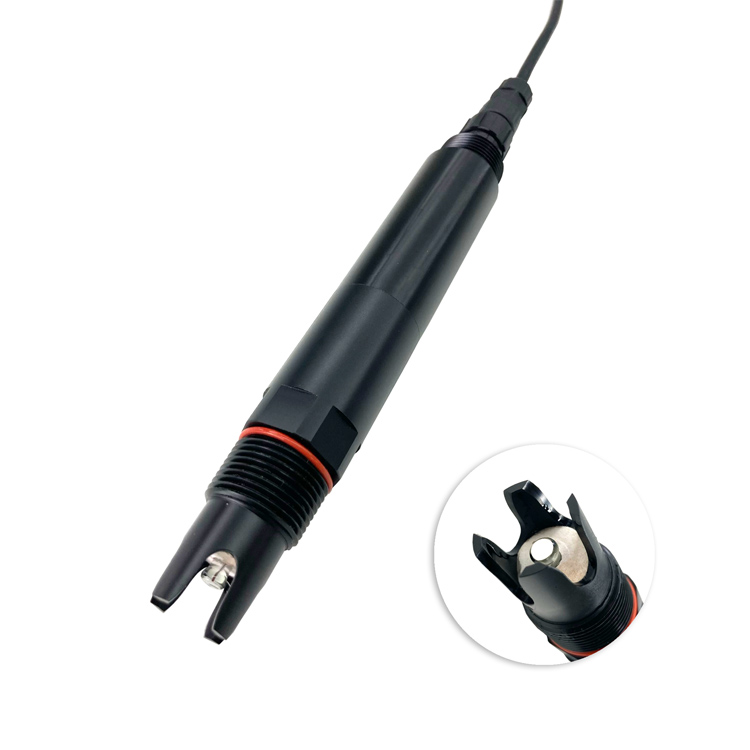
For a plant engineer, the risk is commissioning time. For a buyer, the risk is comparing prices that do not include the same scope. A NiuBoL online pH measuring instrument can be integrated through RS485 Modbus RTU, and selected 4-series configurations can meet 4-20 mA control requirements.
Use this checklist before issuing a purchase request for wastewater, process water, aquaculture water or environmental monitoring.
Before selecting a model, write down what the pH value will decide. A display-only point can tolerate a different response time and alarm strategy than an automatic dosing loop. A regulatory discharge point may require documented calibration and comparison samples. An OEM skid may care more about repeatable wiring and compact installation.
This step prevents overbuying and underbuying. A project that only needs occasional verification may use a portable meter, while a plant that needs trend alarms needs online measurement with data recording.
| Decision type | Specification focus |
|---|---|
| Trend observation | Stable RS485 data, simple maintenance and reliable records. |
| Chemical dosing | Representative location, output scaling, controller compatibility and alarm interlock. |
| Discharge record | Calibration traceability, comparison sample and data export. |
| OEM integration | Model consistency, cable length, register map and delivery schedule. |
A complete industrial pH meter scope may include sensor, transmitter or controller, cable, mounting bracket, calibration buffer, cleaning accessories, communication document and packing suitable for export. If these are not stated, a lower quote may simply be a smaller scope.
Buyers should ask whether the quoted item is only a pH probe or a complete online pH monitoring set. They should also confirm whether the controller is required. Some projects read the sensor directly through RS485, while others need a local display for operation and maintenance.
| Technical item | Verified value or project note |
|---|---|
| Measurement range | 0 to 14 pH |
| Resolution and accuracy | 0.01 pH; +/-0.1 pH |
| Temperature measurement | Accuracy +/-0.3 deg C; NTC automatic temperature compensation |
| Power supply | 12 to 24 VDC |
| Output signal | RS485 Modbus RTU; optional 4-20 mA on 4-series models |
| Power consumption | 0.2 W at 12 V |
| Installation | 3/4 NPT immersion mounting; 5 m cable, customizable |
| Protection and material | IP68; POM body, selected 316L stainless steel option |
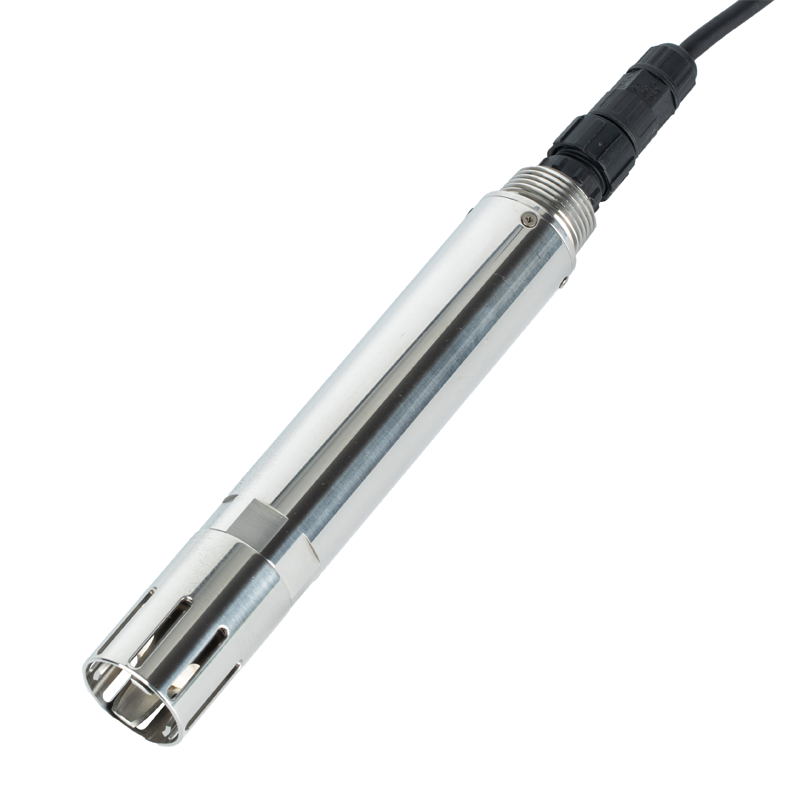
The pH range of 0 to 14 is standard, so price should not be judged by range alone. Accuracy, temperature compensation and electrode condition matter more in real operation. A stable temperature channel helps the system avoid seasonal bias, especially in outdoor tanks and aquaculture systems.
Power supply from 12 to 24 VDC fits common control cabinets and solar-powered monitoring stations. RS485 Modbus RTU allows the sensor to connect with PLC, RTU or IoT gateway. If the project uses an existing analog input card, the optional 4-20 mA output should be written clearly in the RFQ.
Field environment challenge: pH can change quickly with inflow and chemical addition.
System integration plan: Use online pH measurement with controller or PLC communication, plus documented calibration.
User value: Supports neutralization control and discharge record keeping.
Field environment challenge: Incorrect pH may reduce membrane life or chemical efficiency.
System integration plan: Install the sensor after mixing, integrate alarms into the dosing system and verify temperature compensation.
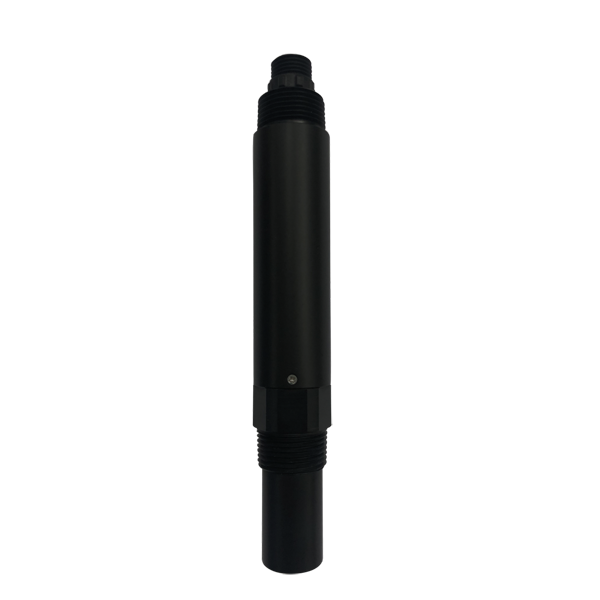
User value: Helps operators adjust chemicals before damage or quality loss occurs.
Field environment challenge: pH interacts with ammonia toxicity and biological filter performance.
System integration plan: Combine pH with DO, temperature and ammonia trend monitoring.
User value: Improves early warning and reduces manual test burden.
Field environment challenge: Panel builders need repeatable wiring and delivery consistency.
System integration plan: Specify model, output, register map, cable and packaging in the purchase standard.
User value: Makes batch assembly and replacement easier.
Do not use a generic line such as 'industrial pH meter, one set' in a purchase request. Add the water type, mounting method, output, cable length, local display requirement, calibration accessories and expected documents. This creates a quote that can be compared.
If the project has multiple points, standardize the interface where possible. Mixed outputs and mixed cable lengths can increase installation mistakes. For distributors, a stable standard package also makes after-sales support simpler.
| Checklist item | Recommended buyer action |
|---|---|
| Water type | State wastewater, process water, aquaculture, RO, river or other medium. |
| Output | Choose RS485, 4-20 mA or both according to PLC and data platform. |
| Mounting | Define immersion, bypass tank, pipe fitting or bracket. |
| Calibration | Request buffer solution requirement and calibration procedure. |
| Documentation | Ask for manual, wiring diagram, Modbus document and packing list. |
| Check | Engineering note |
|---|---|
| 1 | Confirm whether the pH loop is used for observation, chemical dosing or discharge acceptance; the acceptable drift and maintenance response are different. |
| 2 | Keep the probe wet during storage and commissioning. A dry pH bulb can delay startup and create a false impression of sensor failure. |
| 3 | For RS485 Modbus RTU, agree on register map, decimal position, baud rate and address allocation before panel wiring starts. |
| 4 | If 4-20 mA is required by an old PLC, check whether the buyer still needs digital diagnostic data through RS485 for maintenance records. |
| RFQ field | Why it changes selection or quote |
|---|---|
| Number of measuring points | Affects sensor count, controller count, address planning and spare ratio. |
| Local display requirement | Determines whether a transmitter/controller is needed in addition to the probe. |
| Signal interface | RS485 and 4-20 mA have different wiring, data and PLC requirements. |
| Mounting accessories | Brackets, flow cells or protective pipes may be needed for site installation. |
| Export documents | Manual, wiring diagram, invoice, packing and calibration information should match the shipped model. |
For industrial procurement, the most useful pH meter checklist is one that prevents hidden cost. A quote without cable length, mounting accessories or communication documents may look attractive but become expensive during installation. A quote with a clear scope lets engineering, purchasing and maintenance teams evaluate the same system.
The acceptance method should be agreed before shipment. If the customer expects comparison with a portable meter, both sides should define buffer calibration and sampling method. This avoids disputes caused by testing two different water samples at different times.
A good acceptance test does not stop at powering the instrument. The engineer should record buffer calibration, process value, temperature reading, communication address, output scaling and alarm action. If the project uses both RS485 and 4-20 mA, both outputs should be checked under the same process condition.
For dosing control, acceptance should include a stability period after mixing. A sensor installed near the chemical inlet may react faster, but the value may not represent the tank. The controller then doses against a local pocket instead of the real process water.
| Acceptance item | Pass condition |
|---|---|
| Buffer calibration | Reading returns to expected buffer value within agreed tolerance. |
| Process stability | Value remains reasonable after mixing and does not jump from cable noise. |
| Communication | PLC or gateway reads correct register, unit and decimal position. |
| Maintenance access | Probe can be removed, cleaned and reinstalled without unsafe work. |
For export orders, the purchase team should request the same model name on the proforma invoice, packing list, manual and wiring document. Inconsistent naming creates trouble when the equipment reaches the installation contractor, especially when several pH points are supplied in one shipment.
For spare planning, one spare probe is usually more useful than one spare controller when the cabinet is protected and the probe works in fouling water. The exact ratio depends on project criticality, but it should be discussed before the first order.
This online pH meter specification fits projects that need continuous readings, alarm records, PLC data or dosing feedback. It does not fit one-time laboratory verification, temporary sampling work or sites where nobody can clean and recalibrate the probe after installation.
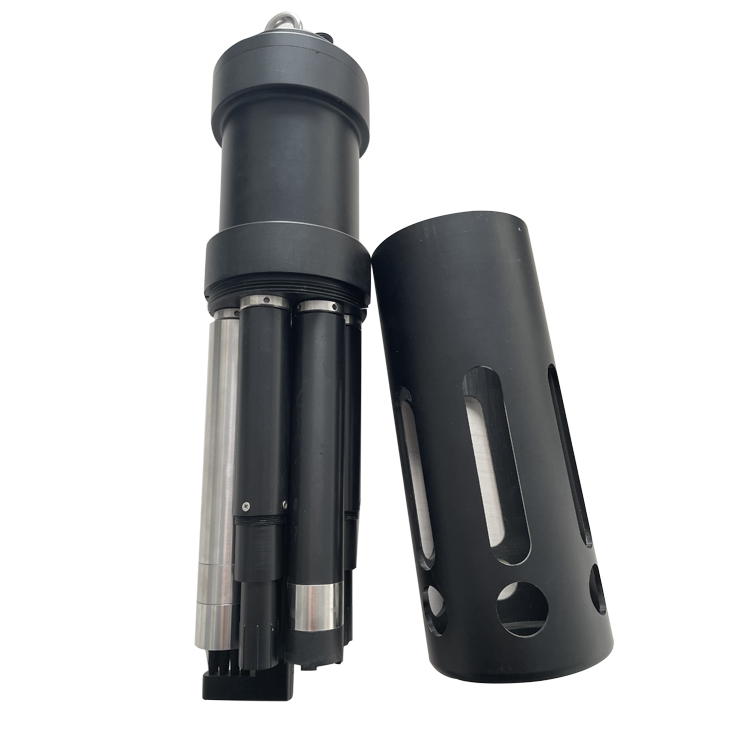
A: The minimum specification should include 0 to 14 pH range, accuracy, temperature compensation, power, output, mounting, cable length, protection grade, calibration procedure and acceptance method.
A: No. If a PLC, RTU or gateway reads RS485 Modbus RTU directly, a separate controller may be unnecessary. A controller is useful for local display, relay output or analog signal conversion.
A: Normalize the scope first. Compare sensor, controller, cable, mounting parts, calibration accessories, output type, communication document, warranty and commissioning support as separate lines.
A: Check mixing time, probe location, alarm delay, output scaling and chemical feed logic. A stable sensor cannot correct a badly designed dosing point.
A: The interval depends on water quality and risk. Clean process water may allow longer intervals; wastewater, grease or chemical shock requires more frequent checks and cleaning records.
A: Request manual, wiring diagram, Modbus register map, calibration guidance, packing list and model identification matching the purchased sensor.
A: Calibrate in buffer, install at the process point, verify temperature and output, compare with a fresh sample, record alarm response and confirm maintenance access.
A: A portable tester is useful for field verification and troubleshooting. It should support the online system, not replace it when continuous monitoring or alarm records are required.
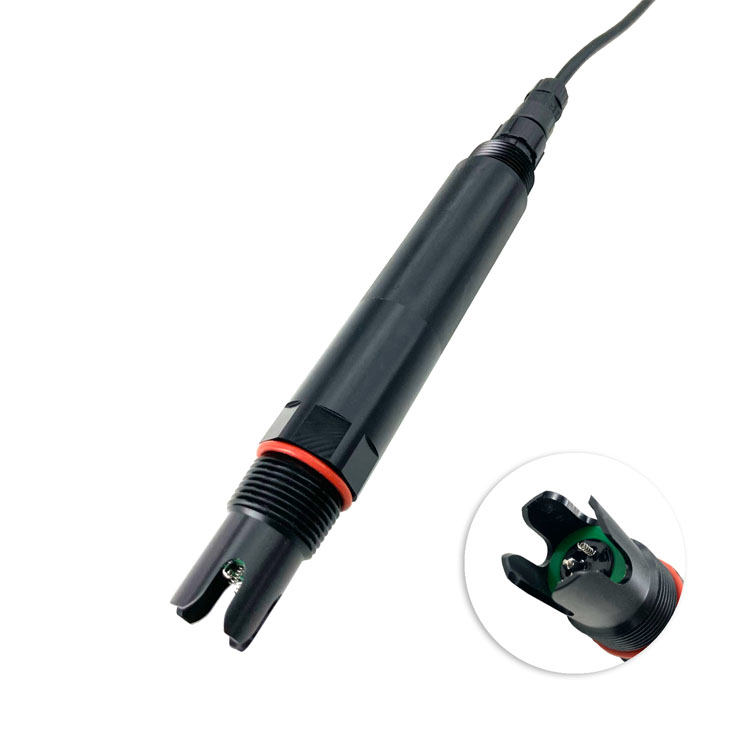
A pH meter for industrial use should be specified as a complete measuring point, not as a vague instrument name. NiuBoL pH sensors support online monitoring, RS485 Modbus RTU integration and optional analog output for traditional control systems. A practical RFQ should define process, output, mounting, cable, calibration and acceptance so the buyer receives a comparable and useful quotation.
Prev:Industrial pH Sensor Selection for Wastewater, Process Water and Harsh Sites
Next:Dissolved Oxygen Meter Price: What Buyers Should Compare Beyond Unit Cost
Related recommendations
Sensors & Weather Stations Catalog
 Agriculture Sensors and Weather Stations Catalog-NiuBoL.pdf
Weather Stations Catalog-NiuBoL.pdf
Agriculture Sensors Catalog-NiuBoL.pdf
Water Quality Sensor Catalog-NiuBoL.pdf
Related products
 Combined air temperature and relative humidity sensor
 TDR Soil Moisture & Temperature Sensor for irrigation| RS485 |4-20mA| NBL-S-THR
 Soil pH sensor RS485 soil Testing instrument soil ph meter for agriculture |NBL-S-PH
 Wind Speed sensor Output Modbus/RS485/Analog/0-5V/4-20mA
 Tipping bucket rain gauge for weather monitoring auto rainfall sensor RS485/Outdoor/stainless steel
 Pyranometer Solar Radiation Sensor 4-20mA/RS485

Screenshot, WhatsApp to identify the QR code
WhatsApp number:+8615367865107
(Click on WhatsApp to copy and add friends)

