





— Blogs —
—Products—
 Consumer hotline +8618073152920
 WhatsApp:+8615367865107
Address:Room 102, District D, Houhu Industrial Park, Yuelu District, Changsha City, Hunan Province, China
Product knowledge
Time:2026-07-22 12:11:15 Popularity:204
An industrial pH sensor should be selected from the site condition, not from the pH range alone. Most probes can display 0 to 14 pH, but wastewater pits, chemical dosing tanks and recirculating process water create different failure modes: coating, dry exposure, electrical noise, temperature swing and maintenance access.
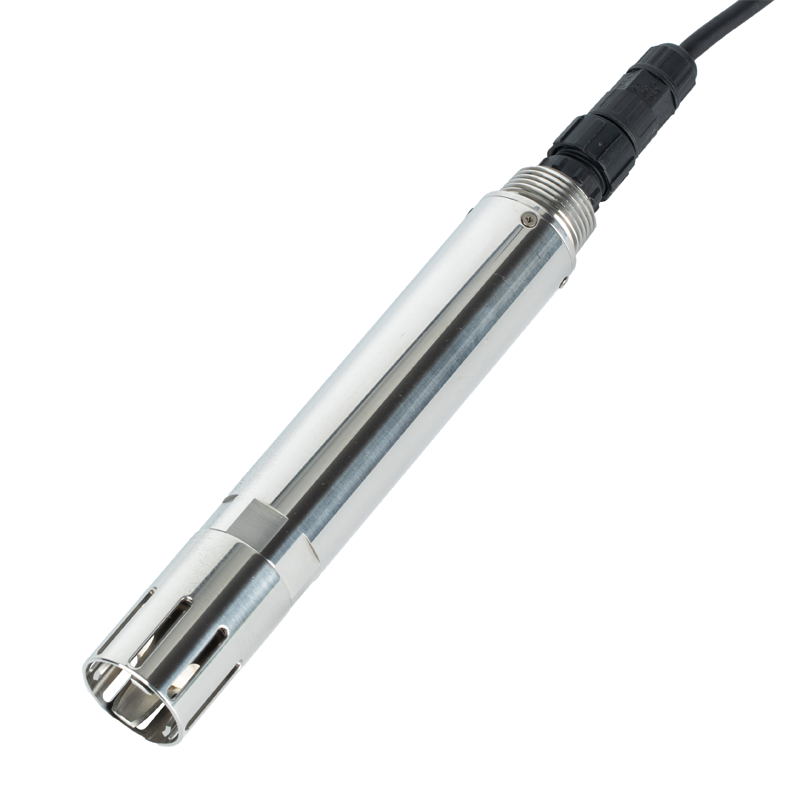
For engineers and procurement teams, the practical question is whether the sensor can hold stable readings after installation and whether the output can be accepted by the PLC, SCADA, RTU or data logger without extra signal conversion. NiuBoL pH sensors support RS485 Modbus RTU, and 4-series models can also fit projects that require a 4-20 mA loop.
This article shows how to specify an industrial pH sensor for wastewater, process water and harsh outdoor sites, including parameter limits, materials, installation choices, calibration work and quotation details.
Industrial pH monitoring is often connected to a control or compliance decision. In wastewater neutralization, the reading may start acid or alkali dosing. In process water, it may protect pipes, membranes or product quality. In stormwater or river discharge, it may trigger inspection before an exceedance becomes a complaint.
A poor selection usually shows up as drift rather than immediate failure. The value looks reasonable at installation, then becomes unstable after solids, oil, scale or biological film attach to the glass bulb or reference junction. Buyers should therefore compare maintenance access, probe material and expected fouling, not only the controller display.
| Site condition | Selection implication |
|---|---|
| High suspended solids | Choose an installation that allows frequent cleaning and avoids sediment covering the bulb. |
| Chemical dosing tank | Confirm immersion depth, mixing quality and whether 4-20 mA output is needed for local PLC control. |
| Outdoor cabinet | Check surge protection, grounding, cable routing and IP68 probe construction. |
| OEM skid | Confirm RS485 register map, power range and cable length before cabinet assembly. |
The NiuBoL industrial pH sensor is suitable for continuous water monitoring where the project needs online data, alarm records and integration with automation equipment. It fits wastewater treatment, aquaculture recirculation, process water tanks, environmental stations and dosing control skids.
It is not the right single instrument for laboratory certification where glassware, temperature-controlled samples and accredited procedures are required. It also should not be installed where the electrode will frequently dry out unless the mechanical design protects the sensing end.
| Technical item | Verified value or project note |
|---|---|
| Measurement range | 0 to 14 pH |
| Resolution and accuracy | 0.01 pH; +/-0.1 pH |
| Temperature measurement | Accuracy +/-0.3 deg C; NTC automatic temperature compensation |
| Power supply | 12 to 24 VDC |
| Output signal | RS485 Modbus RTU; optional 4-20 mA on 4-series models |
| Power consumption | 0.2 W at 12 V |
| Installation | 3/4 NPT immersion mounting; 5 m cable, customizable |
| Protection and material | IP68; POM body, selected 316L stainless steel option |
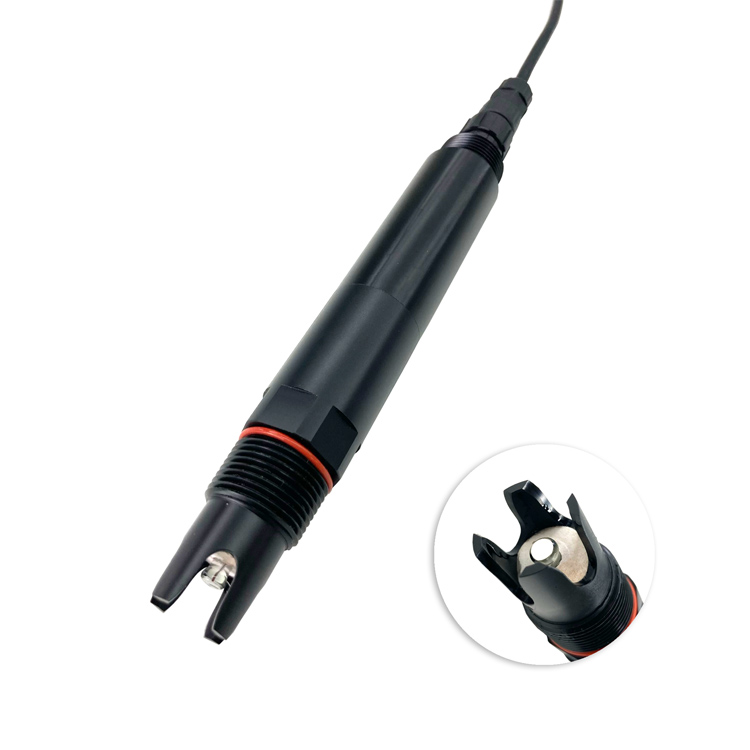
The 0 to 14 pH range covers most industrial water applications, but the more important procurement figure is accuracy and stable compensation. A +/-0.1 pH specification is useful for dosing and trend control when installation and calibration are handled correctly. If the process decision requires tighter laboratory uncertainty, online data should be verified against a lab method.
RS485 Modbus RTU reduces wiring complexity in multi-point systems because several devices can share a bus when addresses are assigned correctly. 4-20 mA remains useful for older PLC cards or projects where one signal loop must be isolated and simple.
Field environment challenge: pH changes quickly after acid or alkali dosing, and mixing is often uneven.
System integration plan: Install the probe where water is representative, connect RS485 or 4-20 mA to the dosing PLC and record calibration after commissioning.
User value: Reduces chemical overshoot and gives operators trend evidence when discharge pH is questioned.
Field environment challenge: Temperature and pump noise can affect measurement stability in recirculating systems.
System integration plan: Use temperature compensation, shielded cable routing and Modbus data mapping into SCADA.
User value: Protects membranes, pipes and process equipment with continuous pH trend data.
Field environment challenge: Outdoor cabinets face surge, rain, sediment and long maintenance intervals.
System integration plan: Use IP68 immersion probe, lightning protection, RS485 bus planning and scheduled field cleaning.
User value: Improves continuity of pH records for river, lake or discharge monitoring.
Field environment challenge: Panel builders need predictable wiring and repeatable model configuration.
System integration plan: Confirm power, output, cable and register map before production.
User value: Reduces panel redesign and makes batch procurement easier.
Start with the water body. A neutralization tank with strong chemical swing needs different cleaning and sample validation than a clean process water return line. Next, define whether the sensor is used for alarm, trend record or closed-loop dosing. Closed-loop dosing requires a better mechanical location because a badly mixed tank can make the controller chase local pH pockets.
For cable length, do not simply order the longest option. Long cables should be planned with shield grounding and route separation from pumps, VFDs and high-current conductors. For export projects, ask for manual, calibration procedure, packing list and test record with the same model number as the shipped sensor.
| Buyer question | Practical answer |
|---|---|
| Do we need 4-20 mA? | Use it when an existing PLC analog input is fixed; choose RS485 when multiple sensors need digital records. |
| Is POM enough? | POM is suitable for many water sites; consider 316L option where mechanical strength or process preference requires it. |
| How often to calibrate? | Set frequency by water fouling and project risk; verify after installation rather than copying a generic interval. |
| What should be stocked? | Keep pH buffer, cleaning solution and at least one spare probe or electrode path for critical sites. |
| Check | Engineering note |
|---|---|
| 1 | Confirm whether the pH loop is used for observation, chemical dosing or discharge acceptance; the acceptable drift and maintenance response are different. |
| 2 | Keep the probe wet during storage and commissioning. A dry pH bulb can delay startup and create a false impression of sensor failure. |
| 3 | For RS485 Modbus RTU, agree on register map, decimal position, baud rate and address allocation before panel wiring starts. |
| 4 | If 4-20 mA is required by an old PLC, check whether the buyer still needs digital diagnostic data through RS485 for maintenance records. |
| 5 | During acceptance, record pH buffer values before and after site installation; this separates shipping damage from installation error. |
| RFQ field | Why it changes selection or quote |
|---|---|
| Water type and process | Wastewater, clean process water, aquaculture and chemical tanks create different fouling and material risks. |
| Output requirement | RS485 Modbus RTU, 4-20 mA or both affects model selection and panel wiring. |
| Installation method | Immersion depth, tank wall bracket, pipe bypass or skid mounting changes accessories. |
| Cable length | Long cable affects routing, delivery and quotation. |
| Calibration responsibility | Define whether factory calibration, site commissioning or customer calibration is expected. |
A useful pH specification should also state what the buyer will not accept. For example, if the site cannot clean a probe weekly, the mechanical design should not place the sensor in a grease layer or settled sludge zone. If the PLC cabinet cannot read Modbus, the quote should include the 4-20 mA option or a signal converter. These details prevent a low unit price from becoming a commissioning delay.
For repeat projects, keep the same model number, cable specification and communication setting across all points unless there is a clear technical reason to change. Standardization lowers spare inventory and makes troubleshooting easier for local maintenance teams.
A harsh pH site is not defined only by acidic or alkaline water. It is defined by how often the probe is coated, shocked, dried, hit by solids or exposed to electrical noise. A buyer should describe these conditions because they decide the bracket, cable route, cleaning interval and spare probe plan.
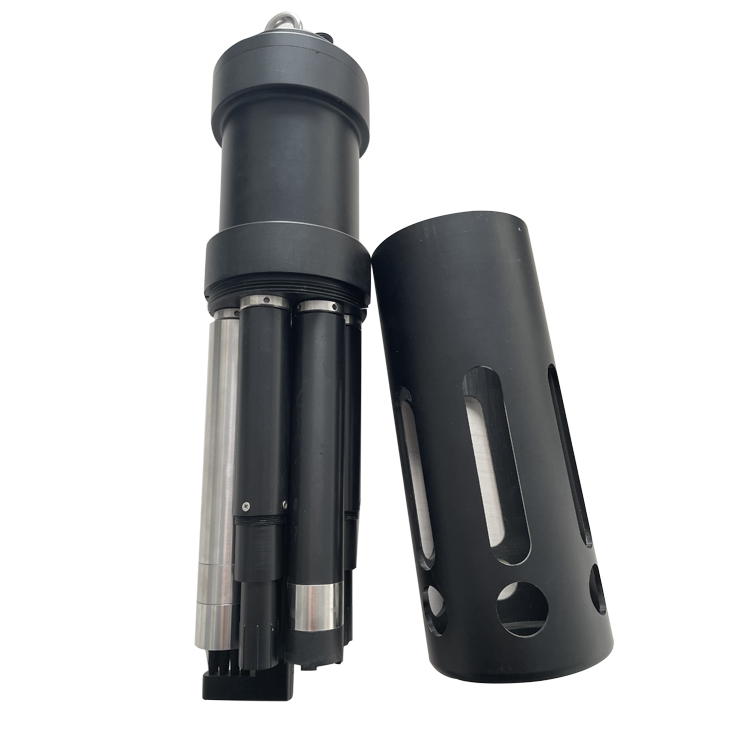
A: No. The range is standard. Buyers should also specify accuracy, temperature compensation, output signal, installation method, material, cable length, calibration method and maintenance access.
A: Use an industrial pH sensor when the site needs continuous values, alarm records, dosing control or PLC/SCADA integration. A handheld meter is still useful for checks, but it cannot replace a fixed online measuring point.
A: Wastewater can contain grease, suspended solids, chemical shock and uneven mixing. These conditions foul the glass bulb or reference junction and make installation position as important as the pH range.
A: Install it after sufficient mixing, away from the chemical injection point and where the reading represents the tank. A probe too close to dosing chemical can make the controller overreact.
A: Check buffer calibration, process reading stability, temperature value, Modbus address or analog scaling, alarm action, grounding and whether the probe can be removed safely for cleaning.
A: Common causes are dry storage, aging electrode, fouled glass bulb, contaminated reference, expired buffer, poor grounding, unstable sample flow and chemical pockets in the tank.
A: Send water type, pH range, temperature, pressure if any, installation drawing, output requirement, cable length, point quantity and whether controller or only probe output is required.
Confirm the measurement purpose, installation environment, signal output, power supply, cable route, data platform, maintenance access, and acceptance record. These details help the project team avoid field changes after procurement.
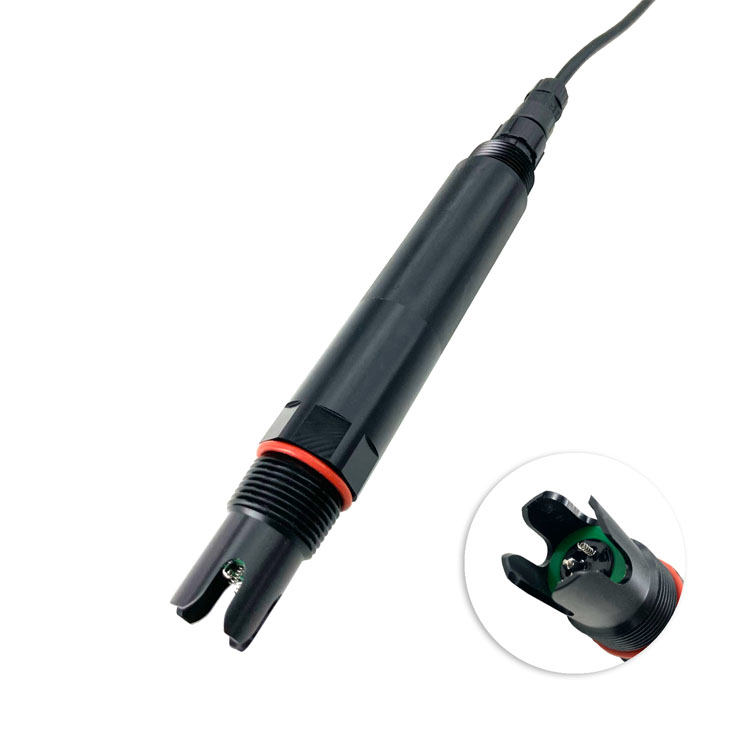
An industrial pH sensor should be purchased as part of a measurement loop: probe, installation position, output interface, calibration method and maintenance plan. For wastewater, process water and harsh outdoor sites, NiuBoL pH sensors give engineers RS485 Modbus RTU integration, optional analog output on 4-series models and practical installation flexibility. A strong RFQ should describe the water, point location, output, cable, calibration and acceptance method before price comparison starts.
Prev:pH Meter Manufacturers: Sample Approval and Repeat-Order Checks
Next:pH Meter for Industrial Use: Specification Checklist for Engineers and Buyers
Related recommendations
Sensors & Weather Stations Catalog
 Agriculture Sensors and Weather Stations Catalog-NiuBoL.pdf
Weather Stations Catalog-NiuBoL.pdf
Agriculture Sensors Catalog-NiuBoL.pdf
Water Quality Sensor Catalog-NiuBoL.pdf
Related products
 Combined air temperature and relative humidity sensor
 TDR Soil Moisture & Temperature Sensor for irrigation| RS485 |4-20mA| NBL-S-THR
 Soil pH sensor RS485 soil Testing instrument soil ph meter for agriculture |NBL-S-PH
 Wind Speed sensor Output Modbus/RS485/Analog/0-5V/4-20mA
 Tipping bucket rain gauge for weather monitoring auto rainfall sensor RS485/Outdoor/stainless steel
 Pyranometer Solar Radiation Sensor 4-20mA/RS485

Screenshot, WhatsApp to identify the QR code
WhatsApp number:+8615367865107
(Click on WhatsApp to copy and add friends)

