





— Blogs —
—Products—
 Consumer hotline +8618073152920
WhatsApp:+8615367865107
Address:Room 102, District D, Houhu Industrial Park, Yuelu District, Changsha City, Hunan Province, China
Product knowledge
Time:2026-07-21 13:45:13 Popularity:242
Quick Answer: Evaluate pH meter manufacturers by the exact instrument, representative sample results, integration documentation and control of repeat orders. For online water projects, a probe photo and a nominal pH range do not establish chemical suitability, protocol compatibility or consistent future supply. Approve the technical configuration before approving private labels or bulk packaging.
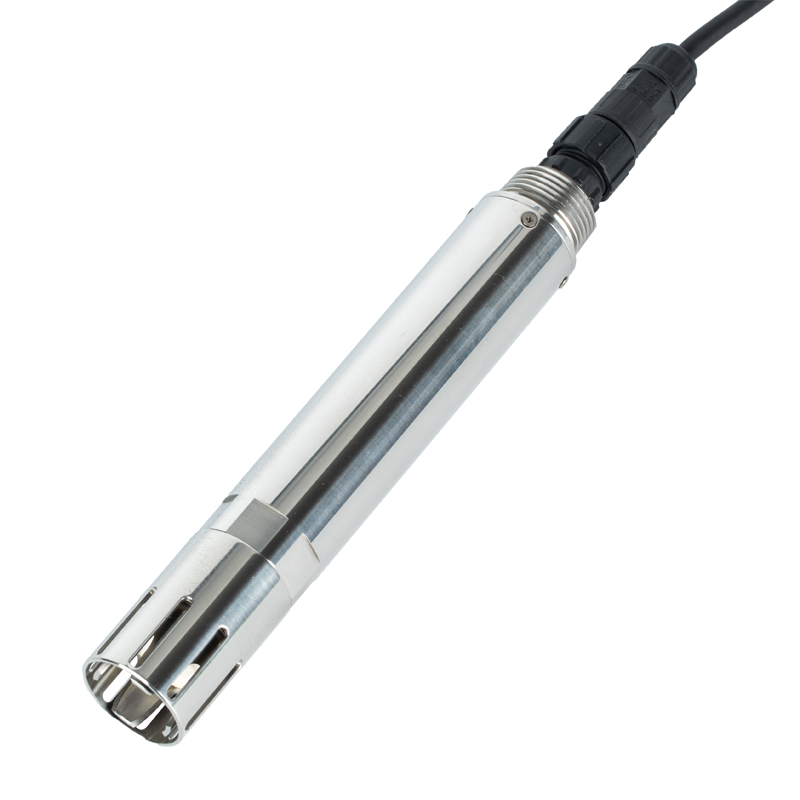
A laboratory meter, an online digital probe and a probe-plus-controller package are different purchases. For distributor or OEM supply, identify the legal supplier, the product configuration and the responsibilities for technical documents and service. A product photograph alone does not establish who makes or supports the instrument.
Start with the water type, expected pH and temperature, pressure, contaminants and installation arrangement. Neutralization tanks, surface water and high-purity samples can require different electrode and sampling characteristics. A 0-14 pH range does not establish equal performance in every chemical solution.
The following NiuBoL examples illustrate the information a project buyer should compare. They are online sensor configurations, not specifications for every pH meter or a combined family-wide promise.
| Item | NBL-WQ-PH | NBL-WQ-PH-4S configuration |
|---|---|---|
| Range and resolution | 0-14 pH; 0.01 pH | 0-14 pH; 0.01 pH |
| Accuracy | +/-0.1 pH; temperature +/-0.3 degrees C | +/-0.1 pH; temperature +/-0.3 degrees C |
| Supply and stated power | 12-24 V DC; 0.2 W at 12 V | 12-24 V DC; 0.2 W at 12 V |
| Output | RS485 Modbus RTU | RS485 Modbus RTU; 4-20 mA optional |
| Housing material | POM | POM and 316L stainless steel |
| Installation and cable | 3/4 NPT immersion mounting; standard 5 m cable | 3/4 NPT immersion mounting; standard 5 m cable |
| Protection | IP68 | IP68 |
Obtain the operating temperature, pressure, compensation implementation and exact wetted construction for the delivered version. Do not merge a material option from one model with another model's limits. A supplier should resolve conflicting specification entries before the configuration is approved.
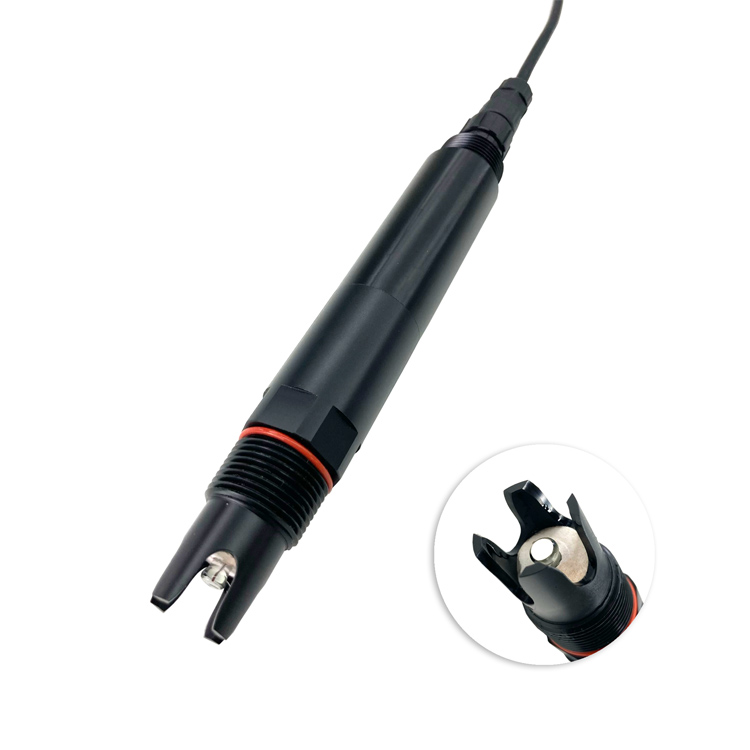
Sample testing should distinguish a buffer check from an application trial. Buffers can help verify response and calibration under controlled conditions. They do not establish service life, fouling behavior or chemical compatibility in the customer's actual water.
| Approval stage | Useful test | What the result establishes |
|---|---|---|
| Identification | Check model, output, cable, connector and supplied documents | Whether the sample matches the proposed order |
| Buffer verification | Use suitable fresh buffers, their temperature-dependent values and the correct calibration procedure | Instrument behavior under those defined conditions |
| Host integration | Compare local pH and temperature with the PLC, RTU or data logger | Correct communication, unit and scaling for the tested configuration |
| Application trial | Observe representative water, cleaning and reference comparisons | Evidence of suitability for the tested duty, not every future site |
| Pilot repeat order | Check a later unit against the approved configuration and tests | Whether the supplied configuration and documentation remain consistent |
Record buffer identity, condition and temperature, stabilization behavior and the calibration settings used. Do not compare one sample in old buffer with another in fresh buffer and attribute the difference entirely to the manufacturer.
Check storage and handling instructions for the actual electrode. Brief rinsing and prolonged storage are different operations. An electrode can pass an initial buffer check yet arrive at the next site in poor condition if the storage arrangement is unsuitable.
Ask for the model's serial settings, supported functions, register definition, data type and scaling. RS485 is an electrical interface, while Modbus RTU supplies the protocol; neither provides a universal pH register map. Test address changes with one device before adding several to a bus.
Where 4-20 mA is required, confirm that the actual output option is included, its span and the host input arrangement. A digital-only probe does not become analog because the quotation uses the words "industrial pH meter." Verify any required transmitter separately.
For a broader monitoring package, identify whether the pH channel is a standalone probe or a module inside a multi-parameter unit. Check replacement access and the actual configuration. A compact combined assembly can be useful, but it changes the supply, service and documentation questions.

Keep an approved configuration record containing the model and version, cable and connector, wetted materials, electrical requirements, output options and register map. Record which changes require review before a later order is accepted. Cosmetic similarity is not a reliable way to detect firmware or electrode changes.
Ask how later changes to the sensor, firmware, cable or calibration behavior will be communicated. For an OEM label, retain the mapping to the underlying technical configuration. The service team should not need to infer a register map from the private-label product name.
Evaluate documentation using an actual support question from the sample trial. A clear explanation of the tested model's wiring or calibration issue is more useful than a generic assurance of technical support. Do not infer response times, electrode life or warranty coverage that have not been agreed.
If certification or a test report is relevant, check its exact product scope, issuer, applicable standard and validity. A company certificate or a document for a different instrument does not establish that the ordered configuration meets the project's requirement.
Separate the sensor, controller if required, cable, calibration materials and service parts in the quotation. Ask which manuals, labels and documents are included and which customizations need a separate agreement. Do not assume a minimum order, lead time, sample policy or customization option from another product.
Price differences are meaningful only when the technical and supply scope match. A sample with the correct output but a different electrode construction is not necessarily an equivalent lower-cost offer. Likewise, an included controller should not be compared against a bare probe without recognizing the difference.
For combined pH and conductivity supply, require separate measurement and calibration definitions even when one gateway collects both. The same approach applies to any wider sensor portfolio: approve each added channel rather than extending the pH sample approval to unrelated products.
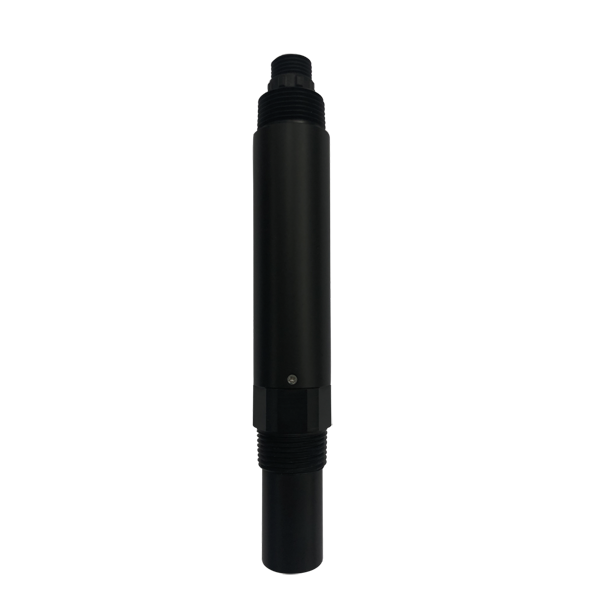
Identify the exact model, water application, electrical output and installation conditions. Request the corresponding technical and communication definitions. This makes the sample test relevant to the proposed project instead of a generic demonstration in buffer.
No. It demonstrates behavior in those buffers under the test conditions. Application suitability also depends on chemistry, fouling, installation and maintenance. Use a representative trial where those factors can affect the required decision.
Confirm the actual digital or analog interface and all equipment needed to use it. Verify Modbus mapping or analog scaling with the intended host. Do not assume optional 4-20 mA is present on every version.
It changes identification and possibly documentation or packaging, but it does not by itself change measurement capability. Retain the underlying model and version mapping, and agree which technical or cosmetic changes require approval.
Service life depends on the electrode, water and operating duty. Obtain the relevant conditions and agreed service terms rather than treating one reference-system or laboratory claim as a guaranteed lifetime in every industrial process.
Compare identification, configuration, documents and representative measurements with the approved baseline. Review communicated changes rather than relying only on the outer label. Use a check plan proportionate to the project risk.
No. Conductivity, chlorine, DO and other channels have different methods, limits and service needs. A wider range can simplify procurement, but each selected instrument still needs its own technical and application review.
Send the water application, required output, operating conditions, proposed mount and host instrument. For repeat or OEM supply, include the approved configuration and document requirements. Include order quantity, destination and any calibration or spare-electrode requirements so the quotation covers the intended supply.
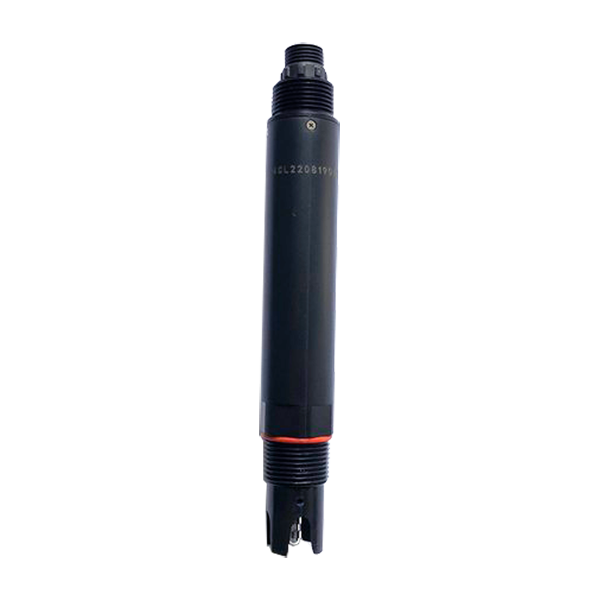
A residual-chlorine probe is a separate measurement with its own flow and calibration requirements. Its approval should remain separate from the pH sensor approval, even when both are supplied for the same monitoring cabinet.
pH meter manufacturers should be evaluated through a defined configuration, meaningful sample checks and controlled repeat supply. For NiuBoL online pH projects, review measurement suitability and host integration before expanding the order to private labels or additional sensing channels. Clear configuration records are more useful than a long list of untested claims.
Prev:Multiparameter Water Quality Probe Buying Guide: Parameters, Cleaning and Integration
Next:Industrial pH Sensor Selection for Wastewater, Process Water and Harsh Sites
Related recommendations
Sensors & Weather Stations Catalog
 Agriculture Sensors and Weather Stations Catalog-NiuBoL.pdf
Weather Stations Catalog-NiuBoL.pdf
Agriculture Sensors Catalog-NiuBoL.pdf
Water Quality Sensor Catalog-NiuBoL.pdf
Related products
 Combined air temperature and relative humidity sensor
 TDR Soil Moisture & Temperature Sensor for irrigation| RS485 |4-20mA| NBL-S-THR
 Soil pH sensor RS485 soil Testing instrument soil ph meter for agriculture |NBL-S-PH
 Wind Speed sensor Output Modbus/RS485/Analog/0-5V/4-20mA
 Tipping bucket rain gauge for weather monitoring auto rainfall sensor RS485/Outdoor/stainless steel
 Pyranometer Solar Radiation Sensor 4-20mA/RS485


Screenshot, WhatsApp to identify the QR code
WhatsApp number:+8615367865107
(Click on WhatsApp to copy and add friends)

