





— Blogs —
—Products—
 Consumer hotline +8618073152920
 WhatsApp:+8615367865107
Address:Room 102, District D, Houhu Industrial Park, Yuelu District, Changsha City, Hunan Province, China
Product knowledge
Time:2026-07-21 13:45:11 Popularity:259
A multiparameter water quality probe is useful when a project needs several measurements at the same location and wants to reduce cables, brackets and station complexity. It is not automatically better than separate sensors. The correct choice depends on parameter combination, maintenance access, cleaning requirement, power budget and whether the project needs station-level integration.
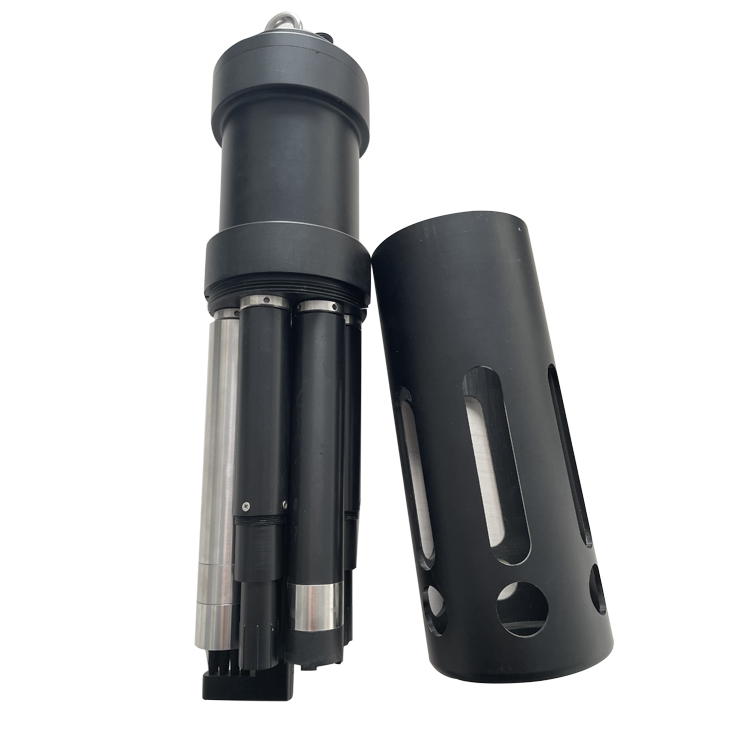
A multiparameter probe is practical for river stations, buoys, aquaculture points and compact water monitoring cabinets. It reduces openings and wiring. It also simplifies installation when DO, pH, turbidity, conductivity, ORP or other parameters are measured at one depth. Separate sensors may be better when each parameter needs a different range, flow cell, cleaning cycle or mounting point.
| Parameter | Verified value or procurement note |
|---|---|
| Model | NBL-WQ-MPS-5A / NBL-WQ-MPS-5B packages |
| Dissolved oxygen | 0 to 20 mg/L, ±2%, 0.01 mg/L |
| pH | 0 to 14 pH, ±0.1 pH, 0.01 pH |
| Turbidity | 0 to 100 NTU or 0 to 1000 NTU by configuration |
| Conductivity and salinity | 0 to 5000 µS/cm, 0 to 200 mS/cm, 0 to 70 PSU options |
| ORP | -1500 mV to +1500 mV, ±6 mV |
| COD option | 0 to 200 or 0 to 500 mg/L equivalent KHP |
| Project value | Fewer cables, fewer openings and self-cleaning options for stations and buoys |
The verified multiparameter package can include DO, turbidity, conductivity or salinity, pH, ORP and COD options depending on configuration. This makes the product suitable for projects where parameter relationships matter. For example, pH and temperature help interpret ammonia risk, while conductivity and COD can help identify pollution events.

| Application | Suggested parameter focus | Buying note |
|---|---|---|
| Aquaculture | DO, pH, temperature, ammonia and conductivity | Alarm response must be practical for farm staff. |
| River station | pH, DO, turbidity, conductivity, COD or ammonia | Power and communication design matter as much as sensor choice. |
| Buoy monitoring | Multiparameter probe with cleaning and low cable count | Check weight, mounting and maintenance visits. |
| Water treatment | Parameters selected by process point | Separate flow-through sensors may be better for some measurements. |
Self-cleaning is useful when biofilm, sediment or algae would make manual cleaning frequent or unsafe. It does not eliminate maintenance. It reduces the rate at which the optical or measurement surfaces become unreliable. Buyers should still define inspection interval, spare parts and cleaning verification.
A multiparameter probe normally connects to a data logger or gateway through RS485 Modbus RTU. The station designer should confirm sensor addresses, power supply, polling interval, grounding and cable protection. For solar stations, every sensor and cleaning function adds power demand, so the power budget should be calculated before shipment.
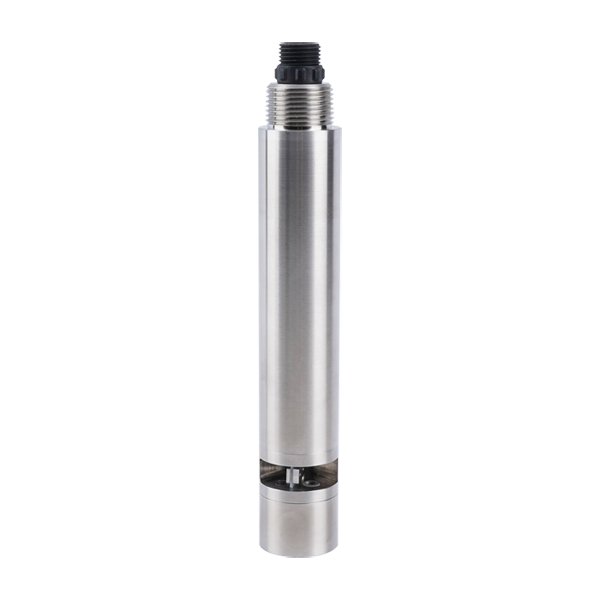
For a multiparameter water quality probe, send the water type, expected range, temperature, pressure, installation photos, cable length, output requirement, controller or gateway model, quantity and destination country. List required parameters, optional parameters, station type, cleaning need, cable length, power source and communication method.
For contractors, also state who supplies the cabinet, bracket, sampling line, power supply, surge protection, SIM card or platform account. Missing scope items usually appear during commissioning, when they are more expensive to solve.
Use separate sensors when residual chlorine needs a controlled flow cell, when pH must sit near a dosing point, when turbidity needs a special range, or when one parameter has much higher maintenance frequency than the others. A good supplier should be willing to recommend separate sensors if they reduce field risk.
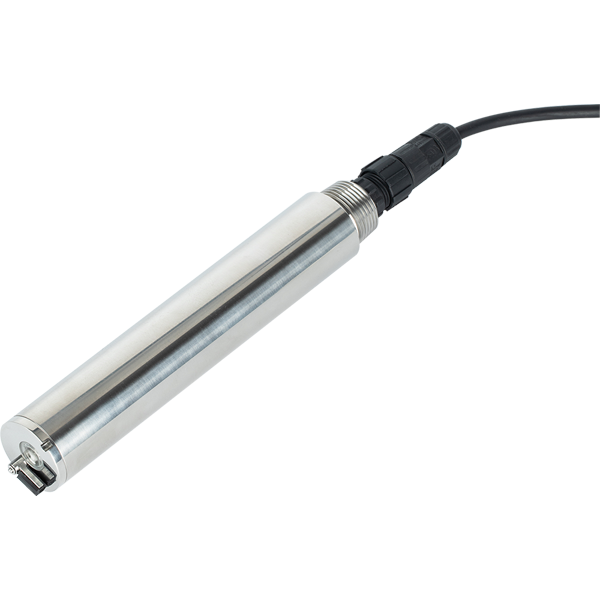
A multiparameter water quality probe should not be filled with parameters only because they are available. Each parameter should have a reason. DO may support aeration or ecological risk. pH may support chemical change and ammonia interpretation. Conductivity may indicate intrusion or ion load. Turbidity may show solids events. COD and ammonia options may support pollution monitoring.
This decision-based approach also helps distributors. Instead of offering a large package first, they can explain which parameters answer the customer's actual question and which can be added later.
| Condition | Multiparameter probe | Separate sensors |
|---|---|---|
| Same location and depth | Usually efficient | May add unnecessary brackets. |
| Different sampling needs | May be unsuitable | Often better. |
| Remote station | Fewer cables and easier cabinet design | More service points. |
| Residual chlorine flow cell | Usually not the same installation | Separate sensor is often clearer. |
A multiparameter probe reduces hardware count but does not make all calibration disappear. pH, DO, turbidity, conductivity and ORP have different check methods. The maintenance schedule should list each parameter separately. If the operator cannot maintain all channels, a smaller package may produce better data than an oversized one.
For RS485 systems, the integrator should confirm register maps, units, decimal places and polling interval for every channel. The platform should show maintenance notes and not just raw values. If the sensor is used on a buoy, also confirm cable strain relief, anti-fouling strategy, power budget and safe retrieval method.
A well-specified multiparameter probe purchase includes parameter list, ranges, cleaning option, mounting, cable length, data logger, power source, platform requirement and spare-part plan.
Unused channels add cost, calibration work and data clutter. Before ordering, the buyer should write the reason for every parameter. If no one can explain what action follows an abnormal ORP, COD or salinity value, that channel may not belong in the first configuration.
This does not mean the project should stay small forever. It means the first package should answer the current decision clearly. Additional parameters can be added after the operator learns how often the station is serviced and which trends matter.
The handover file should list each parameter, range, unit, calibration method, register or platform tag, alarm threshold and maintenance interval. For multiparameter probes, this file is essential because one physical device may contain many logical measurements.
A multiparameter probe should be treated as a monitoring subsystem. It needs mounting, power, communication, cleaning and data review, not only a product line in a quotation.
A buoy project often benefits from a multiparameter probe because cable openings, weight and maintenance visits are limited. Measuring pH, DO, conductivity and turbidity in one package can simplify the buoy structure. If COD or ammonia is required, the buyer should confirm power budget and cleaning requirements carefully.
The buoy should be designed around retrieval and service. A probe that is technically correct but difficult to lift and clean will produce weak data after the first fouling period. The quotation should include mounting and maintenance assumptions.
Before releasing the purchase order, the buyer should confirm five items in writing: measured parameter, expected range, installation point, output signal and maintenance owner. These five items prevent most misunderstandings between purchasing, engineering, site operators and the supplier. If any item is unknown, the RFQ should say so clearly instead of hiding the uncertainty.
The quotation should also separate sensor body, cable, controller or data logger, mounting accessory, calibration or verification materials, communication gateway, packing and documents. This makes it possible to compare suppliers by actual scope. A lower price is not useful if the buyer later discovers that the controller, flow cell, bracket or register map was not included.
Keep the user manual, wiring definition, Modbus register map, calibration record, installation photos, alarm settings, packing list and spare-part suggestion in one folder. For distributors and contractors, this file is also after-sales protection. When the end user asks for help months later, the service team can see what was supplied, how it was installed and what assumptions were used during commissioning.
For projects with several identical stations, do not finalize bulk purchase after only office review. Test one station first, review cleaning workload, power consumption, data stability and platform labels, then repeat the proven configuration. This reduces the risk of multiplying a small design error across many sites.
For a multiparameter probe, the final purchase check should list every channel separately. A single model name is not enough. The order should state pH, DO, turbidity, conductivity, salinity, ORP, COD or ammonia options, the required ranges and which channels must appear on the platform.
For a multiparameter probe, the final purchase check should list every channel separately. A single model name is not enough. The order should state pH, DO, turbidity, conductivity, salinity, ORP, COD or ammonia options, the required ranges and which channels must appear on the platform.
A: It is a probe package that measures several water quality parameters at one point, reducing wiring and installation complexity.
A: NiuBoL packages can include DO, pH, turbidity, conductivity, salinity, ORP, COD options and other configurations depending on project need.
A: Not always. It can reduce installation cost at one point, but separate sensors may be better when parameters need different locations or flow conditions.
A: Specify self-cleaning for remote, buoy, algae-rich, sediment-heavy or wastewater sites where manual cleaning is difficult.
A: Yes. RS485 Modbus RTU can be used with data loggers or IoT gateways when address planning and power design are correct.
A: Confirm parameter list, ranges, cleaning need, cable length, mounting method, power, communication and maintenance access.
A: Each parameter has its own calibration or check method. The maintenance plan should list them separately.
A: Use separate sensors for controlled flow cells, different mounting points, special ranges or parameters with very different maintenance needs.
A: Request wiring, register map, parameter ranges, installation guide, calibration method and spare-part list.
A multiparameter water quality probe is a strong choice when several parameters are needed at one location and installation simplicity matters. It should be selected by parameter set, cleaning need, station layout, power budget and integration method. NiuBoL multiparameter probes support compact river, buoy, aquaculture and monitoring station projects when the required parameter package is clearly defined.
Prev:River Water Pollution Monitoring: Parameter Package and Station Layout
Next:pH Meter Manufacturers: Sample Approval and Repeat-Order Checks
Related recommendations
Sensors & Weather Stations Catalog
 Agriculture Sensors and Weather Stations Catalog-NiuBoL.pdf
Weather Stations Catalog-NiuBoL.pdf
Agriculture Sensors Catalog-NiuBoL.pdf
Water Quality Sensor Catalog-NiuBoL.pdf
Related products
 Combined air temperature and relative humidity sensor
 TDR Soil Moisture & Temperature Sensor for irrigation| RS485 |4-20mA| NBL-S-THR
 Soil pH sensor RS485 soil Testing instrument soil ph meter for agriculture |NBL-S-PH
 Wind Speed sensor Output Modbus/RS485/Analog/0-5V/4-20mA
 Tipping bucket rain gauge for weather monitoring auto rainfall sensor RS485/Outdoor/stainless steel
 Pyranometer Solar Radiation Sensor 4-20mA/RS485

Screenshot, WhatsApp to identify the QR code
WhatsApp number:+8615367865107
(Click on WhatsApp to copy and add friends)

