





— Blogs —
—Products—
 Consumer hotline +8618073152920
 WhatsApp:+8615367865107
Address:Room 102, District D, Houhu Industrial Park, Yuelu District, Changsha City, Hunan Province, China
Product knowledge
Time:2026-06-25 10:58:35 Popularity:232
Automatic soil moisture monitoring equipment is used to understand what is happening in the root zone without waiting for visible crop stress. It is also called a soil moisture station or soil condition monitoring system. For agriculture, drought response and irrigation projects, the system provides the basic data needed to decide when water is needed and how serious the deficit is.
NiuBoL soil monitoring systems can combine soil temperature, soil moisture, soil pH and soil electrical conductivity data with solar power, wireless communication and platform management. The engineering goal is simple: keep long-term, continuous soil data available for irrigation scheduling, drought dispatching and field management.
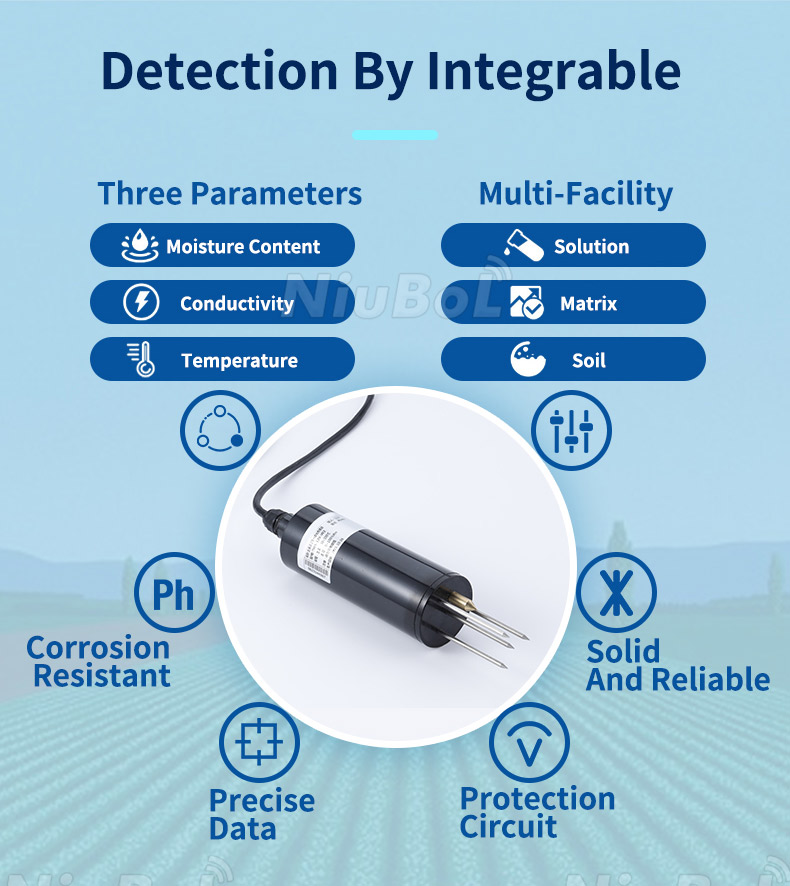
Soil moisture is one of the most important agricultural conditions, but it is often judged by surface appearance or experience. That can be misleading. A field may look dry on the surface while the root zone still has enough water, or the surface may be moist after light rain while deeper layers remain dry.
Automatic monitoring supports drought relief because it gives managers continuous evidence of soil water deficit. It also supports irrigation because it helps avoid both under-irrigation and excessive irrigation. For government projects, cooperatives and large farms, historical soil moisture records can become a basis for decisions and reports.
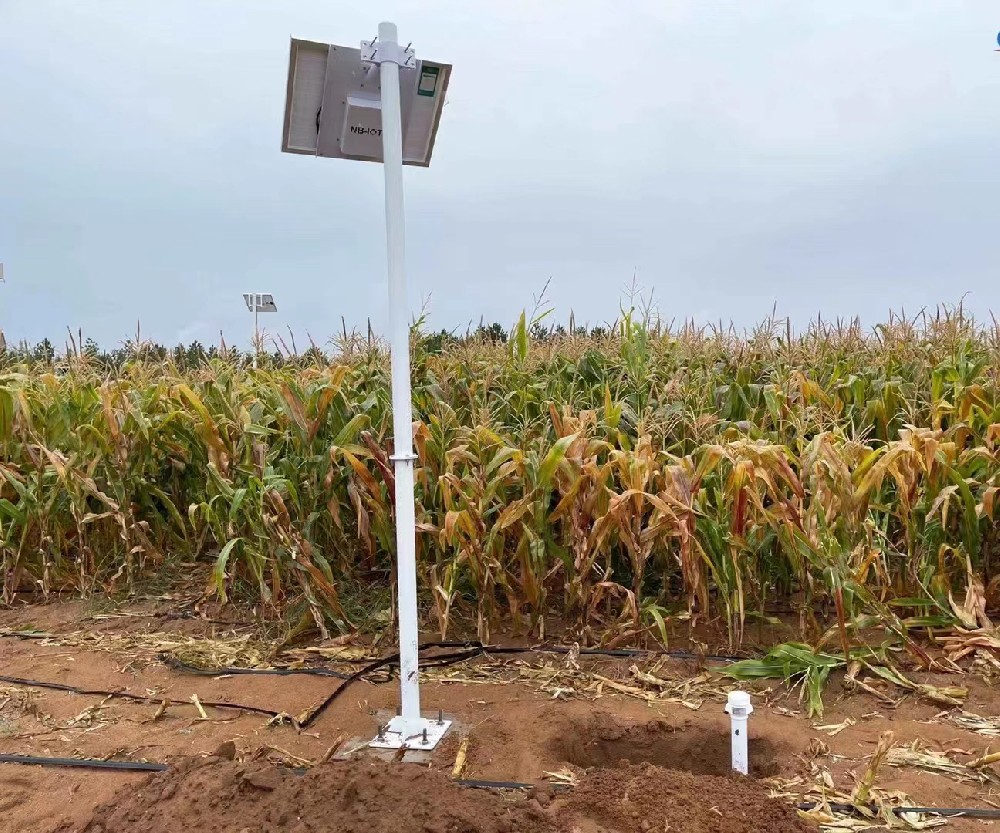
A soil moisture monitoring station usually includes buried soil sensors, a data collector, solar power supply, communication module, mounting pole or cabinet and cloud platform. Sensors can be placed at different depths to create a soil moisture profile. This is useful for crops with deeper roots and for drought assessment.
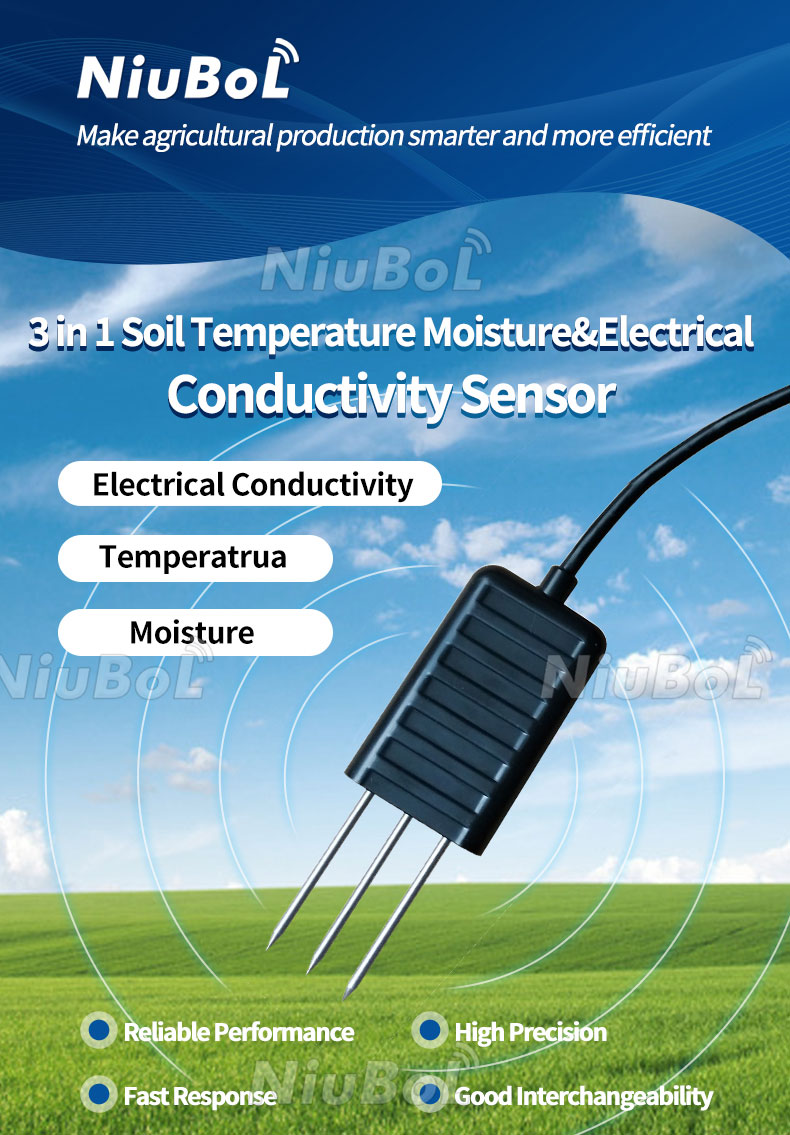
Soil temperature helps interpret root activity and seasonal changes. Soil pH helps evaluate acidity and crop suitability. Soil EC helps evaluate salinity or nutrient-related conductivity changes. Moisture, temperature, pH and EC together give a more complete soil condition picture than moisture alone.
RS485 and Modbus RTU are suitable for soil monitoring because several probes may need to connect to one collector. The project should define sensor depth, cable route, address settings and platform fields before installation. Solar power is useful for unattended farmland, but the battery and panel must match reporting interval and communication power demand.
For large areas, the system may use multiple soil monitoring stations. Each station should have a clear name, coordinates and depth labels in the platform. Without this metadata, historical data is hard to interpret after the crop season changes.
| Parameter | Typical Project Value | Engineering Use |
|---|---|---|
| Soil moisture | 0-100% volumetric water content by sensor type | Drought evaluation and irrigation scheduling |
| Soil temperature | -40 to 80℃ typical | Root-zone and seasonal condition monitoring |
| Soil pH | 0-14 pH, typical accuracy around ±0.1 pH by model | Soil acidity and crop suitability |
| Soil EC | 0-10000 us/cm in common agricultural sensors | Salinity and nutrient trend reference |
| Power supply | Solar power or DC supply depending on site | Unattended farmland monitoring |
| Communication | RS485 / Modbus RTU to collector; 4G or other upload through terminal | Platform integration and remote viewing |
| Probe protection | IP68 for buried probes | Long-term soil installation |
| Collector protection | Outdoor cabinet or enclosure, typically IP65 or above | Field station reliability |
| Installation depth | Configured by crop root depth and monitoring objective | Profile monitoring and irrigation decisions |
Site challenge: Regional drought response needs continuous soil moisture evidence rather than sporadic manual checks.
System integration scheme: Install solar-powered soil moisture stations and transmit data to a management platform.
User value: Managers can compare deficit by area and plan water allocation more scientifically.
Site challenge: Irrigation timing is often based on habit or visible crop symptoms.
System integration scheme: Install root-zone soil moisture sensors and link data to irrigation scheduling.
User value: The farm can irrigate before stress becomes visible and stop before water is wasted.
Site challenge: Protected cultivation may hide root-zone stress because air climate is controlled.
System integration scheme: Use soil moisture, temperature, EC and pH monitoring in representative beds or pots.
User value: Operators can adjust irrigation and fertigation with clearer data.
Site challenge: Agronomic projects need comparable data across plots and seasons.
System integration scheme: Use multi-depth sensors with consistent installation records and exportable data.
User value: Researchers gain reliable soil condition records for analysis.
Choose sensor depth according to crop root depth, not a generic installation number.
Use multi-depth monitoring where drought profile or deep-root crops matter.
Add pH and EC when soil chemistry affects the management decision.
Confirm whether the site needs solar power and 4G upload or local RS485 collection.
Protect cables against rodents, machinery and water accumulation.
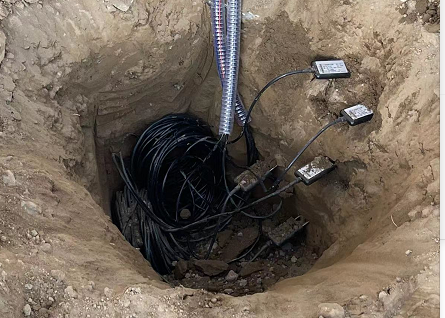
Record installation depth, soil type and coordinates during commissioning.
A soil probe must have good contact with the soil. Air gaps around the probe can make readings unstable. Installation should avoid stones, roots and disturbed backfill where possible. After installation, the first data period should be reviewed before using values for automatic control.
Soil moisture values should be interpreted by soil type. Sandy soil, loam and clay have different water holding behavior. A useful project will set irrigation thresholds after observing local soil and crop response rather than copying a threshold from another farm.
Sensor depth should follow crop root distribution. Shallow vegetables may need monitoring in the upper root zone, while orchards and field crops may need deeper profiles. If the project is mainly drought warning, multi-depth monitoring is more useful than a single shallow probe because drought stress develops through the profile.
Station quantity should follow soil type, crop block and irrigation district. One station in uniform land may be useful, but one station cannot represent several different soils or slopes. The buyer should identify representative blocks first, then decide whether each block needs a sensor or a station.
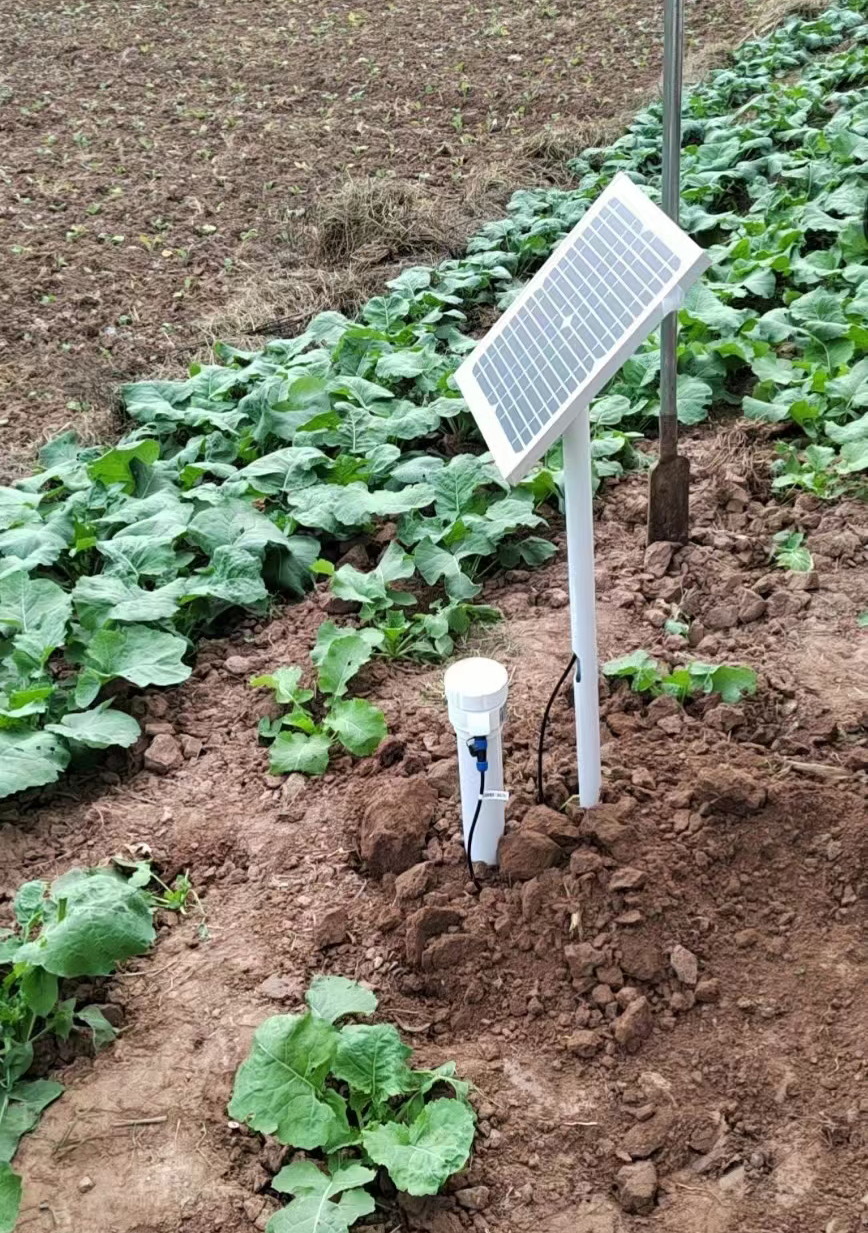
Installation depth is recorded for every probe.
Soil type is documented near each monitoring point.
Moisture values are reviewed after rain and irrigation events.
pH and EC data are interpreted with crop requirements, not as isolated numbers.
Solar power and communication status are visible in the platform.
Maintenance records show probe inspection and cable condition.
Installing probes in loose backfilled soil and treating the values as field condition.
Using one threshold for every soil texture and crop stage.
Buying pH and EC sensors without a plan for how those values will affect management.
Ignoring cable protection in fields with machinery or rodents.
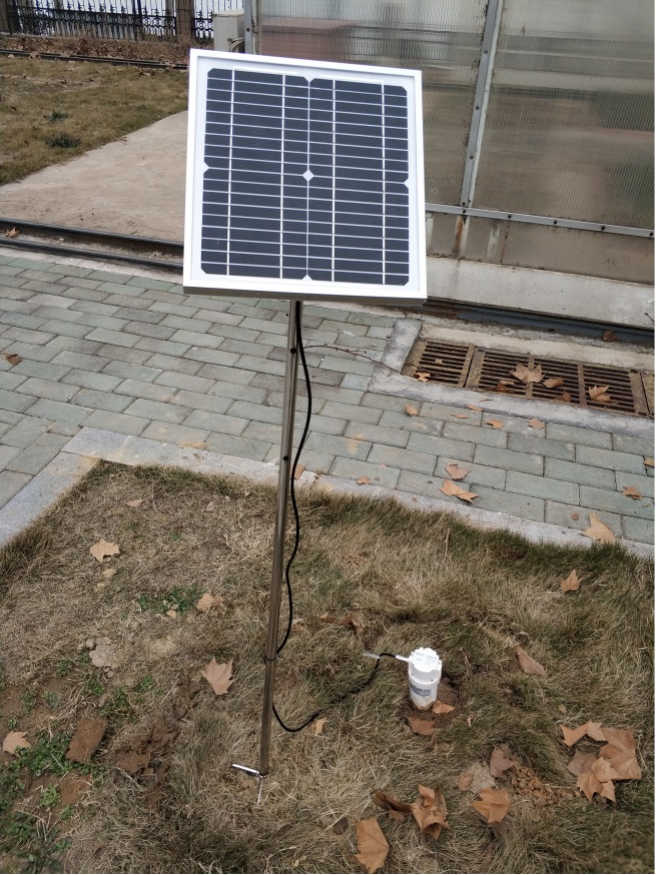
Soil moisture data should be reviewed as a trend, not only as one number. A falling trend after several dry days indicates developing deficit. A quick rise after irrigation followed by rapid decline may indicate shallow wetting or poor water retention. A deep sensor that remains dry after surface irrigation can show that water has not reached the effective root zone.
For drought management, the most useful report compares stations, depths and crop blocks. Managers can then decide which area needs water first. For irrigation projects, the most useful report compares irrigation time with moisture recovery. This turns the station into a decision tool rather than a display screen.
For a soil moisture monitoring inquiry, the buyer should provide crop type, soil type, monitoring depth, station quantity, power condition, communication condition and whether pH or EC data is required. If the project is for drought relief, the supplier should also know the management area and whether station data must be displayed on a map.
A single shallow probe can tell whether the upper soil layer is wet, but it cannot tell whether irrigation has reached deeper roots. A multi-depth profile helps separate three situations: surface wetting after light rain, effective root-zone recharge after irrigation, and deeper drought that remains after short watering. This is why many drought and irrigation projects should consider at least two depths in representative plots.
For buyers, the profile does not need to be complicated. The important part is to make each depth meaningful for the crop. A shallow vegetable bed and an orchard block should not use the same installation plan. The supplier should be told the crop and management objective before recommending depth.
A: It is a field system that uses soil sensors, a collector, power supply and communication module to continuously monitor soil water and related parameters.
A: Soil moisture is the core parameter. Soil temperature, pH and EC are added when root-zone condition and soil chemistry are important.
A: Yes. Multi-depth installation is useful for drought assessment, deep-root crops and irrigation strategy analysis. It helps distinguish surface wetting from real root-zone recharge.
A: Many soil sensors support RS485 Modbus RTU, which makes them suitable for connection to collectors and platforms.
A: Solar power supports unattended farmland where grid power is not available, but panel and battery sizing must match the reporting interval.
A: It provides continuous soil water deficit data, helping managers decide where water is needed most urgently.
A: It can provide data for irrigation control when connected to a compatible controller, but hydraulic design and valve control must also be planned.
A: Avoid loose soil contact around the probe and unrecorded installation depth, because both reduce data credibility.
A: Include sensors, collector, power supply, communication method, mounting accessories, platform access and installation guidance.
A: The buyer should provide crop type, soil type, required depths, station quantity, power condition, communication condition and whether pH or EC is needed. This prevents the supplier from selecting a probe depth or configuration that does not match the field decision.
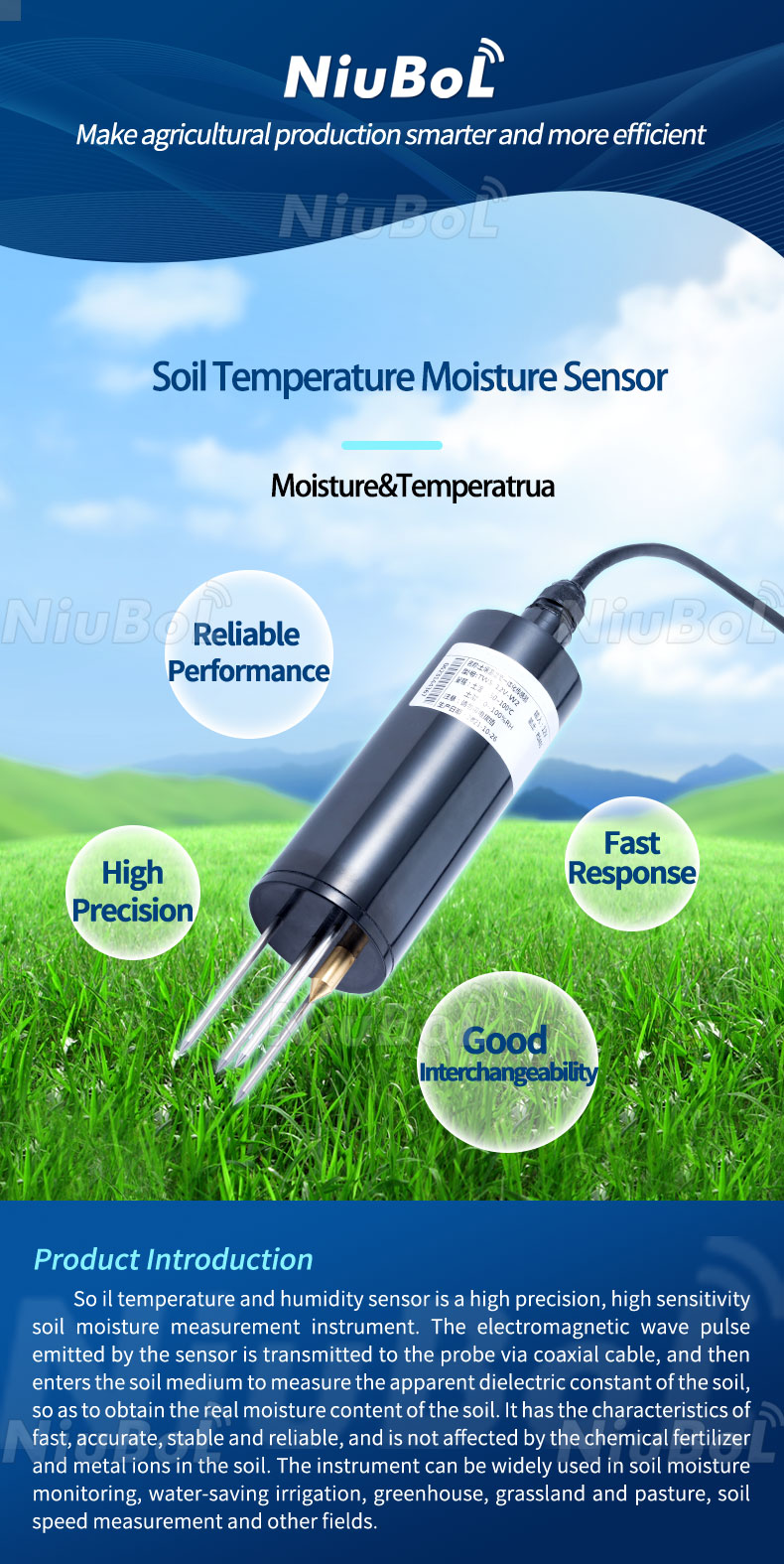
Automatic soil moisture monitoring equipment gives farms and agricultural managers a measurable root-zone view. The useful system is not only a probe in soil; it is a complete chain of sensor depth, power supply, communication, platform and decision rules. NiuBoL soil monitoring solutions can support irrigation, drought response and long-term soil condition management.
 NBL-S-TMSMS-Tubular-Multi-depth-Soil-Moisture-Sensor-Instruction-Manual.pdf
NBL-S-TM-Soil-temperature-and-moisture-sensor-Instruction-Manual-4.0.pdf
NBL-S-THR-Soil-temperature-and-moisture-sensors-Instruction-Manual-V4.0.pdf
Prev:Smart Agricultural Irrigation System Guide for Sensor-Based Water and Fertilizer Control
Next:Automatic Weather Station Working Principle and Its Role in Modern Meteorological Services
Related recommendations
Sensors & Weather Stations Catalog
Agriculture Sensors and Weather Stations Catalog-NiuBoL.pdf
Weather Stations Catalog-NiuBoL.pdf
Agriculture Sensors Catalog-NiuBoL.pdf
Water Quality Sensor Catalog-NiuBoL.pdf
Related products
 Combined air temperature and relative humidity sensor
 TDR Soil Moisture & Temperature Sensor for irrigation| RS485 |4-20mA| NBL-S-THR
 Soil pH sensor RS485 soil Testing instrument soil ph meter for agriculture |NBL-S-PH
 Wind Speed sensor Output Modbus/RS485/Analog/0-5V/4-20mA
 Tipping bucket rain gauge for weather monitoring auto rainfall sensor RS485/Outdoor/stainless steel
 Pyranometer Solar Radiation Sensor 4-20mA/RS485

Screenshot, WhatsApp to identify the QR code
WhatsApp number:+8615367865107
(Click on WhatsApp to copy and add friends)

