— Blogs —
—Products—
 Consumer hotline +8618073152920
 WhatsApp:+8615367865107
Address:Room 102, District D, Houhu Industrial Park, Yuelu District, Changsha City, Hunan Province, China
Product knowledge
Time:2026-06-25 10:58:35 Popularity:241
A smart agricultural irrigation system turns irrigation from a fixed schedule into a measured control process. The system decides when to irrigate, how long to irrigate and when to stop by reading soil moisture, weather, crop stage and sometimes nutrient condition. For farms and irrigation contractors, this changes water management from experience-driven operation to data-supported operation.
The supplied project concept is straightforward: when the soil is too dry, the system increases irrigation; when the soil is wet enough, it reduces or stops irrigation. In engineering terms, the value comes from the closed loop between sensors, controller, valves, pumps and the field pipeline.
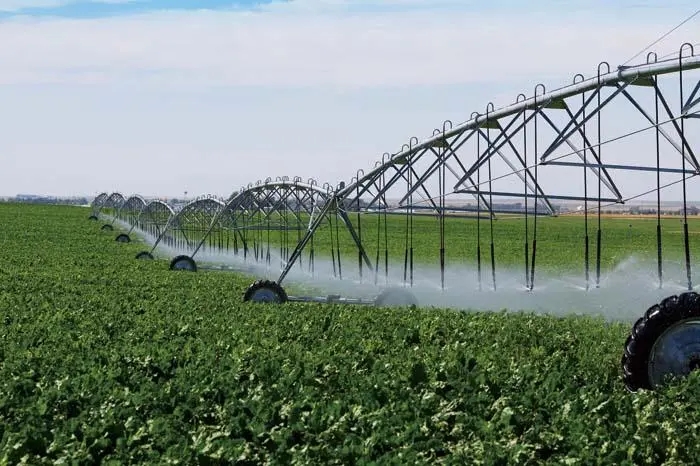
Agriculture uses a large share of available water, and irrigation efficiency is still a major issue in many regions. Fixed-time irrigation can waste water after rainfall, while manual observation may miss root-zone water stress. Smart irrigation reduces this gap by measuring the field condition directly.
Water-fertilizer integration adds another layer. Instead of applying water and fertilizer separately according to habit, the system can monitor soil moisture, crop nutrient demand and fertigation status, then control pumps or dosing equipment. This improves consistency and reduces labor intensity.
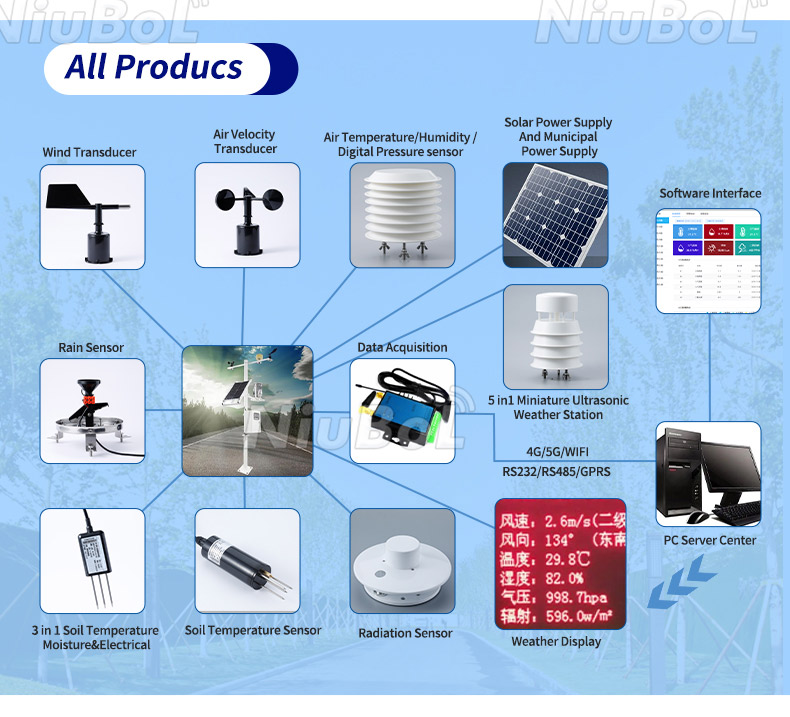
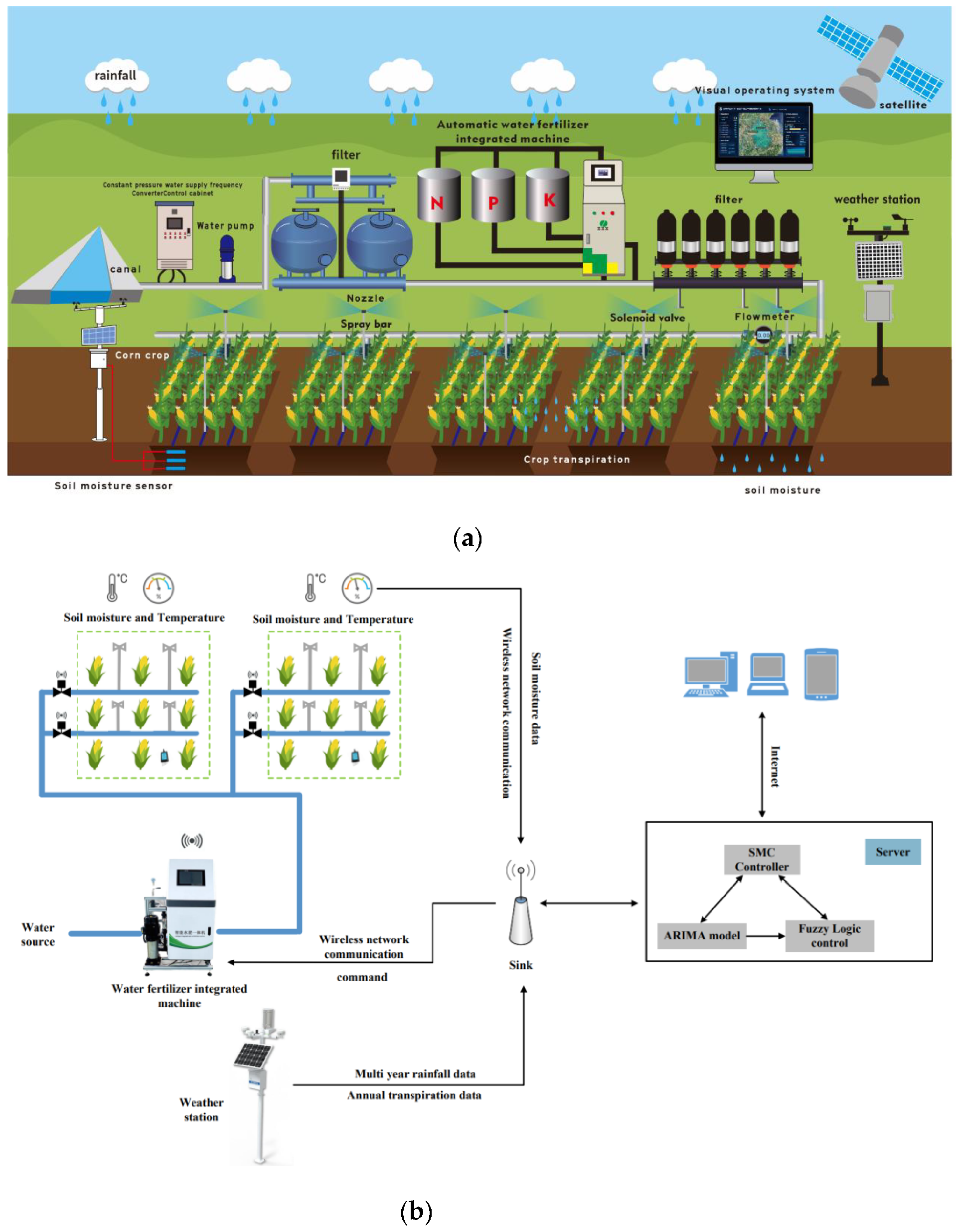
A practical system includes soil moisture sensors, optional soil temperature, pH and EC sensors, weather data, controller or RTU, solenoid valves, pump control, filtration, pipelines, drip or sprinkler equipment and a management platform. The system does not need to be complex on day one, but the architecture should allow expansion by zone.
The field controller is the decision point. It receives sensor data, compares it with thresholds or programs, starts irrigation and records the result. For a greenhouse, the system may also coordinate with climate control. For open-field farms, rainfall and soil moisture are more important.
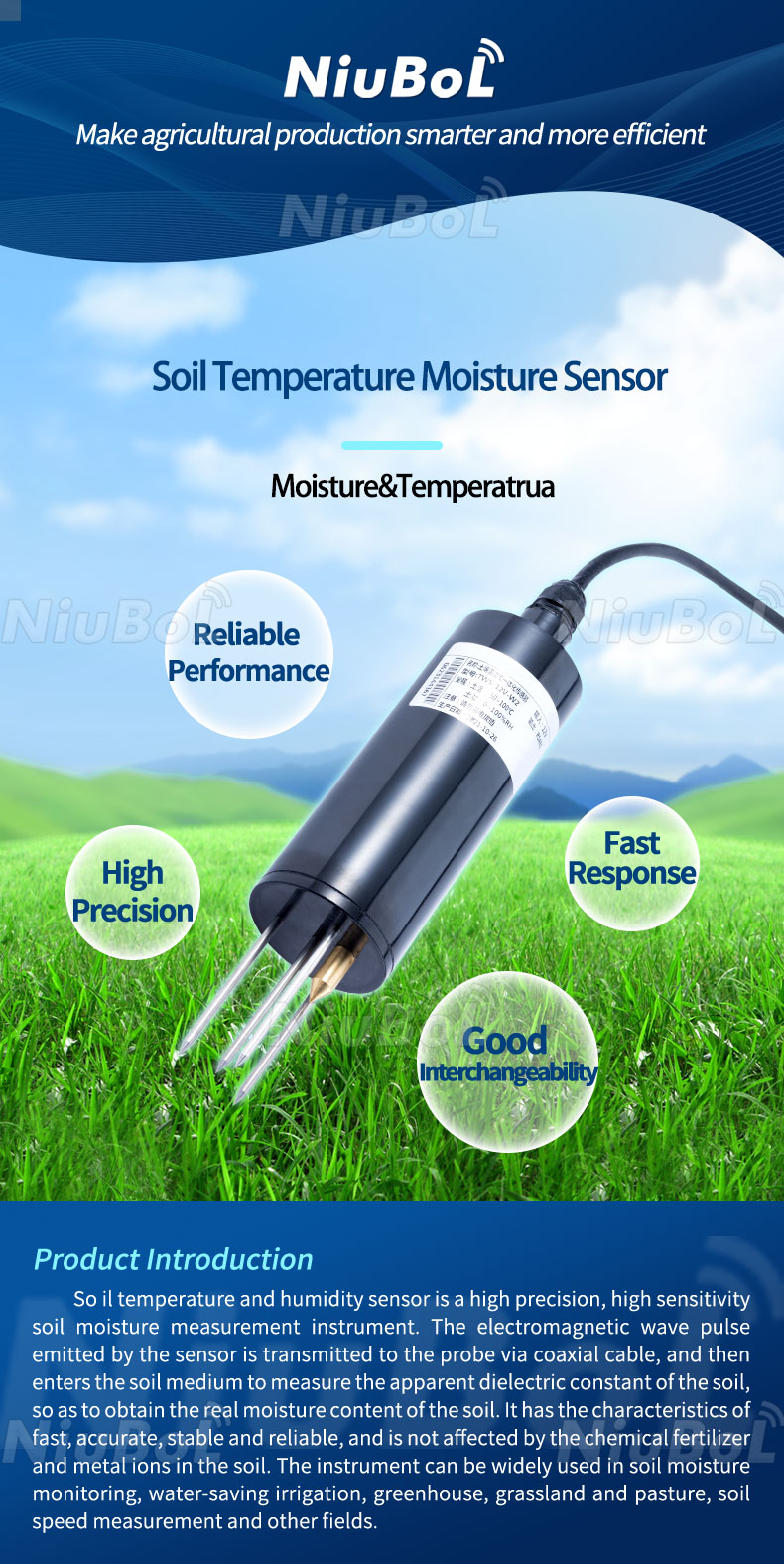
RS485 and Modbus RTU are useful when soil sensors, EC/pH sensors and control cabinets must work together. A gateway can read multi-point data and upload it through 4G or Ethernet. The buyer should confirm sensor address, cable distance, valve quantity, controller output type and platform requirements before ordering.
Wireless communication is also common for widely distributed farms, but field reliability should be evaluated. Battery life, solar charging, signal coverage and local storage during network interruption determine whether the system remains useful through the season.
| Parameter | Typical Project Value | Engineering Use |
|---|---|---|
| Soil moisture range | 0-100% volumetric water content by sensor type | Irrigation start and stop decision |
| Soil temperature | -40 to 80℃ typical | Crop root-zone condition and seasonal analysis |
| Soil EC | 0-10000 us/cm in common agricultural sensors | Nutrient and salinity reference |
| Soil pH | 0-14 pH, typical accuracy around ±0.1 pH by model | Soil acidity and crop suitability reference |
| Controller output | Relay or valve output according to zone quantity | Pump, solenoid valve and fertigation control |
| Communication | RS485 / Modbus RTU, 4G, Ethernet or wireless nodes | Field acquisition and platform upload |
| Power supply | AC cabinet power, DC 12-24V for sensors, solar optional for remote nodes | Site power design |
| Protection level | IP65 for cabinets and field nodes; IP68 for buried probes | Outdoor and buried installation reliability |
| Irrigation method | Drip irrigation, sprinkler irrigation, micro-sprinkler or mixed zones | Crop and field matching |
Site challenge: Water demand changes with rainfall, soil texture and crop stage.
System integration scheme: Install soil moisture sensors by representative field block and control valves by irrigation zone.
User value: The farm can irrigate according to root-zone deficit rather than a fixed calendar.
Site challenge: Greenhouse crops need stable moisture and nutrient delivery under changing temperature and light.
System integration scheme: Combine soil moisture, EC and pH sensing with fertigation control and platform records.
User value: Operators reduce manual mixing and keep irrigation decisions traceable.
Site challenge: Tree crops have deeper roots and uneven soil moisture across blocks.
System integration scheme: Use multi-depth or block-level soil moisture monitoring with zone valves.
User value: Managers can adjust irrigation by block instead of watering the whole orchard the same way.
Site challenge: Projects need measurable evidence of water saving and improved scheduling.
System integration scheme: Use sensors, controller logs and flow records to document irrigation events.
User value: The owner gains data for reporting, training and later expansion.
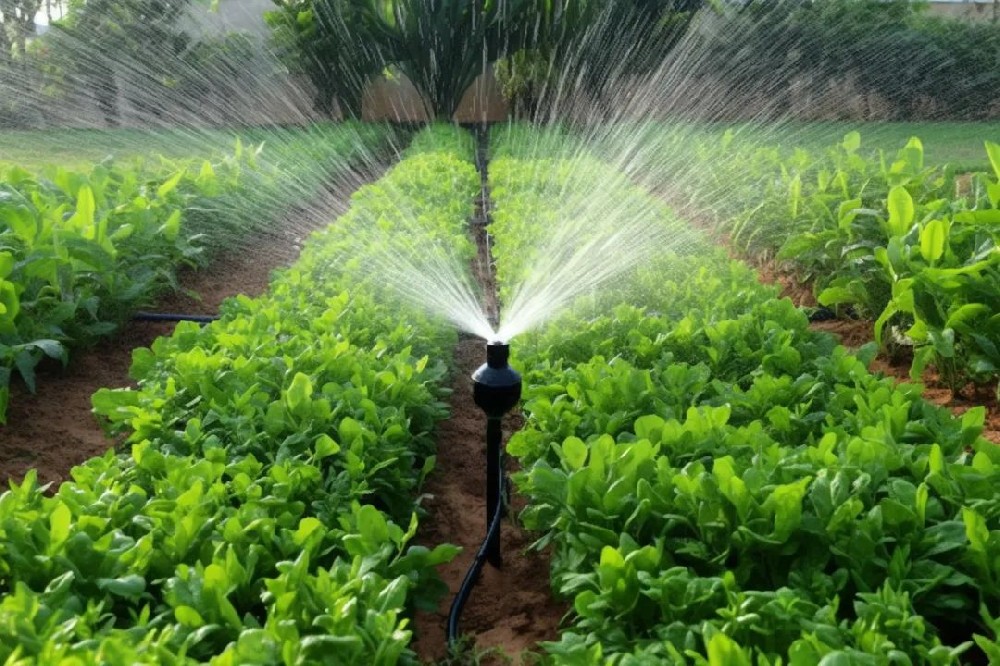
Define crop type, root depth, irrigation method and zone quantity before selecting sensors.
Use soil moisture as the basic control parameter; add EC and pH when fertigation decisions require them.
Confirm whether the controller must operate pumps, valves, fertilizer channels or only provide alarms.
Check pipe pressure, filtration and valve flow before relying on automatic control.
Request wiring diagrams, Modbus documents, platform screenshots and commissioning procedures.
Keep manual override for pumps and valves because field maintenance still needs local control.
A smart irrigation system should not be sold only as a long equipment list. If a farm has simple drip irrigation and one crop, too many fertilizer channels may make operation harder. If the farm has several crops and zones, a small controller may become a bottleneck. Good design matches complexity to the user’s actual management ability.
The important acceptance test is a real irrigation event. The operator should see the correct valve open, pressure remain stable, soil moisture update correctly and the platform store the irrigation record. This test finds many wiring, naming and hydraulic problems before the system is handed over.
A smart irrigation project should define who or what is allowed to start irrigation. Some farms want fully automatic control based on soil moisture thresholds. Others want the system to recommend irrigation while an operator approves the command. The difference affects controller selection, alarm design and user permissions.
The system should also define what happens after rainfall. If soil moisture has recovered naturally, irrigation should be delayed. If only the surface is wet and deeper soil remains dry, root-zone sensors may still require irrigation. This is why sensor depth and crop root depth are engineering decisions, not minor installation details.
Each valve name in the platform matches the actual field block.
Pump flow and pressure remain stable when the designed zone is open.
Soil moisture values change reasonably after irrigation.
Manual override is available for maintenance and emergency operation.
Irrigation records include start time, stop time, zone, flow or duration and alarm status.
Fertilizer dosing, if included, is tested with real EC or pH feedback.
The value is strongest where water is limited, labor is expensive, crop value is high or irrigation mistakes are costly. For small low-value fields, a simple sensor alarm may be enough. For greenhouses, orchards and large demonstration farms, zone control and platform records usually justify a more complete system.
A buyer should write the irrigation specification around zones and decisions. Instead of asking only for a smart irrigation system, the document should state crop type, soil type, irrigation method, number of zones, pump capacity, valve voltage, pipe pressure and whether fertigation is included. This prevents the supplier from quoting a control cabinet that cannot match the field hydraulics.
Thresholds should be written as commissioning values, not permanent values. Soil moisture thresholds often need adjustment after the first irrigation cycle because field capacity, crop root depth and local soil behavior vary. A practical project leaves room for threshold tuning and operator training.
For an irrigation project inquiry, the buyer should provide planted area, crop type, irrigation method, zone quantity, water source, pump capacity, pipe diameter, valve voltage and whether fertilizer dosing is required. If these details are missing, suppliers can only quote a rough control system, and the risk of later field modification becomes higher.
A: It controls irrigation timing and duration by using sensor data, controller logic, valves, pumps and sometimes fertilizer dosing equipment.
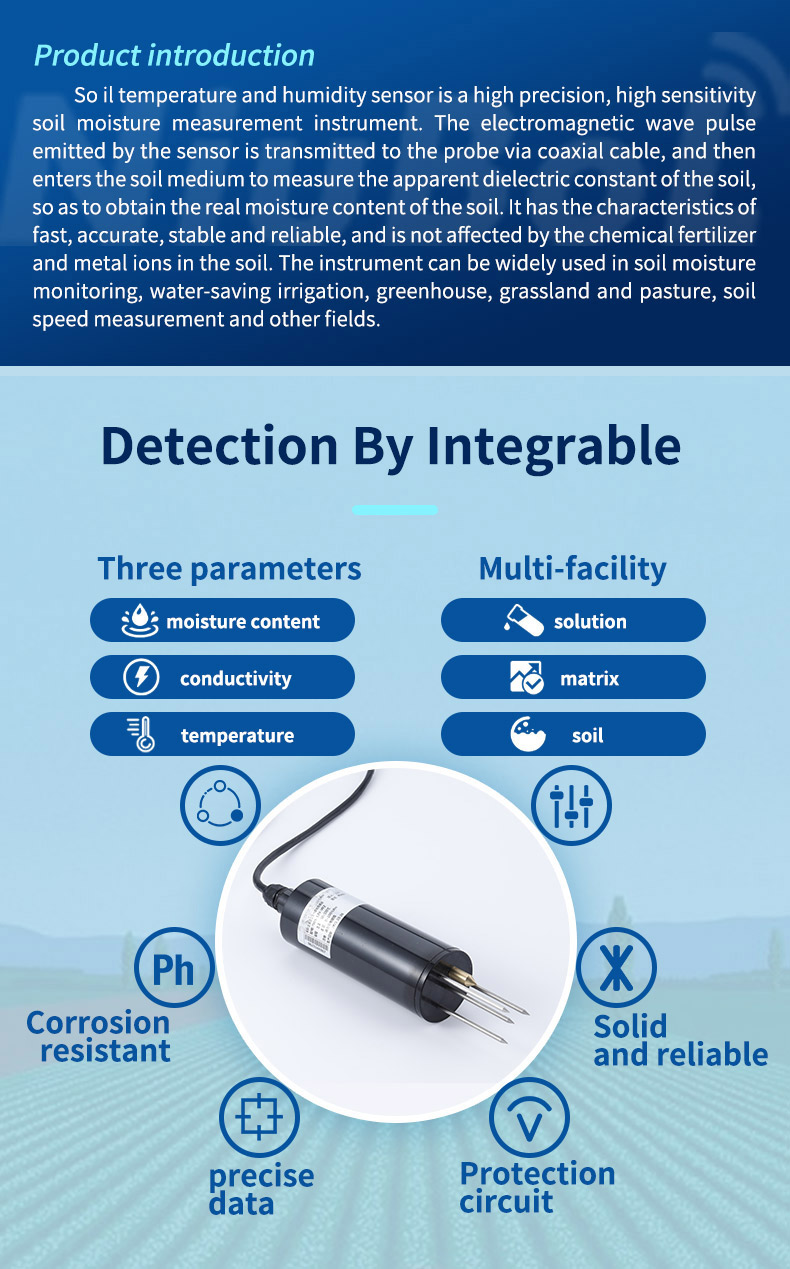
A: Soil moisture is the core sensor because it shows whether the root zone needs water. Soil EC and pH are added when nutrient or salinity management is required.
A: It can reduce unnecessary irrigation when sensors are installed correctly and thresholds match crop needs. The result depends on soil, crop, irrigation method and operation discipline.
A: Yes. Irrigation automation controls water delivery, while water-fertilizer integration also controls fertilizer dosing and nutrient solution management.
A: RS485 is recommended when multiple sensors or industrial controllers are connected. Wireless nodes may be used where cabling is difficult.
A: Zones should follow crop type, pipeline capacity, soil condition and management blocks, not only land area. A zone should be small enough for the pump and valve system to deliver stable pressure and uniform water distribution.
A: Check water source, pump flow, filtration, pressure, valve quantity, communication coverage and maintenance responsibility. These factors decide whether the control system can actually irrigate the field as designed.
A: Local control can work if the controller supports it. Internet is mainly needed for remote viewing, alerts and platform records.
A: Sensor positions, valve names, threshold settings, wiring diagrams, platform login, operation records and maintenance instructions should be handed over.
A: The inquiry should include crop type, field area, irrigation method, zone quantity, water source, pump capacity, valve voltage and whether fertigation is required. These details help the supplier match the controller with the hydraulic system.
A smart agricultural irrigation system is valuable when sensors, hydraulics and control logic are designed together. The strongest project is not the one with the most devices, but the one where soil data, pump capacity, valve grouping and crop demand match. NiuBoL sensor and irrigation monitoring components can support farms, greenhouse projects and integrators that need measurable water and fertilizer control.
Prev:Online PV Weather Monitoring System Installation Guide for Solar Power Projects
Next:Automatic Soil Moisture Monitoring Equipment Selection Guide for Irrigation and Drought Response
Related recommendations
Sensors & Weather Stations Catalog
 Agriculture Sensors and Weather Stations Catalog-NiuBoL.pdf
Weather Stations Catalog-NiuBoL.pdf
Agriculture Sensors Catalog-NiuBoL.pdf
Water Quality Sensor Catalog-NiuBoL.pdf
Related products
 Combined air temperature and relative humidity sensor
 TDR Soil Moisture & Temperature Sensor for irrigation| RS485 |4-20mA| NBL-S-THR
 Soil pH sensor RS485 soil Testing instrument soil ph meter for agriculture |NBL-S-PH
 Wind Speed sensor Output Modbus/RS485/Analog/0-5V/4-20mA
 Tipping bucket rain gauge for weather monitoring auto rainfall sensor RS485/Outdoor/stainless steel
 Pyranometer Solar Radiation Sensor 4-20mA/RS485

Screenshot, WhatsApp to identify the QR code
WhatsApp number:+8615367865107
(Click on WhatsApp to copy and add friends)